Economist Dr. Mahfi Eğilmez, former Undersecretary of the Treasury, attributed the 818.2 billion TL loss incurred by the Central Bank of the Republic of Turkey (TCMB) in 2023 to the Currency-Protected Deposit (KKM) scheme. Recalling how profit distribution was handled during periods when the Central Bank was profitable, Eğilmez highlighted the 2023 loss by stating, "there was no distribution of profit shares to shareholders and employees, nor was there any transfer of profit to the Treasury."
Eğilmez's article is as follows:
Unless otherwise stated, all data in this article, which aims to evaluate the 2023 situation and losses of the Central Bank (TCMB) in general and to draw lessons from the incorrect policies implemented, are taken from the independent auditor's report written on the TCMB financial statements (see endnote 1 for the link to the report). Now, let us evaluate the 2023 operating results of the TCMB based on this data.
TCMB Shareholders and Their Shares from Profit Distribution
First, let us look at who receives a share of the profit when the TCMB makes a profit, that is, the shareholding structure of the Bank:
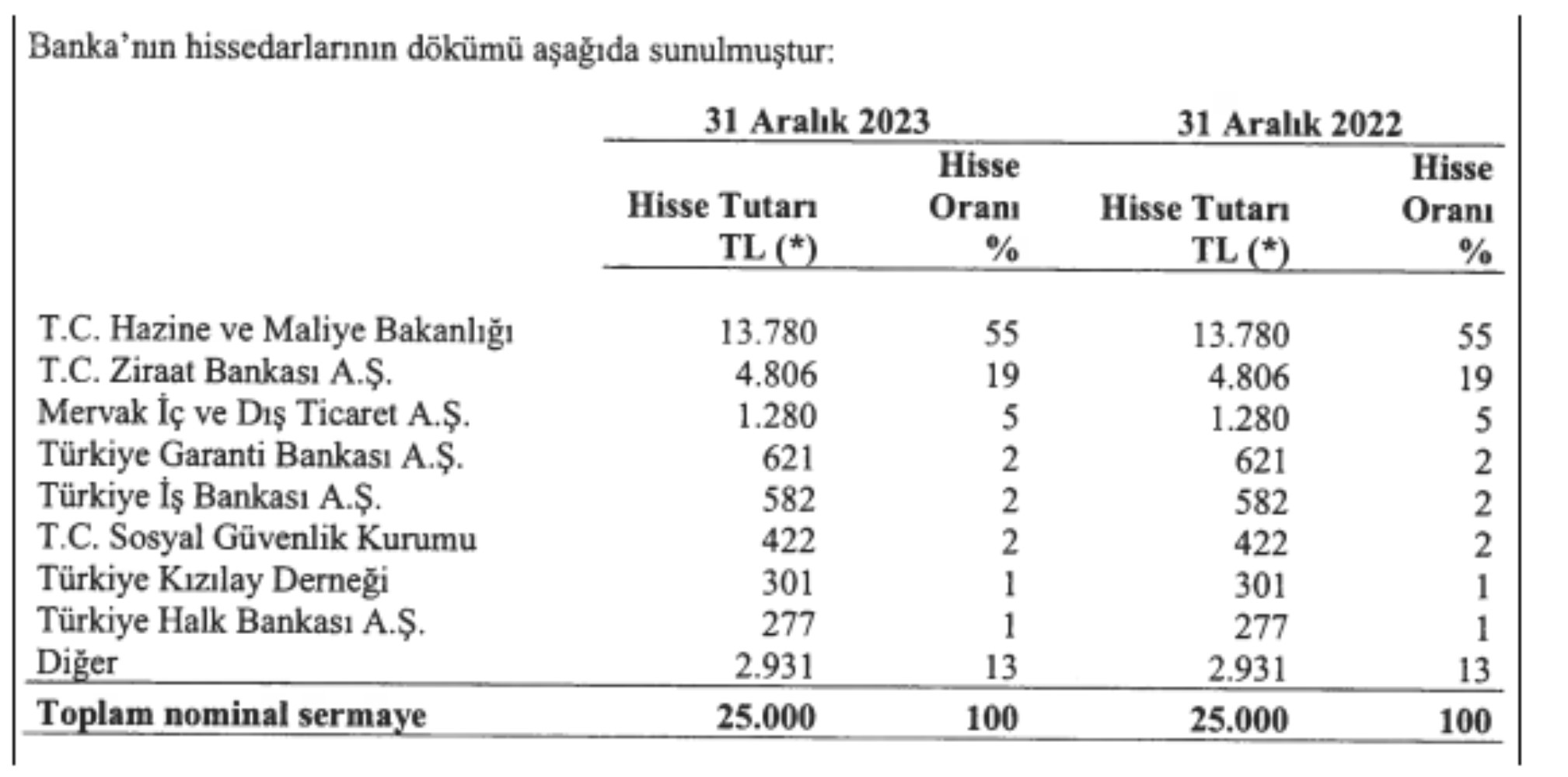
According to this structure, 55 percent of the TCMB belongs to the Ministry of Treasury and Finance (Treasury), and 19 percent belongs to Ziraat Bank, whose capital is owned by the Treasury. Other public institutions or organizations with public sector partnerships are included among the remaining shares. In other words, the vast majority of the shares of the TCMB, which is a joint-stock company, belong to the public sector. Mervak, which is among the shareholders, is the Social Assistance Foundation for Central Bank Employees. Under the 'Other' heading, there are many small shareholders. When the TCMB makes a profit, it transfers the vast majority of this profit to the Treasury, in accordance with this share structure and the provisions in its law.
Let us show how the profit is distributed in the table below, comparing the last two years:
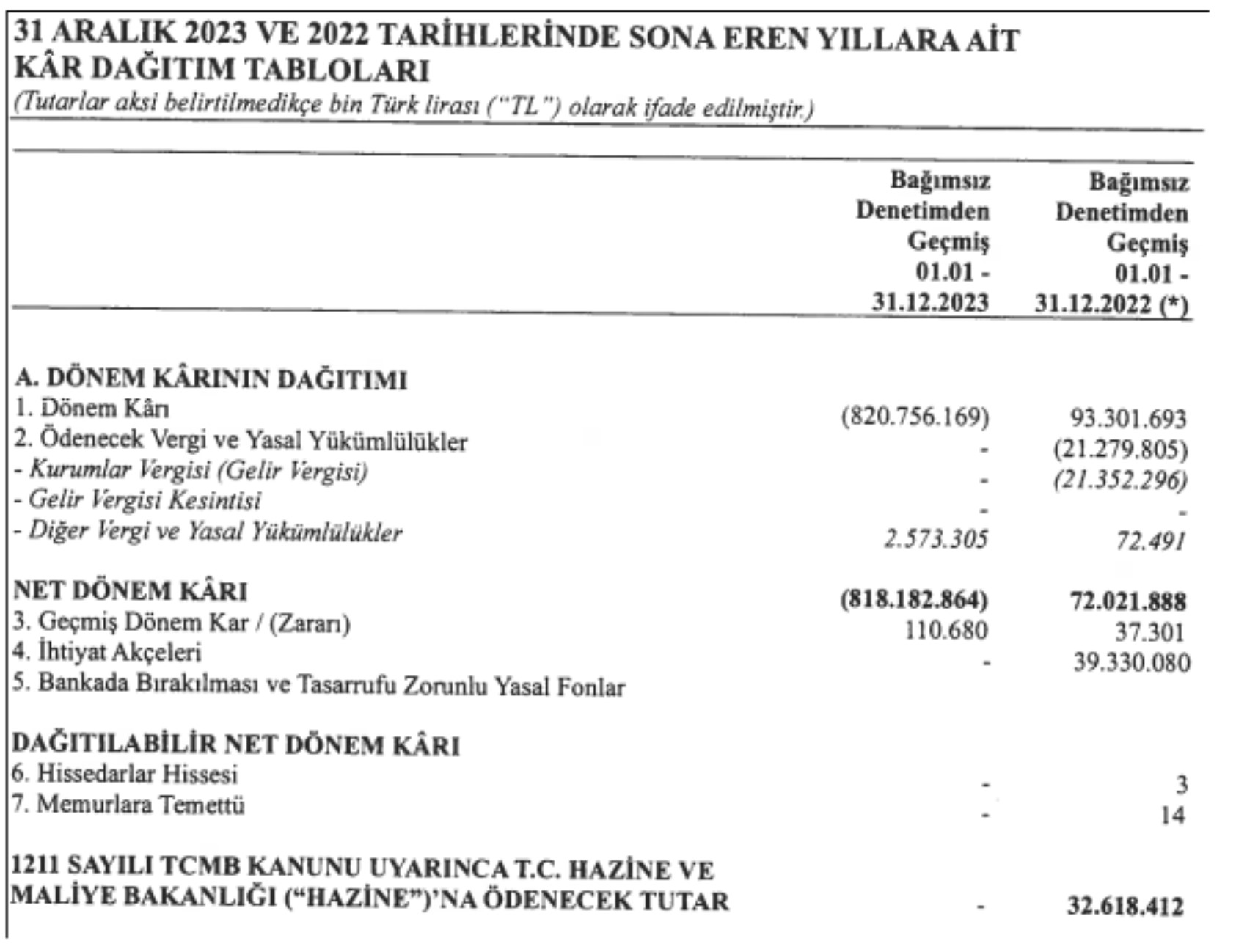
According to this table, in the distribution of the 72 billion TL net profit obtained in 2022, after the 39.3 billion TL set aside as legal reserves, a negligible amount of the remaining balance was distributed to other shareholders and TCMB employees. The remaining 32.6 billion TL of the profit was transferred to the Treasury, and the 39.3 billion TL legal reserve was also given to the Treasury.
TCMB's Past Years' Profits and 2023 Loss
The Central Bank (TCMB) announced that it incurred a loss of 818.2 billion TL in 2023. This was not a surprise to those following the TCMB balance sheet. Because the TCMB was burdened with a currency-protected deposit load that had nothing to do with its mandate, and this burden was reflected in the balance sheet items. Since there was a loss of 818.2 billion TL in 2023 rather than a profit, it was not possible to set aside legal reserves, nor was there any distribution of profit shares to shareholders and employees or a transfer of profit to the Treasury.
The Central Bank's profits from previous years are as follows (source: TCMB, Profit and Loss Statement.)
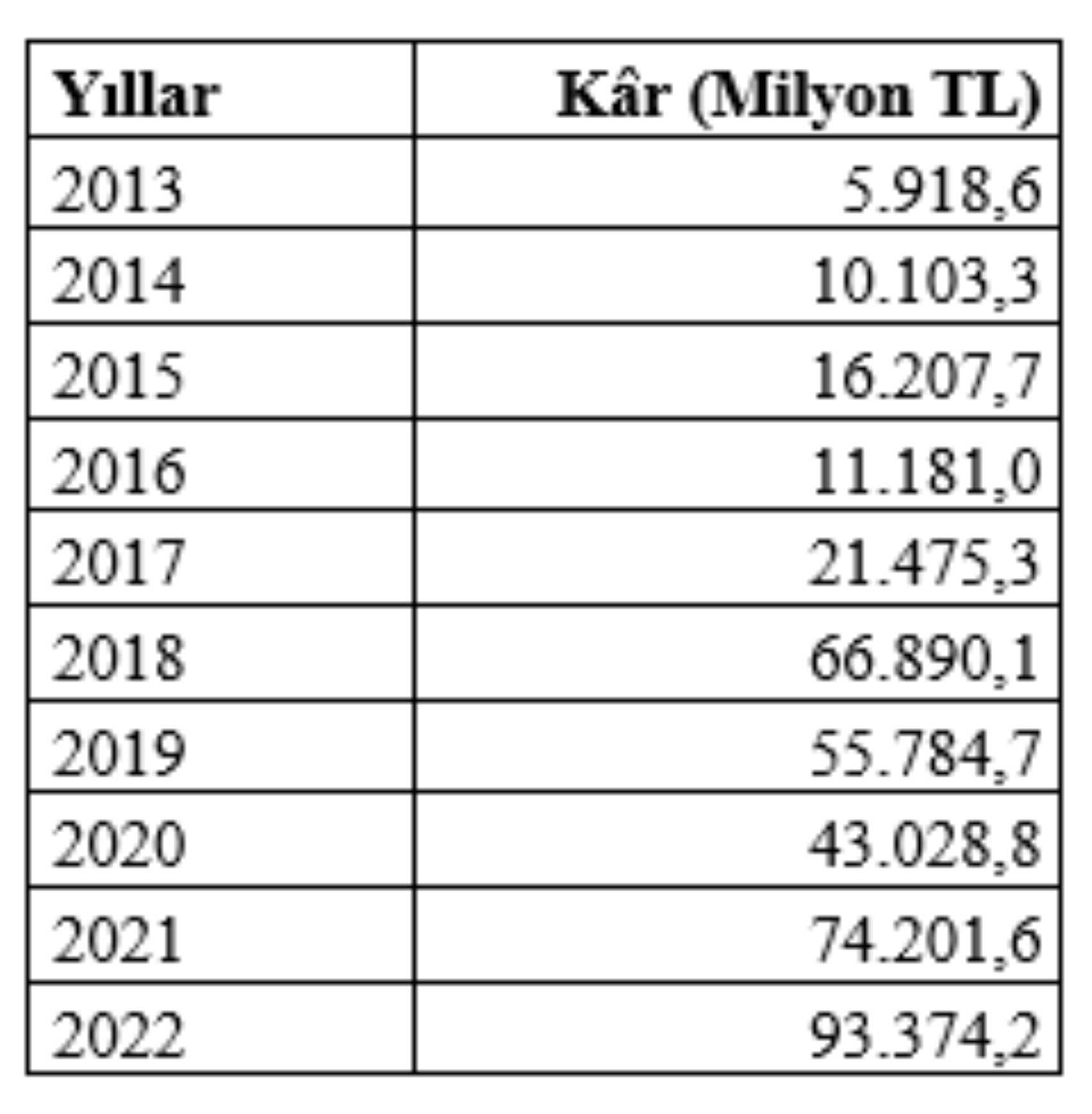
Central banks may occasionally face losses depending on the state of the markets or the direction and weight of the monetary policy they implement. For example, in 2023, not only the TCMB but other central banks also incurred losses. For instance, the US Federal Reserve (Fed) lost 114 billion dollars, and the European Central Bank (ECB) lost 1.3 billion Euros. Among the central banks that incurred losses are the Swiss and Dutch central banks. The main reason for these losses was the changes in exchange rates and the domestic and foreign bonds they held in their securities portfolios. During the global crisis, central banks aimed to stimulate the economy by increasing the money supply and purchasing bonds from the market. As long as interest rates did not change, this transaction did not create a loss. As a result of the interest rate hikes that started in 2022 and accelerated in 2023 to stop the rise in inflation, the value of the bonds they held fell. This is the main reason for the losses of central banks in 2023 (for this contradiction, you can look at my article in endnote 2.)
The TCMB's 818.2 billion TL loss in 2023, unlike the situation of the central banks mentioned, emerged from the confusion of cause-and-effect relationships. There have been many unscientific steps in recent years, but the one that has caused the most damage to the economy among them has been setting the interest rate below inflation. The currency-protected deposit system, introduced to prevent the demand for foreign currency created by the interest rate cuts that began in September 2021, shifted the cost that banks should have paid onto the TCMB, leading to a loss of 818.2 billion TL as of the end of 2023.
Status of TCMB's Foreign Exchange and Gold Reserves
This incorrect economic policy, in addition to this astronomical loss it imposed on the TCMB, also cost a serious loss of reserves. The table below shows the reserve status of the TCMB as of April 19, 2024 (source: prepared by me using data from the TCMB balance sheet, monetary and financial indicators table, and international reserves and foreign currency liquidity table.)
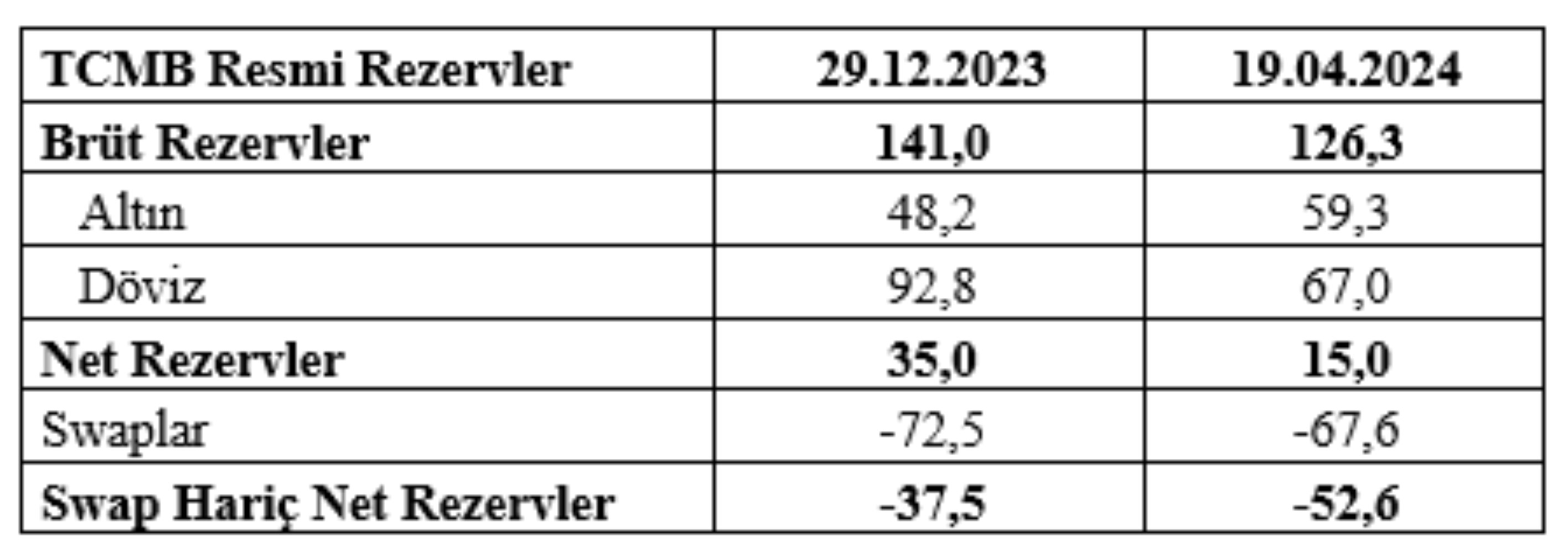
While the TCMB was assuming the loss of a currency-protected deposit system that provided a currency guarantee, even though it was none of its business, it also sold its reserves to keep the exchange rate low in order to show GDP as high, and it did not stop there; it also spent reserves acquired through debt.
While on the subject of reserves, let us also touch upon the issue of the TCMB's gold, which is discussed in the public sphere based on false information. The table below shows the TCMB's gold assets and where they are kept:
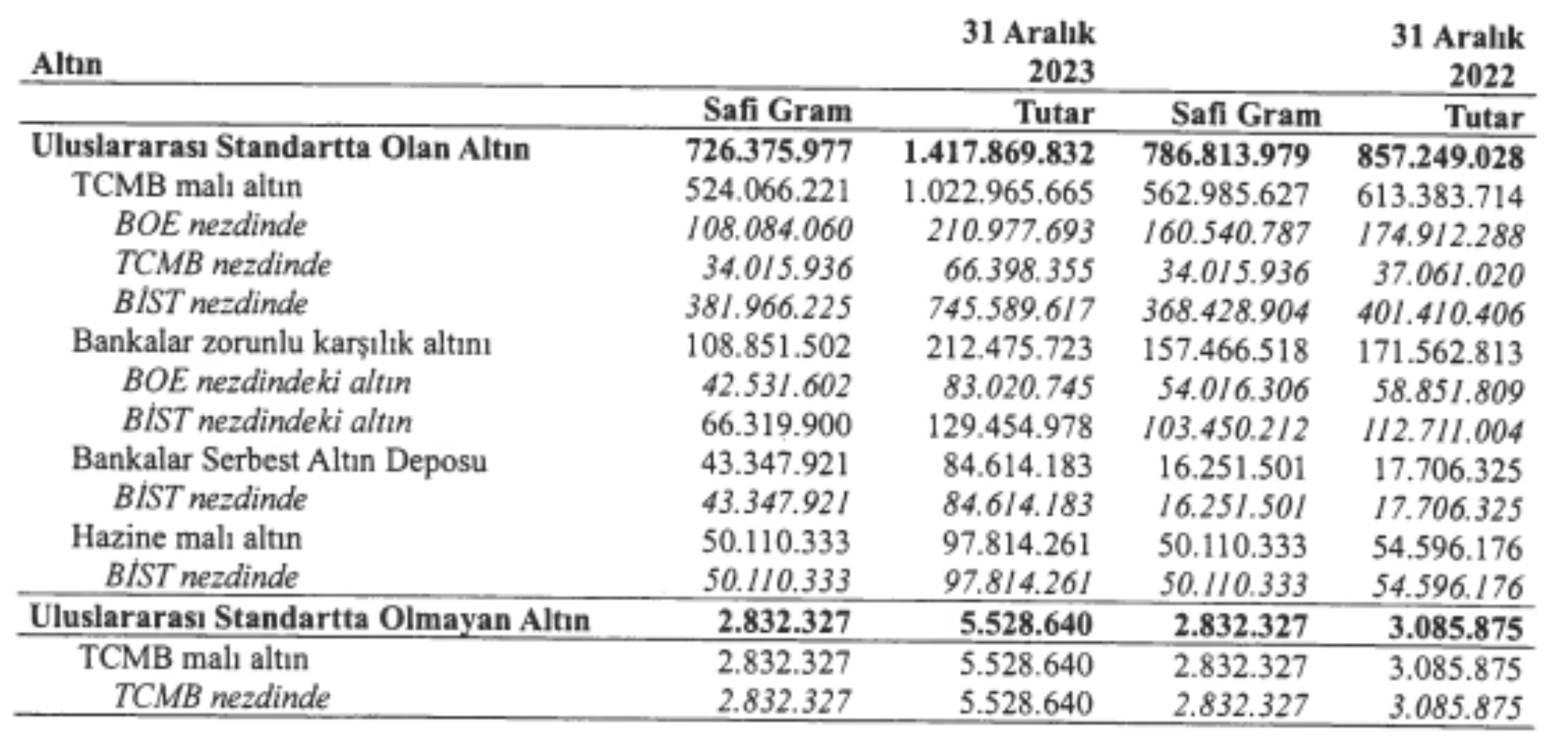
As of the end of 2023, the TCMB's gold assets of international standard amount to 726.4 tons. Of this amount, 524.1 tons belong to the TCMB, 152.2 tons to banks (108.1 tons are required reserves, 43.3 tons are banks' free gold deposits), and 50.1 tons belong to the Treasury. In addition, there is 2.8 tons of non-international standard gold belonging to the TCMB. Of the 726.4 tons of international standard gold, 34 tons are kept in TCMB vaults, 150.6 tons at the Bank of England (BOE), and 541.8 tons at Borsa Istanbul (BIST). The 2.8 tons of non-international standard gold are in the TCMB vaults. The reason why some of the gold is held at the BOE and some at the BIST is so that they can be used in swap transactions.
Evaluation
Central banks generally make a profit. Conversely, they may also incur losses depending on the policies followed during crisis periods and developments in interest rates. The TCMB's 2023 loss stemmed from the currency-protected deposit application, which was introduced to prevent people from fleeing to foreign currency as a result of incorrect interest rate policies. This application led not only to losses but also to reserves falling into the negative due to efforts to maintain the exchange rate. The problem does not end there. The fact that the TCMB incurred a loss and, as a result, will not be able to transfer profit and legal reserves to the Treasury as in previous years, has also created a serious problem for the financing of the 2024 budget deficit.
Economic policy is an interesting policy. If it cannot be constructed and implemented correctly as a whole, it turns into conflicting parts, and reaching a synthesis becomes impossible. If we can manage to look at it from the perspective of economic policy, we see that interest rates are among the most important factors in the economy. When set incorrectly, it turns the economy upside down, destroys production and investment, and leads to consumption taking precedence. As a result, even if the economy grows, quality growth cannot be achieved. Even if the interest rate is determined correctly after a while, it cannot fix the economy on its own; it must be supported by structural reforms."
News Source: 12punto