The decision of the Financial Action Task Force (FATF), which determines the compliance of world economies with the fight against financial crimes, regarding Turkey has been announced. The FATF has removed Turkey from the grey list after 3 years.
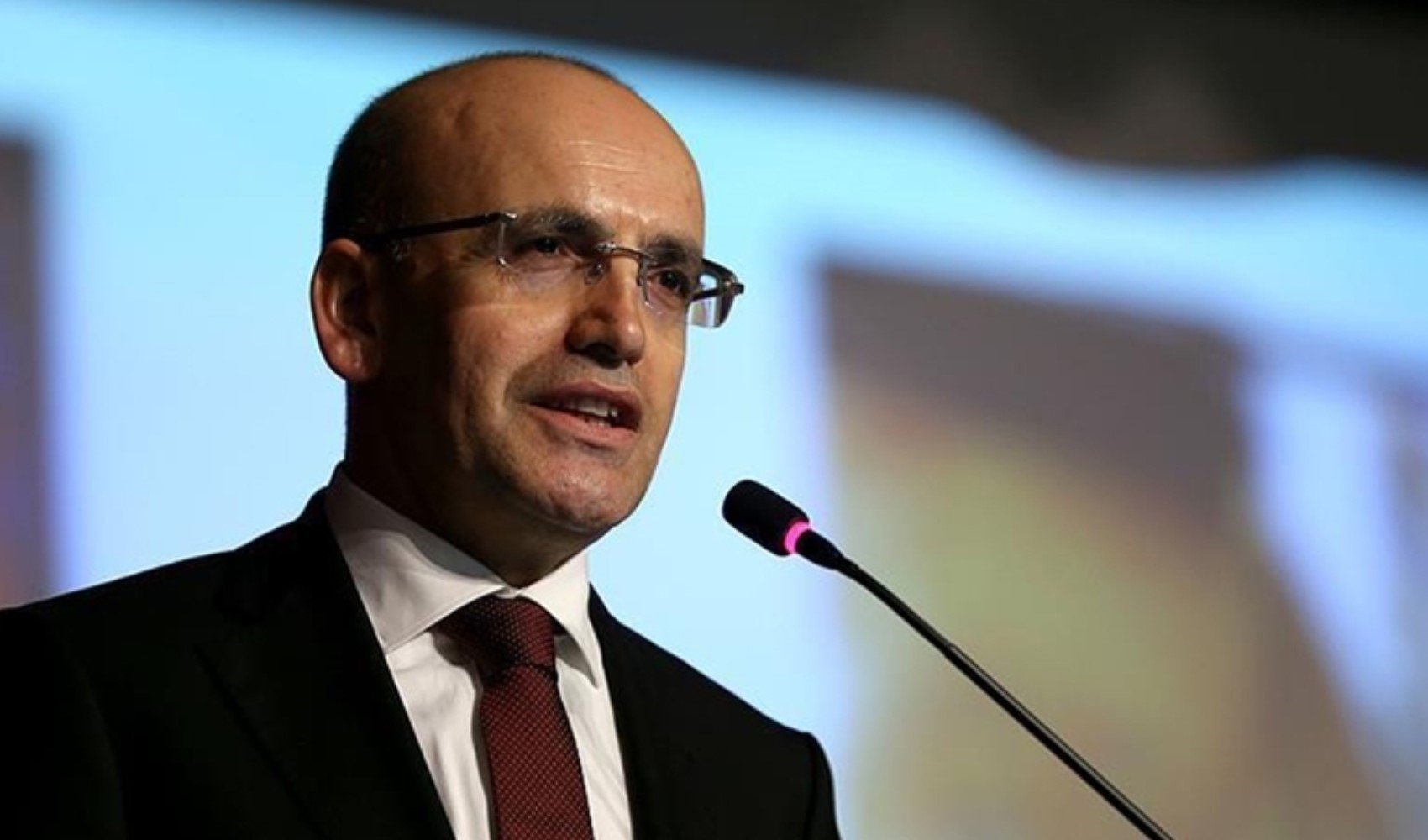
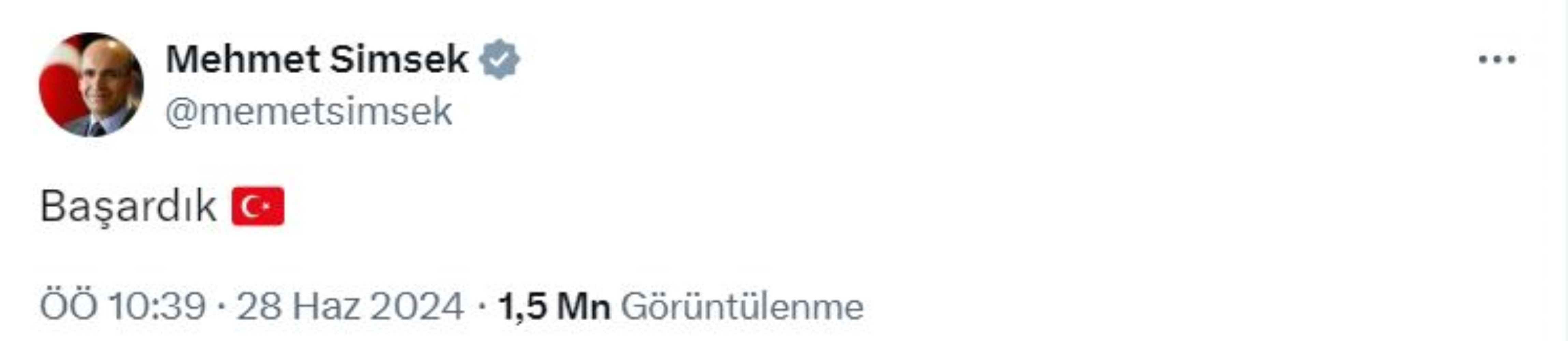
Minister of Treasury and Finance Mehmet Şimşek, who is in Singapore for the critical meeting, shared a message on his X account saying "We succeeded" along with a Turkish flag emoji.
The FATF had placed Turkey on the list known as the grey list in 2021.
With the cryptocurrency regulation adopted in Parliament, Turkey has now met all 40 standards set by the FATF.
IT WAS ENTERED IN 2021
The Financial Action Task Force (FATF) had announced that Turkey was placed on the grey list, which requires closer monitoring, due to deficiencies in preventing money laundering and the financing of terrorism.
Accordingly, it was emphasized in the last evaluation conducted in 2019 that there were some deficiencies in these areas, and Turkey entered the grey list, which means it will be closely monitored.
FATF President Marcus Pleyer emphasized in a press conference that different actors in Turkey, such as those in the banking and real estate sectors and those trading in precious metals, needed to be monitored more strictly.
Pleyer had said, "Turkey must demonstrate that it effectively deals with complex money laundering cases and is determined to open investigations into the financial funding of organizations such as ISIS and Al-Qaeda, which the United Nations defines as terrorist organizations."
IT WAS COMING IN PLAIN SIGHT
Financial Times had written before the decision that Turkey was expected to be placed on the grey list.
In the news, it was stated that Turkey, which is already struggling to attract foreign investors, could face more difficulties with this decision.
According to the authors of the research, the grey list causes a decrease in portfolio flow, which is referred to as hot money, entering a country.
According to the research, this decrease in hot money occurs at a rate of 3 percent of a country's GDP, and a similar decrease also occurs in the rate of foreign direct investment.
WHY DOES A COUNTRY ENTER THE GREY LIST?
The grey list refers to countries that are kept under close surveillance by the Financial Action Task Force (FATF) because they have deficiencies and risks regarding money laundering and the financing of terrorism.
The FATF first prepared its recommendations regarding the grey list in 1990 as an initiative to combat the misuse of financial systems by people laundering drug proceeds.
Following its revision in 1996, its mandate was expanded in October 2001 to cover the financing of terrorist acts and terrorist organizations.
The recommendations were updated in cooperation with observer organizations such as the IMF (International Monetary Fund), the World Bank, and the United Nations, and were accepted worldwide as the international standard for combating money laundering and the financing of terrorism.
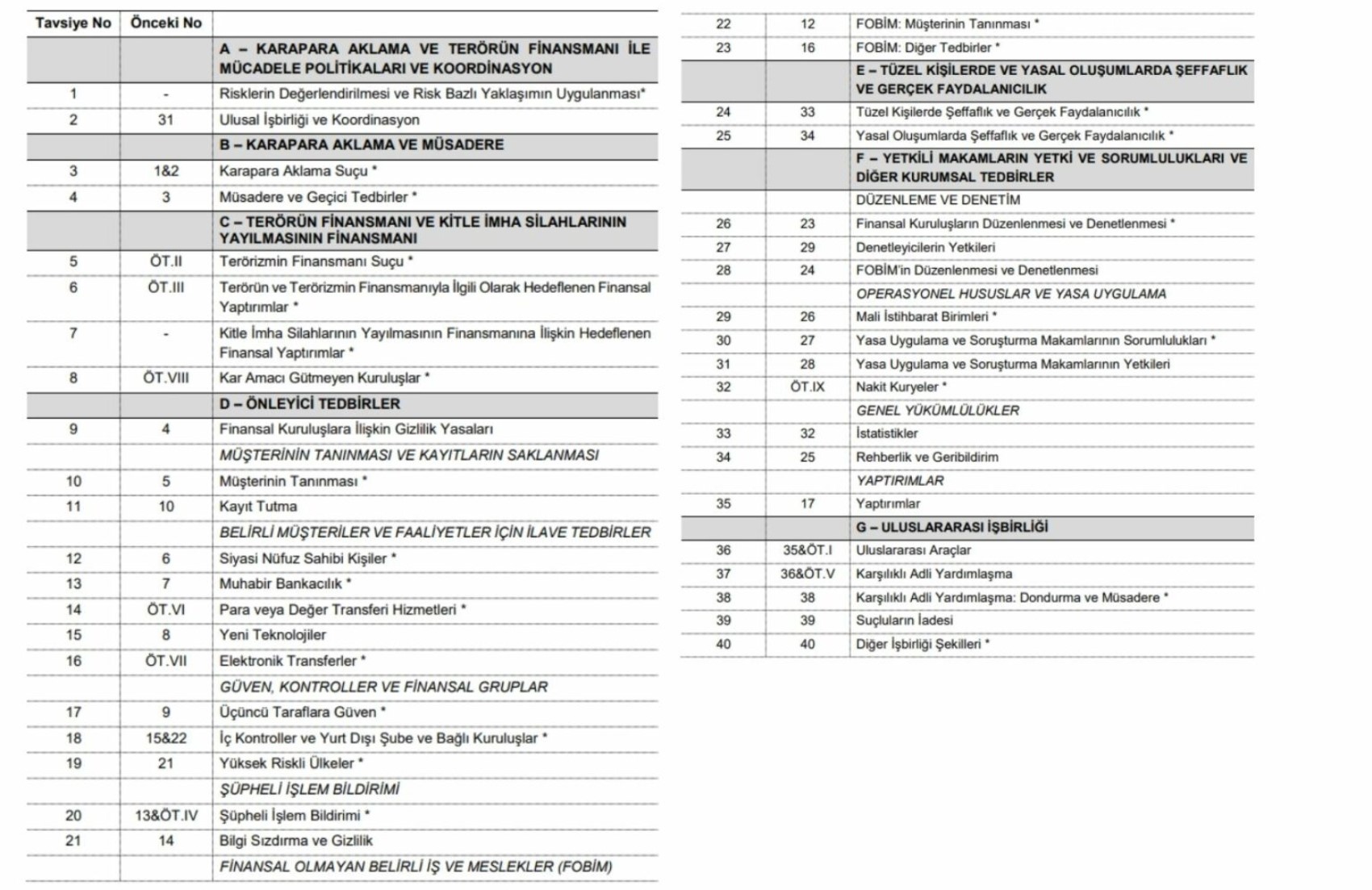
Countries face the risk of being on the "grey list" if they do not comply with the 40 recommendations created by the FATF.
Here are those 40 recommendations:
CONSEQUENCES OF BEING ON THE GREY LIST
The grey list can negatively affect foreign direct investment coming into a country.
Being included in the Grey List indicates 'strategic deficiencies' identified in a jurisdiction's policies to prevent money laundering and the financing of terrorism.
WHAT WILL HAPPEN NEXT?
Removing Turkey from the grey list can create many positive economic and financial effects.
First, the loss of reputation and the hesitation of foreign investors caused by being on the grey list may disappear.
This could lead to an increase in foreign capital inflow to Turkey and a relief in financial markets.
In addition, the easing of additional obligations and audits on companies engaged in import and export may contribute to an increase in trade volume.
The acceleration of foreign capital flow may help the Turkish Lira gain value and a more effective exchange rate policy to be followed in the fight against inflation. This situation may allow the Central Bank to lower the policy rate earlier.
As a result, removing Turkey from the grey list will be an important step that will support economic growth and increase financial stability.
STATEMENT FROM THE MINISTRY
The following statements were included in the statement made by the Ministry of Treasury and Finance:
"Our country was represented by our Minister of Treasury and Finance, Mr. Mehmet Şimşek, at today's meeting of the Financial Action Task Force (FATF). Thanks to the right steps taken, Turkey has been removed from the grey list. May it be beneficial to our country and our nation.
This result, achieved with the contributions of all our public and private sector stakeholders, especially our Ministries of Justice, Interior, and Foreign Affairs, under the leadership of our President, will further increase confidence in our financial system and facilitate the achievement of program goals.
We thank all institutions and organizations that contributed to this process. Turkey will continue to carry out its fight against the financing of terrorism and money laundering with determination and in full compliance with international standards from now on.
In this context, the administrative and technical capacity of MASAK and other institutions will be further strengthened; legal and administrative regulations will be implemented with the same sensitivity when necessary."
YERLİKAYA: WE ARE OFF THE GREY LIST
Minister of Interior Ali Yerlikaya, in his statement where he said, "I thank everyone who contributed to our country's removal from the 'Grey List'," noted the following:
"We will continue to resolutely maintain our fight against organized crime groups, drug traffickers, migrant smuggling organizers, and money-laundering criminal hubs, especially those targeting terrorism and the financing of those traitors."
??WE ARE OFF THE GREY LIST????
— Ali Yerlikaya (@AliYerlikaya) June 28, 2024
I thank everyone who contributed to our country's removal from the “Grey List”.
We will continue to resolutely maintain our fight against organized crime groups, drug traffickers, migrant smuggling organizers, and money-laundering criminal hubs, especially those targeting terrorism and the financing of those traitors… pic.twitter.com/RyVUuqI2Qy
IT WILL CREATE A POSITIVE EFFECT
Another name who made statements after Turkey's removal from the grey list was Vice President Cevdet Yılmaz. Yılmaz said that this decision would have a positive effect on the Turkish economy.
Cevdet Yılmaz's statements are as follows:
"Thanks to the action plan we have completed to prevent money laundering and the financing of terrorism, Turkey has been removed from the grey list today.
With this development, the confidence of international investors in our country's financial system has been further strengthened. The decision will have extremely positive results for both our financial sector and our real sector.
Turkey's removal from the grey list will accelerate the inflow of international resources and have a positive effect on borrowing costs.
With the acceleration of capital flow towards our country, the increase in interest in Turkish Lira assets will also accelerate the disinflation process.
We thank all our institutions and organizations that contributed to this process, especially our Ministry of Treasury and Finance."
Thanks to the action plan we have completed to prevent money laundering and the financing of terrorism, Turkey has been removed from the grey list today.
— Cevdet Yılmaz (@_cevdetyilmaz) June 28, 2024
With this development, the confidence of international investors in our country's financial system has been further strengthened. The decision,…
FATF EXPLAINED THE REASON FOR THE DECISION
The Financial Action Task Force (FATF), which evaluates the performance of countries in the fight against international financial crimes, announced that Turkey has been removed from the ''grey list'' it was placed on in 2021 because it lagged behind in the fight against money laundering and the financing of terrorism.
Minister of Treasury and Finance Mehmet Şimşek, who shared a post on his social media account before the final declaration was published, gave a signal in advance that Turkey had been removed from the list with the phrase "We succeeded".
In the FATF's decision text, it was emphasized that progress has been made in allocating more resources to the financial intelligence unit to audit the compliance of high-risk sectors with the fight against money laundering/financing of terrorism and in increasing on-site inspections in general.
THE DECISION WAS SUMMARIZED UNDER 8 HEADINGS
While the text emphasized the implementation of deterrent sanctions for money laundering/financing of terrorism violations, especially for informal money transfer services and exchange offices, and regarding requirements for adequate, accurate, and up-to-date beneficial ownership information, it pointed to progress in improving the use of financial intelligence to support money laundering investigations and increasing proactive disseminations by the financial intelligence unit.
In the text, where the FATF also drew attention to conducting more complex money laundering investigations and prosecutions, it pointed to setting clear responsibilities and measurable performance targets and benchmarks for authorities responsible for the recovery of assets derived from crime and the pursuit of terrorism financing cases, and using statistics to update risk assessments and inform policy.
The text stated that progress has also been made in conducting more financial investigations in terrorism cases, prioritizing terrorism financing investigations and prosecutions related to groups designated by the UN, and ensuring that terrorism financing investigations are expanded to identify financing and support networks. In the text, regarding targeted financial sanctions within the scope of UN Security Council resolutions 1373 and 1267, progress was emphasized in addressing deficiencies in following up on foreign requests and domestic designations related to groups designated by the UN, in accordance with Turkey's risk profile.
In the text, which highlights developments in implementing a risk-based approach to the supervision of non-profit organizations to prevent their misuse for the financing of terrorism, providing access to a wide variety of non-profit organizations in the sector and receiving their feedback, and taking steps to ensure that the sanctions applied are proportionate to any violation and that supervision does not disrupt or discourage the legitimate activities of non-profit organizations such as fundraising, it was stated, "Therefore, Turkey is no longer subject to the FATF's increased monitoring process."
At the FATF meeting held in Singapore, whether Turkey would be removed from the grey list was also to be discussed. The FATF had signaled in recent weeks that Turkey would be removed from the list, stating that it had fulfilled the necessary reforms.
In the statement made as a result of the meetings, the FATF officially announced that Turkey had achieved the goals set for removal from the grey list, and therefore it was no longer subject to the high-level monitoring process.
WHICH COUNTRIES REMAIN?
The FATF, which determines the compliance of world economies with the fight against financial crimes, had placed Turkey on the ''grey list'' on October 21, 2021, on the grounds that it lagged behind in the fight against money laundering and the financing of terrorism.
The FATF periodically audits member countries in terms of the progress they have shown in preventing money laundering and the financing of terrorism.
The FATF currently has a total of 39 members, including 37 countries and 2 regional organizations. Turkey became a member of the FATF on September 24, 1991.
The following countries remain on the FATF's latest updated grey list:
Bulgaria, Burkina Faso, Cameroon, Croatia, Democratic Republic of Congo, Haiti, Kenya, Mali, Monaco, Mozambique, Namibia, Nigeria, Philippines, Senegal, South Africa, South Sudan, Syria, Tanzania, Venezuela, Vietnam, Yemen.
WHAT IS FATF?
Turkey became a member of the FATF on September 24, 1991.
The FATF carries out its activities through General Assembly meetings and meetings of working groups established to work on various issues.
The FATF holds three General Assembly meetings each year.
These meetings are usually held in October, February, and June each year.
The FATF periodically audits and evaluates member countries in terms of the progress they have shown in preventing money laundering and the financing of terrorism.
The FATF follows up on the deficiencies identified in the country report with a Biennial Update and Regular Follow Up.
News Source: 12punto