

What should companies do after Trump's decisions?
US President Donald Trump has initiated a process affecting all countries worldwide with his new customs tariff decision, which has opened the curtain on trade wars. The potential effects of Turkey being included in the 10 percent tax bracket are also a subject of curiosity. Zahide Demir, Partner at KPMG Turkey Customs and Foreign Trade Services, stated that this decision has launched a new era of negotiation in global trade and emphasized that these rates could change through potential negotiations. Evaluating the likely impacts of the decisions on the world and especially on Turkey, Demir also provided important advice to companies on what path they can follow during this process.



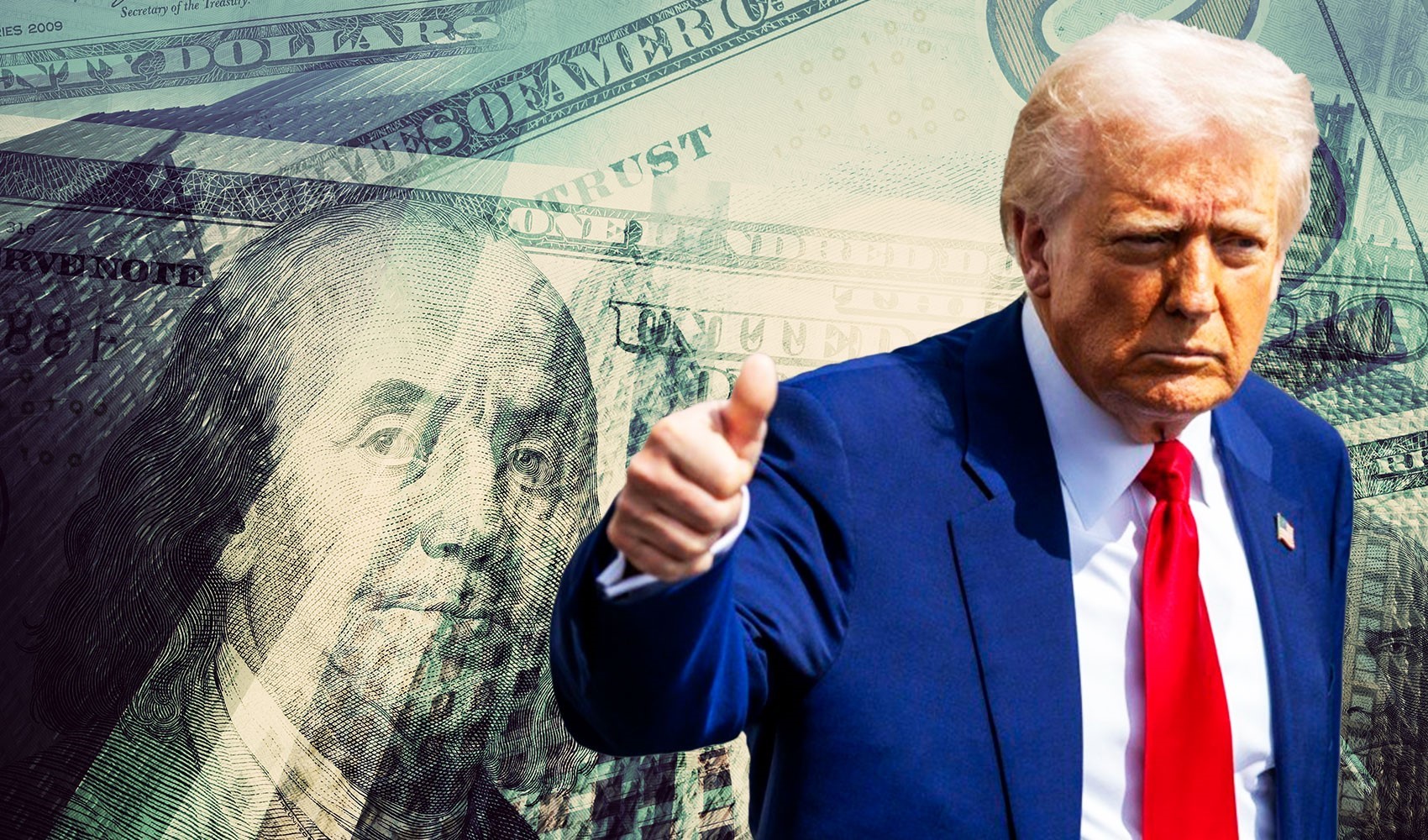
US President Donald Trump's steps to reshape foreign trade are continuing with increasing speed. The messages he has given since the day he took office regarding the fact that the current order would not continue in this way were followed by decisions targeting major trading partners such as China, Canada, and Mexico. At the beginning of April, Trump issued a decision that would affect all countries in the world and, consequently, global foreign trade. Accordingly:
As of April 5, 2025, an additional customs duty of 10 percent has begun to be applied to all countries exporting to the US. Turkey is also included in this group of countries.
As of April 9, 2025, additional customs duty rates, specifically determined and at higher levels, will come into effect for countries with which the US has the largest foreign trade deficits (the countries causing the most damage).
If the imported goods contain 20 percent or more of US-origin inputs, the relevant tax will only be applied to non-US-origin inputs.
“THE CURTAIN ON TRADE WARS HAS BEEN RAISED”
Evaluating these latest decisions taken by Trump, Zahide Demir, Associate Partner at KPMG Turkey Customs and Foreign Trade Services, said, “The regulation naturally caused repercussions all over the world. Because with this decision, Trump is inviting all countries to sit at the negotiating table. Immediately after this invitation, he adds that it is also possible for these rates to increase or decrease ‘depending on the results obtained from the negotiations.’”
Stating that all countries and the World Trade Organization have expressed their concerns following the announcement of the decision, Demir said, “The curtain on trade wars has been raised. It is not difficult to estimate that the decision will have an effect that will reduce the volume of foreign trade. Markets have, of course, also been negatively affected by this decision. It is hardly possible for countries to remain indifferent to this regulation. Indeed, the statements are in this direction. On the other hand, it does not seem very possible to assume that the new tax burdens created by the decision will remain constant; rather, one should think of this new situation like a ‘t1’ point on an imaginary graph. Cards will be reshuffled with decisions to be taken by other countries, such as China's decision to impose an additional 34 percent tax on US-origin products in retaliation, which will be the t2 point. The tensions or uncertainties that such situations will bring will affect production processes and investment plans.”
“THE LOW RATE OF 10 PERCENT FOR TURKEY DOES NOT MEAN MUCH ON ITS OWN”
“We know that the formula used in determining tax burdens in the decision is based on the US's foreign trade deficits in its trade with the relevant country,” said Demir, adding, “Turkey is in the group of countries subject to a 10 percent base tax. Looking at the rates of other countries, it is possible to interpret the 10 percent rate as a relatively favorable situation. However, the low rate will not mean much on its own. Determining how which sectors will be affected by this decision requires a sector-based study, also taking into account the data of other partners in the global supply chain.
For example, in the textile sector, the expectation of creating an advantage is more intense when considering the tax burdens in Far Eastern countries. Still, creating a simple ‘advantage story’ by comparing it with the 20 percent rate applied to the EU will not be enough. Even companies that only export to the EU may have to take into account the possibility of the current market shrinking. In short, many factors such as possible shifts in production centers, and the addition and removal of new links to the supply chain must be evaluated simultaneously.”
WHAT PATH SHOULD COMPANIES FOLLOW?
Predicting that the homework of customs and foreign trade experts will increase in the new era, Demir gave the following advice to companies:
“Companies need to review their sector and competitor analyses. Revising their investment plans according to the latest developments in foreign trade and following the process very closely are among the most important issues to pay attention to. The speed of breakage or transformation in the global supply chain also makes such monitoring mandatory. It will be beneficial to examine current production processes with an origin-based perspective. We anticipate that such an analysis will contribute to the development of a strategy to fill any gap that may arise in the market. Researching alternative routes against possible contractions in export markets will contribute to managing potential risks. As the KPMG customs and trade team, we will continue to follow the process closely and assist our business partners.”
News Source: 12punto
Most Read
Galatasaray announces injury updates for Osimhen, Lemina, and Singo

Attention online sellers: Tax monitoring expanded
VAR for the Fenerbahçe-Beşiktaş derby has been announced!
Bridges and highways are being privatized: 15 July and FSM are also on the list

Peugeot September 2026 price list is out

New details emerge in 'panel' operation targeting lawyers
First statement from Osimhen after injury in Başakşehir match
Gökçek era detail in ABB investigation

Özlem Şanver: 'He said he would change, I believed him; should I be beaten just because I didn't leave?'

Mourinho explains why he substituted Arda Güler