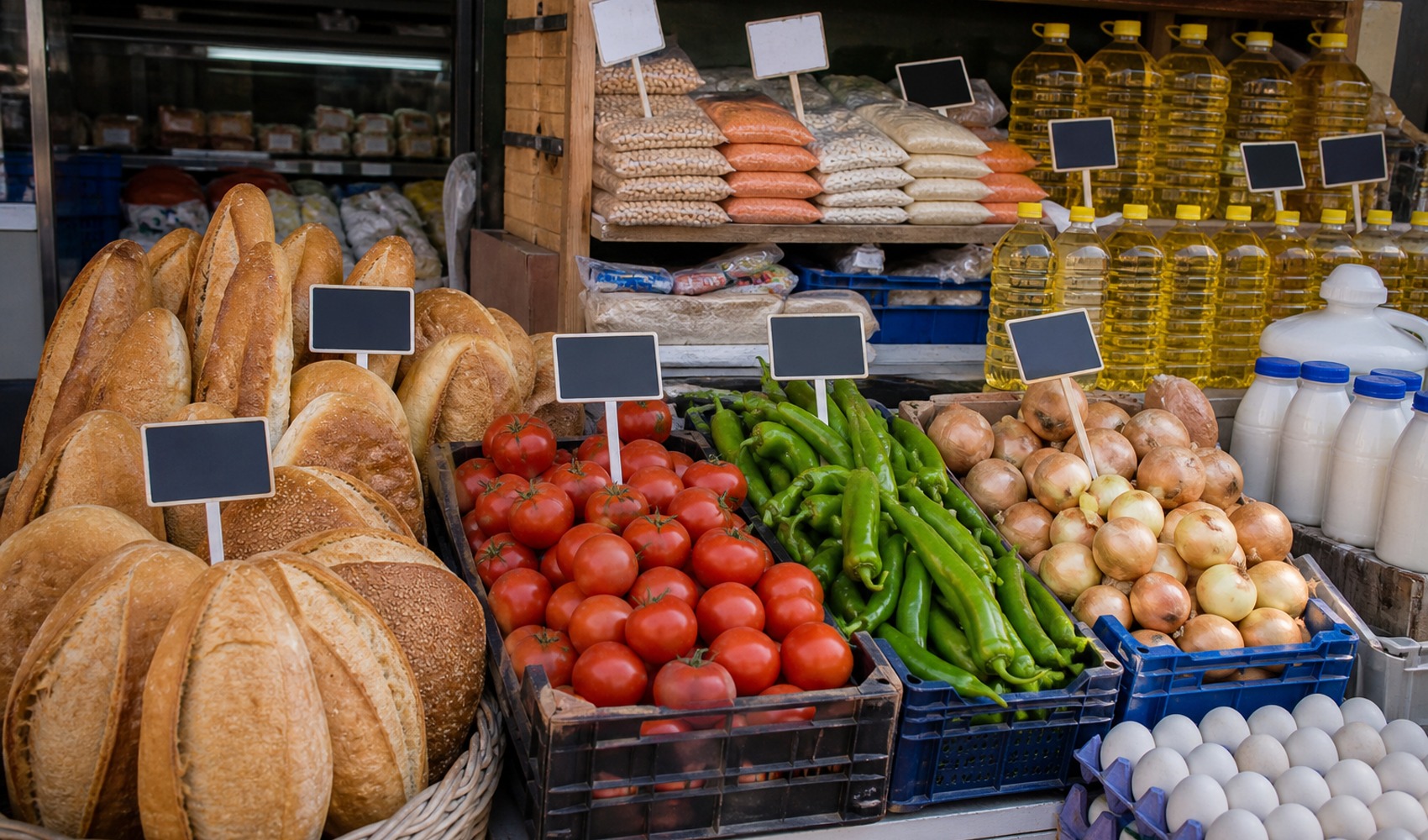
The persistent high level of food prices in Turkey is not a subject that can be explained solely by price tag changes on supermarket shelves. The price includes numerous factors, ranging from the cost of diesel and fertilizer in the field to exchange rates, feed prices to climate risks, and storage and logistics to retail competition.
For this reason, there is no single answer to the question, "Why is food expensive?" When the consumer and producer price indices of TurkStat (TÜİK), the inflation reports of the Central Bank of the Republic of Turkey (TCMB), the FAO global food price index, the World Bank's commodity reports, and the OECD-FAO agricultural outlook studies are read together, the common picture is this: Food prices are affected by both global shocks and structural problems specific to Turkey.
This file provides a framework based on findings from publicly available official and international sources published up to mid-2024. For the most up-to-date figures for 2025-2026, the databases of TÜİK, TCMB, the Ministry of Agriculture and Forestry, the FAO, and the World Bank should be checked separately before publication.
HOW HAVE FOOD PRICES CHANGED IN TURKEY?
In Turkey, the food and non-alcoholic beverages category is one of the items that amplifies the social impact of inflation because it has a high share in household budgets. In the CPI basket of TÜİK, food and non-alcoholic beverages are monitored as a separate main expenditure group. Annual increases in this item create a more visible pressure than general inflation, especially for low- and fixed-income households.
TÜİK data shows that food prices have at times risen faster than general consumer inflation; volatility is particularly high in items such as unprocessed food, fruits and vegetables, meat, dairy products, eggs, and oil. Weather conditions and supply fluctuations become more prominent in unprocessed food, while energy, packaging, labor, and financing costs become more significant in processed food.
When making long-term comparisons, it is necessary to look at at least 1, 3, 5, and 10-year series instead of a single month. Consumer prices and producer prices may not move at the same speed for basic products such as bread and cereals, meat and dairy products, eggs, pulses, fruits and vegetables, sunflower oil, sugar, potatoes, and onions. This gap makes it necessary to examine the additional costs and market structure in the chain extending from the field to the market.
WHY HAVE PRODUCTION COSTS INCREASED?
One of the fundamental components of food prices is production cost. In agricultural production, expenses for fertilizer, diesel, electricity, seeds, seedlings, feed, agricultural pesticides, irrigation, labor, machinery, and equipment directly create costs. The Agricultural Input Price Index of TÜİK is one of the main indicators used to monitor this cost pressure.
Fertilizer and energy costs occupy an important place in field crop and vegetable production. The price of diesel affects not only tractor usage but also transportation and irrigation expenses. Electricity prices are of critical importance for producers who irrigate, and feed prices are critical for producers of milk, red meat, white meat, and eggs.
In livestock farming, feed cost is one of the determining items. Since there is a dependency on foreign sources for feed raw materials in Turkey, exchange rates, global grain and oilseed prices, freight costs, and import conditions can be reflected in domestic market costs. This situation can increase price pressure on meat, milk, eggs, and poultry products.
In the inflation reports of the TCMB, when evaluating food prices, producer prices, unprocessed food volatility, exchange rate pass-through, energy costs, and wage increases are considered together. This approach shows that production costs are reflected in final prices not alone, but together with demand conditions, the supply chain, and expectations.
THE PRICE CHAIN FROM FIELD TO MARKET
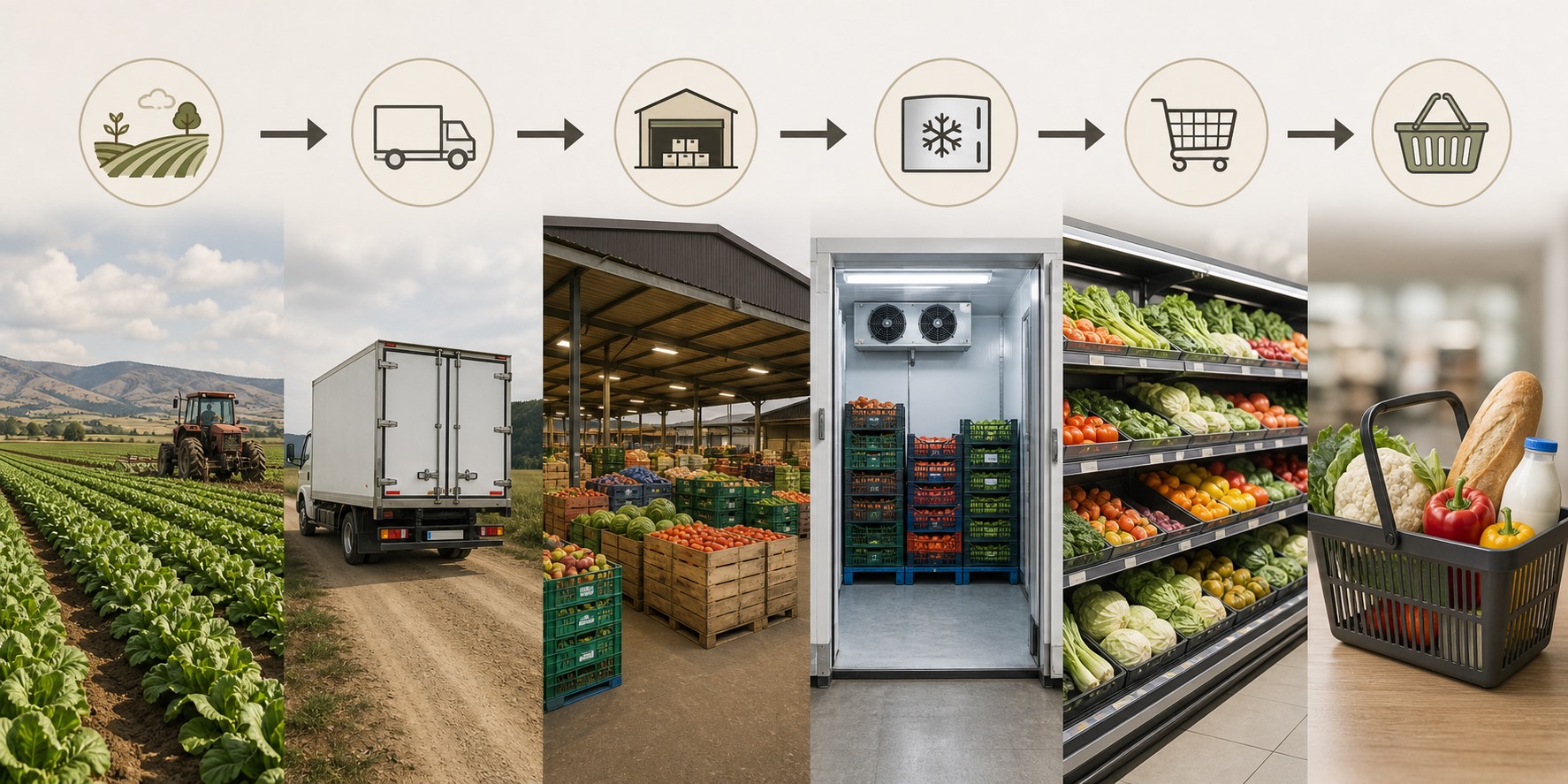
The stages a food product goes through before reaching the consumer usually operate through this chain: producer, merchant or cooperative, wholesale market or wholesaler, packaging and storage, logistics, retail point of sale, and consumer. At each stage, items such as waste, transportation, cold chain, rent, energy, labor, financing, taxes, and profit margins are formed.
The difference between the producer price and the market price cannot be explained solely by the "number of intermediaries." The perishability of the product, harvest time, regional supply, storage facilities, cold chain requirements, transportation distance, packaging, retail scale, and competitive conditions can increase or decrease the gap.
Since the waste rate can be high in fruits and vegetables, post-harvest losses are an important part of the price chain. In meat and dairy products, cold chain, veterinary services, feed, energy, and processing costs come to the fore. In more durable products such as pulses and cereals, storage and financing costs become more prominent.
The Competition Authority's examinations regarding food retailing and fast-moving consumer goods markets draw attention to the importance of producer, supplier, and retailer relationships in price formation. However, it is not correct to reach the same conclusion for every product in this area; the structures of the meat, milk, fresh fruit-vegetable, oil, and pulse markets are different from each other.
CLIMATE CHANGE AND DROUGHT
The climate impact on food prices is becoming increasingly visible. Events such as drought, irregular rainfall, extreme heat, frost, hail, floods, and storms can affect production quantity, quality, and harvest time. Since Turkey is located in the Mediterranean basin, it is considered among the regions sensitive to climate change.
The drought monitoring studies of the General Directorate of Meteorology reveal that rainfall can show significant differences according to regions. While the risk of drought in grain comes to the fore in one year, frost in fruit, or flood or hail damage in vegetables can affect prices in another period. Therefore, the climate impact should be evaluated on a product and regional basis.
Climate change can increase not only production quantity but also costs. The need for more irrigation can increase electricity and water costs, the pressure of diseases and pests can increase the use of agricultural pesticides, and extreme weather events can increase insurance and replanting costs. These effects can be reflected in prices directly or with a delay.
TURKEY’S IMPORT DEPENDENCY
Although Turkey has a strong production capacity in many agricultural products, it needs imports for some products and inputs. Energy, fertilizer raw materials, feed raw materials, oilseeds, and in some periods, grain products come to the fore in this framework. The impact of imports on prices varies according to the market structure of the product.
When the exchange rate increases the cost of imported inputs, this increase can pass through to producer prices and subsequently to consumer prices. However, the speed and rate of the pass-through are not the same for every product. Stock status, contract structure, public interventions, foreign trade regime, world prices, and domestic demand conditions determine this process.
The fact that Turkey imports some agricultural products does not always mean that there is no domestic production. Quality differences, the industry's need for raw materials, the seasonal distribution of domestic production, the goal of price stability, stock management, and global price advantages can play a role in import decisions. Therefore, imports can turn into a channel that reduces price pressure in some periods, and in others, increases costs due to exchange rates and global prices.
CHANGES IN AGRICULTURAL LAND AND NUMBER OF FARMERS
There are also long-term structural factors in the persistence of food prices. Data from TÜİK and the Ministry of Agriculture and Forestry show that cultivated areas, fallow areas, fruit and vegetable production areas, and agricultural employment have changed over time. These changes are important in terms of supply capacity and the continuity of production.
Urbanization, pressure for non-agricultural use, land fragmentation through inheritance, high input costs, irrigation problems, and the decrease in the young population in rural areas can affect production decisions. For small producers, access to finance, mechanization, bargaining power, and the level of organization are also among the important topics.
The abandonment of production by the farmer or turning to less risky products can lead to a supply contraction in some products. However, this effect is not the same for every product. In strategic products, public purchase prices, support policies, foreign trade measures, and irrigation investments can directly affect production decisions.
FOOD WASTE AND THE LOGISTICS PROBLEM
One of the areas that affects food prices but is often invisible is loss and waste. Products can be lost in the field, at harvest, in storage, in transport, at the wholesale market, in the market, in restaurants, or in households. In perishable products, the inadequacy of the cold chain and storage problems increase costs.
The Food Waste Index studies of the United Nations Environment Programme show that food waste is at a serious level on a global scale and that the household stage carries a significant share. Since calculations regarding Turkey are also based on model estimates, there is a need for more up-to-date local data on a product and stage basis.
It is not easy to measure the impact of loss and waste on prices. However, the general mechanism is clear: When a portion of the produced product is lost before reaching the consumer, the cost of the sellable quantity increases. This can create price pressure, especially in perishable products such as fresh fruits and vegetables, dairy products, meat, and fish.
WHAT IS THE STATE OF FOOD PRICES IN THE WORLD?
Food prices in Turkey are not independent of global developments. The FAO Food Price Index reached a historical peak in 2022 following the Russia-Ukraine war; although there was a decline in some commodity prices in the subsequent period, volatility continued in energy, fertilizer, grain, and oilseed markets.
The World Bank's commodity reports emphasize the impact of energy and fertilizer prices on agricultural production costs. Energy prices are reflected in both production and logistics costs. Fertilizer prices can be effective on product yield and planting decisions.
The OECD-FAO Agricultural Outlook reports state that climate risks, geopolitical tensions, trade restrictions, energy costs, and changes in income levels are among the main uncertainties for food markets. For Turkey, these global factors can be felt more strongly due to the exchange rate and dependency on imported inputs.
WHAT DO EXPERTS SAY?
The common emphasis of agricultural economists is that food inflation cannot be read as solely supply-driven or solely demand-driven. Production costs, market structure, exchange rate pass-through, storage capacity, and the timing of agricultural supports are evaluated together.
Agricultural engineers and producer organizations draw more attention to input costs, irrigation, fertilizer and diesel prices, product purchase prices, and the farmer's financing burden. According to this view, the producer's inability to foresee costs makes planting decisions difficult and can cause fluctuations in supply.
Economists, on the other hand, highlight the channels of exchange rates, inflation expectations, wages, financing costs, monetary policy, and market competition. In this approach, food prices are evaluated as both a result and a feeder of the general inflation dynamic.
Climate scientists and environmental researchers emphasize that drought and extreme weather events are no longer temporary shocks but risks that should be at the center of agricultural planning. According to this view, water management, crop patterns, and climate adaptation policies are also becoming part of price stability.
WHAT DO INSTITUTIONS SAY?
TÜİK monitors food prices with different data sets such as CPI, Agricultural Input Price Index (Tarım-GFE), Agricultural Producer Price Index (Tarım-ÜFE), crop production, animal production, foreign trade, and agricultural employment. When these series are used together, the relationship between producer cost, production quantity, and consumer price can be read more accurately.
The TCMB handles food prices in its inflation reports as an area closely monitored in terms of monetary policy. The report evaluates the volatility in unprocessed food, exchange rate and cost pass-through, the impact of wages and energy costs, and expectations on pricing behaviors.
The Ministry of Agriculture and Forestry provides a framework through policies on production, support, irrigation, livestock, crop production, and food supply security. The Ministry of Trade plays a role in terms of unfair pricing, market surveillance, foreign trade measures, and supply chain regulations.
The FAO, World Bank, OECD, and United Nations institutions provide the opportunity for international comparison with global food, commodity, climate, poverty, and waste data. These sources are used to understand which part of the increase in Turkey is related to global cost and supply shocks.
WHAT IS EXPECTED IN THE COMING YEARS?
Current international projections indicate that uncertainty in food markets will continue. In the OECD-FAO outlook reports, climate events, geopolitical risks, energy prices, trade policies, and productivity growth are counted among the main determinants. These projections should be read as a risk framework, not a precise price forecast.
For Turkey, short-term price control alone is not seen as sufficient for permanent improvement. In expert evaluations, production planning, irrigation investments, cooperativism, storage and cold chain capacity, agricultural data quality, reducing input dependency, and the farmer's access to finance are the prominent topics.
The persistence of a decline or stability in food prices appears to depend on the simultaneous provision of predictability of producer costs, reduction of losses in the supply chain, a competitive market structure, climate adaptation policies, and macroeconomic stability.
CONCLUSION: WHY ARE FOOD PRICES RISING PERMANENTLY?
The rise in food prices in Turkey is a multi-layered problem. Production costs are increasing; the exchange rate creates pressure through imported inputs; climate events cause supply to fluctuate; logistics, storage, and waste costs are added to the supply chain; and structural issues such as agricultural land, farmer profile, and production planning increase long-term risks.
The most important factors of price increases vary according to the product group. Feed costs in meat and milk, climate and waste in fruits and vegetables, global prices and exchange rates in grain, import dependency in oilseeds, and energy, packaging, and labor in processed food can be more prominent.
For this reason, food prices are a structural issue that cannot be explained by short-term fluctuations. Official data and expert evaluations show that a permanent solution must cover the entire chain, from production to logistics, from climate adaptation to competition, and from imported input dependency to rural population policies.
BIBLIOGRAPHY
- - TÜİK — Consumer Price Index, Food and Non-Alcoholic Beverages sub-group, 2003=100 database. https://data.tuik.gov.tr
- - TÜİK — Agricultural Input Price Index and Agricultural Product Producer Price Index data sets. https://data.tuik.gov.tr
- - TÜİK — Crop production, animal production, agricultural employment, and foreign trade statistics. https://data.tuik.gov.tr
- - Central Bank of the Republic of Turkey — Inflation Reports and evaluations regarding food prices. https://www.tcmb.gov.tr
- - Ministry of Agriculture and Forestry — Publications on agricultural production, support, water management, and food supply security. https://www.tarimorman.gov.tr
- - General Directorate of Meteorology — Drought, rainfall, and temperature evaluations. https://www.mgm.gov.tr
- - Competition Authority — Reports on food retailing, fast-moving consumer goods, and market examinations. https://www.rekabet.gov.tr
- - FAO — Food Price Index, global food prices database, and market evaluations. https://www.fao.org/worldfoodsituation/foodpricesindex
- - World Bank — Commodity Markets Outlook reports; energy, fertilizer, and agricultural commodity prices. https://www.worldbank.org/en/research/commodity-markets
- - OECD-FAO — Agricultural Outlook reports; global agricultural markets and medium-term projections. https://www.oecd.org/agriculture/oecd-fao-agricultural-outlook/
- - UNEP — Food Waste Index Report; global and country-based food waste estimates. https://www.unep.org/resources/report/unep-food-waste-index-report
- - IPCC — Assessment reports on climate change, the Mediterranean basin, and agricultural risks. https://www.ipcc.ch
News Source: 12punto