

Dermatologist issues 'Leprosy' warning
Dermatology Specialist Dr. Asiye Yıldız stated, "Leprosy continues to be a problem in underdeveloped and developing countries even in the 21st century."



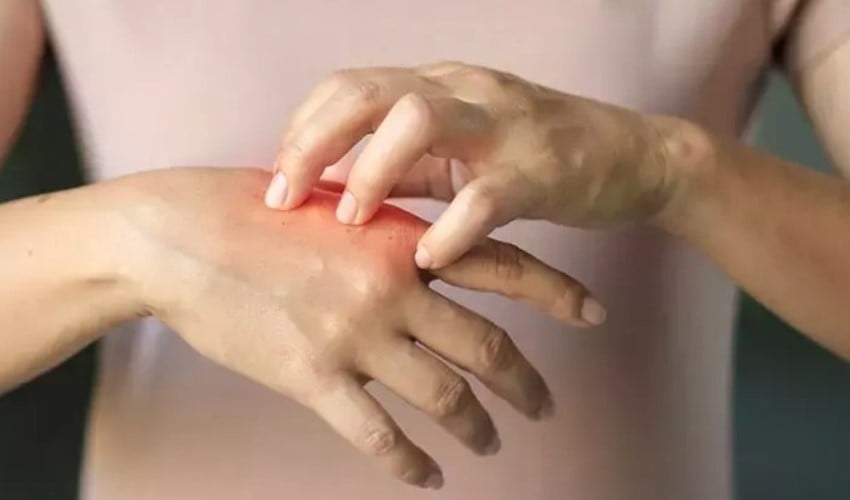
The last week of January each year is observed as "Leprosy Week," and the last Sunday of January is "World Leprosy Day." Providing information about the infectious disease, which causes serious health problems and subsequent loss of labor, Dermatology Specialist Dr. Asiye Yıldız said that despite a significant decrease in the number of patients due to successful control programs, the disease continues to be a problem in underdeveloped and developing countries even in the 21st century.
Stating that leprosy is one of the oldest diseases known to mankind, Dr. Asiye Yıldız said, "Anatolia is a land through which many civilizations have passed since ancient times. This disease was brought to Anatolia through migrations. In Turkey, the modern fight against leprosy began on June 1, 1957, with the establishment of the Ankara Leprosy Control Association by Assoc. Prof. Dr. Etem Utku, a faculty member of the Department of Infectious Diseases at Ankara University Faculty of Medicine. Starting with Professor Etem Utku, many valuable scientists have worked in the fight against leprosy in Turkey and have achieved today's success.
As a result of the implementation of recommended modern treatment protocols in our country, the number of patients has decreased significantly. The treatment of all patients who have been diagnosed and are under observation has been completed, and they are no longer infectious," she said.
"TRANSMITTED THROUGH RESPIRATORY TRACT AND SKIN CONTACT"
Pointing out that the disease is most commonly transmitted through the respiratory tract and skin contact, Dr. Yıldız said, "The probability of the disease appearing in young children is higher, especially through close household contact. The average incubation period is 2-4 years, and it can sometimes be longer. Infectivity disappears shortly after treatment begins," she stated.
SYMPTOMS OF THE DISEASE
Speaking about the symptoms of the disease, Dr. Asiye Yıldız said, "The first clinical sign is a light-colored, sometimes slightly reddish patch, a few centimeters in size, that appears on other parts of the body such as the face, the outer surfaces of the arms and legs, the back, and the buttocks, which is slightly different in color from the skin and does not cause complaints such as itching or pain. When diagnosed during this period, it heals completely with treatment.
If left untreated, it progresses to more advanced clinical forms, which can lead to redness on the skin, nodules, patches with wide, distinct borders, loss of eyebrows, symptoms related to nerve involvement, and numbness and sensory loss in the hands and feet.
Injuries and burns occur due to sensory loss. The symptoms of the disease vary according to the patient's response to the bacillus, ranging from a patch with slight skin depigmentation to a clinical picture involving the peripheral nervous system, eyes, bones, muscles, and other tissues, leading to deformities and disabilities. When nodules called lepromas settle on the face, they create a facial appearance known as 'lion face.' They also lead to nasal collapse known as saddle nose, perforation of the palate, drooping eyelids, hoarseness, and auto-amputation of fingers. When the hands are affected, a claw-hand appearance occurs," she said.
THE IMPORTANCE OF DIAGNOSIS IN THE DISEASE
Dr. Asiye Yıldız said the following regarding diagnosis and prevention of the disease:
"In the diagnosis of the disease, it can be identified by manual examination of suspicious skin lesions along with signs of peripheral nerve involvement, detection of nerve thickening, and superficial sensory loss through sensory testing. Microscopic demonstration of the leprosy bacillus also confirms the diagnosis.
Leprosy is treated with combined drugs according to the World Health Organization's treatment regimens, lasting 6-12 and sometimes 24 months. Alternative treatment is applied in cases where these drugs cannot be used. Adults do not need to take additional precautions to protect themselves from this disease.
However, precautions must be taken for children. There is no protective vaccine. Immune prophylaxis is performed with BCG. In order to bring leprosy under control, it is important to know the symptoms of the disease, for patients to be diagnosed and treated in the early stages before disability develops, and for patients and the public to be educated."
News Source: İHA
Most Read

Galatasaray announces injury updates for Osimhen, Lemina, and Singo

Attention online sellers: Tax monitoring expanded

VAR for the Fenerbahçe-Beşiktaş derby has been announced!

Bridges and highways are being privatized: 15 July and FSM are also on the list

Peugeot September 2026 price list is out

Another bankruptcy in the construction sector

New details emerge in 'panel' operation targeting lawyers

First statement from Osimhen after injury in Başakşehir match

Özlem Şanver: 'He said he would change, I believed him; should I be beaten just because I didn't leave?'

Mourinho explains why he substituted Arda Güler