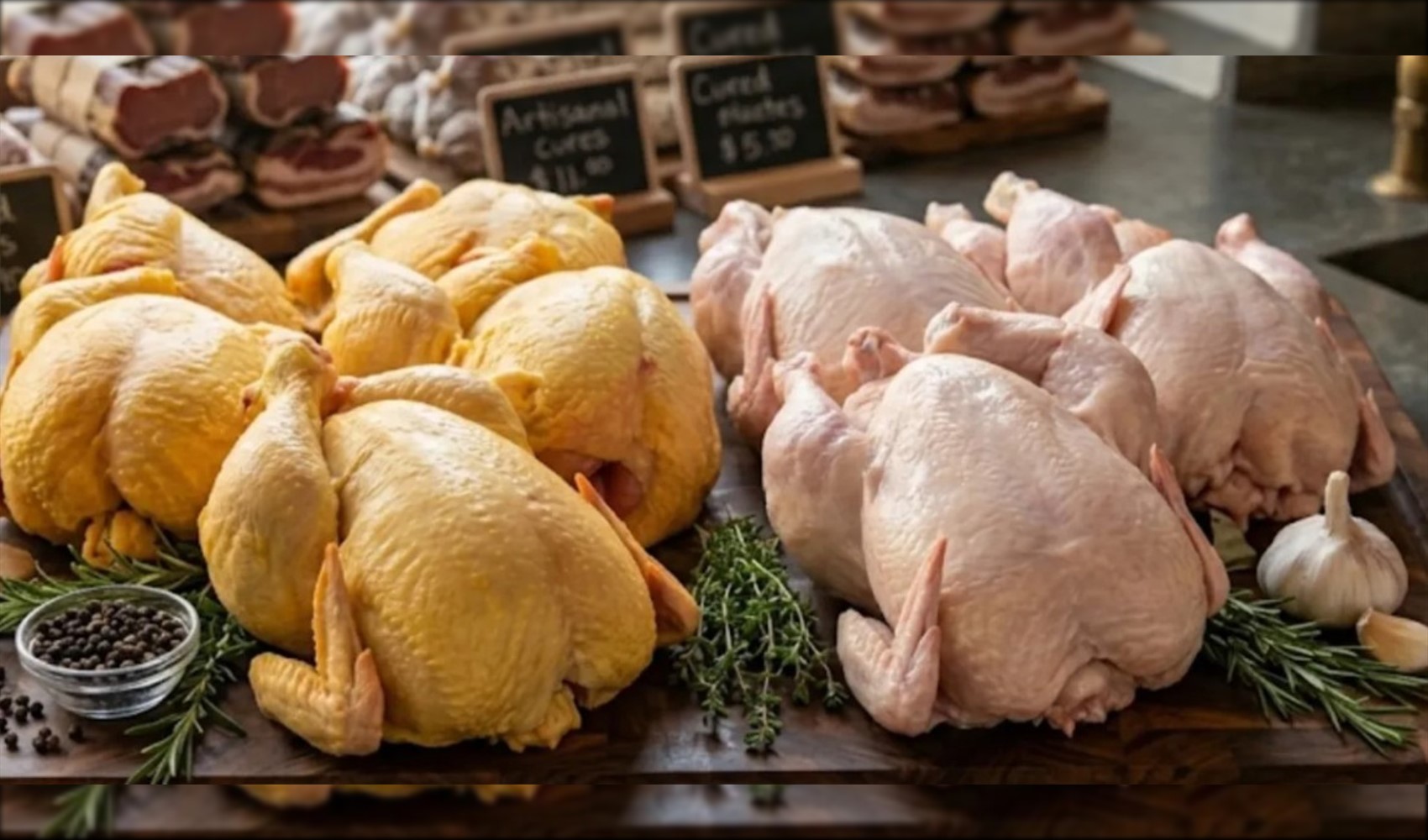
Most of us, when we see a yellow one, think, “this must be a free-range chicken, it's more natural.” However, the chicken's skin may not provide as reliable information as we think.
The main reason for the yellowness is natural pigments called carotenoids found in feed. More yellow color can accumulate in the skin and subcutaneous fat of chickens fed with pigment-rich feed such as corn, alfalfa, and marigold. In other words, the color we see is often formed in the chicken's feeder before it reaches our plate.
SOMETIMES THE PRODUCER DETERMINES THE COLORS
Genetically, some chickens easily accumulate these pigments in their skin, while others break them down. Therefore, one of two different breeds fed with similar feed may be yellow, while the other may be light-colored. Producers can also raise chickens that appear yellower by adjusting the feed content according to consumer habits.
For this reason, yellow skin does not by itself prove that the chicken has roamed in a village, is organic, is more nutritious, or is tastier.
The USDA (United States Department of Agriculture) also specifically states that skin color is not a measure of nutritional value, flavor, tenderness, or fat content.
A white chicken is not automatically of poor quality either. The natural color of raw chickens can range from bluish-white to yellow. To detect spoilage, one should look not only at the color but also at bad odors, a sticky or slimy surface, and storage conditions.
In conclusion, a yellow chicken is not fake, but its color does not count as a “free-range chicken certificate.” The yellowness in question often tells us not where the chicken roamed, but what it ate and what kind of genetics it has for processing pigments.
News Source: 12punto