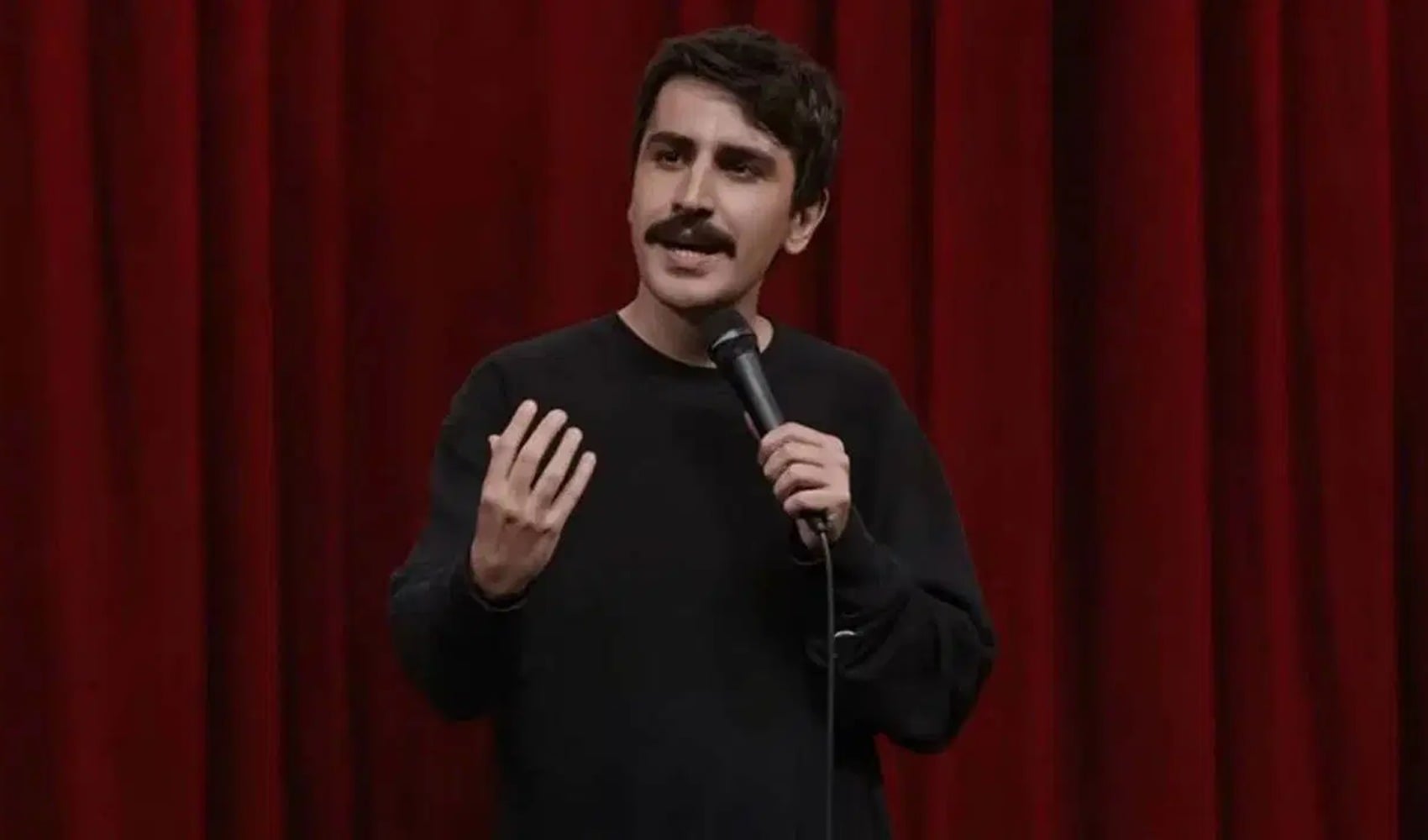
Comedian Deniz Göktaş spoke to The New York Times following his arrest and subsequent release due to remarks made in his stand-up show "Dead Sea." Göktaş, who spent nearly three months in prison, evaluated the trial process, his relationship with self-censorship on stage, and the role of humor in the face of political pressure.
In the hearing held on September 28, Göktaş was sentenced to a total of 19 months and 10 days in prison on charges of "insulting the President" and "denigrating religious values"; the court ordered the release of the comedian, who had been detained for approximately 88 days.
In the interview, Göktaş explained that he had been warned that his defense in court might make his release less likely, but said he did not want to back down despite this. The comedian stated that his goal was to make not only his own case but also the broader debate surrounding freedom of expression visible.
I wanted to show that we can speak freely in a world where people are afraid to talk for fear of being punished.
SELF-CENSORSHIP AND LIMITS ON STAGE
Göktaş expressed that as he became more recognized in his profession, he had more to lose, which pushed him toward self-censorship, and he explained that he felt uncomfortable with this situation. The comedian said he felt that the students and retirees who attended his shows acted more courageously in their daily lives than he did, which made him feel hypocritical.
For this reason, Göktaş stated that he decided to say whatever he found funny on stage without thinking about the consequences. The comedian, who shared that he had "the most comfortable sleep of his life" on his first night in prison, emphasized that he did not regret his show during the detention process.
I don't want to brag, but we have both cancel culture and prison here.
Responding to questions from The New York Times regarding political pressure on comedians in the US and debates over "cancel culture," Göktaş said it was difficult to make a direct comparison between Turkey and the US. Stating that comedians in the US seem freer to him, Göktaş nevertheless expressed that similar issues might be debated in both countries in the coming years.
In his assessment of the impact of humor against authoritarian regimes, Göktaş approached the power of comedy to create direct political change with caution. He said that humor could provide people with empathy, motivation, and the courage to speak, but that it had its limits.
Göktaş also explained that in his defense in court, he had referenced Lenny Bruce, one of the important figures in American stand-up history. The comedian stated that he saw in Bruce's humor the freedom to remain true to oneself and push boundaries, adding that Doug Stanhope and George Carlin were also among the names that influenced him.
Göktaş announced that he had written 20 minutes of material for his new show during his nearly three-month detention, and stated that he plans to use them on stage next year. He said that one of the first notes he wrote in the diary he kept in prison was not to dwell too much on the lawsuit filed against him in his shows.
News Source: 12punto