

History cannot be contained by politics
Written by Mustafa Emre Özgen... History cannot be contained by politics



Mustafa Emre ÖZGEN
In the geography we inhabit, there are fundamentally two political veins. One is the nationalist and conservative thought influenced by the Islamic religion, and the other is the contemporary, progressive, and revolutionary thought that dates back to before Sultan Mahmud II, who ascended the throne in 1876, reached its peak with Mustafa Kemal Atatürk, and continues its struggle today. Whether in the founding assembly during the National Struggle or in the subsequent multi-party system, there have been various parties that represented or claimed to represent these two schools of thought.
As a requirement of modern political communication, in order to concretize the school of thought you possess, you must give it form, embody it, and put forward witnesses by showing examples from history. You present a symbol that will bring people together by glorifying its thoughts and actions. This both facilitates the perception and acceptance of the idea by the masses and creates sensitivity by adding a symbolic meaning. This could be a party leader, a student leader, a writer, a journalist, or an ordinary person.
Today, there are certain historical figures that politicians and writers, especially those with a heavy Islamist orientation, have adopted as symbols for themselves. Although these thinkers are not widely known by the masses in this segment, there is one name that reaches the masses, especially through propaganda-oriented series originating from TRT: the 34th Ottoman Sultan, Abdulhamid II.
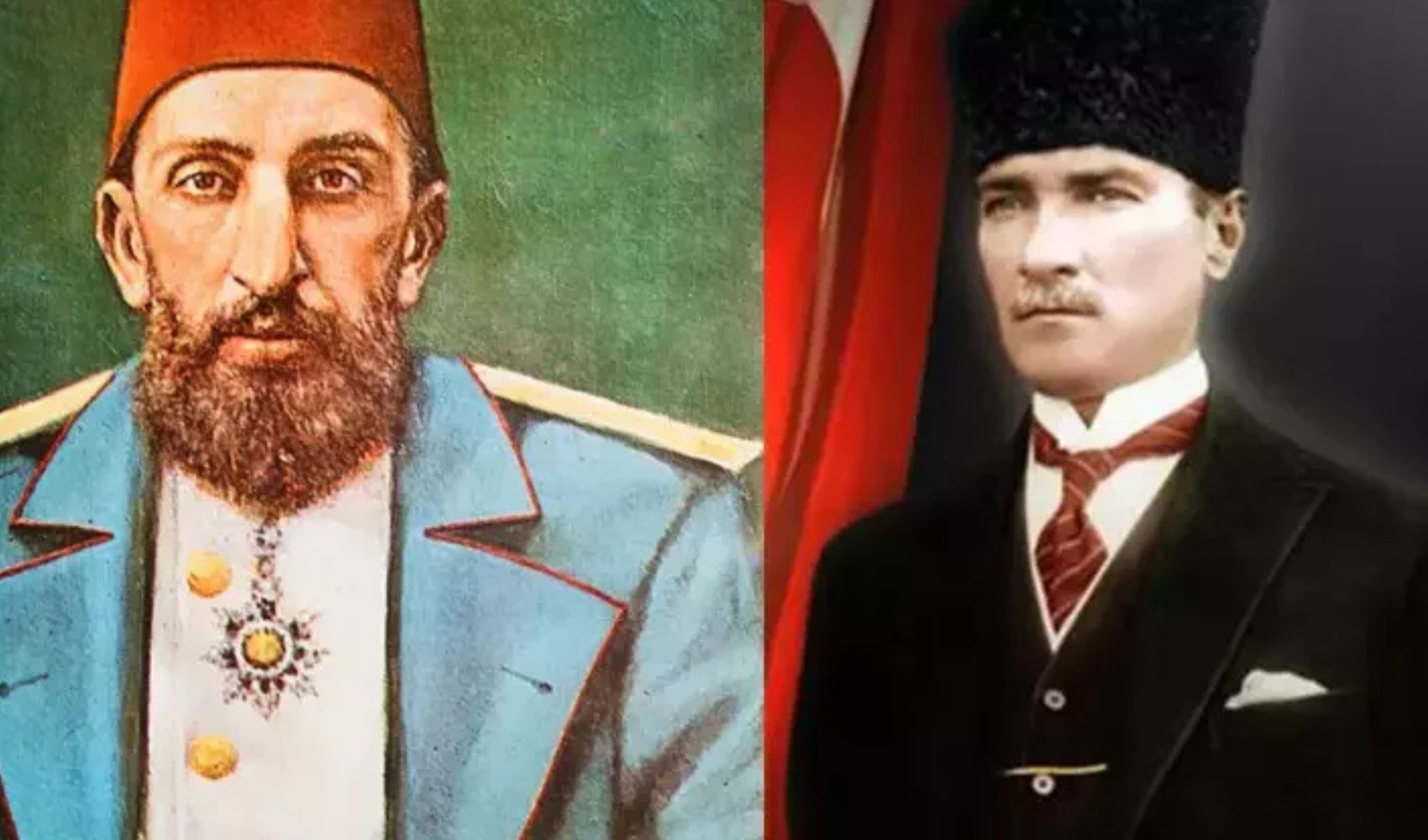
Abdulhamid II, one of the most controversial sultans of the Ottoman Empire, which was founded over 700 years ago and completed its historical life 102 years ago, has become one of the flagship names of Political Islam, especially in the last 10-15 years. Abdulhamid II, a monarch about whose methods and behaviors a consensus has still not been reached throughout his 33-year reign, has been quite simply mounted onto a specific political view. Making a sultan the symbolic name of a specific political view is a behavior that simplifies him, diminishes him, and makes his historical existence insignificant. Because if we think independently of Abdulhamid II, symbolizing a historical personality in a political view imprisons him within a narrow audience. Therefore, a person who should be a common value of history becomes a part of propaganda in a political view.
Of course, sharper, more fundamentalist circles are trying to place Abdulhamid II, whose era, methods, and perspectives are different, against Mustafa Kemal Atatürk! These purposeful instigators, who clearly have not read even two pages of a history book in high school, set aside the first rule of history, the understanding that "History is evaluated according to its own era," and turn two different historical figures into each other's opposites.
But history is not like that.
It is necessary to read history independently of political concerns. Because when we set this aside, we encounter a landscape greater than these simple oppositions. For example, who knows the lines full of praise that Abdulhamid II wrote about Mustafa Kemal in his diary?
It was a narrative that caught my attention and surprised me when I first read it. Şerafettin Turan, one of the valuable historians our country has raised, who passed away in 2015, states in his book titled "Mustafa Kemal Atatürk: A Unique Life and Personality" that Abdulhamid II referred to Mustafa Kemal as the "commander who saved Istanbul" due to the victory achieved at Gallipoli. The Sultan, who also noted the friendship between his son Âbid Efendi and Mustafa Kemal, wrote about Mustafa Kemal: "He stopped the army and navy of two great states like England and France at Gallipoli, and turned them back; that is what I need. I prayed for his success!"
The section on page 204 of Turan's book is as follows:
"Even Abdulhamid II, who was kept under house arrest at the Beylerbeyi Palace, referred to Mustafa Kemal, who came to see his friend Salih Bozok who was on duty there, as the 'commander who saved the state.' The deposed former sultan wrote the following in his memoirs for April 11, 1917: 'The enemy had packed up and left, pouring half of his soldiers into the sea and half into his ships. A colonel (miralay) named Mustafa Kemal won this great victory. May Allah be pleased with those who serve his state! After a long time, my son Âbid Efendi said that he had met this Mustafa Kemal Bey. He was a friend of Captain Salih (Bozok). He would come to eat with his friend from time to time. They also became friends with Âbid Efendi on this occasion. Mustafa Kemal Pasha even gifted him two gazelle fawns. He actually came one more time, they told me. He had a cape on his back and was saying goodbye to his friend. I couldn't make out his face well from a distance, but he didn't look like ordinary soldiers. He had a dangerous calmness. I understood then why Enver Pasha was wary of him. Talat Pasha was protecting him. These are small things. He stopped the army and navy of two great states like England and France at Gallipoli, and turned them back; that is what I need. I prayed for his success!'"
Mustafa Kemal, due to the school of thought he possessed, was diametrically opposed to this order, such as the sultanate and the caliphate, which no longer met the requirements of the age. But discussing historical figures only through their names, leaving aside their thoughts and actions, not only simplifies the subject but also does not give these people their due.
Therefore, when reading history, we should think by keeping our perspective as broad as possible and set aside our political opinions. Otherwise, we cannot go beyond deceiving ourselves with propaganda elements in TV series.
News Source: 12punto
Most Read
Galatasaray announces injury updates for Osimhen, Lemina, and Singo

Attention online sellers: Tax monitoring expanded
VAR for the Fenerbahçe-Beşiktaş derby has been announced!
Bridges and highways are being privatized: 15 July and FSM are also on the list

Peugeot September 2026 price list is out
Another bankruptcy in the construction sector

New details emerge in 'panel' operation targeting lawyers
First statement from Osimhen after injury in Başakşehir match

Özlem Şanver: 'He said he would change, I believed him; should I be beaten just because I didn't leave?'
Mourinho explains why he substituted Arda Güler