

Is Iran alone, or has the world changed?
Written by Dr. Hande Orhon Özdağ... Is Iran alone, or has the world changed?



Dr. Hande Orhon Özdağ
“Is Iran alone?”
On the 3rd day of the conflicts, a news-commentary program—I cannot recall which one at the moment—asked this question. And a commentator, whose name I also cannot recall, replied without hesitation: “Yes, Iran is alone!”
Had I been in the commentator's place, I would undoubtedly have given the same answer. Iran is alone... However, I believe that analyzing the nature of this loneliness is key to understanding global power balances.
THE GHOST OF 2003
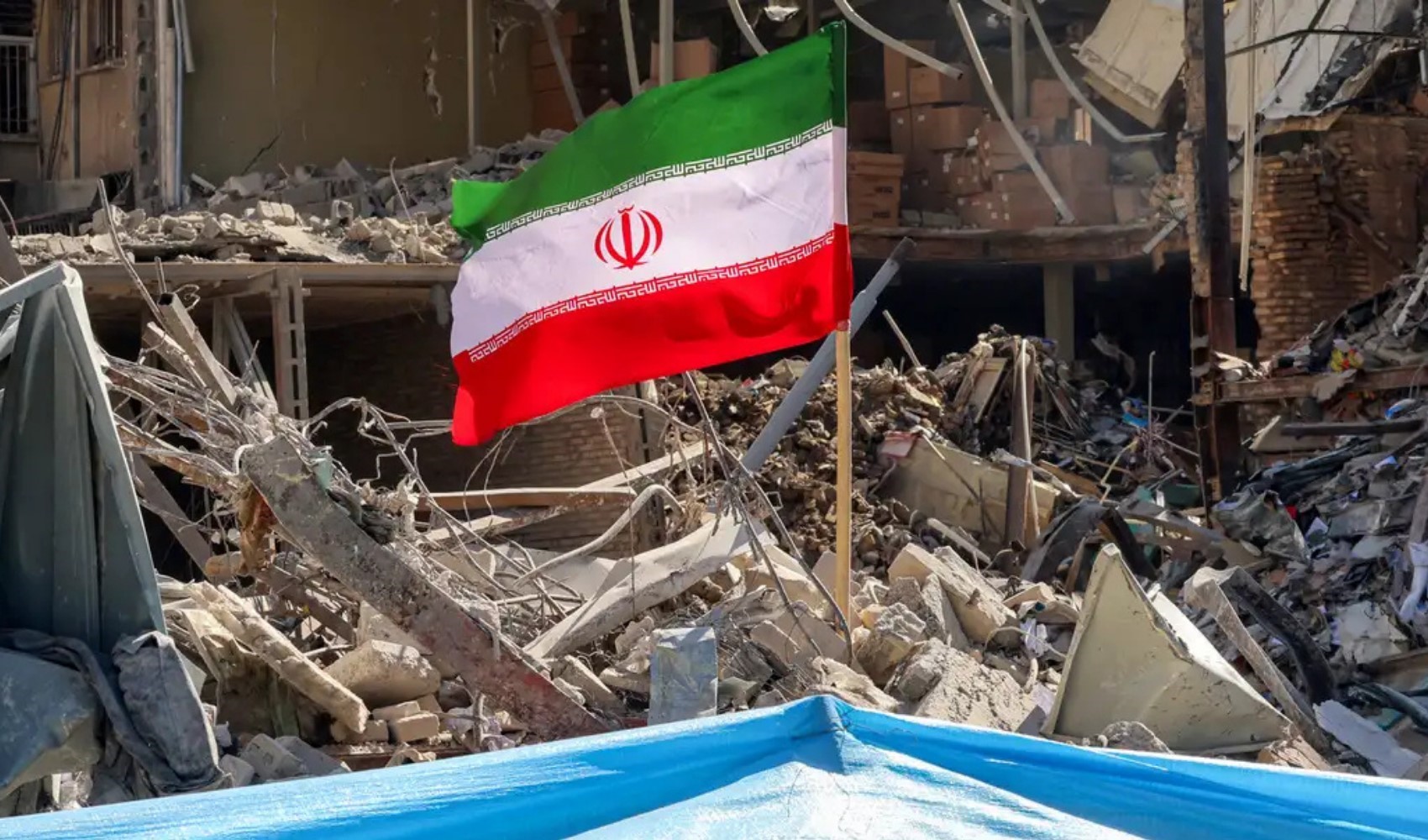
Just as we did exactly 23 years ago, we are facing a serious war on our border. Much has changed in the world since March 2003, when the US invaded Iraq. However, our region has welcomed the spring once again in the shadow of the sounds of bombs. In those days, the US President of the time, George W. Bush, had declared Iran, along with Iraq, as part of the “Axis of Evil.” The US was conducting a pre-emptive strike on Iraq on the grounds that it possessed weapons of mass destruction. The option of intervening in Iran was also on the table... The Iraq invasion changed many balances in the Middle East. However, whether the US achieved its targeted geopolitical results is debatable. What is not very open to debate is that, contrary to what was intended, the invasion provided Iran with great strategic depth. Over time, Iran gained a regional influence that perhaps even its revolutionary leaders could not have imagined. And today, we see that the “intervention in Iran” option, which was also on the table years ago, is now on the ground. Israel and the US have launched a pre-emptive war against Iran, the purpose of which has not yet been fully formulated...
CONFINING IRAN TO ITS BORDERS
This war can be seen in many respects as an attempt to confine Iran within its borders. Behind the US and Israel's motivation for regime change lies the goal of limiting Iran's regional capacity. The two demands that Washington put forward in the negotiations, which were understood to be for show from the beginning, clearly showed this: Iran would stop its ballistic missile program and cut its ties with proxy forces in the region. Iran, as many sovereign states would do, refused to even discuss these two items.
Iran established its regional influence with a doctrine it calls the “Axis of Resistance.” Against the US's “Axis of Evil” rhetoric, Iran's “Axis of Resistance”... Some called this the “Shia Crescent.” This concept was quite functional for anti-Iran mobilization in the Sunni-majority region. But whatever its name, Iran was able to build a network of influence extending from Hamas to Hezbollah; from Iraq to Yemen and Syria, and even from the Pakistan-Afghanistan line to Central Asia. The most critical pillar of this network was the 15-year Syrian crisis. This was the war that consolidated Iran's regional power the most after the Iraq invasion.
THE GEOPOLITICS OF LONELINESS
While we were talking about an Iran that was almost becoming a giant in the region until 2-3 years ago, we are now talking about how “alone” Iran is under fire. Well, it is already obvious that Hezbollah and Hamas, which are Iran's regional levers, have received a major blow, and that in Syria, which Iran calls the front line of its resistance front, there is a regime in place today that condemns Iran against Israel. Therefore, when we say “Iran is alone,” the actors who are sometimes implicitly and sometimes explicitly accused are Russia and China. Diplomatic support in the face of an attack on Iran, the now-defunct UN Security Council initiative, pre-war joint military exercises, and support such as China's sharing of radar images, it seems, were found to be more passive than expected.
This actually shows not that Russia and China have “betrayed” Iran, but that the world of the 2000s and 2010s is now over, or perhaps it never existed as it was thought to.
THE LIMITS OF THE ALLIANCE
In this context, first of all, it is necessary to understand the nature of Iran's cooperation with Russia and China well. It would be a big mistake to compare Iran's alliance with Russia and China to the NATO alliance or the alliance of states within the European Union. This was always the case. In these conditions, where even the NATO alliance is shaken within itself and the European Union cannot even take a joint step regarding security and defense, it is even more so. Iran, Russia, and China are states that take similar stances against the US's aggressive policies in their regions and develop economic-military cooperation against the West's oppressive financial-military tools. There have always been conflicts of interest to a certain extent, but despite these, they have been states that could develop bilateral cooperation within the framework of the principle of “non-interference in internal affairs” against the West's “democratization” agenda.
They were never a “pole” like in the Cold War era. Of course, I do not intend to reduce Iran's cooperation with China and Russia solely to anti-Americanism. However, one of the most important reasons why Iran, China, and Russia, or in a broader perspective, BRICS and the Shanghai Cooperation Organization (SCO), are perceived as a “pole” is actually that it is “reactive.” These structures put the ideal of “creating an alternative world order” into their documents, true. However, they could not or did not carry the claim of creating a common ideology or a common narrative to do so.
Despite this, it cannot be said that these collaborations remained symbolic for either Iran or other actors. These actors fed on opposition to policies and doctrines that were always expressed through the legal entity of the US, and found regional resilience by leaning on each other when necessary. This is an important pillar of how Iran, which has been under sanctions since its establishment, has been able to develop such a self-defense power despite all its vulnerabilities, and even survive to this day in a region surrounded by adversaries, whether we like it or not.
EVERYONE IS A LITTLE ALONE IN THE NEW WORLD
Today, I invite those who dwell on Russia and China not entering the war on Iran's side, and those who see this as a weakness, to look at the Syrian Crisis, where the global and regional conjuncture was very different. Did China intervene militarily in the Syrian crisis? Did it have any involvement in the Syrian Crisis other than providing diplomatic support and indirectly providing economic and military support? No. Russia also did not directly intervene militarily in the Syrian Crisis until 2015. That is, it took about 4 years for Russia to intervene directly in Syria.
Moreover, the Syrian crisis was a war largely shaped through proxy forces. What is in question in Iran today is a direct inter-state regional war. In the era of proxy wars, states could make their proxies fight and somehow avoid being open targets themselves. Today, there is a global dynamic where if you have the slightest involvement in a war, you can become a direct target. European countries are questioning the reliability of the decades-old NATO alliance; Gulf countries are questioning the deterrence of the US. It has been declared many times that the legal structure that keeps international relations alive has disappeared. There is no set of principles to replace it. Every state is left alone with its own principles and its own motivations.
Now, let's sit crooked and talk straight at this point. How can we get out of this without thinking about Russia's historical ties with Israel and the Gulf countries; the importance of the Gulf countries for China's energy supply sources; the trend of developing China-Europe cooperation against Trump; the fact that Trump is the most important key for Russia to get what it wants in Ukraine, and many more. In other words, interests are no longer single, and equations are not single-unknown.
Every state is a little alone; no one can fully trust each other. We are entering a period where we cannot speak with the reflexes of the past world. I invite everyone to prepare themselves for this.
News Source: 12punto
Most Read
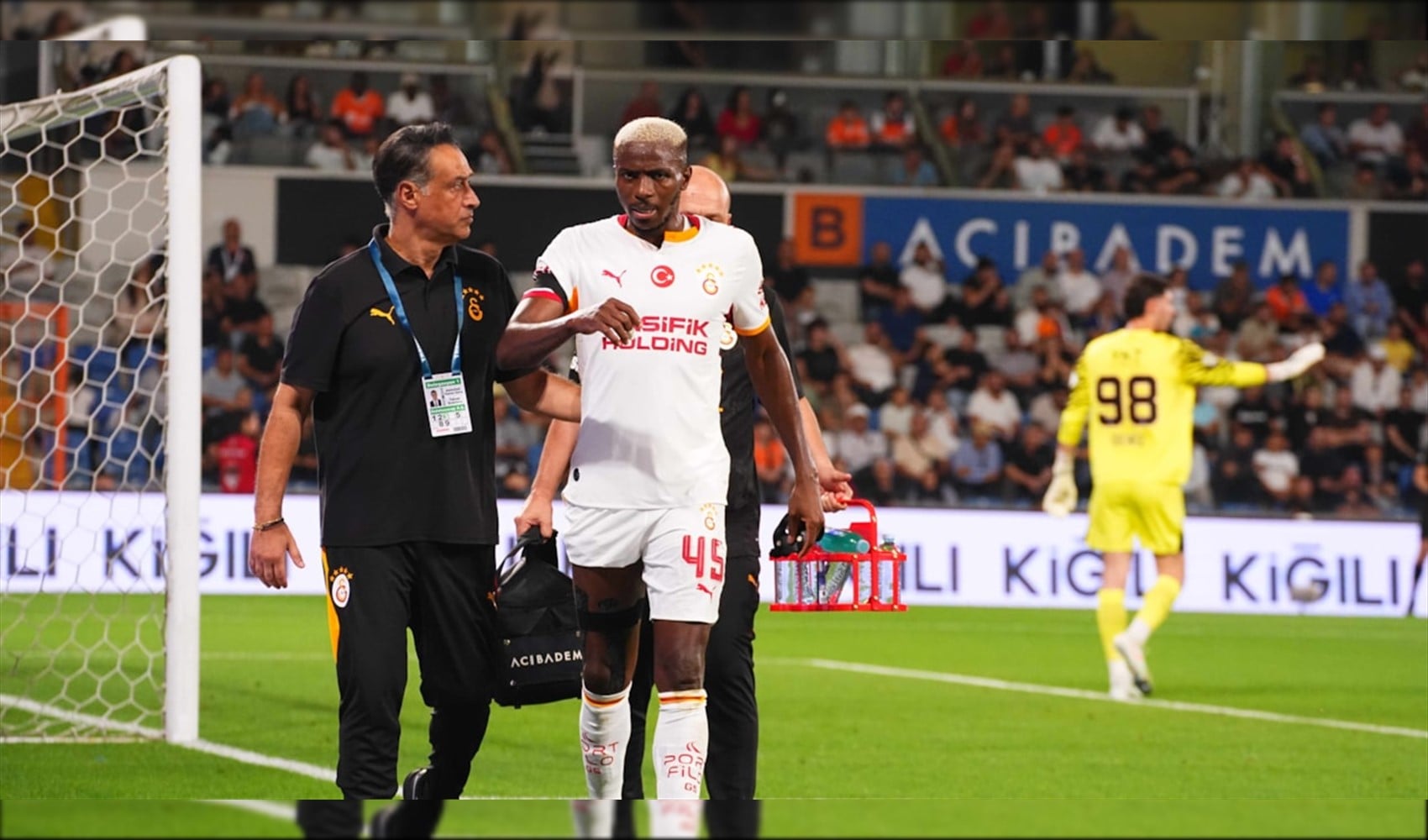
Galatasaray announces injury updates for Osimhen, Lemina, and Singo

Attention online sellers: Tax monitoring expanded
VAR for the Fenerbahçe-Beşiktaş derby has been announced!
Bridges and highways are being privatized: 15 July and FSM are also on the list

Peugeot September 2026 price list is out

New details emerge in 'panel' operation targeting lawyers
Gökçek era detail in ABB investigation

First statement from Osimhen after injury in Başakşehir match

Özlem Şanver: 'He said he would change, I believed him; should I be beaten just because I didn't leave?'

Mourinho explains why he substituted Arda Güler