Adnan Yılmaz
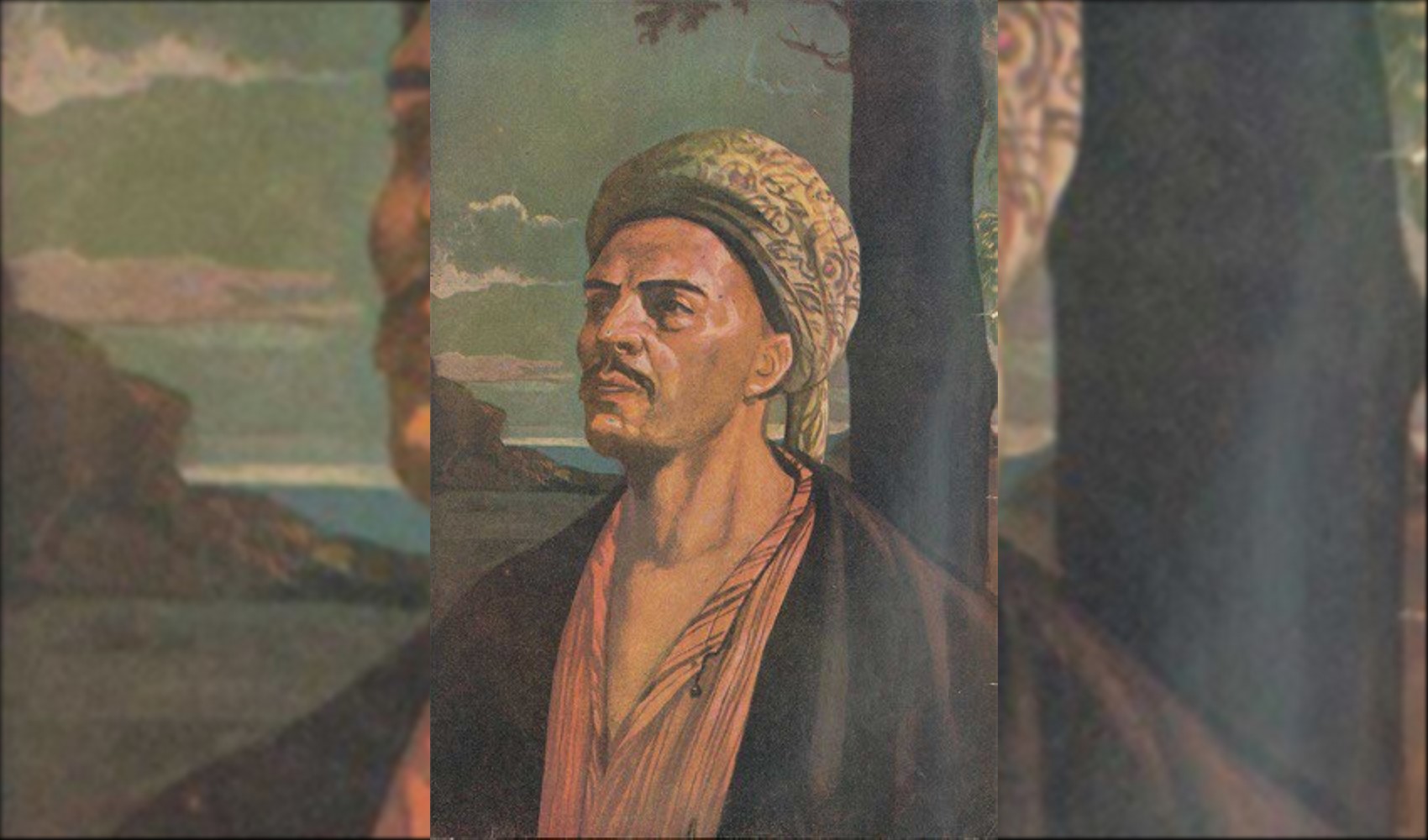
Yunus Emre was not a dervish who remained indifferent to the state of the world while wandering from land to land with a staff in his hand and a saddlebag on his back. Narratives that confine him solely to this image overshadow both the dissent in his poetry and his historical identity.
He was a great Turkmen poet who felt the pain of the people in an Anatolia crushed by the Mongol invasion; he did not hold back his words against those who made illicit gain valuable, turned dervishhood into a gateway for profit, and became a burden to the people in the name of religion.
His referring to himself as "Miskin Yunus" (Humble/Poor Yunus) was not an expression of indifference to the world, but of his Sufi understanding that disciplined his ego and pride. Yunus, who advised building hearts, also saw those who wounded them.
Today, those who reduce him to a few beautiful lines written about love must also hear this moral courage in his poetry.
AGAINST THOSE WHO EAT THE FLESH OF THE POOR
The Anatolia where Yunus Emre lived was not a peaceful garden of poetry. The heavy consequences of the invasion, the disintegration of Seljuk rule, power struggles, and the burdens placed upon the people were part of daily life.
We cannot think of the images of enemy, captivity, and exile in his poetry separately from this historical environment. Even when describing the power of love in one of his couplets, he brings the feared enemy of the era into his poem:
“Love sent its army to the house of my heart, to its climate
You made my soul a captive, what can the Tatar enemy do to me.”
The "Tatar enemy" here recalls the mark left on the public mind by war and invasion. The language of Sufism and the language of historical life meet in the same couplet.
In Yunus Emre’s poem "Listen, O Great Ones," his criticism of moral decay extends to the point where the beys (lords) forget their responsibility toward the people. The poet describes those in power who have lost their generosity and conscience in striking language:
“The generosity of the beys is gone, they have each mounted a horse,
What they eat will be the flesh of the poor, what they drink will be blood.”
Faced with the splendor of the beys on their horses, Yunus sees the oppression suffered by the poor. His characterization of the food on their tables as "flesh of the poor" and what they drink as "blood" is a severe moral indictment directed at the reign maintained through the rights of the people.
In these lines, the justice of the poet of love speaks. While seeking sincerity in faith and worship, Yunus also seeks conscience and responsibility in those who govern. He sees the loss of the measure between the lawful and the forbidden, and the consumption of the people's labor and bread by the powerful, as parts of the same moral disintegration.
His turning toward divine love and truth does not mean closing his eyes to the pains of this world. He fulfills the requirement of love for humanity by defending the rights of the poor. In Yunus’s world of the heart, there is no place to lend prestige to a splendor built upon oppression.
MORALITY EXTENDING FROM PRAYER TO THE HEART
In Yunus Emre’s wisdom, worship and human relations cannot be separated from each other:
“If you have broken a heart once, this prayer you perform is not prayer.”
This line places the moral responsibility of worship before the individual. It also questions how the person performing the prayer treats the heart of the person in front of them.
Appearing religious from the outside does not excuse hurting others. Worship cannot be turned into a veil that covers pride and ruthlessness. Yunus wants a person to consider their faith together with their behavior.
For this reason, his understanding of the heart is not merely a sentimental delicacy. It is a moral standard that protects human dignity, cares about the pain of others, and holds the individual responsible for their own actions.
If we are breaking hearts while talking about the heart today, excluding people while praising brotherhood, or boasting with our positions while talking about humility, Yunus’s lines first direct questions to us.
A CLOAK AND A CROWN DO NOT MAKE A PERSON A DERVISH
Yunus also clearly shows the distance between religious appearance and morality:
“What they call dervishhood is not a cloak and a crown,
He who makes his heart a dervish is not in need of a cloak.”
Clothing, titles, and appearance cannot vouch for a person’s inner world. The value of the claim of dervishhood emerges in a person’s behavior.
If there is self-interest behind the display, and a calculation of gain behind religious words, that is where Yunus’s dissent begins:
“Those who say I am a dervish, those who do not eat the forbidden
It is when the forbidden is not eaten that it is attained.”
A person’s morality is not measured only by what they say in times of impossibility. The real test begins when the opportunity is in hand. How one behaves in the face of money, authority, and influence reveals the value of their word.
The poet’s social criticism becomes even more evident in these lines:
“Muslims of the era have become strangers
The lawful is not eaten, the forbidden has become valuable.”
Then he does not hold back his words:
“The hodjas who take the place of the Prophet
Have become a burden to this people.”
He criticizes those expected to make the people’s lives easier for becoming a burden to them. He opposes the turning of faith into a tool for superiority and profit.
Those who interpret Yunus’s tolerance as turning a blind eye to injustice must also take this clear dissent in his poetry into account.
YUNUS, WHO MATURED AT THE GATE OF TAPDUK
One of the most important gates opening to Yunus Emre’s world of thought is his murshid (spiritual guide), Tapduk Emre:
“At Tapduk’s service, we became servants at his gate
We were raw, Miskin Yunus, we matured, thank God.”
Maturing here is the discipline of the ego. It is moving away from pride, knowing oneself, and understanding humanity.
Abdülbaki Gölpınarlı’s assessments linking Yunus Emre to Babai circles allow us to think about the historical ties of this spiritual world. The traditions transmitted around Tapduk Emre, Hacı Bektaş Veli, Sarı Saltuk, and Barak Baba are important in understanding the Turkmen Sufi circle in which he was raised.
Of course, we cannot consider the manakibname (hagiography) narratives as direct historical documents. Nor can we transport the dervish order structures that became distinct in later centuries as they were to Yunus’s era. However, this caution cannot be a justification for ignoring his place in the Babai and Bektashi memory.
To understand Yunus, it is necessary to evaluate his poetry, his murshid, and the communities that kept him alive for centuries together.
WITHOUT FORGETTING THE KIRŞEHİR BASIN
The central place of Kırşehir in this cultural world is not limited only to Ahi Evran. There is a wide field of relationships that should be considered around Hacı Bektaş Veli, Âşık Paşa, Gülşehrî, Tapduk Emre, Yunus Emre, and Şeyh Edebali.
The *Menâkıb-ı Ahi Evran-ı Velî*, which I included in my book *Bozkırın Hafızası* (Memory of the Steppe) and which Baki Yaşa Altınok evaluated, is noteworthy in this respect. In this verse work written in a later period, Yunus is mentioned in the same narrative as the Ahis:
“Yunus also set out on the road with him
Finding many an Ahi, may he be joyful.”
This record does not single-handedly finalize all historical relationships. However, it shows that cultural memory does not think of Yunus separately from the Ahis and the world of saints around Kırşehir.
Yusuf Ziya Yörükan’s view pointing to the area of tombs and dervish cells between Mucur and Aksaray also reminds us of the importance of this basin in Yunus research.
Instead of turning the issue into a race of which city the grave is in, we should research the cultural ties around Kırşehir, Hacıbektaş, Aksaray, and Niğde. The goal is not to bring more fame to a city, but to better understand the history of thought in Anatolia.
THE VOICE OF TURKISH AND TURKMEN MEMORY
Yunus Emre expressed the deepest issues in the Turkish spoken by the people. While describing existence, death, love, and divine truth, he did not distance his words from the life of the people.
Turkish became the language of thought and wisdom in his poetry.
The bond established between the wisdom of Ahmed Yesevi and the poetry of Yunus also gains meaning in this framework. In the Sufi memory extending from Turkestan to Anatolia, the will to address the people in their own language is an important commonality.
Yunus processed this accumulation with his own poetic power. The people kept him alive; his poems maintained their existence in memories, dervish lodges, and oral tradition as much as they did in books.
His gaining universal value does not eliminate his Turkmen identity and cultural roots. Being able to address the common issues of humanity with the language of his own people is the foundation of his greatness.
HEARING HIS DISSENT ALONG WITH HIS LOVE
Hallâc-ı Mansûr also has a special place in Yunus Emre’s poetry:
“I left the sedition in the world, my fire turned Mansur to ash
I said 'Ene'l-Hak' (I am the Truth) on his tongue, I am the rope around his neck.”
This expression shows the shattering depth in his wisdom. While thinking about the price of love, he feels what Mansur experienced within his own poetry.
Indeed, some of his lines encountered harsh religious interpretations in later periods. The fact that there are severe judgments in the fatwa belonging to Sheikh ul-Islam Ebussuud Efendi, as conveyed by Abdülbaki Gölpınarlı, regarding those who recite Yunus’s lines within a certain form of ritual, shows that this legacy was not met in the same way in every circle.
To commemorate Yunus today means to take responsibility for his word.
We cannot take refuge in his love while breaking hearts. We cannot use his lines as an ornament for ourselves while eating the rights of the poor. We cannot show his dervishhood as an example while replacing morality with religious appearance.
Yunus Emre’s true identity cannot be covered up. Because in his poetry, there is conscience, memory, and dissent along with love.
If we truly want to understand him, we must hear his voice that builds hearts and his words directed at those who eat the flesh of the poor with the same attention.
News Source: 12punto