



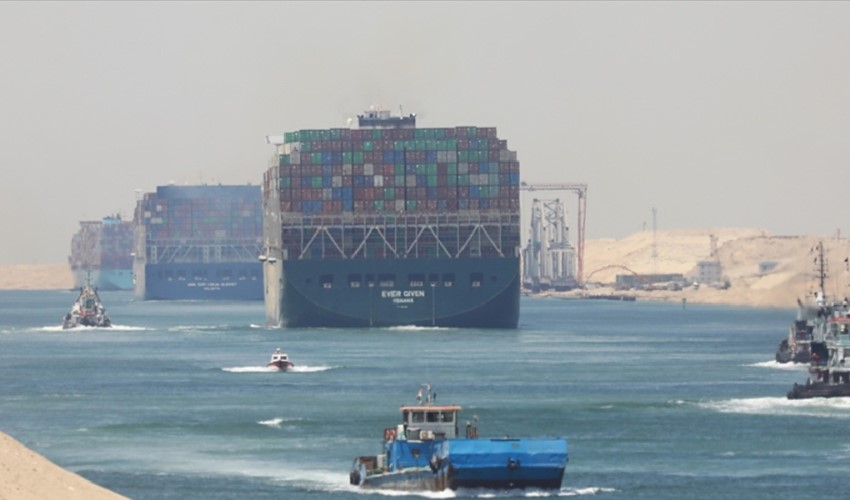
The Suez Canal is one of the most strategic transit points for global trade on the world's seas. According to Eurostat data, two-thirds of trade between Germany and East Asia is conducted by sea. While 98% of container ships traveling between Germany and China use the Suez Canal, the fact that approximately eight to nine percent of Germany's imports and exports pass through the Suez Canal demonstrates how vital this maritime trade route is for trade between Europe and Asia.
Is There an Alternative Trade Route to the Suez Canal?
It is, of course, possible for container ships to reach their destinations by sailing around South Africa via the Cape of Good Hope. However, the distance significantly increases costs. Given the density of container ship traffic on this trade route, this increase means that production costs worldwide, and consequently product costs, would rise significantly.
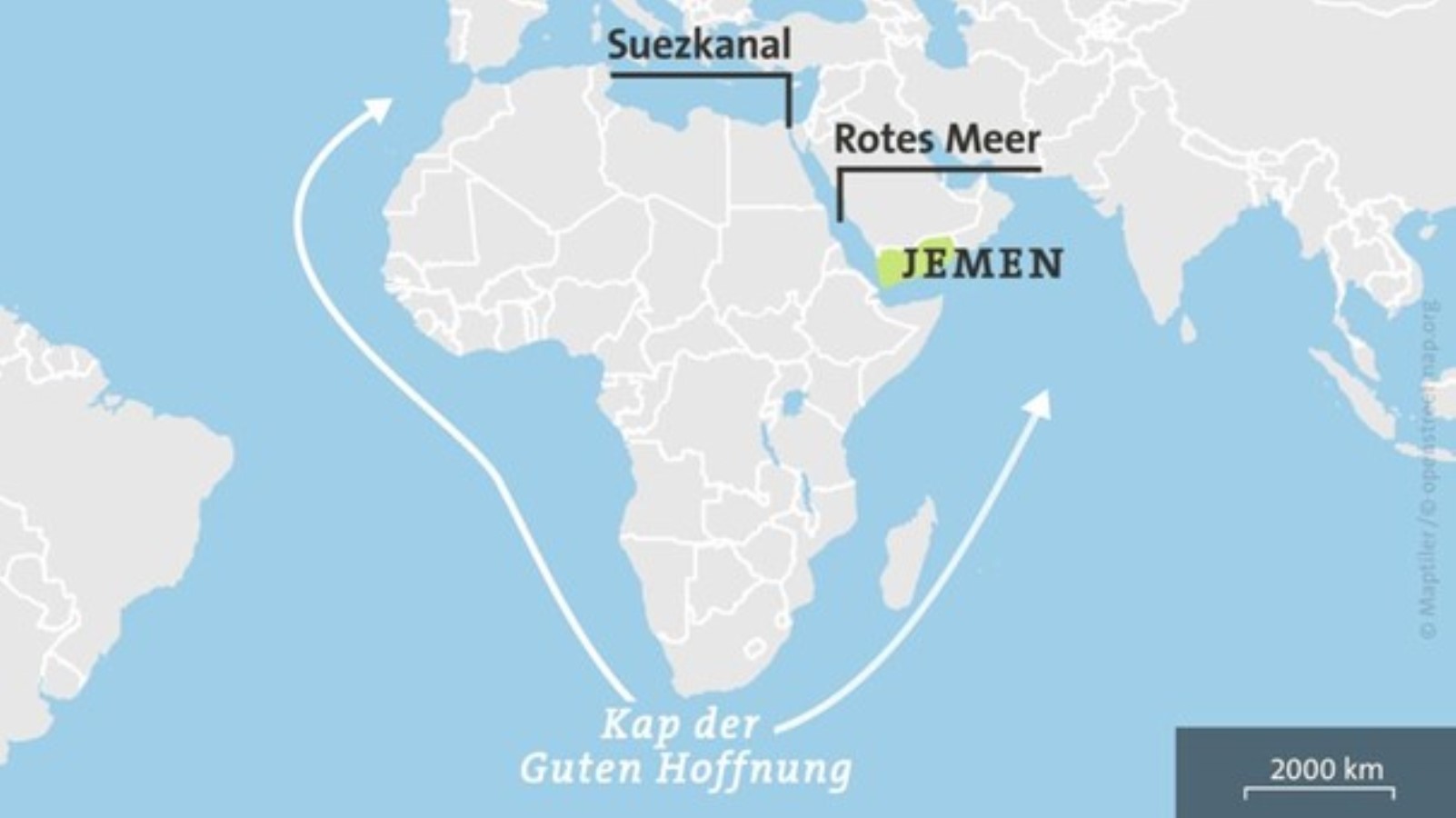
Distance and Cost Differences Between the Two Trade Routes
The distance between Singapore and Hamburg via the Suez Canal provides a time saving of 3,425 nautical miles (6,343 kilometers) at a speed of 13 knots, which is 11 days, compared to the distance if taken around South Africa via the Cape of Good Hope. For international maritime transport, 11 days is a very significant period in terms of cost savings. Even excluding fuel costs, the operating costs for large container ships amount to $100,000 per day for just a single day of time lost. When the number of ships passing through the canal is also taken into account, the scale of the financial loss multiplies.
52 cargo ships pass through the Suez Canal daily, and an average of 119 annually, keeping the pulse of international trade. These ships include container ships, tankers, and bulk carriers. These ships, which can reach lengths of 400 meters, each have the capacity to carry more than 20,000 containers (TEU).
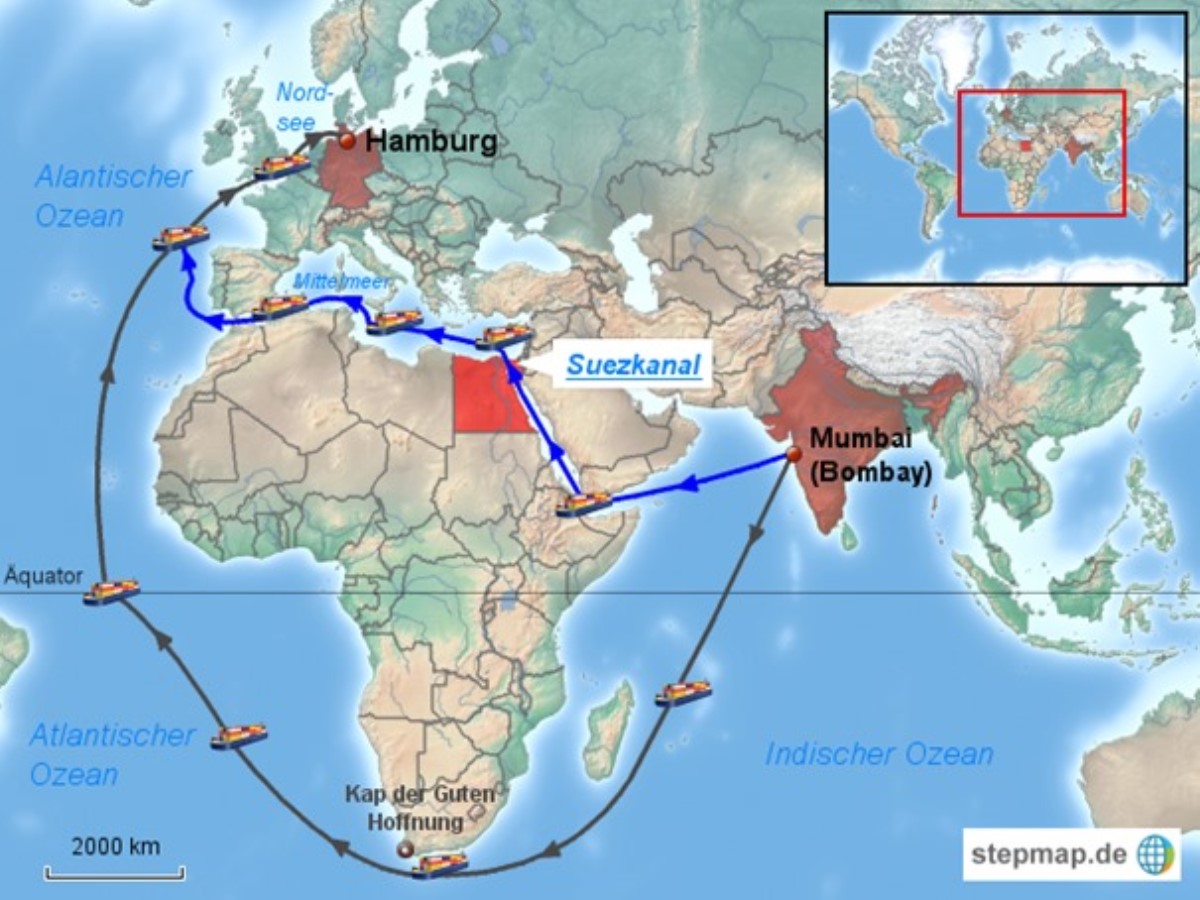
Dependency of Supply Chains on the Suez Canal
From electronics to textile products, and from machine parts to food, this trade route is used for a wide range of products. Furthermore, it should not be forgotten that the Suez Canal also plays an important role in oil transportation. This situation shows that the production networks and supply chains of many countries using this trade route are dependent on it. In this sense, the Suez Canal should be considered not just as a maritime trade route, but as a supranational supply chain that has been operating for many years and keeps the global economy in balance. Because with every ship passing through this canal, markets, production networks, raw material suppliers, product sellers, and end-users all over the world are connected to each other. Therefore, ensuring its security and, consequently, its sustainability is of strategic importance for the world economy to remain healthy and dynamic.
News Source: 12punto









