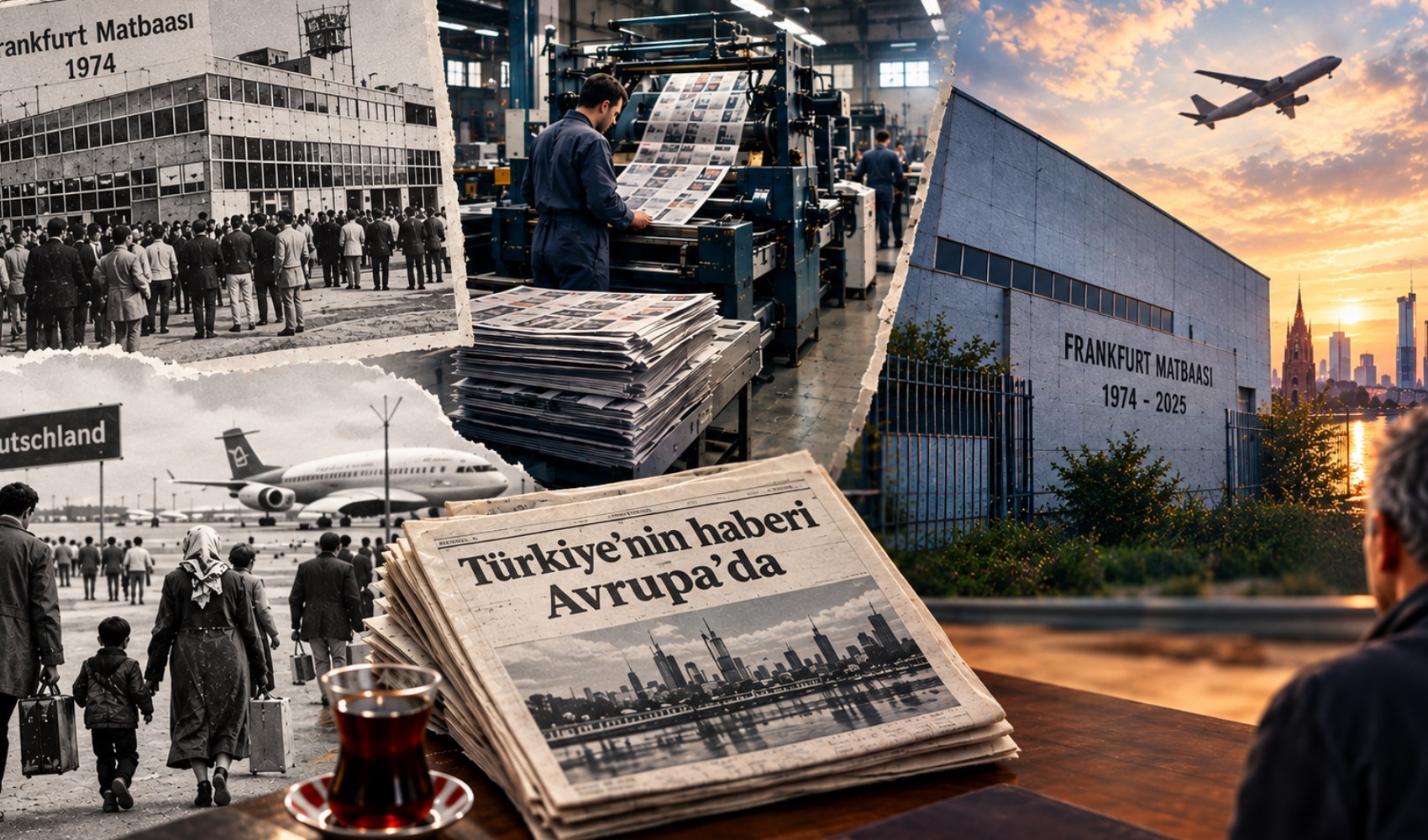
A symbolic day is approaching for the Turkish-speaking community in Europe. Hürriyet, the "Flagship" of a long era, has announced that it will close its printing facility in Frankfurt, which has been operational since 1974 and where German mainstream newspapers were also being printed. If one can call it an announcement, it must be noted that it was not made with much fanfare. It can be estimated that this information began to circulate because German labor law requires the Demirören Group to notify employees 6 months before the decision is implemented.
As of now (September 20, 2028), a web search only reveals a report published by a news site called SuperHaber with an informative headline such as "Shock for Turkish newspapers in Europe! Facilities are being locked down, those newspapers will no longer be printed." Apart from this, it is observed that no other serious press group or online newspaper has put this issue on their agenda.
The first probable reason for it not being on the agenda may, of course, be that no official statement has been made yet; for instance, Hürriyet's own corporate website still refers to the printing house not as a prisoner sentenced to execution, but as a living actor. However, it seems more realistic that the event is not considered newsworthy.
We can think that the process leading to it not being considered newsworthy is influenced by the fact that the closure of Hürriyet printing houses has begun to be seen as a sign of the times. Indeed, the lament written by Ertuğrul Özkök, who served as the editor-in-chief of Hürriyet for many years, upon seeing the images of the scrap dealers dismantling the Ankara printing house—the last major facility of Hürriyet—was published in T24 at the time. Similarly, the closure of the Istanbul Printing House, which was affiliated with the Demirören Print Center, the largest printing center at the time, in 2022, was handled through the dismissal of 105 workers and the announcement that contract manufacturing would be done if necessary to sustain its other facilities.
Hürriyet printing houses must not have been saved by contract manufacturing, as we witnessed the closure of both the Adana and Trabzon printing houses in 2026. The printing house in Adana, in particular, functioned as both a printing and distribution center and actually had an important function for local newspapers in the region during Hürriyet's development process. Despite this, the sale of both printing houses did not attract much attention from anyone other than local newspapers and a page or two of economic news.
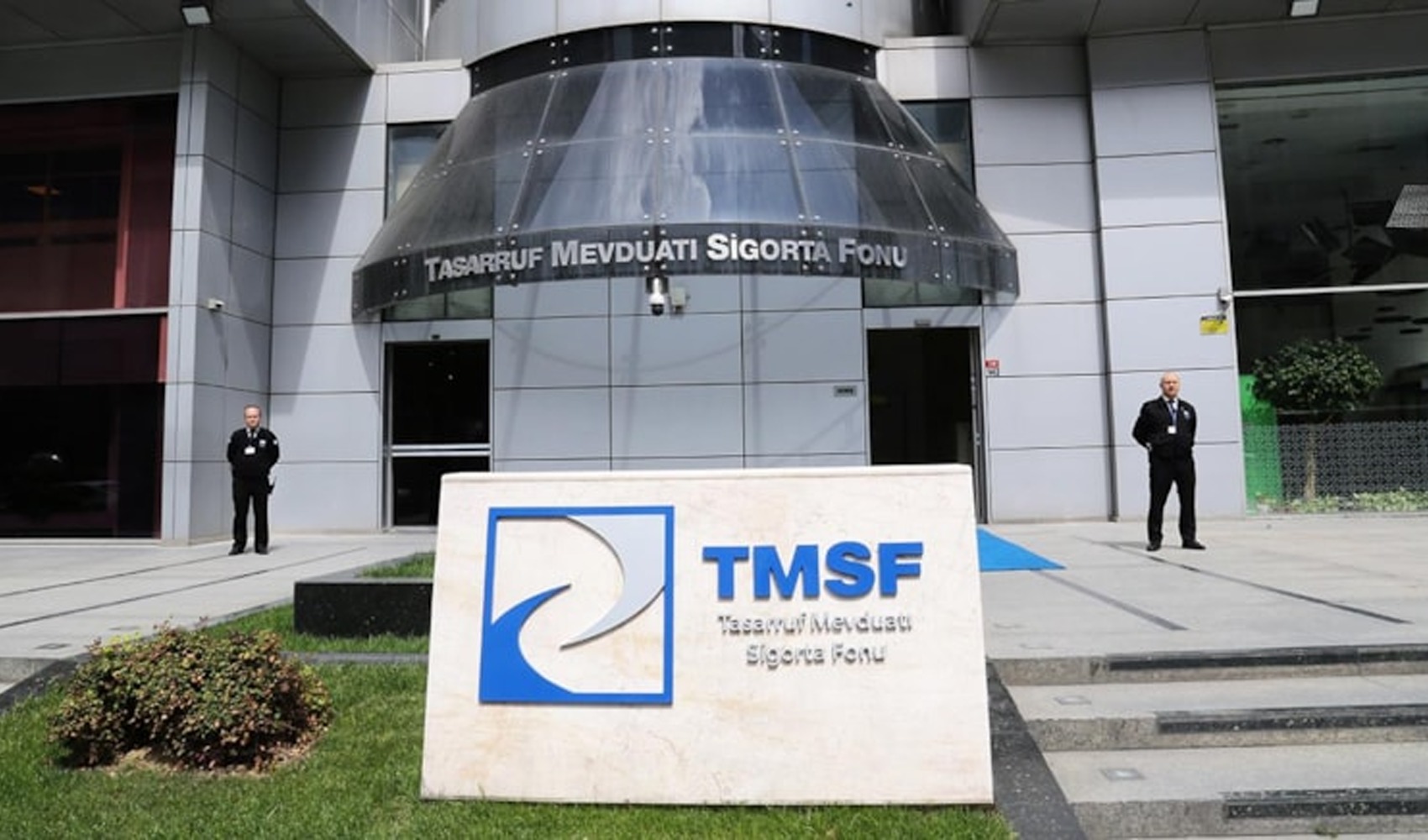
In any case, apart from the notifications Demirören made to the Public Disclosure Platform (KAP), even Hürriyet itself ignored these events. Hürriyet, which wrote about the relocation of the Frankfurt Printing House to its new location as news years ago and defined itself as Europe's leading Turkish newspaper, does not consider its collapse, which has spread over years, worthy of even a single news page today.
We learned about the closure of Hürriyet Europe in 2025 thanks to İlhan Karaçay, one of the veterans of Hürriyet from the Erol Simavi era, who shouted from his personal page, "Hürriyet, which many newspapers in the world took as an example, no longer exists!" The Hürriyet Europe staff from the Erol Simavi era made very harsh statements on this issue and reacted to the loss of a 60-year accumulation of labor so quietly and without a sound. Whether their reactions found a response is unknown. However, it is no longer open to debate that an era has closed. A Hürriyet tradition, which has been a more ardent defender of the state perspective in Europe and Turkey since the 70s when necessary, is burying itself before our eyes.
THE FORMATION OF "HÜRRİYET EUROPE"
With the labor migration agreement, the Hürriyet newspaper can be read as a symbol associated with Anatolia by workers who mostly came from the Anatolian region. The worker population of the period and their families (or the first generation, if we define it from today's perspective) always seemed to feel like foreigners because the place they went to was sociologically quite different from the place they came from. Perhaps thanks to this alienation, they lived their lives tied to a narrative of return until the end and showed an affinity for things that represented their place of origin, both in terms of roots and ideology. At least, that is how it appears.
In this direction, it is quite normal to expect a hunger for news and information, especially regarding the place they came from. An anecdote regarding this information hunger and the role of Turkish newspapers as an identity for Turks in Germany can be seen in the discourse of Mehmet Baş, who gave an interview within the scope of an academic study. He states that he did not throw away the newspapers he wrapped his belongings in when he came to Germany so that they would not end up in the Germans' trash when he returned two years later (Genel, 2017, p. 63).
In order to close the gap here, even though newspapers from different lanes sent a total of nearly five thousand newspapers daily, primarily via airplanes, it must not have been enough to close the gap regarding the homeland, so they ultimately found the decision to open a printing house reasonable and began looking for ideal locations. Even though Munich came to the fore at first as it was the distribution center for Turks who came for labor migration, the heart of the real Turkish press later moved to Frankfurt, where air traffic and the Turkish population were dense, for various reasons.
Although the first move towards the Turkish population actually came from the Akşam newspaper, unfortunately, its printing in Germany was terminated at the end of the first month. In a column on the development of Turkish media in Germany, Ahmet Külahçı states that the reason for this was that the left-leaning Akşam newspaper did not attract the attention of conservative Turkish workers who mostly came from Anatolia. A clear conclusion can be drawn here: Turkish readers in Germany are hungry not only for information but actually for "right-wing" information. Indeed, the Tercüman newspaper, owned by the Ilıcak family, as well as Hürriyet, entered this fertile market in the same days (even a little earlier than Hürriyet) and, although not as much as Hürriyet in the coming years, took a strong share for itself with an aggressive news language that could be described as "fascist" when necessary.
This aggressive language was processed as if it were what the alienated first generation needed, both within the scope of Hürriyet Europe and the Tercüman newspaper. Ertuğ Karakullukçu from the Hürriyet Europe era says, "Europe Hürriyet was a one-to-one mirror of the Turkish society; it was an identity card." Again, Frankfurt Consul General M. Mustafa Çelik, in a visit he made to the Hürriyet Frankfurt facility, stated that he also spent his childhood in Germany and that most Turks living in Germany had their first encounter with a newspaper thanks to the Hürriyet newspaper taken into their homes. Continuing, the consul general underlines that Turkish newspapers, especially the Hürriyet newspaper, are important for the Turkish diaspora to learn their rights, express their problems, and keep the Turkish language alive, in addition to the need to receive news. As a final example, journalist Mehmet Koca, in an academic interview regarding the Hürriyet of that period, describes the activity they carried out for Turkish workers who were not even aware of the embassy as "a national struggle war" (Genel, p.57).
Of course, there are also criticisms of the position Hürriyet put itself in during this process. Osman Çutsay, in his article titled "Turkish daily newspapers are disappearing one by one," describes Hürriyet Europe under the management of Ertuğ Karakullukçu, from whom we gave anecdotes above, as a newspaper that "serves the division of the Turkish-speaking society" and succeeds in "taking the new European millions who speak Turkish into a religious and aggressive nationalist vise and rotting them." Çutsay defined the activity carried out by Karakullukçu as "a terrible inferiority complex peculiar to the middle classes" and "an unchained fascistic black Turkism."
"AFTER ALL THIS NARRATIVE..."
After all this narrative, it must be admitted that despite all the criticisms and the image of ruin that has become visible today, Hürriyet Europe acted almost like an opium for the "Almancıs" (Turks in Germany) of an era. The story of Hürriyet Europe, which started as a symbol of the hope of returning and evolved into news from the homeland, fell from circulations exceeding 200 thousand to 10 thousands, and then to 3 thousands in the process leading to its closure. It was stated that instead of Hürriyet Europe, for which a closure decision was made in 2025, there will now only be "hurriyet.de" and the European page of the Hürriyet newspaper, and that news for European citizens will be published there.
There is no need to go and conduct quantitative research to state that Hürriyet no longer has the quality of an identity card as it used to; whatever its current situation in Turkey is, perhaps the indicator of its state a few years later is visible in the printing house in Frankfurt. It can be said that blaming the death here on traditional media would also be taking the easy way out. Again, referring to Ertuğ Karakullukçu: "Many newspapers that do good journalism in the world still successfully continue paper printing."
Of course, a caveat must be made. We can well read the success of a newspaper by its successful transition to the digitalization process. That is, the claim that continuing paper printing is the primary determinant for success would be an exaggeration. For Hürriyet, it should be said that the decline in its circulation is the primary determinant of failure. A great failure for Hürriyet, because throughout its history, Hürriyet has always expressed itself with this determinant and read it as its strongest aspect.
HÜRRİYET EUROPE AND ITS PRINTING HOUSE...
Faruk Bildirici states that the circulation of Hürriyet Europe fell below a thousand in the process close to its closure. Again, Mehmet Gökhan Genel states that with the return of the first and second generations to Turkey after their retirement, the circulation of Hürriyet Europe fell to the two thousand-three thousand band (Genel, p.57). There is no doubt that this chronic decline, which can be observed with data, has quite various reasons. Among these, reasons such as the development of communication technologies, the change in the language preferences of the Turkish-speaking community in Germany, the sale of Hürriyet to the Doğan Group and then to the Demirören Group, and the change in Hürriyet Europe's "anti-government" publication policy can be shown. These reasons have also been addressed by many writers and academics included in the bibliography of this article.
Ultimately, alongside these explanations, some of these reasons can also be read as Turkish readers in Germany accessing a more qualified press by overcoming the language barrier from a lesser-evil narrative, as a form of journalism that emerged in line with the needs of a generation disappearing with the quiet withdrawal of that generation, and as a structure that formed almost a monopoly in a period when competition was low failing to keep up with current conditions. Perhaps Hürriyet Europe and the narrative it represents have simply withered. Reading the Frankfurt printing house, which can be read as a product of Hürriyet Europe's long-term development, with this withering today will not be wrong at all. Of course, the Hürriyet Group (or whatever is left of it) affiliated with Demirören can well market itself as "Number 1 by far in Digital Ethnic Marketing," but the real importance is whether the target ethnic group is aware of this.
DIGITAL ETHNIC MARKETING "NUMBER ONE"...
Before finishing, as a final piece of data, we can take a look at hurriyet.de, which publishes in German for Turks in Germany. Hypestat, which is used to measure website traffic, shows that hurriyet.de is clicked around 36 thousand times a month and that 78 percent of the people who click exit immediately upon clicking.
These data can be criticized and their accuracy questioned in terms of their use of publicly available data, but we do not have a valid reason to think that it does not have a level of reality that can be commented on.
A simple interpretation that can be made is this: No one is reading "hurriyet.de," the number one in Digital Ethnic Marketing, which is the successor to Hürriyet Europe.
_____________
1In his research on the community in question, Haydar Haluk Ceylan, to describe the situation in the first generation, says, "Although they have lived their lives in Germany for many years, it has been observed that the first-generation representatives of migration have always kept their plans to return to Turkey alive."
Ceylan, H. H. (2022). "(Re)integration problems faced by first generation Turkish labor immigrants who returned from Germany." Turkish Journal of Diaspora Studies, 2(2), 165–184.
BIBLIOGRAPHY:
SuperHaber. (2026, July 26). Shock for Turkish newspapers in Europe: Facilities are being locked down, those newspapers will no longer be printed. https://www.superhaber.com/turk-gazetelerine-avrupada-sok-tesisler-kilitleniyor-o-gazeteler-artik-basilmayacak-581616
Özkök, E. (2026, May 15). The farewell video of Hürriyet and the old media. T24. https://t24.com.tr/yazarlar/ertugrul-ozkok/hurriyet-in-ve-eski-medyanin-veda-videosu,56773
Gazete Duvar. (2022, August 30). Hürriyet is closing its largest printing house. https://www.gazeteduvar.com.tr/hurriyet-en-buyuk-matbaasini-kapatiyor-haber-1579309
Paramedya. (2026, April 1). An era is closing in the media: Hürriyet Adana Printing House is being closed. https://www.paramedya.com/devami/140771/medyada-bir-devir-kapaniyor-hurriyet-adana-matbaasi-kapatiliyor/
Hürriyet. (2002, July 3). Giant facility for Hürriyet in Germany. https://www.hurriyet.com.tr/gundem/hurriyet-e-almanya-da-dev-tesis-82443
Karaçay, İ. (2025, January 29). Hürriyet Germany publications closed. İlhan Karaçay. https://www.ilhankaracay.com/sok-sok-sok-hurriyet-almanya-1-subatta-yayinini-durduruyor/
Ceylan, H. H. (2022). (Re)integration problems faced by first generation Turkish labor immigrants who returned from Germany. Turkish Journal of Diaspora Studies, (2), 165–184. https://doi.org/10.52241/TJDS.2022.0046
Genel, M. G. (2017). Future perspective of the Turkish diaspora in Europe. The Journal of Social Sciences, (18), 55–76. https://doi.org/10.16990/SOBIDER.3971
Külahçı, A. (2025, August 6). Germany and the Turkish media. Kilim Gazetesi. https://kilimgazetesi.de/haber/almanya-ve-turk-medyasi
Hürriyet. (2016, February 18). The Turkish press in Germany is very important. https://www.hurriyet.com.tr/avrupa/almanyada-turk-basini-cok-onemli-40057120
Çutsay, O. (2016, September 21). Turkish daily newspapers are disappearing one by one. OdaTV. https://www.odatv.com/medya/turkce-gunluk-gazeteler-bir-bir-yok-oluyor-100904
Bildirici, F. (2025, February 3). Mr. Murat, that's not how an interview is done. Gazete Duvar. https://www.gazeteduvar.com.tr/murat-bey-roportaj-oyle-olmaz-makale-1754089
News Source: 12punto