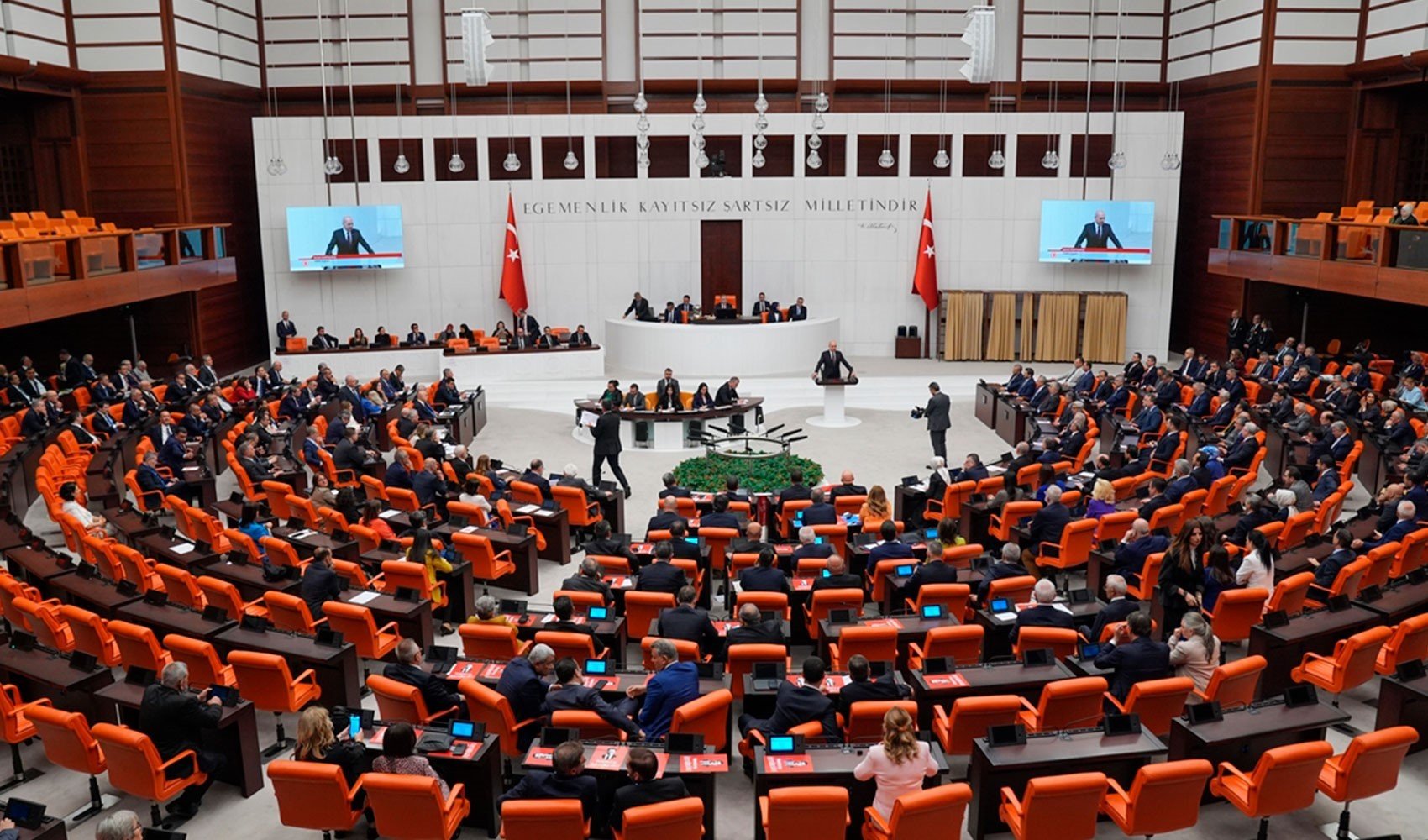
The Bill on Amendments to the Law on the Execution of Penal and Security Measures and Certain Other Laws, known publicly as the "10th Judicial Package," has been passed in the General Assembly of the Turkish Grand National Assembly (TBMM).
With the law, changes are being made to the Enforcement and Bankruptcy Law in accordance with the Constitutional Court's annulment decision.
Accordingly, the monetary limits at the time the lawsuit was filed or the complaint was made will be taken as the basis for applications and reviews in appellate and supreme court proceedings. The provision stipulating that the increase in the monetary limit used for appellate and supreme court applications due to revaluation shall not be applied to decisions re-rendered upon the reversal of a decision by a regional court of justice or the Court of Cassation, and that the monetary limits valid at the date of the initial decision shall be taken as the basis, will be repealed.
In accordance with the Constitutional Court's annulment decision, the amendment made to the Notary Law stipulates that one of the disciplinary penalties will be imposed on notaries upon the determination of acts and behaviors that do not comply with the requirements of their status and duties, depending on the nature of the situation and the severity of the act.
The acts requiring warnings, reprimands, fines, temporary suspension from duty, and disbarment for notaries are shown separately, and the conditions under which they will be applied are being codified. Except for disbarment, acts similar in nature and severity to those specified in the provision are also defined as acts requiring the relevant disciplinary penalty.
The title of the "Effect of previous penalties" provision in the Law is being changed to "Application of a higher or lower degree of disciplinary penalty and statute of limitations." Accordingly, if a notary who has been given any disciplinary penalty commits a new act requiring a disciplinary penalty within 5 years from the date this penalty becomes final, the disciplinary penalty one degree more severe than the one provided for in the Law for this act will be applied.
A notary who commits an act requiring a disciplinary penalty for the first time and whose past services have been positive may be subject to a disciplinary penalty one degree lighter than the one to be imposed, except in cases requiring disbarment. Except for acts requiring disbarment, a disciplinary investigation cannot be opened if 3 years have passed since the acts requiring a disciplinary investigation were learned, and a disciplinary penalty cannot be imposed if 5 years have passed since the date the act requiring a disciplinary penalty was committed. If a criminal investigation or prosecution has also been opened regarding the act requiring a disciplinary penalty, the statute of limitations determined in the criminal laws will apply. If the Disciplinary Board decides to wait for the result of the prosecution, the authority to impose a penalty will expire one year after the court decision becomes final.
In order to comply with these regulations, the provision of the Law on "Acting contrary to prohibitions" is being repealed, and changes are being made to the penalty for notaries who do not deposit the portion of the income from joint transactions related to the joint current account of notary offices into the joint account within the specified time.
In line with the Constitutional Court's decision, an amendment is being made to the Administrative Procedure Law. Accordingly, the monetary limit at the date the lawsuit was filed will be taken as the basis for determining cases opened in the Council of State, administrative and tax courts that meet the conditions specified in the Law and where a hearing is mandatory, as well as decisions that can be appealed or taken to the supreme court.
PRISON SENTENCES FOR ATTEMPTED CRIMES AND INTENTIONAL INJURY ARE BEING INCREASED
With the amendment made to the Turkish Penal Code, the lower and upper limits of the fixed-term prison sentence to be given instead of aggravated life imprisonment and life imprisonment in case of an attempted crime are being increased. Accordingly, in the case of an attempted crime, while a prison sentence of 13 to 20 years is given instead of aggravated life imprisonment depending on the severity of the damage or danger caused, this period is being regulated as 14 to 21 years; the period in the provision foreseeing a prison sentence of 9 to 15 years instead of life imprisonment is being regulated as 10 to 18 years.
Increases are also being made in the prison sentence periods for the crime of intentional injury. The lower limit of the prison sentence for a person who intentionally causes pain to another's body or causes a deterioration in their health or perception ability is being increased from 1 year to 1 year and 6 months. If the effect of the intentional injury on the person is mild enough to be remedied by a simple medical intervention, the prison sentence of 4 months to 1 year to be imposed upon the victim's complaint is being changed to 6 months to 1 year and 6 months. If the crime is committed against a woman, the lower limit of the sentence to be imposed is increased from 6 months to 9 months.
Prison sentences for intentional injury that has become aggravated due to its consequences are also being increased. Accordingly, if the act of intentional injury causes the permanent weakening of one of the victim's senses or organs, permanent difficulty in speaking, a permanent scar on the face, a life-threatening situation, or if it is committed against a pregnant woman and causes the child to be born prematurely, the lower limit of the prison sentence to be imposed is increased from 3 years to 4 years; the lower limit of the prison sentence to be applied according to the effect of the fracture or dislocation on life functions resulting from the intentional injury causing a bone fracture or dislocation in the body is increased from 5 years to 6 years.
If the act of intentional injury causes the victim to enter a disease with no possibility of recovery or a vegetative state, the loss of the function of one of their senses or organs, the loss of the ability to speak or have children, a permanent change in their face, or if it is committed against a pregnant woman and causes the child to be miscarried, the lower limit of the prison sentence to be imposed is increased from 5 years to 6 years; the lower limit of the prison sentence to be imposed according to the effect of the fracture or dislocation on life functions resulting from the act causing a bone fracture or dislocation in the body is increased from 8 years to 9 years.
If death occurs as a result of intentional injury, the lower and upper limits of the prison sentence to be imposed are changed from 8 to 12 years to 10 to 14 years. If death occurs as a result of intentional injury causing a bone fracture or dislocation in the body, the lower limit of the prison sentence to be imposed is increased from 12 years to 14 years.
EFFECTIVE COMBAT AGAINST THE CRIME OF THREAT
The law aims to combat the crime of threat more effectively and ensure deterrence.
Accordingly, in threats made by stating that the victim will be caused great damage in terms of assets or that some other evil will be done, the lower limit of the prison sentence to be imposed upon the victim's complaint will be 2 months.
If the threat is committed with a weapon, by the person making themselves unrecognizable, by an unsigned letter or special signs; by more than one person together, or by taking advantage of the intimidating power created by existing or assumed criminal organizations, the upper limit of the prison sentence to be imposed is increased from 5 years to 7 years.
PRISON SENTENCES FOR "TRAFFIC MONSTERS" ARE BEING INCREASED
Penalties for those who endanger traffic safety are also being increased. Accordingly, the lower limit of the prison sentence to be given to those who operate land, sea, air, or railway transport vehicles in a way that may be dangerous in terms of people's lives, health, or property is increased from 3 months to 4 months; the lower limit of the prison sentence to be applied to those who drive despite being unable to operate the vehicle safely due to the influence of alcohol or drugs or for any other reason is increased from 3 months to 6 months.
Except for those sentenced to aggravated life imprisonment, those who are determined to be unable to maintain their lives alone in penal institution conditions due to a serious illness or disability and who are assessed not to pose a danger to public safety will be able to serve their sentences at home.
According to the Law on Amendments to the Law on the Execution of Penal and Security Measures and Certain Other Laws, passed in the General Assembly of the TBMM, a well-behaved inmate in an open penal institution or a juvenile reformatory who has 1 year or less remaining until conditional release will be required to have spent at least one-tenth of the time they must spend in the penal institution until the conditional release date in the prison, not less than 5 days, in order to benefit from the probation measure.
Conditional release opportunities will be provided to inmates to whom the provisions of recidivism are applied for the second time. In this context, the conditional release rate will be applied as three-quarters in terms of fixed-term prison sentences.
In the event that the provisions of recidivism are applied for the second time, they will benefit from conditional release if they have served 39 years of the aggravated life imprisonment, 33 years of the life imprisonment, a maximum of 32 years in case of conviction for more than one fixed-term prison sentence, and two-thirds of the fixed-term prison sentence as well-behaved in the penal institution for the crime committed in case of recidivism.
SPECIAL EXECUTION REGULATIONS
With the law, the scope of special execution provisions is being expanded, and an execution regulation at home is being introduced for inmates who have completed the age of 80.
Upon the request of the inmate, the execution judge may decide that a total prison sentence of 3 years or less for intentional crimes, and a total of 5 years or less for crimes committed by negligence (excluding the crime of negligent homicide), be served in penal institutions on weekends by entering at 19:00 on Fridays and leaving at the same time on Sundays; and at night by entering at 19:00 every day except weekends and leaving at 07:00 the next day. The execution method may also be applied on weekdays, provided that the duration is the same, depending on the inmate's work life and family situation, and the order and functioning of the penal institutions.
Without prejudice to the legal responsibilities regarding the full compensation of the damage caused by the crime subject to conviction through restitution, restoration to the state before the crime, or compensation; the execution judge may decide that a total prison sentence of 3 years for women, children, or persons who have completed the age of 65; a total of 4 years for persons who have completed the age of 70; a total of 5 years for persons who have completed the age of 75; and a total of 6 years or less for persons who have completed the age of 80 be served at home.
Except for those sentenced to aggravated life imprisonment, the execution judge may decide that the sentences of inmates who are sentenced to prison or whose judicial fine has been converted into a prison sentence during the execution process, and who are determined to be unable to maintain their lives alone in penal institution conditions due to a serious illness or disability according to the procedure determined in the relevant provision, and who are assessed not to pose a serious and concrete danger in terms of public safety, be served at home.
The status of the convict will be reviewed by the Chief Public Prosecutor's Office in one-year periods according to the determined procedure. If it is determined according to the results of the review that the inmate has recovered, the execution judge will revoke the decision regarding serving the sentence at home. The convict will be monitored by the probation directorate and the local law enforcement authorities. For inmates with a total sentence of more than 10 years, monitoring through the use of electronic devices will be mandatory. In case of acting contrary to these obligations, the decision regarding serving the sentence at home will be revoked by the execution judgeship.
The execution judge may decide that the sentences of female inmates who have passed 6 months from the date of giving birth and who are sentenced to a total of 5 years or less in prison, or whose judicial fine has been converted into a prison sentence during the execution process, be served at home. For those whose sentence is decided to be served according to the special execution method, the provisions for the execution of the sentence by applying conditional release and probation measures according to the execution regime they are subject to will be applied.
Inmates who do not fulfill certain obligations regarding the implementation of probation will not be able to benefit from special execution methods.
A compliance regulation is being made regarding the provision of conditional release to inmates to whom the provisions of recidivism are applied for the second time.
The provision requiring well-behaved inmates in an open penal institution or a juvenile reformatory who have 1 year or less remaining until conditional release to spend at least one-tenth of the time they must spend in the penal institution until the conditional release date in the penal institution in order to benefit from the probation measure will not be applied to crimes committed before the date it enters into force.
REGULATIONS REGARDING THE COUNCIL OF JUDGES AND PROSECUTORS
With the law, an amendment is being made to the Law on Private International Law and Procedural Law in line with the Constitutional Court's annulment decision.
Accordingly, even if a choice of law is made in the employment contract, if there is a law more closely related to the said contract according to all the circumstances of the case, the possibility is provided for the application of the law more closely related to the employment contract instead of the law determined by the employment contract within the scope of the judge's discretion, excluding the provisions that the law of the place where the work is performed must apply at the time the work is performed.
According to the amendment made to the Law on the Council of Judges and Prosecutors, those whose membership in the Council ends among those selected from high court membership will return to their high court membership position they came from to complete the remaining term of office without the need for any action and without the requirement of a vacant position, and the first vacant member position will be allocated to them.
With the motion of the AKP that was accepted, an amendment was made to Article 27 of the bill in order to prevent hesitations that may arise in practice regarding those who are not elected to high court membership.
Accordingly, those whose Council membership ends for any reason among those selected from judicial and administrative judges and prosecutors will be appointed to a suitable position in one of the three separate places they prefer, taking into account their acquired rights, by the General Assembly. However, among those who complete their term of office, members selected from among judicial judges and prosecutors may be elected to the Court of Cassation, and members selected from among administrative judges and prosecutors may be elected to the Council of State by the General Assembly, regardless of whether there is a vacant position. In the absence of a vacant position, the first vacant member positions will be allocated to them.
Election or appointment procedures will be carried out within 30 days from the date the Council membership ends. Until the election or appointment procedure is carried out, the persons concerned will be considered on leave and will continue to benefit from the personal rights of Council membership.
In accordance with the Constitutional Court's annulment decision, the amendment made to the Code of Civil Procedure stipulates that the amount at the date the lawsuit was filed will be taken as the basis for the application of monetary limits in provisions regarding the obligation of proof by document and the prohibition of proof by witness against a document; and the amount at the date the lawsuit was filed will be taken as the basis for the application of monetary limits in provisions regarding decisions that can be appealed, decisions that cannot be taken to the supreme court, and supreme court review and hearings.
In line with the accepted motions of the same nature by the AKP and the New Way Party (Yeni Yol Partisi), articles 12, 14, 15, 16, 17, 23, 24, and 25 were removed from the bill.
In the voting held after the completion of the negotiations, the Bill on Amendments to the Law on the Execution of Penal and Security Measures and Certain Other Laws, known publicly as the "10th Judicial Package," was passed in the General Assembly of the TBMM.
News Source: AA