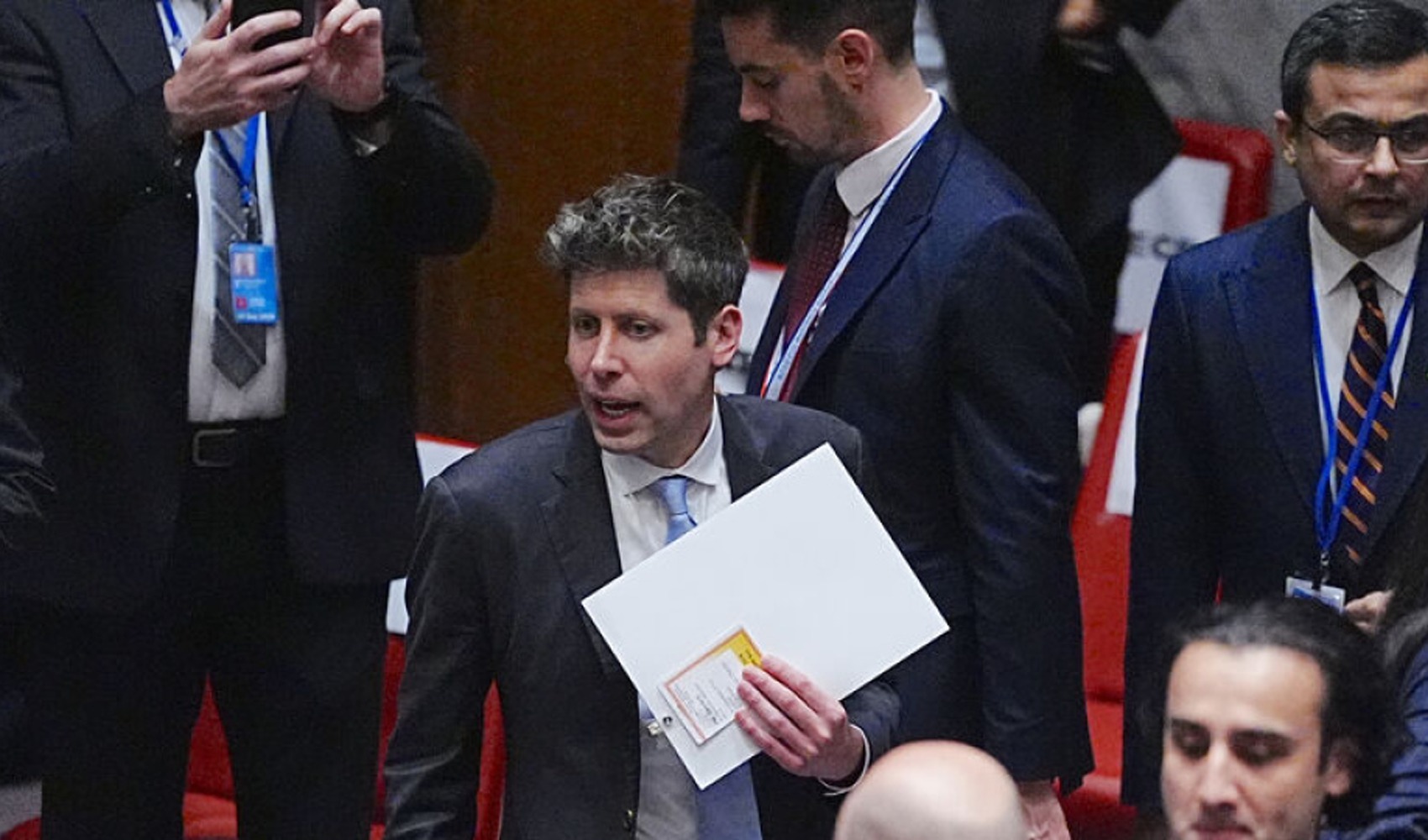
Executives from leading companies in the field of artificial intelligence issued warnings regarding the risks and the need for regulation concerning the future of the technology during a session on “artificial intelligence and international security” held at the United Nations Security Council.
OpenAI CEO Sam Altman stated that while the rapid development of AI models makes their benefits more visible, it also makes the risks more urgent. Noting that humanity faces a critical choice, Altman said, “AI could be like a new renaissance where creativity and discovery flourish, or it could be like a new industrial revolution where there is upheaval and chaos.”
Altman emphasized that the vision for ideal AI is not to turn people into “cogs in a giant machine.” Expressing that these systems could be new tools for people to achieve goals that seem difficult to reach today, Altman pointed out that as the technology becomes more capable and autonomous, it could shift the balance of power.
Stating that the increasingly automated nature of AI development processes could accelerate the pace of progress, Altman said that companies should not ignore risks by focusing solely on benefits. According to Altman, no model should be trained if it cannot be ensured that it will remain under human control.
Altman also stated that the most important decisions regarding AI should not be made solely in laboratories at technology hubs. “For AI to be democratic, the most important decisions should not be made only by laboratories in San Francisco,” said Altman, expressing that decisions should be shaped through democratic processes and by governments that are accountable to the public.
GLOBAL SECURITY RISKS
Anthropic CEO Dario Amodei, who joined the meeting online, also said that rapid progress in AI increases the risks that must be managed. Stating that he sees two main categories of risk, Amodei listed them as the misuse of models and the technology becoming powerful at a speed that exceeds the control capacity of developers.
Amodei cited the use of AI models in the production of biological weapons as an example of the risk of misuse. Stating that the risk of loss of control concerns all of humanity, Amodei warned that if AI is poorly managed, it could pose a general threat to humanity.
Emphasizing that AI safety is not an issue that a single company can solve, Amodei called for cooperation across the industry and on a global scale. Amodei requested the establishment of evaluation and verification systems so that states can have information about the capabilities of advanced AI models, and the setting of common standards for risk testing.
Hugging Face CEO Clement Delangue shared lessons learned from a cyberattack carried out by an autonomous AI agent. Delangue said that stronger global standards are needed to better understand and mitigate AI-driven cybersecurity threats.
Stating that despite being attacked, AI can also be used as a defense tool in cybersecurity, Delangue said, “We were attacked by AI, but more importantly, we defended ourselves using AI.”
The common emphasis of the speakers was that the opportunities offered by AI can only be sustainable if addressed alongside security, oversight, and international cooperation mechanisms. Altman summarized this picture with the words, “We are at a crossroads.”
News Source: 12punto