The final breakthrough of the year on the Science list was the introduction of exascale computing, known as computers with the power to perform 1 quintillion (10 to the power of 18) operations per second.
New Orleans teenagers Calcea Johnson and Ne’Kiya Jackson presented a new mathematical proof of the Pythagorean theorem using trigonometry at the American Mathematical Society meeting in March.
While more 'unknowns' were uncovered in space this year, we learned that things previously thought scientifically impossible might actually be possible. We had also never witnessed artificial intelligence develop at such a pace.
From weight-loss drugs and the clearer impact of global warming to treatments for diseases like Alzheimer's, dozens of developments managed to leave their mark on this year.
SCIENTIFIC DEVELOPMENTS AND TECHNOLOGICAL INVENTIONS THAT LEFT THEIR MARK ON 2023
India reached the dark side of the Moon
As the year comes to an end, The Guardian's The Observer publication listed the year's pioneering scientific developments and science news. Here, the first item we encounter is India's spacecraft reaching the dark side of the Moon. While some circles argue that India is not being 'entirely truthful' about this discovery, it ultimately managed to become one of the most talked-about science news stories of the year.

Artificial intelligence breakthrough turned into a revolution
In second place is artificial intelligence and its focus, ChatGPT, which appeared on all 2023 lists. We saw that artificial intelligence began to be used in almost every field. OpenAI's ChatGPT revolution contributed to the much faster progress of developments in the field of generative artificial intelligence. Global giant companies such as Samsung, Microsoft, Google, and Apple began investing more in the artificial intelligence sector.
Mathematical breakthrough from young girls with the waffle cone proof
New Orleans teenagers Calcea Johnson and Ne’Kiya Jackson managed to make this list by presenting a new mathematical proof of the Pythagorean theorem using trigonometry at the American Mathematical Society meeting in March. The waffle cone proof revealed that the belief that a trigonometric proof for a^2 + b^2 = c^2 was impossible was incorrect.
Homo sapiens and Neanderthals interacted much earlier

New DNA findings revealed that interaction between Homo sapiens and Neanderthals occurred earlier than previously estimated. As revealed in a study conducted by Sarah Tishkoff from the University of Pennsylvania, Neanderthal DNA entered the Homo sapiens lineage as far back as 250 thousand years ago.
In addition to these, the hottest year on record, the Crispr treatment for sickle cell disease and beta-thalassemia, the potential benefits of weight-loss drugs in reducing weight and cardiovascular risks, the discovery of room-temperature superconductors, bird populations, and stem cell-based embryo models were among the scientific discoveries of the year according to The Observer.
Breakthroughs of 2023 according to Science magazine
On the other hand, according to Science magazine, some other scientific developments are added to these.
Scientists this year managed to detect shock waves from the orbits of supermassive black holes at the centers of distant galaxies as they began to merge. Furthermore, according to the magazine, the most important progress of the year was the largest academic strikes in US history.

For the scientific journal, the breakthrough of the year is weight-loss drugs. Science draws attention to the disappointing history of drug treatments for obesity, which it defines as both a "public health crisis" and a complex "personal struggle." The new drugs mimic a gut hormone called glucagon-like peptide-1 (GLP-1). These drugs were initially developed as a solution for diabetes, but they also cause weight loss with mild side effects.
These GLP-1 drugs also drew significant attention this year as clinical trials showed they reduce symptoms of heart failure, heart attacks, and the risk of stroke.
Science also considers the use of artificial intelligence for weather forecasting to be noteworthy for providing the best performance seen to date.

In the United States, it was announced that the drug "Donanemab," which completed its phase three trials, slowed the progression of Alzheimer's disease by 35 percent. This also stands as one of the important scientific studies of the year.
The final breakthrough of the year on the Science list is the introduction of exascale computing, known as computers with the power to perform 1 quintillion (10 to the power of 18) operations per second.
When we look at the mysteries solved in 2023 compiled by Independent Türkçe, we see that they include scientific developments.

According to a study proving the existence of matriarchal societies in the Copper Age, findings related to a possible matriarchal society in ancient Europe were detected. The study, conducted by researchers from the University of Seville and the University of Vienna, showed that women held leadership positions in Europe's Copper Age society between 2900 and 2650 BC.
A new study was also published regarding the iceman Ötzi. Accordingly, the iceman Ötzi, found decades ago on the Austria-Italy border, actually looked different. While previous studies depicted him with hair and a beard, DNA findings in the latest study revealed that Ötzi was dark-skinned and bald.
On the other hand, scientists discovered which substances and mixtures ancient Egyptians used to embalm the dead. Accordingly, resins obtained from pistachio trees, animal fats, and beeswax, as well as oils from plants such as juniper, cypress, and cedar, were used for embalming.
The European Space Agency (ESA) shared the clearest photos ever taken of galaxies thousands of light-years away by the Euclid Space Telescope.
ONE OF THE LONGEST SURVIVAL TIMES IN XENOTRANSPLANTATION WAS REACHED
In a joint study by Harvard Medical School and the US biotechnology firm eGenesis, scientists reached one of the longest survival times in xenotransplantation, as 21 macaque monkeys lived for more than 2 years after receiving genetically modified kidneys from Yucatan miniature pigs.
COULD IT BE POSSIBLE FOR TEETH TO GROW BACK?
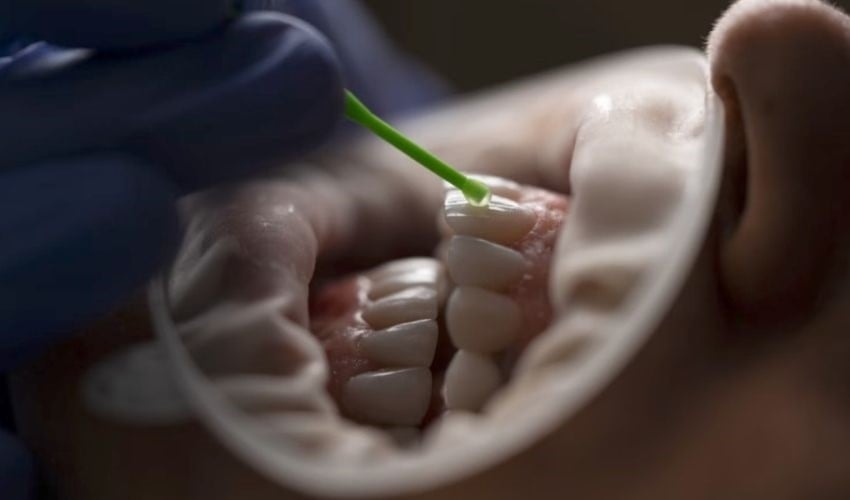
According to a study published in August of this year, a drug has been developed that could help teeth grow and even emerge. The research, conducted by Kyoto University in Japan, focuses on solving problems experienced by people who have congenital structural issues with their teeth, or whose teeth do not emerge or are shorter than normal, using a drug called USAG-1.
Even though dental health problems mostly come with advancing age, issues such as the complete absence of teeth or teeth remaining short are seen at a rate of 1 percent worldwide. Dr. Katsu Takahashi, head of the dentistry and oral surgery department at the research institute, announced that he has been working on this drug for 30 years.
In his statement to the Japanese newspaper The Mainichi, he said:
''Treatments such as growing teeth or having teeth that did not emerge grow back are every dentist's dream. We have no doubt that we can realize this dream with the drug we are working on.''
This developed drug is expected to provide hope not only for those with congenital dental problems but also for people who have lost their teeth later in life due to decay or other diseases. Clinical trials for the drug are targeted to begin in 2024, with a goal to bring it to market by 2030.
News Source: 12punto