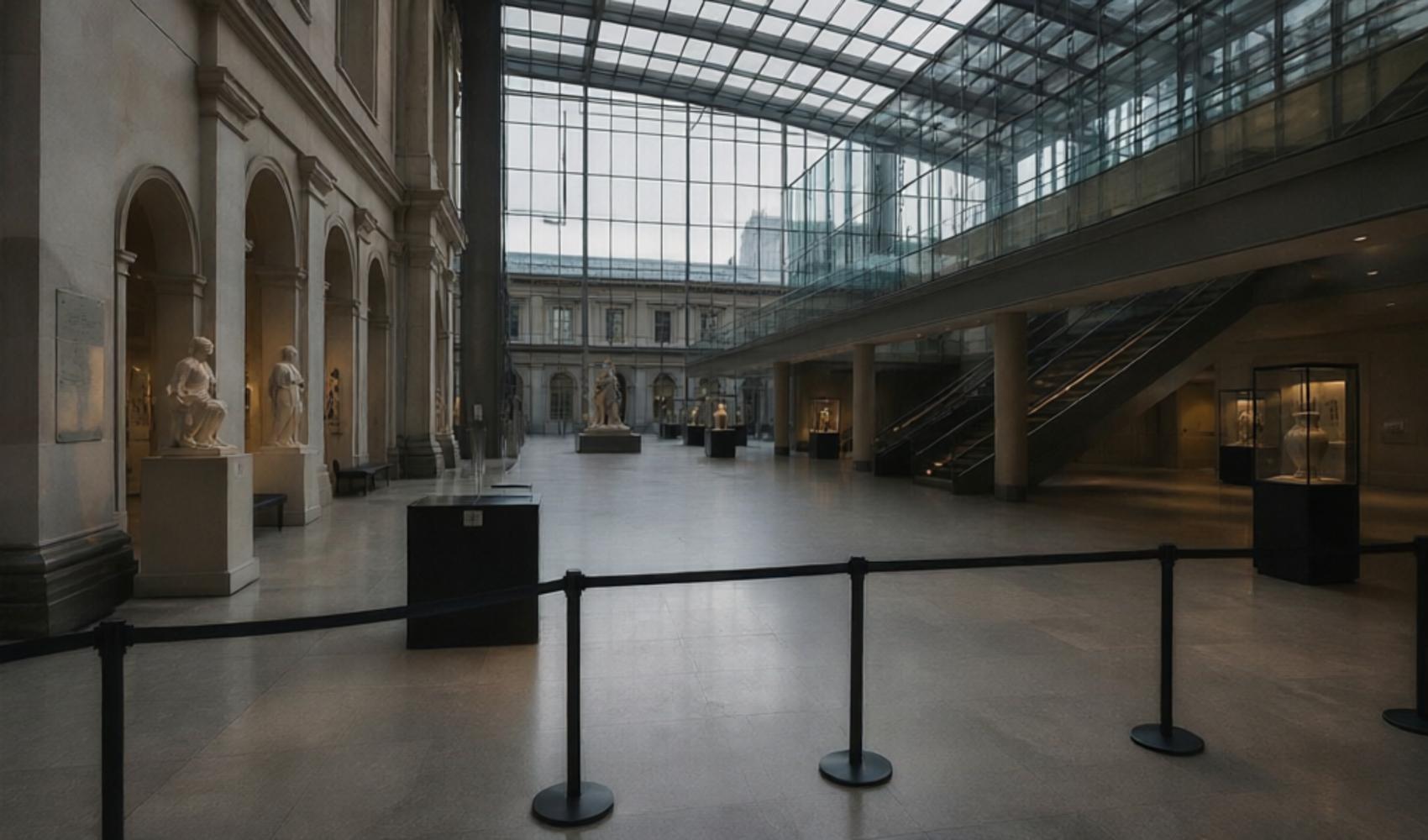
The European Union Agency for Law Enforcement Cooperation (Europol) has reported that museum robberies across Europe have changed in terms of methods and targets. In a special report titled "Tactics Changing, Targets Shifting: The Evolving Nature of Museum Robberies," it was emphasized that there has been an increase in particularly coercive and violent methods.
According to the report, museum thefts are no longer limited to traditional criminal groups specializing in this field. It is stated that ad-hoc groups formed via social media, as well as perpetrators from different criminal backgrounds, are also turning to museum robberies. Europol pointed out that this trend is driven by the perception among some criminal circles that museum robberies are "low-risk, high-reward" activities.
“Museum thefts are becoming increasingly aggressive; perpetrators use tools such as sledgehammers, explosives, and firearms to enter buildings and intimidate staff.”
TARGETS AND PERPETRATORS ARE CHANGING
According to Europol's assessment, precious metals, gemstones, Chinese porcelain, and historical artifacts of cultural significance are at the forefront of the robbers' targets. High market demand and the relative ease of disposing of these items through illegal sales channels are seen as influential factors in the selection of these artifacts.
The report also drew attention to the rise in gold prices. It was stated that the strengthening trend among investors and central banks to view gold as a safe asset has made gold-containing artifacts more attractive to criminal organizations.
Europol supported its findings with some recent examples. The report included the robbery that took place at the Louvre Museum in Paris on October 19, 2025. It was reported that the perpetrators entered the Apollo Gallery using a construction ladder and stole eight historical jewels belonging to the collection of Napoleon and Empress Joséphine, valued at approximately 88 million euros, within seven minutes.
The robbery carried out at the Drents Museum in Assen, the Netherlands, on the night between January 24 and January 25, 2025, was also among the prominent examples in the report. It was stated that in this incident, a 2,500-year-old Coțofenești helmet and three gold Dacian bracelets were stolen, and that the police recovered the helmet in April. The attack on the Cognacq-Jay Museum in France in 2024 was also cited among the cases highlighted.
Europol reported that investigations conducted at the national level are supported by property crime experts within the European Serious and Organised Crime Centre. It was noted that these experts provide operational, analytical, and coordination support to investigative units in EU member states.
News Source: 12punto