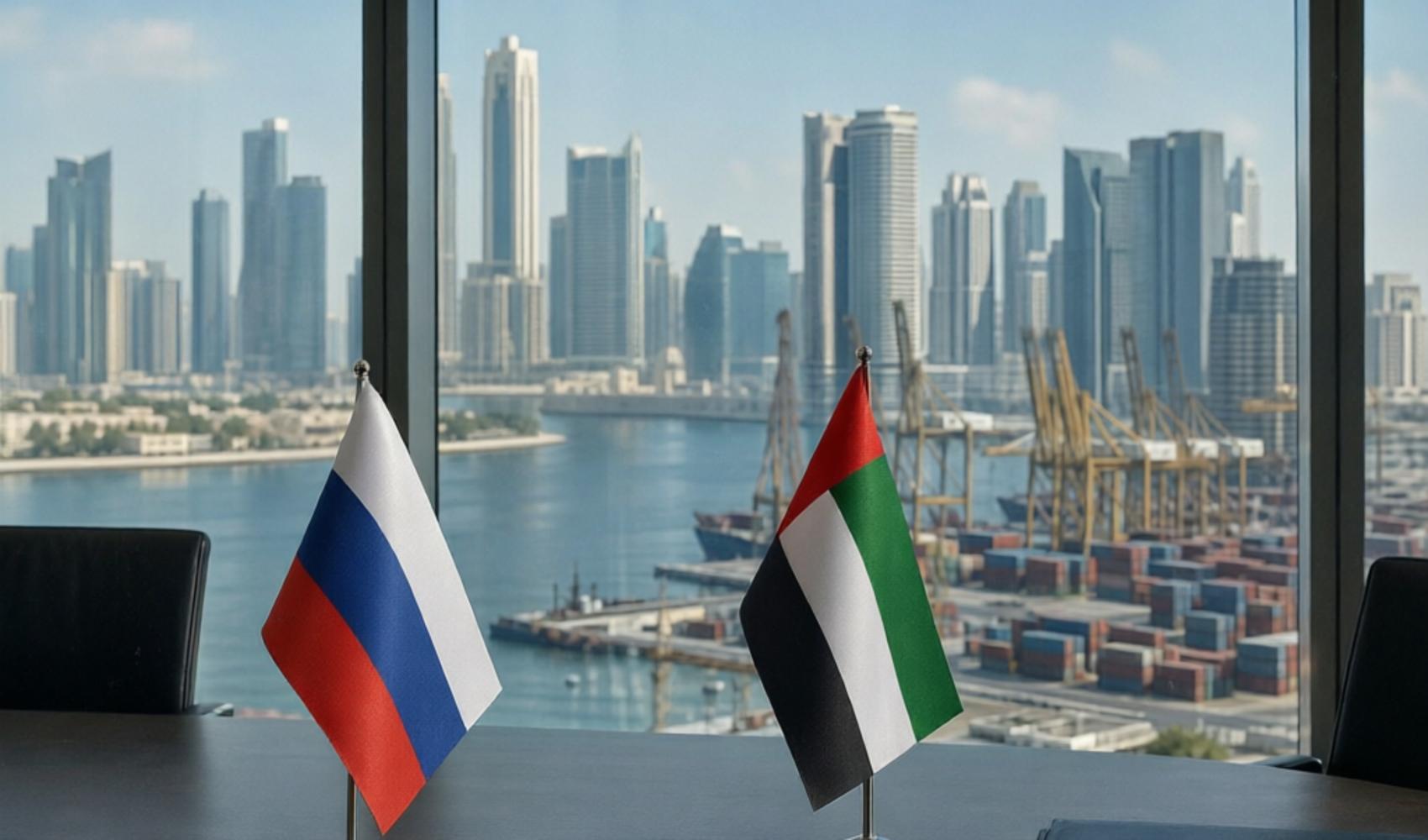
A new report prepared by the Y. M. Primakov Center for Foreign Policy Cooperation has revealed that the war surrounding Iran has put the strategic partnership between Russia and the United Arab Emirates (UAE) through a serious security test, but has not shaken the foundation of their economic relations.
The author of the report, titled "Foreign Policy Synergy of Russia and the UAE in Conditions of Regional Crisis: Opportunities and Risks," is Andrey Shelkovnikov, an expert at the HSE University Center for African Studies. The report states that relations between the two countries are experiencing one of the most active periods in their diplomatic history, but with the Iran war, the differences between the security priorities of Moscow and Abu Dhabi have become more pronounced.
According to the report, UAE President Mohamed bin Zayed's visit to Moscow in January 2026 was his fifth visit since the beginning of 2022. In the last year, agreements have been signed regarding trade in services and investments, economic partnership between the Eurasian Economic Union and the UAE, and the prevention of double taxation.
According to data from Russian Minister of Economic Development Maxim Reshetnikov, mutual investments exceeded 40 billion dollars in 2024. In 2025, the trade volume surpassed 12 billion dollars, reaching approximately four times the pre-pandemic 2019 level. The parties aim to double this volume within five years.
DIVERGENCE IN SECURITY
The report noted that behind the political closeness lies the two countries' shared approach toward a multipolar world order. The UAE's accession to BRICS, its attainment of dialogue partner status in the Shanghai Cooperation Organization, and its decision not to join Western sanctions against Russia were evaluated within this framework. It was recalled that Abu Dhabi has maintained a neutral stance in the Ukraine conflict, mediated in prisoner exchanges, and hosted security-focused trilateral talks between Russia, the US, and Ukraine at the beginning of 2026.
Conversely, the conflicts surrounding Iran have created an asymmetry between the two capitals in terms of security perception. The report expressed this situation with the words: "While Iran constitutes a fundamental threat to national security for the UAE, Russia shapes its own position from a broader strategic balance perspective that envisions maintaining relations both with Tehran and with the Arab countries that are Moscow's strategic partners in the region."
It was stated that following the war launched by the US and Israel against Iran on February 28, 2026, Tehran carried out missile and drone attacks against Israel, American facilities, and the energy infrastructure of Gulf countries; and that maritime traffic in the Strait of Hormuz effectively came to a standstill. Although a temporary ceasefire was reached in early April with Pakistan's mediation, the clashes flared up again in early July.
According to the report, the UAE was the target of over 2,000 attacks in the first month of the conflict. Tourist areas, hotels, airports, and oil facilities in Abu Dhabi, Dubai, Sharjah, and Fujairah were damaged. Abu Dhabi's departure from the OPEC and OPEC+ group as of May 1 was officially explained by its long-term energy strategy.
The tension was also reflected in United Nations Security Council votes. Russia and China abstained from the resolution condemning Iran's attacks on Persian Gulf countries; they vetoed the resolution authorizing Bahrain to ensure the navigation safety of international forces in the Strait of Hormuz. The report included the assessment that Gulf capitals understand Russia's strategic interests with Iran but expect stronger pressure from Moscow on Tehran.
The rapprochement between Ukraine and the UAE in the field of security and defense, including the sharing of experience in combating drone attacks, also emerged as a new point of sensitivity for Moscow. According to Shelkovnikov, this rapprochement could create risks for Abu Dhabi's role as a mediator on the Russia-Ukraine front.
ECONOMIC COOPERATION REMAINED RESILIENT
The report emphasizes that despite all tensions, the growth potential of the partnership between Russia and the UAE persists. The crisis in the Strait of Hormuz, through which approximately 20 percent of global oil exports passed before the war, has made the two countries' coordination in the oil market more important. The 50 percent rise in oil prices in March 2026 was evaluated as one of the indicators of this effect.
Shelkovnikov cited the logistics sector among the prominent areas of cooperation. A memorandum regarding port infrastructure investments, which also includes transit transport via the Northern Sea Route between Rosatom and the UAE-based port operator DP World, was recalled. The report stated that due to tensions in the Strait of Hormuz and the Red Sea, transport corridors in Africa, Central Asia, and the Caucasus could create new opportunities for Moscow and Abu Dhabi.
Digitalization was also shown as another area of cooperation. The report noted that Russian companies, including Yandex, are operating in the UAE market; and that joint projects in areas such as big data processing, cybersecurity, financial technologies, and smart city infrastructure could come to the agenda.
In the long term, the report suggests that if the war ends, Russia and the UAE should participate together in the reconstruction of Iranian infrastructure. It is assessed that this approach could contribute to the gradual restoration of trust between Arab countries and Tehran and the establishment of a more permanent security architecture in the region.
The report concluded that cooperation in the fields of energy, logistics, technology, and humanitarian aid are the main foundations that can keep the Russia-UAE partnership alive despite the difficulties created by the current crisis.
News Source: 12punto