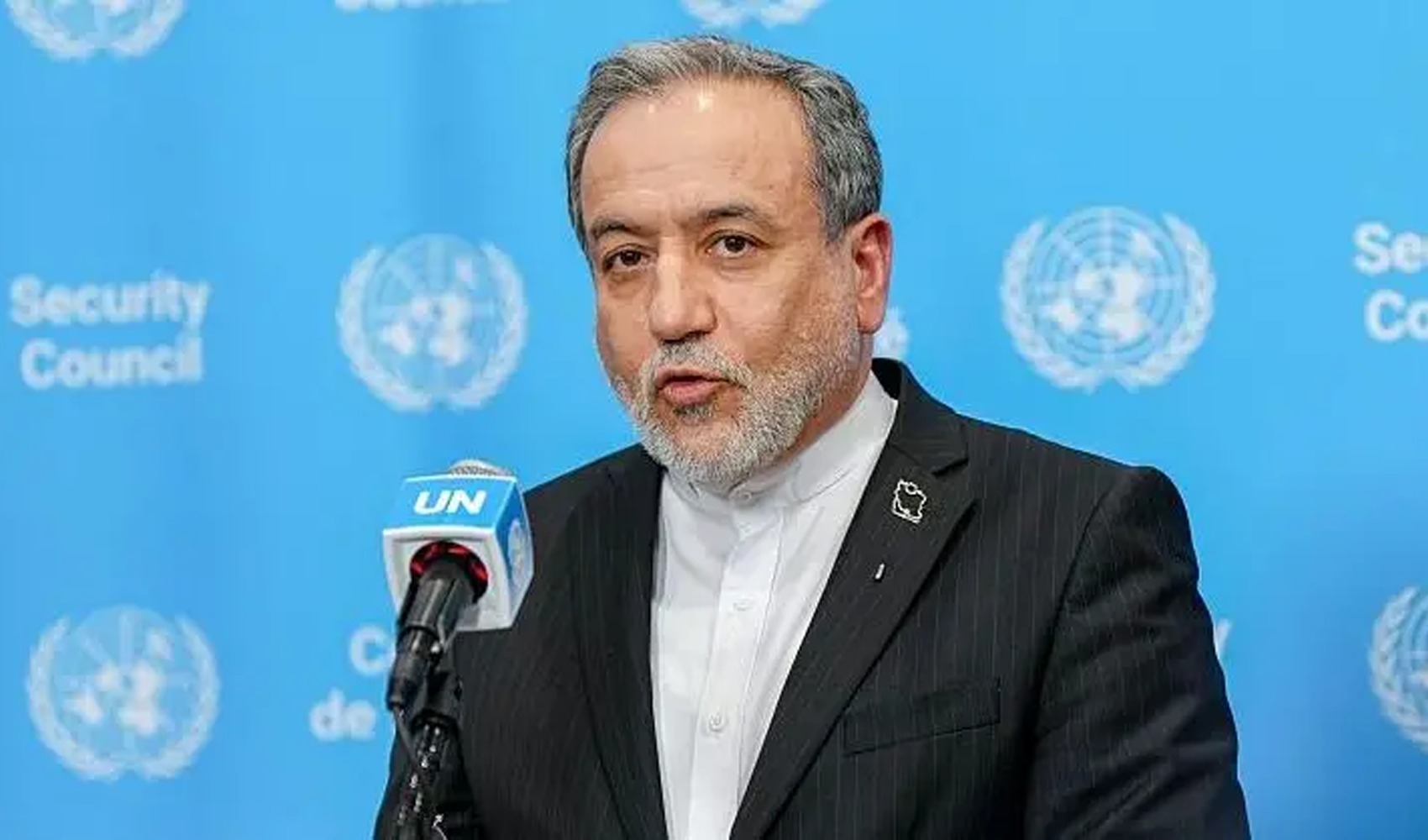
Iranian Foreign Minister Abbas Araghchi announced that his country has proposed an agreement to the US that would see the reopening of the Strait of Hormuz. Speaking to reporters at the United Nations in New York, Araghchi said that "if the necessary conditions are met," normal maritime traffic could be restored in the strait within seven days.
Araghchi stated that the proposal was conveyed to the US through Qatar, adding, "The choice is now up to the US." The Iranian minister argued that the steps Tehran is demanding were already included in the memorandum of understanding signed in June and that no new conditions were being put forward.
No official response to the proposal has been announced by the US side. A US official said that positive discussions, which also include nuclear topics, are being held through intermediaries. However, the Wall Street Journal, citing US officials, reported that President Donald Trump has rejected the proposal.
According to the report, Trump expressed skepticism in private meetings that Iran would fulfill its demands and told his team that he sees the resumption of bombings as a possibility. Araghchi, on the other hand, stated that "everything is ready" if the US is serious about an agreement.
MEMORANDUM OF UNDERSTANDING BACK ON THE AGENDA
The 14-point memorandum of understanding signed between the US and Iran on June 18 aimed to establish a ceasefire and at least partially reopen the Strait of Hormuz. The text included provisions such as Iran never possessing nuclear weapons, the parties ending military operations on "all fronts," the lifting of the US naval blockade, and the easing of sanctions.
The agreement also stipulated that Iran would make arrangements for the safe passage of commercial vessels and consult with Oman regarding future ship traffic. However, the memorandum collapsed shortly after the parties resumed attacks.
Iranian President Masoud Pezeshkian also said that the ceasefire process would begin on the day the US agrees to move forward based on the memorandum. Pezeshkian stated that Iran would now allow UN nuclear inspectors to enter the country; he denied allegations that Tehran is developing nuclear weapons.
Before the war, the Strait of Hormuz was a critical route through which approximately 20 percent of the world's oil and liquefied natural gas flow passed. While the closure of the strait led to sharp fluctuations in energy prices, maritime transport in the region was also seriously disrupted.
According to Kpler data cited by Reuters, an average of about 18 ships passed through the strait per day over the last 10 days; on some days, this number dropped to as low as nine. Meanwhile, the US has continued its blockade of Iranian ports while targeting Iranian facilities in the strait and Iranian tankers off the country's coast.
Another development increasing regional tension has been the intensification of attacks in the Red Sea by the Houthis, who are allied with Iran in Yemen. The Houthis' advance around the strategic Port of Mocha, which overlooks the Bab-el-Mandeb Strait, has increased pressure on energy and global maritime transport.
In his speech at the UN General Assembly this week, Trump said that an agreement with Iran might be possible after the November elections. Araghchi, emphasizing that Tehran will not accept "coercion, threats, or intimidation," stated, "Peace cannot be built with threats of destruction."
News Source: 12punto