For many years, the political preferences of voters of Turkish descent in Germany were strongly identified with two parties in particular. One was the Social Democratic Party of Germany (SPD) and the other was the Alliance 90/The Greens party. Policies on migration, citizenship, equal rights, and social participation played an important role in establishing a strong political bond between those of Turkish descent and these two parties for years.
Looking at today, we see that this bond is no longer as undisputed as it once was. The preferences of voters of Turkish descent are diversifying. While there is a shift toward parties other than the SPD and the Greens, conservative parties and even the right-wing populist Alternative for Germany (AfD) party, which has caused major controversy with its migration and Islam policies, are also able to win votes from voters of immigrant descent.
It would be insufficient to evaluate this change only in terms of the political preferences of those of Turkish descent. Because this change, which breaks conventional wisdom, also raises an important question regarding the future of centrist politics in Germany: Why are the social democrats and the Greens losing a portion of their traditional voters? How do the cost of living, housing, social security, war, and concerns about the future play a role in this rupture? How should it be explained that the AfD, despite its anti-immigrant policies, also receives votes from voters of Turkish descent?
We had previously directed these questions to Cemal Bozoğlu, a member of the Bavarian State Parliament for Alliance 90/The Greens, one of the political addresses that those of Turkish descent in Germany have strongly supported for many years.
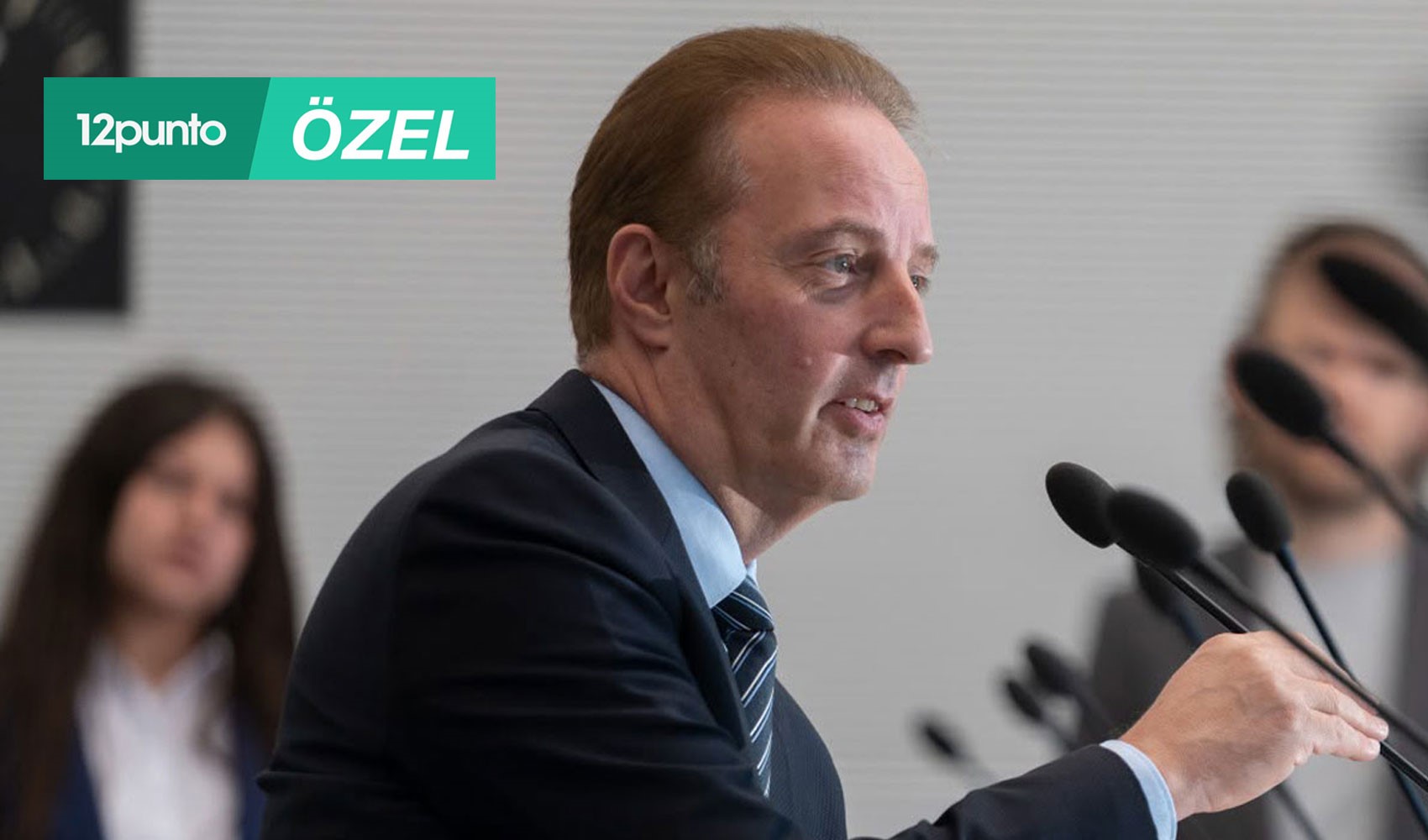
Now we turn the spotlight to the other traditional political address, the Social Democratic Party of Germany (SPD). We are facing a politician who does not mince words about the AfD: SPD Bundestag member Macit Karaahmetoğlu.
The 58-year-old Karaahmetoğlu, who was born in Rize, has long been warning German voters of Turkish descent against the AfD. He made his harshest warning immediately after the Saxony-Anhalt state elections. After the AfD's votes reached 43.8 percent, he evaluated the result with the words, "The gates of hell have been opened in Germany." He spoke even more harshly after the AfD's leader in the state, Ulrich Siegmund, mentioned defense industry and "Remigration" (the mass deportation of immigrants) policies in the same context: "Are you planning to take immigrants from their homes by force of arms and deport them when you come to power?"
Karaahmetoğlu, who is also the chairman of the Election Review, Immunity, and Rules of Procedure Committee, one of the most critical committees of the Bundestag, argues that the AfD poses a threat not only to immigrants but also to the rule of law and democracy in Germany. He has long persisted in his warnings to those of Turkish descent not to fall for the thought that "the AfD doesn't mean us."
Karaahmetoğlu, who considers it wrong and "an extremely comfortable political simplification" to call all AfD voters "racist," also opens his own party, the SPD, to criticism. For example, he says that the fear of war should not be underestimated. He admits that there are points where centrist politics cannot provide an adequate response to people's economic and social concerns.
We asked the SPD's Macit Karaahmetoğlu the same questions we posed to Green politician Cemal Bozoğlu in the previous interview.
Different answers came to the same questions...
“CALLING THEM 'RACIST' WOULD BE A COMFORTABLE SIMPLIFICATION”
– It is known that there are names within the AfD who have contacts with ethnic nationalist, far-right, and even racist circles. However, is it sufficient to define the entire AfD solely as a "racist party" based on this to explain the political phenomenon we are facing today?
The AfD is not a homogeneous party, nor is its electorate. In addition to economically liberal and center-right conservative segments, there are also groups within the party that advocate for a more statist line in social policy. We also see support for the AfD among voters of immigrant descent.
Do you think that explaining the AfD solely with the "racist" label turns into a simplification that avoids questioning why the party can win votes from such different social segments? Especially when you look at it in terms of the welfare state, migration, and the "Germans first" rhetoric, could welfare chauvinism be a more inclusive concept to explain the AfD's success? How do you define the AfD?
MACİT KARAAHMETOĞLU – We need to draw a very clear line between understanding the AfD and normalizing the AfD. Investigating why a party receives the votes of millions of people is not legitimizing that party's radical rhetoric. On the contrary, it is the duty of democratic politics.
I see calling all AfD voters "racist" as both wrong and an extremely comfortable political simplification. Because then we are spared from asking the difficult question: Why are people turning to the AfD?
But this does not lead to the conclusion that the AfD's political line is innocent. The "Remigration" used by the AfD, its understanding of Germanness based on ethnic belonging, and its rhetoric that positions one part of society against another cannot be ignored.
I do not explain the AfD solely with the "racist party" label in the classical sense. Today, the AfD has become a radical right-wing party that combines ethnic nationalism, social unrest, economic insecurity, and the fear of cultural loss in the same political pot.
I think the concept of "welfare chauvinism" is important here. Because the AfD is not just conducting a policy that advocates for the shrinking of the welfare state. At the same time, it is conducting a perception operation over who the opportunities of the welfare state belong to: "You pay the taxes, others benefit," "Housing goes to the immigrant, not you," "The state protects someone else, not you"...
The danger of this rhetoric is exactly here. It takes a real distribution problem, a real housing problem, or a real cost-of-living problem and does not look for the cause of these in income and wealth distribution, lack of investment, or public services that have been neglected for years, but in the immigrant living in the apartment next door.
Therefore, the answer to the AfD's success is not to underestimate people's economic and social concerns. On the contrary, it is to address those concerns more seriously than the AfD. What we must say is this: The problem may be real, but the culprit pointed out by the AfD is wrong.
“TELLING PEOPLE ONLY MACROECONOMIC INDICATORS IS NOT ENOUGH”
– While the rise of the AfD is being discussed, are the center-right and center-left facing their own responsibilities enough? In Germany, people are struggling with rising prices and rents, they feel their purchasing power is falling, and they are worried about energy costs, their social security, and their future.
Did centrist politics leave this field to the AfD itself by not sufficiently embracing people's concerns about livelihood, rent, energy, social security, and the future? Looking at it from the perspective of your own party, what are the points where you say, "We made a mistake here too" in the rise of the AfD? What lessons should be learned from these results?
MACİT KARAAHMETOĞLU – If I answer this question as a social democrat by saying, "We didn't make any mistakes," I would be disrespecting the voter.
In the 2025 Bundestag elections, the SPD received 16.4 percent of the vote. The AfD reached 20.8 percent. This result was a message not only about the AfD but also about us.
Now we are facing a much harsher picture in Saxony-Anhalt. According to the preliminary official results of the September 6 elections, the AfD reached 43.8 percent in the second votes. The increase compared to the previous state election is approximately 23 points. If you explain such a result only by the radicalization of the voter, you would be eliminating politics' own responsibility.
The SPD's fundamental promise is historically very clear: The working person, the retiree, the mother and father trying to support their family, the tenant, and the segments of society with more limited means should know this: The state will not leave me alone.
When this trust is damaged, the greatest capital of social democracy is also damaged.
Telling people only macroeconomic indicators is not enough. Statistically, inflation may fall, but the price at the market does not return to its old level. The salary may have increased, but the person may not feel safer at the end of the month. Indeed, according to data from the Federal Statistical Office, real wages increased by 1.9 percent in 2025, but the real wage level could only approach the 2019 level. This also explains why the loss people have experienced in recent years is still in their political memory.
I think our lesson is very clear: Politics must protect not only people's income but also their sense of security.
Affordable housing, strong municipalities, good schools, a working railway system, accessible healthcare, good wages, and a secure pension system are not abstract social policy topics. These are the visible faces of the democratic system in daily life.
If the state only appears before the citizen when demanding taxes or asking them to fill out a form, but is nowhere to be found when a daycare is needed, when looking for a doctor's appointment, or when trying to find an affordable house, people at some point ask, "Who is this system working for?"
The AfD is using exactly this void. I think we can face our mistakes, and we will continue on our way by drawing various lessons from the past and the election results in the new period.
“POLITICS MUST TELL THE TRUTH”
– Defense Minister Boris Pistorius accused the AfD of using people's fear of war for political purposes and said, "Fear is the fuel of the AfD." However, isn't there a question here that centrist politics should also ask itself? People's concern about the growth of the war, parents' fear that their children will one day be sent to war, and young people's desire for a future without war are legitimate social concerns in themselves. It is also seen that the objection to sending weapons to Ukraine is stronger, especially in East Germany. Could defining these concerns only as a "fear" used by the AfD mean underestimating a real discomfort in society? Did centrist politics leave the issue of war and peace to the AfD itself because it did not respond sufficiently to these concerns?
MACİT KARAAHMETOĞLU – Yes, it would be a big mistake to underestimate the concerns in society on this issue. If a mother or father asks, "Will my child have to go to war one day?" giving them a geopolitical lecture cannot be enough. It must be acknowledged that that fear is human.
At the same time, politics must also tell the truth. We want to maintain peace in Europe, but the war Russia is waging against Ukraine has shown us that peace is not a situation that continues on its own.
Therefore, allocating more resources to defense is not about wanting war for us, but part of the deterrence that will prevent the war from spreading further into Europe.
But we must acknowledge that there are periods when democratic politics makes communication errors. When you tell people only "more defense spending is needed," you are saying half of the sentence. The other half is: Why? Against which threat? Within which borders? Where is diplomacy? What is Europe's long-term peace perspective?
Today, Germany's defense spending is rising very significantly. Decisions of this magnitude need to be explained to the public, subjected to parliamentary oversight, and a false choice should not be created between the welfare state and security.
If a country is secure against the outside but socially fragmented on the inside, it is not strong. Likewise, if it is socially strong but unable to defend itself, it is not secure.
Social security and external security are not rivals of each other, but two fundamental duties of a democratic state. What the AfD does is take people's longing for peace and turn it into a political slogan that masks Russia's aggression and Europe's security reality.
WAR AND ARMAMENT: “THE AfD DROPPED ITS OWN MASK”
– Doesn't a contradiction emerge here in the AfD's own rhetoric as well? While the party opposes arms aid to Ukraine and increasing defense spending, Saxony-Anhalt AfD leader Ulrich Siegmund announced that they are not in principle against the Israeli defense company Elbit Systems producing in the state and argued that military production is necessary for Germany's security.
Is the AfD really an anti-war and anti-armament party, or is it turning the anti-war reaction in society into political gain?
MACİT KARAAHMETOĞLU – I think the AfD dropped its own mask here. When asked about the possible investment of the Israeli defense company Elbit Systems, AfD leader in Saxony-Anhalt Ulrich Siegmund said that they do not categorically reject defense industry production. More importantly, he linked this to the tools that might be needed in the "Remigration and deportation operations" they plan in the future.
We cannot take these words lightly because two truths emerge here at the same time.
First, it is seen that the AfD's narrative of "We are a peace party against armament" is not consistent. A "peace" understanding that changes depending on whose hands the weapon is in and for what purpose it will be used is not a peace policy.
Second, and more gravely, military production and the mass deportation of immigrants are brought together in the same sentence.
That is why I asked and will continue to ask this question:
"Are you planning to take immigrants from their homes by force of arms and deport them?"
Millions of people living in Germany have the right to know the answer to this question.
What needs to be done against the AfD's "peace party" rhetoric is not to counter their slogan with another slogan. It is to show their own words to the public. Because sometimes the most effective way to explain a party is to put what it says in front of people without adding anything to it.
While the AfD talks about peace to the outside, it conducts a policy that targets social peace through immigrants on the inside. I see the real contradiction here.
“THEY SAY 'GERMANY FIRST,' BUT WHICH GERMANY, WHOSE GERMANY?”
– On one hand, the AfD is at the center of serious debates in Germany due to its relations with Russia, and on the other, it receives open political support from US President Donald Trump and MAGA circles. Even though the interests of Moscow and Washington are not the same, how do you evaluate this closeness to the AfD from both sides?
Is the AfD, which appears before the voter with the claim of "Germany's interests" and sovereignty, really pursuing an independent "Germany First" policy, or is it turning into a political space where different foreign power interests over Germany intersect?
And finally: In Germany, where millions of people of Turkish descent and approximately 5.5 million Muslims live, what do you think the AfD's strengthening to this extent means for the country's internal balances, social cohesion, and the future of people of immigrant descent?
MACİT KARAAHMETOĞLU – I use a very fundamental criterion here: Is the policy of a German political party determined in Berlin, or is it shaped according to whether it receives applause in Moscow or Washington?
The AfD constantly talks about "German interests" and national sovereignty. However, we have seen that the same party has been the subject of a special debate in the Bundestag in the context of Germany's security interests due to its relations with Russia. On the other hand, we also see the open political sympathy coming from the MAGA movement in the US and the Donald Trump circle.
Moscow and Washington may not want the same thing. However, the weakening of democratic Europe, the fragmentation of the European Union from within, and the decrease in Germany's maneuverability within Europe may serve the interests of different actors for different reasons.
Therefore, my understanding of "sovereignty" is very simple: Germany's sovereignty means not being dependent on Washington as much as not being dependent on Moscow. Defending German interests means defending a democratic, economically strong, and self-deciding Germany as part of a strong and sovereign Europe.
A political movement that calls itself "Germany First" meeting on the same political goals with foreign actors that will weaken Germany's democratic institutions and alliances in Europe deserves at least this question:
"You say 'Germany First,' but which Germany and for whose interests?"
The Germany I defend is a Germany at the center of a strong Europe that acts with its own democratic will.
“IMMIGRANTS ARE NOT SPECTATORS OF THIS COUNTRY, THEY ARE ITS OWNERS”
– Finally... In Germany, where millions of people of Turkish descent and approximately 5.5 million Muslims live, what do you think the AfD's strengthening to this extent means for the country's internal balances, social cohesion, and the future of people of immigrant descent?
MACİT KARAAHMETOĞLU – The issue here is no longer just an issue of immigrants. It is an issue of what kind of country Germany will be.
According to 2025 data from the Federal Statistical Office, approximately 21.8 million people in Germany have a migration story, which corresponds to 26.3 percent of the population living in private households.
The comprehensive research of the Federal Office for Migration and Refugees regarding the Muslim population in Germany reveals that approximately 5.3 to 5.6 million Muslims live in the country. At the time the research was conducted, approximately 47 percent of them were German citizens.
So we are not talking about two completely separate societies called "Germans" and "immigrants" here.
Your doctor's name might be Mehmet. Your child's teacher might be Ayşe. The person working as an engineer in your company might have a family that came from Turkey. Millions of people who pay taxes, start companies, work in hospitals, take care of the elderly, do science, and are members of parliament are part of this country.
I am one of them too.
Therefore, the "Remigration" debate is not an abstract migration policy debate for me. On the contrary, it is related to this question: Who will decide who really belongs to this country in Germany? The passport, the constitution, or the definition of ethnic Germanness in someone's head?
The answer that democratic Germany gives to this question is clear. German citizenship cannot be divided into first and second class.
But it is also necessary to say this to people of immigrant descent: Being afraid and withdrawing from democratic life would be the wrong answer. On the contrary, voting, joining political parties, and taking part in unions, associations, and civil society is more important today than ever.
And I also have a warning for centrist parties: If we see citizens of immigrant descent as a "target audience" that is only remembered during election periods, we will make a big mistake. These people are not spectators of Germany, they are its owners.
The rise of the AfD reminds us of an important thing:
Democracy is not protected only by red lines drawn against the far right. Democracy remains strong when people see a concrete reason to stay on the democratic side of that line.
Therefore, our struggle is not only against the AfD. It is a struggle for better wages, more affordable housing, a strong welfare state, good education, security, equal opportunity, and a Germany where everyone can feel they belong.
ABOUT MACİT KARAAHMETOĞLU
Macit Karaahmetoğlu was born on July 11, 1968, in Rize. After his law education, Karaahmetoğlu, who practiced law, worked as a lawyer specializing in copyright and media law. Karaahmetoğlu, who was elected to the Bundestag from the Baden-Württemberg SPD, continues his duty as a member of parliament in the 21st legislative period.
Karaahmetoğlu, who is a full member of the Committee on Legal Affairs and Consumer Protection and the Election Review, Immunity, and Rules of Procedure Committee in the Bundestag, also chairs the Election Review, Immunity, and Rules of Procedure Committee. He serves as a substitute member on the Defense Committee and the Foreign Affairs Committee.
Karaahmetoğlu, who also continues his presidency of the German-Turkish Society (Deutsch-Türkische Gesellschaft e.V.), has been active in the field of German-Turkish relations and the society of Turkish descent in Germany for many years.
IŞIN ERTÜRK - BERLIN
News Source: 12punto