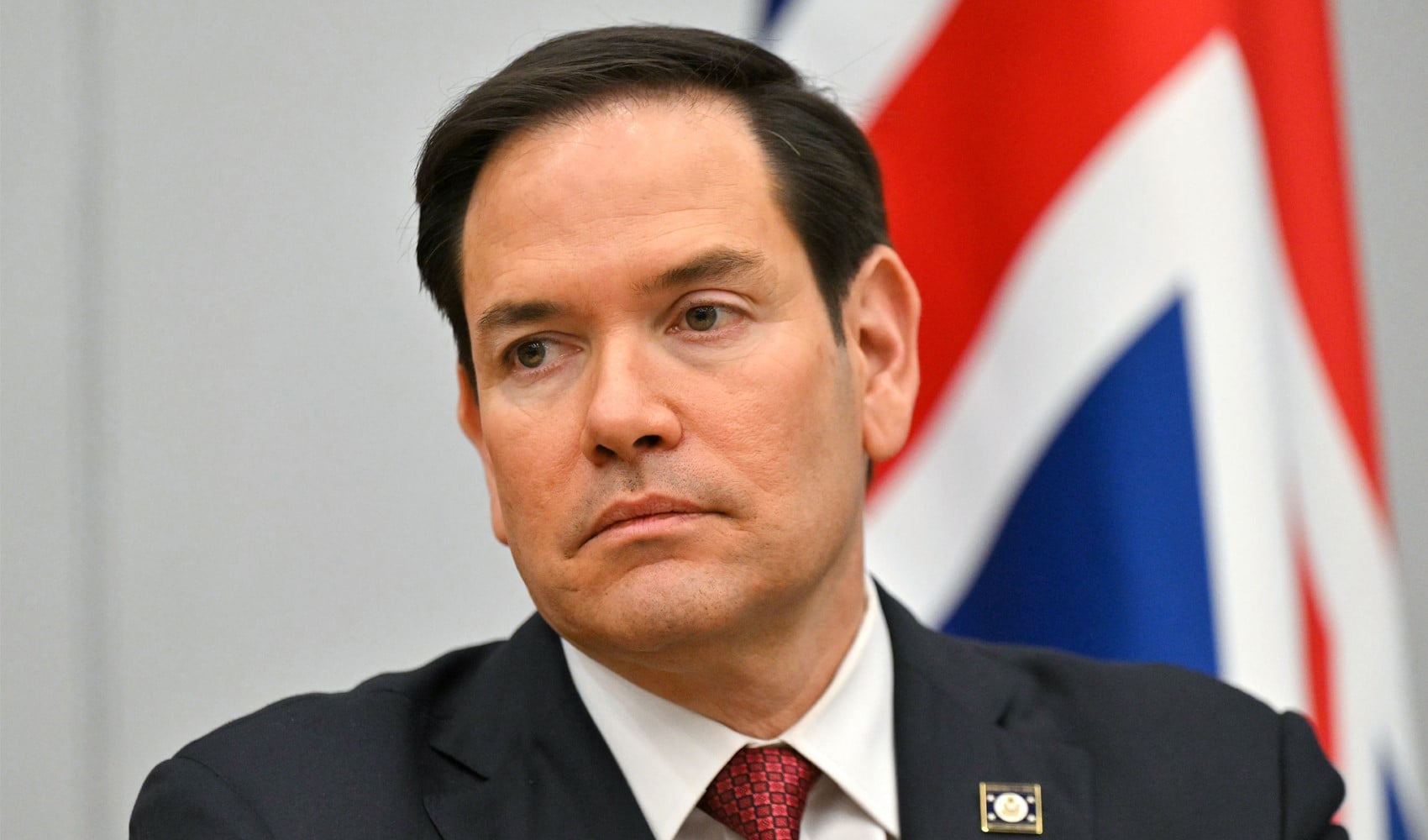
US Secretary of State Marco Rubio and Russian Foreign Minister Sergey Lavrov met on the sidelines of the 81st United Nations (UN) General Assembly. The closed-door meeting addressed the war between Russia and Ukraine and bilateral relations between the US and Russia. US Secretary of State Rubio answered questions from members of the press following the meeting.
When asked whether he had discussed the issue of hybrid attacks against Europe and Germany with Russian Foreign Minister Lavrov, Rubio replied, "If I tell the media what was discussed as soon as I leave the meeting, such talks do not function healthily."
Rubio said, "One of our concerns regarding the war between Russia and Ukraine is that the war could spread elsewhere. This could happen through a hybrid attack, through sabotage, or through a misunderstanding. We have raised this in many meetings."
"We have invited Putin to the G20"
Responding to a question about the possibility of a new meeting between US President Trump and Russian President Vladimir Putin, Rubio said, "To solve problems, you need to meet with people you do not agree with or with whom you have problems. That is why we invited President Putin to the G20. We believe this will be an opportunity for him to engage not only with the President but also with other world leaders. We hope he accepts the invitation and that an opportunity arises in December."
Stating that at least a dozen phone calls have taken place between Trump and Putin since the US President took office, Rubio added, "We will continue to remain open to making contact."
"We will continue to defend and keep the straits open"
When asked about what happened during the meeting between the US negotiating team and the Iranian delegation yesterday, Rubio said, "I do not want to characterize the meeting in one way or another. I think there is a fairly clear understanding of what this is. Do not forget what is at the heart of everything here. The number one issue, as the President underscored in his speech to the world public yesterday, is that Iran can never possess nuclear weapons. Everything stems from there."
Rubio stated, "We understand that the straits are also an issue. The southern transit line of the straits is open. More oil is passing through here every day. This place is open thanks to the efforts of the US military, which protects ships and clears mines. This trend will continue. The only blockade in the Strait of Hormuz is the one we are enforcing against Iran. Because they continue to fire on ships. They did it even this morning. There was another attack on ships, but we will continue to defend and keep the straits open."
"Iran is under the delusion that the Democrats will win and the President will no longer be able to take action"
When asked for his comment on the claim that Iran is waiting for the midterm elections in the US for a deal, Rubio said, "They are under the delusion that the Democrats will win in November and then the President will no longer be able to take action. I do not think they understand our system very well."
When asked about the possibility of coordination or consensus on Iran following meetings with Gulf countries, Rubio replied, "I think there is a consensus that the straits should be open and free without being attacked. The same applies to the view that what is happening with the Houthis and in Yemen is extremely problematic. There is also a consensus that Iran should never possess nuclear weapons."
Rubio added, "Almost every country in the region has been facing the threat of an Iranian proxy force for years. There is a strong consensus that Iran is a harmful power in the region."
In response to a question about Russia's interest in the energy ceasefire proposed by Ukrainian President Volodymyr Zelenskyy, Rubio said, "I think both sides are interested in a limited ceasefire covering energy and some other areas. This will not end the war, but it could alleviate some of the global pressures."
"(Venezuela) There is a need for an electoral process that people trust"
When asked about US President Trump's statement that "freedom will come to Cuba" and whether a military landing operation similar to the one in Venezuela might be in question for Cuba, Rubio replied, "I am not saying this specifically for Cuba, but if there is a threat to the national security of the US, the President has the authority and the obligation to deal with it."
Rubio said, "Our preference is always to resolve these issues through negotiation, through political means, without the need for the use of military force, and in a way that progress is achieved with fundamental changes in a country. Beyond that, I will not speculate and I will certainly not make any threats."
Answering a question about the meeting Trump held yesterday with Venezuela's Interim President Delcy Rodriguez, Rubio assessed it as, "It was a short but important meeting." Rubio said, "There is a lot that needs to be fixed for Venezuela to be successful. Debt restructuring is one of the fundamental issues. The second and equally important issue is the political transition process."
Stating that the US aims to stabilize the economy in Venezuela and help rebuild institutions so that elections can be held, Rubio said, "In the last two weeks, some media organizations that have not been allowed to broadcast for seven years in Venezuela have started broadcasting again. Political parties need to be re-established. There is a need for an electoral process that people trust. Trust must also be built that votes will be counted correctly and announced correctly."
"(Houthis) We are not satisfied with what is happening"
When asked what more the US could do against the Iranian-backed Houthis in Yemen, Rubio replied, "We have a strong defense agreement with Saudi Arabia, and we will continue to fulfill our commitments under this agreement. We are not satisfied with what is happening."
The US Secretary of State said, "We are of the opinion that the attacks on energy infrastructure in the Middle East were not carried out solely by the Houthis. Shiite militias backed by Iran likely also participated in the attacks. Every issue I am asked about regarding the Middle East eventually comes back to an Iranian-backed group."
Regarding what the US is doing to end the war in Sudan, Rubio said, "This is an extremely disappointing issue. We have reached agreements at meetings in various parts of the world. Some things were accepted, documents were signed, but the commitments made are not being fulfilled. We all know that what is happening in Sudan would not have happened if it were not for the support of one side by external actors."
Emphasizing that they are trying to achieve progress at least in the humanitarian field in the short term, Rubio said, "Every time we seem to be making progress, at least when we get close to a point like opening humanitarian corridors, one of the parties takes a step back because they think they are winning or can win. Also, there are external actors."
"The relationship between the US and China will be defining for the 21st century"
When asked about concerns regarding the great importance placed on Chinese President Xi Jinping's visit, Rubio replied, "The US and China are the world's two largest economies. The US and China likely possess the two most powerful militaries in the world. The relationship between the US and China will be defining for the 21st century. Therefore, the idea that we should not engage at the highest level is irresponsible."
Stating that regular communication and meetings took place between the US and the Soviets even when the threat of nuclear annihilation existed, Rubio said, "No matter how great our disagreements with the Chinese government are, we are not talking about a small country. It is the world's second-largest economy and an extremely important military power that is carrying out one of the fastest military buildups in history. We also have very serious friction points in areas such as trade, supply chains, and critical minerals. Therefore, leaders meeting with each other is a requirement of responsible statecraft."
"We do not want a new crisis in the West Bank"
Regarding the reconstruction of the Gaza Strip and the financing of reconstruction efforts, Rubio said, "Donor countries will participate in the event. They will announce not only their commitments but also where the money will be directed. A number of countries have pledged aid. We want more countries to participate."
Arguing that the solution would be a "Gaza de-Hamasified," Rubio said, "Gaza should be under the will of a Palestinian administration that represents its people."
Stating that reconstruction will also be an important part of peace, the US Secretary of State said, "This is a long-term project. It is not something that can happen in six months. But at least people can be given hope about what kind of future awaits them when everyone does their part."
When asked about his feelings regarding the situation in the West Bank, Rubio said, "Considering everything happening in the region right now, especially the difficulties encountered in implementing the agreement in Gaza, the fragile situation in Lebanon, the Houthis and Saudi Arabia, the ongoing tension and conflict with Iran, the last thing the region needs is a new crisis point."
Arguing that Israel also does not need a new crisis, Rubio said, "That is why we have conveyed to everyone what our preference is. The President also thinks that the world does not need a West Bank crisis right now. That is our position."
"I do not think Iran is in a position to lecture on the international system"
Evaluating Iranian President Masoud Pezeshkian's UN speech, Rubio accused Iran of killing protesters in its own country and supporting terrorist organizations in the region for attacks against its neighbors. Rubio said, "I do not think Iran is in a position to lecture others on human rights or the international system while constantly violating the international system."
The US Secretary of State said, "I do not understand how they can speak in defense of the international system while being one of the world's leading violators of the international system."
"Destroying Iran's nuclear facilities is not enough"
When asked why the US did not declare victory and withdraw from Iran, Rubio said, "Destroying Iran's nuclear facilities is not enough. A long-term and enforceable commitment is needed that Iran will never pursue nuclear weapons. As long as Iran continues to be ruled by the current individuals, it is an unacceptable risk for the world. They say they want nuclear energy. There are dozens of countries in the world that have nuclear energy. That is not what they want. They want the capacity to have their own uranium enrichment facilities. We know they have investigated the program to develop nuclear weapons multiple times. It is unacceptable for a state sponsor of terrorism to possess nuclear weapons."
News Source: 12punto