



Today is the anniversary of Ankara becoming the capital.
In truth, Ankara didn't have much else to offer back then besides its goats, cats, and pears.
It also had the oxcarts left over from its thousands of years of history.
However, Mustafa Kemal Pasha had read about this place in the pages of history and realized that in an ancient era, Ankara had been governed by a system similar to a Republic.
A hidden gem was concealed within it.
The very center of Ankara was also its physical center of gravity.
In May 1919, before departing for Anatolia, he noticed an interesting detail when he appeared before Sultan Mehmed Vahdettin. As the Sultan spoke, his eyes kept drifting to the enemy warships visible from the palace window. It was at that moment he thought, "A government center cannot be in a place (Istanbul) where one gets anxious over the cannons of a ship," he said.
In fact, three months before this date, in February 1919, he had already decided with Atatürk and a few close friends to make Ankara a "Center of Resistance."
When he ignited the fire of the War of Independence, he would govern Anatolia from here.
In line with this decision, he ensured the 20th Army Corps headquarters was moved to Ankara. And he ensured that his trusted classmate, Ali Fuat (Cebesoy) Pasha, was placed in charge of this corps.
The Mudros Armistice had already been signed, and with the few soldiers left, there was only the 15th Army Corps in Erzurum under Kazım Karabekir Pasha, and the 20th Army Corps, which had withdrawn to the vicinity of Ulukışla.
Atatürk had gained control of Central Anatolia with the 15th Army Corps commanded by Ali Fuat Pasha, making Ankara a secure location. Thus, he cut off the influence of the occupying powers and the collaborationist Sultan and Damat Ferit Pasha Government over Anatolia. Ankara became a reliable center in the very first days of the national movement and stood behind Mustafa Kemal.
Ali Fuat Pasha, who settled in Ankara with his corps, was also responsible for security as far as the Afyon region.
Atatürk could not immediately realize the idea of moving the capital to Ankara, which had been on his mind since he began the National Struggle. Because this was very risky. Even Kazım Karabekir Pasha had opposed it.
He couldn't even write the name Ankara into the Constitution (Teşkilat-ı Esasiye). While Istanbul existed, no one wanted Ankara to be the capital. Yes, Istanbul had hosted the capital since 1453, but with the 1877-78 Russo-Turkish War, also known as the "War of '93," the Russians had reached as far as Yeşilköy.
And they had even erected a monument.
Enver Pasha had barely stopped the Bulgarians with the 1st Army in 1913 in front of Bakırköy.
By 1919, the Dardanelles had been passed, the Black Sea had become an unsafe sea, and Greek battalions had come by land to settle in hotels in Istanbul, while over sixty enemy warships, led by British, French, Italian, and Greek vessels, had dropped anchor in the strait.
There was even a Japanese ship among them.
The capital was officially under occupation.
A capital means the administrative center, the mind, and the brain of a country. A state whose capital has been taken, whose mind and brain have been removed, and which has become vulnerable to dangers, could never, ever be governed.
Mustafa Kemal certainly knew this, but changing the capital was not that easy. He knew this too. When he embarked on the National Struggle, he acted without hurting or offending anyone. Even if it wasn't legal, he would make Ankara the political capital for the time being.
Mustafa Kemal Pasha came to Ankara in the final days of 1919 and began his work. He opened the Parliament in Ankara. He formed the state cadres at the Ankara School of Agriculture. He established the army in Ankara. He managed all his wars from here. He managed diplomacy against the seven great powers from Ankara.
His residence and headquarters was the Çankaya Mansion.
He won the First and Second Battles of İnönü. He won the Battle of Sakarya, known as the Sea of Blood. He prepared for the Great Offensive, where the Afyon plain was painted in crimson blood, from here.
If he had lost, he would have been hanged in the middle of Ankara. But he won. He saved the entire country, Anatolia.
After winning all the wars and driving the enemy into the sea in Izmir, Atatürk could finally write into the Constitution that Ankara was the capital. When the Republic was proclaimed and he gave the 1924 Constitution its final form, he did not forget to add that Ankara was the capital. He said, "The official language of the Turkish State is Turkish; its capital is the city of Ankara."
Constitutional matters are things that fit into wars, declarations, decades, and centuries. After Atatürk died, it was declared in the 1945 Constitution that Ankara was the capital. It was in the 1961 Constitution, and it was in the 1982 Constitution.
The fact that Ankara is the capital was an unchangeable and unamendable article of all our Constitutions.
None of those who drafted new Constitutions attempted this. They did not dare to change it. They didn't even think about it. The first three articles of the Constitution had already been written with war and revolution; only another war and another revolution could scrape them away.
It was that clear.
You know, there are fools who want to change the fourth article of our Constitution; let's explain it to that fool as if explaining it to a child. The fourth article of the Constitution states that the first three articles cannot be changed or even proposed for change.
And our Constitution's third article states that Ankara is the capital.
Let us tell the fools who want to change it then: Ankara is the fortress of a victory and the headquarters of a revolution. It is a headquarters that cradled the First and Second İnönü, Sakarya, and the Great Offensive battles.
Atatürk ignited the fire of liberation, started a war, and won a victory to make Ankara the capital.
Those articles were written not with ink, but with blood.
To change the unchangeable capital status of Ankara, which is stated in Article 3 of the Constitution, you too must start a war.
This business is not like gathering 3-5 people in front of you and talking to screens and microphones.
And once you start the war, if you have the guts, you have to win this war too.
This historical truth is what you need to carve into that foolish mind of yours.
Most Read
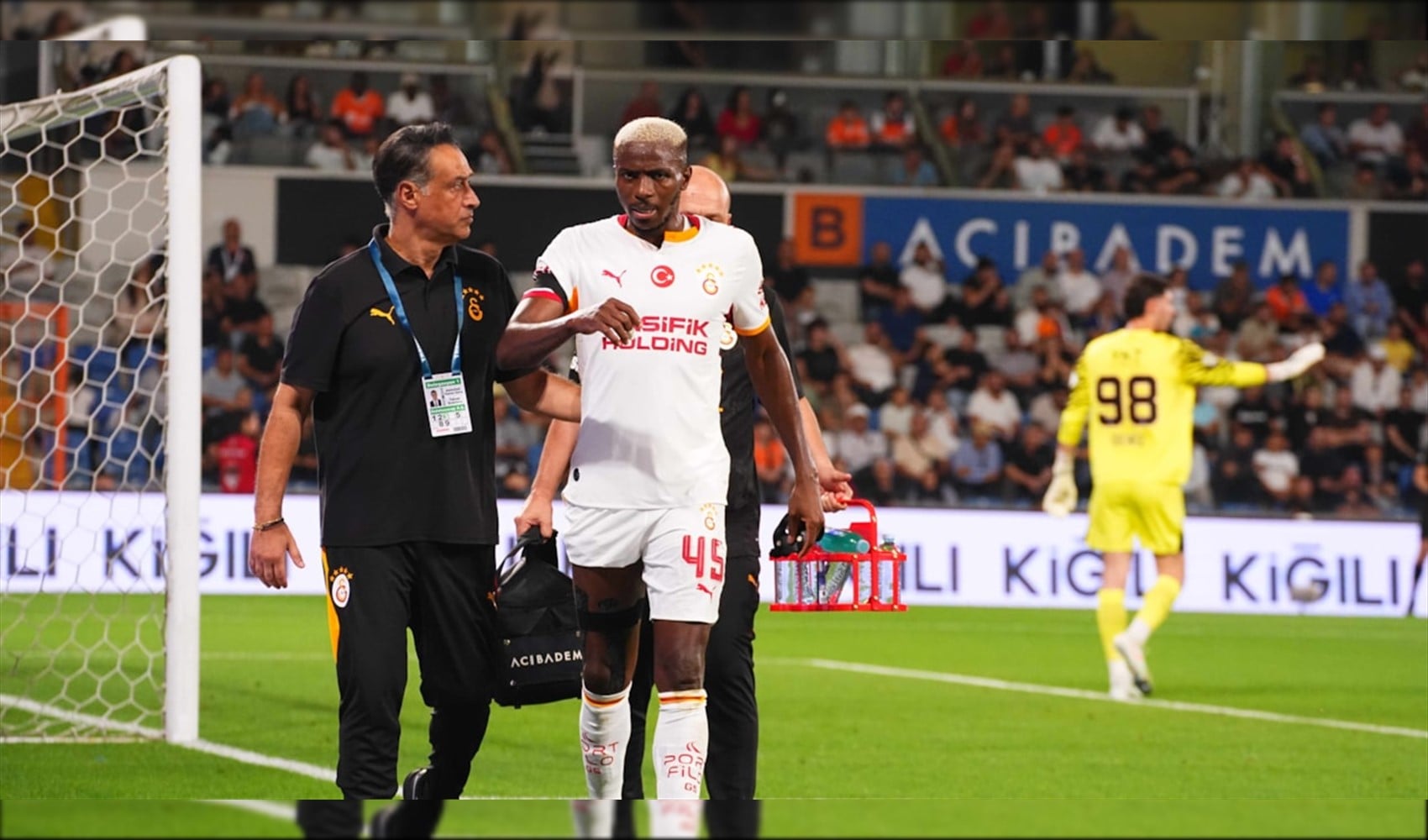
Galatasaray announces injury updates for Osimhen, Lemina, and Singo

Attention online sellers: Tax monitoring expanded
VAR for the Fenerbahçe-Beşiktaş derby has been announced!
Bridges and highways are being privatized: 15 July and FSM are also on the list

Peugeot September 2026 price list is out

New details emerge in 'panel' operation targeting lawyers
Gökçek era detail in ABB investigation
Rules are changing in Schengen
First statement from Osimhen after injury in Başakşehir match

Özlem Şanver: 'He said he would change, I believed him; should I be beaten just because I didn't leave?'