



Tomorrow is the anniversary of Uğur Mumcu's assassination.
Time flows by so quickly.
Thirty-one years have passed since this vile assassination, whose purpose and whom it served have now become clearly evident.
I met him in 1991, when I started as an intern at the Ankara Bureau of Cumhuriyet Newspaper, while I was still a fresh reporter.
I remember the times he would stop by the newspaper.
He would pull a chair into the middle of the office and chat with the reporters and writers who gathered around him.
What remains in my memory after 30 years are not faint, fading recollections.
They are as vivid as if it were today!
The collarless leather vest he wore over a light-colored shirt, the Smith & Wesson revolver he carried as a precaution against a possible attack, his resolute and confident tone of voice as he evaluated the day's developments, and the way he would ask for everyone's opinion—regardless of whether they were young, old, experienced, or inexperienced—and listen to what each person had to say with seriousness...
For interns like me, he was a living legend!
At that time, he was primarily working on Islamist and separatist terrorist organizations, the support these organizations received from Western countries, and the link between drug trafficking and terrorism.
When he wasn't at the Ankara Bureau, he would call and ask the intern reporters to scan the newspapers; he wanted us to research how many martyrs Turkey had lost in the fight against terrorism in the last month or week, where the terrorist attacks had taken place, whether the perpetrators had been caught, and to track police and gendarmerie drug raids, the amount of drugs seized, and the connections of those captured.
Naturally, even this task alone was an invaluable experience for me.
Since 'Saint Google' had not yet appeared in our lives back then, I would scan the newspapers one by one and re-read the news related to the topics Uğur Mumcu wanted me to research with greater care. I would take my notes meticulously and take great pleasure in doing so.
But for me, the most important thing was the comments Uğur Mumcu made after I called him to report the results of this small investigation.
I can say that I learned a great deal about investigative journalism from these five-to-ten-minute phone conversations.
He would use the data I provided in his columns.
How to conduct research, how to evaluate the results, how to establish connections between developments, how to interpret them, and how to form a perspective; I learned these important pieces of information, which I have benefited from throughout my journalistic career, from the short conversations I had with him.
Years later, at the Uğur Mumcu Investigative Journalism Foundation (um:ag), established by his family in his name, I would like to emphasize that I have benefited greatly from what he taught me while teaching a course on foreign policy reporting.
At the end of 1991, a major crisis erupted at Cumhuriyet newspaper due to internal conflicts.
The Editor-in-Chief of that period, Hasan Cemal, must have been overly influenced by the political climate of Turgut Özal, as he wanted to change the newspaper's editorial line, while the team led byİlhan Selçuk and Uğur Mumcu vehemently opposed this.
In the end, the newspaper was torn apart. I packed my bags and left. I didn't have an official contract anyway. You wouldn't get a permanent staff position without suffering for three or five years.
During this process, key figures of the opposition wing at the newspaper would gather at Uğur Mumcu's house, if not every evening, then every three to five days, trying to determine a strategy. I would attend these meetings too. One evening, in front of the door, Uğur Mumcu grabbed my arm and said, "We can endure being unemployed for a while longer, but you don't have the luxury of being unemployed or taking a break from the profession. Go to Ünal İnanç and start working there." he said.
My heart and mind were with Cumhuriyet, but I did as he said.
I knocked on Ünal İnaç's door, "Come on in, Uğur spoke of you with praise" he said as he started the conversation, asking a few questions in a row.
However, I didn't listen to any of them, so I think I gave nonsensical answers, because at that moment "praise" I was busy thinking about what the word meant.
After leaving Ünal İnanç, I immediately ran to the İmge Bookstore, grabbed a dictionary from the shelf, and looked up the meaning of the word 'sitayiş' (praise). I let out a deep sigh of relief; my mind was at ease.
A while later, the Turkish News AgencyI started working as a reporter responsible for diplomacy and terrorism files.
Then, the crisis at Cumhuriyet ended. Those who had left returned. But the circulation, which had hit rock bottom during the crisis, never returned to what it once was.
I did not return to Cumhuriyet, nor did I make any attempt to do so.
What had happened had left me disappointed.
Days at the Turkish News Agency passed by with an intense work pace.
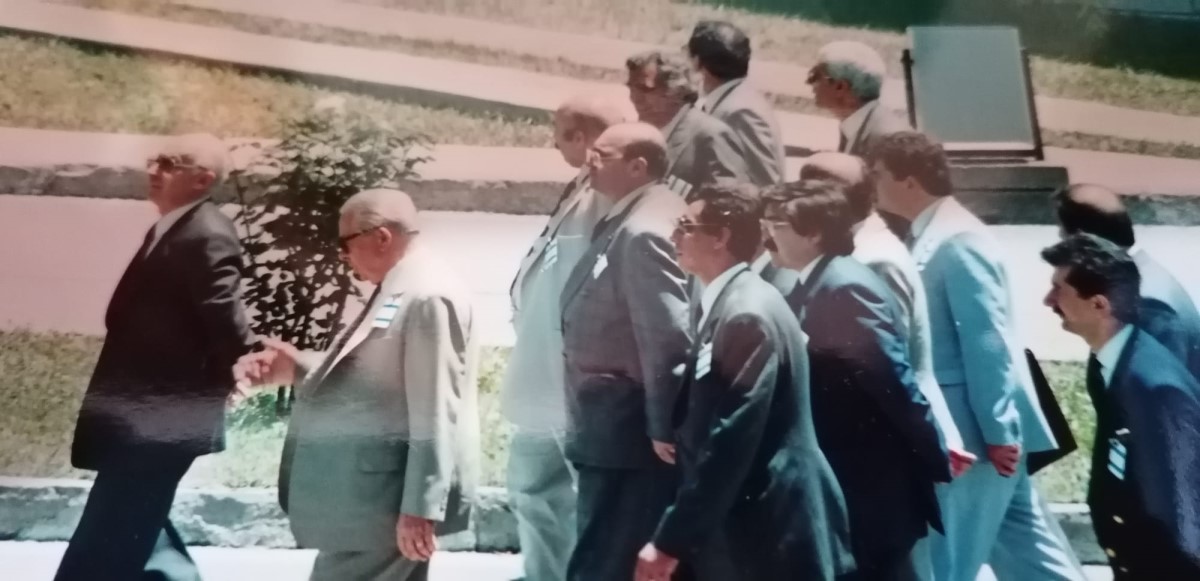
On the evening of January 22, 1993, just as I was preparing to leave work, Ünal İnanç called me into his office.
In front of him were three folders that could be described as quite thick.
He said, 'You know where Uğur lives, don't you?'
'Yes,' I said.
'Alright then, take this file, get in a taxi, and go to Uğur's house. Give this file to him personally. If Güldal opens the door, ask for Uğur. Make sure you give it to him yourself.'
Ünal İnanç was a magnificent police reporter whom everyone in the Ankara scene respected deeply. As a journalist who had dedicated years to this field, he acted with extreme caution. He was meticulous, leaving no stone unturned in his work. He had spent a lifetime with police, gendarmes, military personnel, intelligence officers, and JİTEM members. He had incredible news sources. Information and documents flowed to him almost effortlessly. Even if what he said didn't make sense to me—which it often didn't— 'He must know something' I would say, and I wouldn't press him further.
After handing me the file, he continued to give me instructions.
- Do not take a taxi from here, from Mithatpaşa; go and hail a taxi on the Boulevard. Do not stop on the way, and as soon as you get in the car, lock the door. If you notice anyone following you, do not go to Uğur's house; get off in a crowded place along the way. Do not give the file to anyone!
Everyone called Ünal İnanç "Father" He truly lived up to this title with his appearance, his demeanor, his habits, his temperament, and his overall manner.
I thought to myself, "Father must be in one of his moods again" I thought.
I left without asking anything. Looking to my right and left, just as he said from Mithat Paşa Street to Atatürk Boulevard I walked. Without paying any mind to Ankara's biting frost, the muddy roads, or the rush of people trying to get home, I got into a taxi in front of Güven Park, “Köroğlu Street” I said, locked the door, and opened the cover of the file.
In Turkish, on it “The Turin File” was written.
I turned the pages; they were in Italian. As far as I could understand, they were the minutes of a drug case in Italy. Furthermore, they contained assessments from the security bureaucracy in Turkey.
Along with the information note attached to the cover letter and the opinions of the relevant units, it had been distributed to the MGK (National Security Council) General Secretariat, the General Staff, the Prime Ministry, and the Presidency. it had been distributed.
There were notes taken in English and Turkish inside. Upon looking carefully, I realized these were translations from Italian.
Taking advantage of the slow-moving traffic, I began to read.
In summary, it described the PKK's drug trafficking in Europe. After the drugs entered Iraq and Turkey via Afghanistan and Iran, it was being handled by the PKK to Europe was being emphasized. Furthermore, there was detailed information regarding drug production in Southeastern Anatolia. Some individuals who had held critical positions in Turkey, as well as certain businessmen, were also included in the file.
However, the detail that caught my attention the most was that the intelligence services of the leading European countries were also involved in this business. The intelligence services of these countries were taking a share of the drug trafficking and using this money to fund various operations they were conducting in countries across the Middle East and Africa.
Some political murders and assassinations were also related to these. A money trail involving hundreds of millions of Marks was at stake.
It seemed as if everyone wanted a piece of this pie.
The PKK also knew the power it held, used it politically, and was gaining ground in Germany, France, Belgium, and the Netherlands. Europe, in turn, was turning a blind eye to the PKK's terrorist acts.
I was horrified by every line of the file I could read.
After an hour that felt like a few minutes, I arrived at Uğur Mumcu's house. I knocked on the door of his modest apartment below the ground floor. He opened it himself and invited me in. I handed over the file, and Güldal Hanım offered me a quick coffee.
"Did you look?" he asked.
"Yes," I said.
"This Europe," he said, "still hasn't digested our War of Independence. They support all kinds of inhumane activities against our country. That is exactly why we must be strong. That is why full independence is so important..."
As those who knew him would recognize, he excitedly explained the link between terrorism and drugs once again, stating that if this is not prevented, the countries that support terrorism, even if indirectly, will eventually become targets themselves.
I left his side 15-20 minutes later, got on the bus, and went home. The next day, I noted down what I remembered from the Turin File and what Uğur Mumcu had said in my black-bound notebook.
I was off on Sunday.
The phone rang; it was our intern, Emel, calling. At first, I couldn't understand what she was saying through her sobs. She seemed to be choking from crying, then she paused for a moment and They killed Uğur Mumcu was all he could say.
I was frozen...
I didn't know what to say or what to do.
I got up and went to the street where his house was; it was like the Day of Judgment. They hadn't even removed his body, which had been torn apart by the explosion.
What did I feel? A great shock, a great sorrow, but also a very great anger!
The rest is already written in detail in the books of recent history.
A magnificent funeral ceremony, politicians' "his blood will not remain on the ground" statements and so on...
We would only realize much later that some people had carried out an inhumane clearing of the area to pave the way for the Political Islamist mentality on the path to the dystopia we live in today.
In fact, these murders had begun earlier.
The enlightened, republican, Kemalist intellectuals of this country Muammer Aksoy, Çetin Emeç, Turan Dursun, Bahriye Üçok, all of them had been murdered within the year 1990.
Three years later Uğur Mumcu, and in 1999 Ahmet Taner Kışlalı...
In order to establish the dominance of the political Islamist mentality, this country's Kemalist intellectuals and opinion leaders were murdered one by one.
After the assassination of Uğur Mumcu, the Turin File never came to the agenda in this form. I do not know what the fate of the file was. However, in the following years, details were written and drawn regarding the PKK's place in the drug trade, the organization's financing of its actions with drug money, and its bribery of many influential and authorized figures in Europe.
Even though the situation manifests itself in an extremely unfavorable manner under today's circumstances and conditions, let us emphasize once again that we do not have the luxury of losing hope before the cherished memory of our republican, enlightenment-oriented, and Kemalist intellectuals who gave their lives for this country. Despite all this, let us conclude our article by saying,“As long as we breathe, there is hope” and put a period to our writing.
Our final word is for the fake patriots, the word-jugglers and empty talkers who show up here and there on the anniversary of his death, winking at both the Palace and the opposition, waiting in ambush to see what they can snatch from which CHP municipality, and feeding off the rent of reputation. Before they make fancy remarks about Uğur Mumcu, they must, absolutely must, rinse their mouths.
* * * *
January 19 is also the anniversary of the assassination of journalist Hrant Dink. Like Uğur Mumcu, he too fell victim to the dark calculations of dark circles.
That day, at those hours On Karanfil Street I was drinking sahlep at the Flamingo Patisserie with a friend from the security bureaucracy. As they say, three-quarters of journalism is luck; mine was just like that...
Under normal circumstances, my friend should have been informed quickly about the assassination due to his job, but my phone rang first. The caller was Cumhuriyet's Ankara News Editor Mustafa Çakır.
He said they shot Hrant Dink, gave no details, and hung up.
Without hiding my astonishment, I said to my friend, “They’ve assassinated Hrant Dink, I think he’s dead” was all I could say.
He was very surprised.
In my professional life, especially when speaking with someone from the foreign service or the security bureaucracy, I have found that I can get much healthier and more accurate answers to the questions I ask while developments are still fresh.
That is why, without giving him much time to think, “Who could have done it?” I asked.
He paused for a moment and "Whoever wants to pin this on the nationalists, the military, that is, the state, will most likely be the one behind it." he said.
So, I said...
Something like this cannot be done without America's knowledge. The Fethullahists are behind it. That was the first thing that came to my mind, he said. After all, it was no secret that the Gülen community was a subcontractor, a pawn, and a useful apparatus for America.
I asked him why he thought that. He gave two reasons.
The first was that America wanted to intimidate the Kemalist, republican bureaucracy to further pave the way for political Islamists, ensure they remained on the defensive, and silence the anti-AKP segments of society by putting them into a psychology of guilt.
The second reason was that Hrant Dink was openly opposing the policies of the United States and the Armenian diaspora in America. Hrant Dink believed that Turkey-Armenia relations should be normalized and that the Yerevan administration needed to free itself from the influence of the diaspora, and he did not hesitate to express these views openly.
In the end, the execution order was given.
Thus, they killed two birds with one stone.
The opposition was suppressed, the obstacles in the AKP's path were cleared, and a significant barrier in front of the diaspora was removed.
The AKP seized the psychological advantage before the general election held on July 22 and during the presidential election process that concluded on August 28, and they utilized it to the fullest.
If I had asked my friend a few days after the incident, I most likely would not have received this assessment.
I quickly returned to the office and wrote my report as insider information.
From 2007 to 2016, the trail of the Dink assassination became, so to speak, completely muddled. The real perpetrators were never uncovered. However, it was understood much later that the Fethullahist structure within the state was behind the assassination.
Let us conclude this part of our article by saying that if Hrant Dink were alive today, many things would be very different.
Most Read
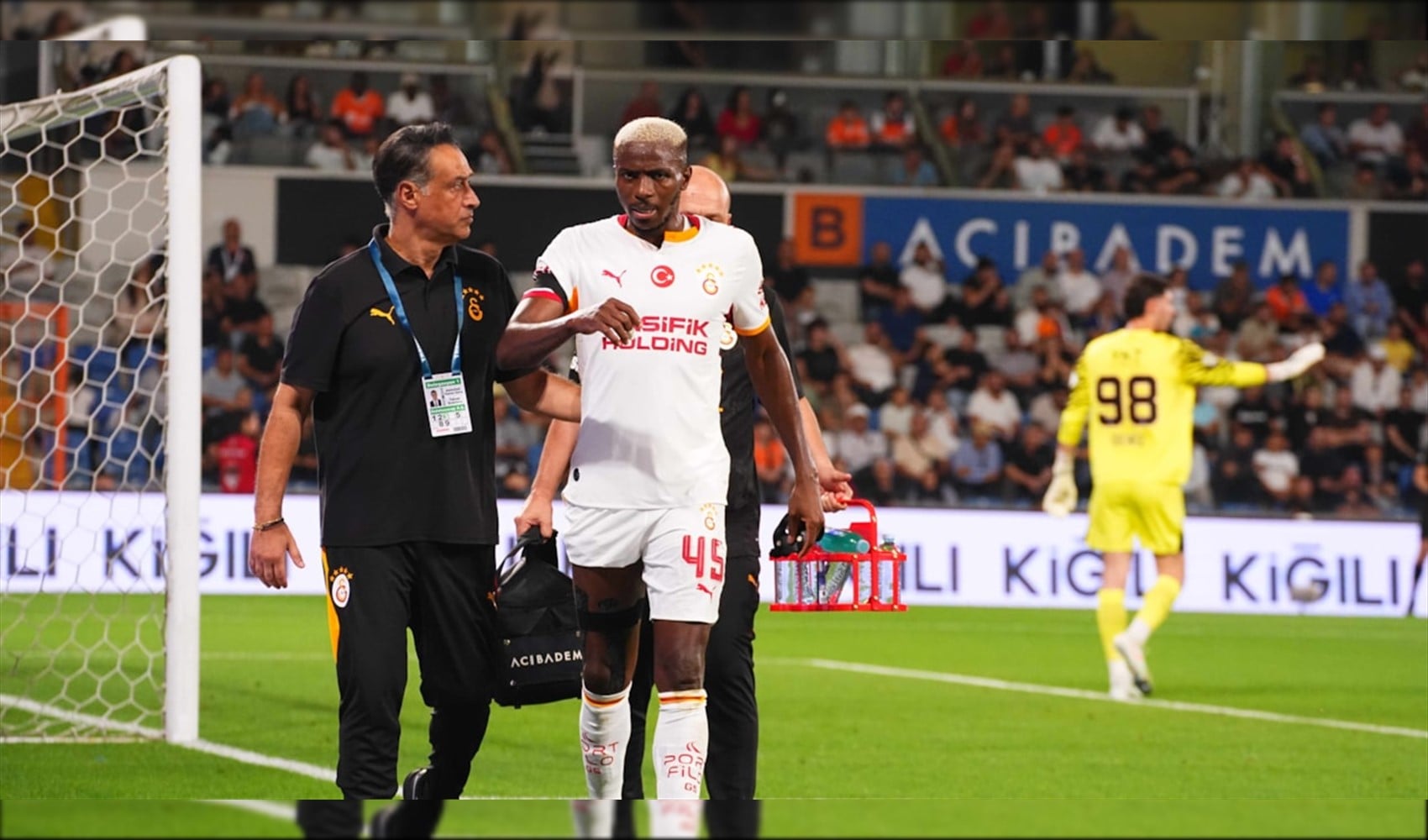
Galatasaray announces injury updates for Osimhen, Lemina, and Singo

Attention online sellers: Tax monitoring expanded
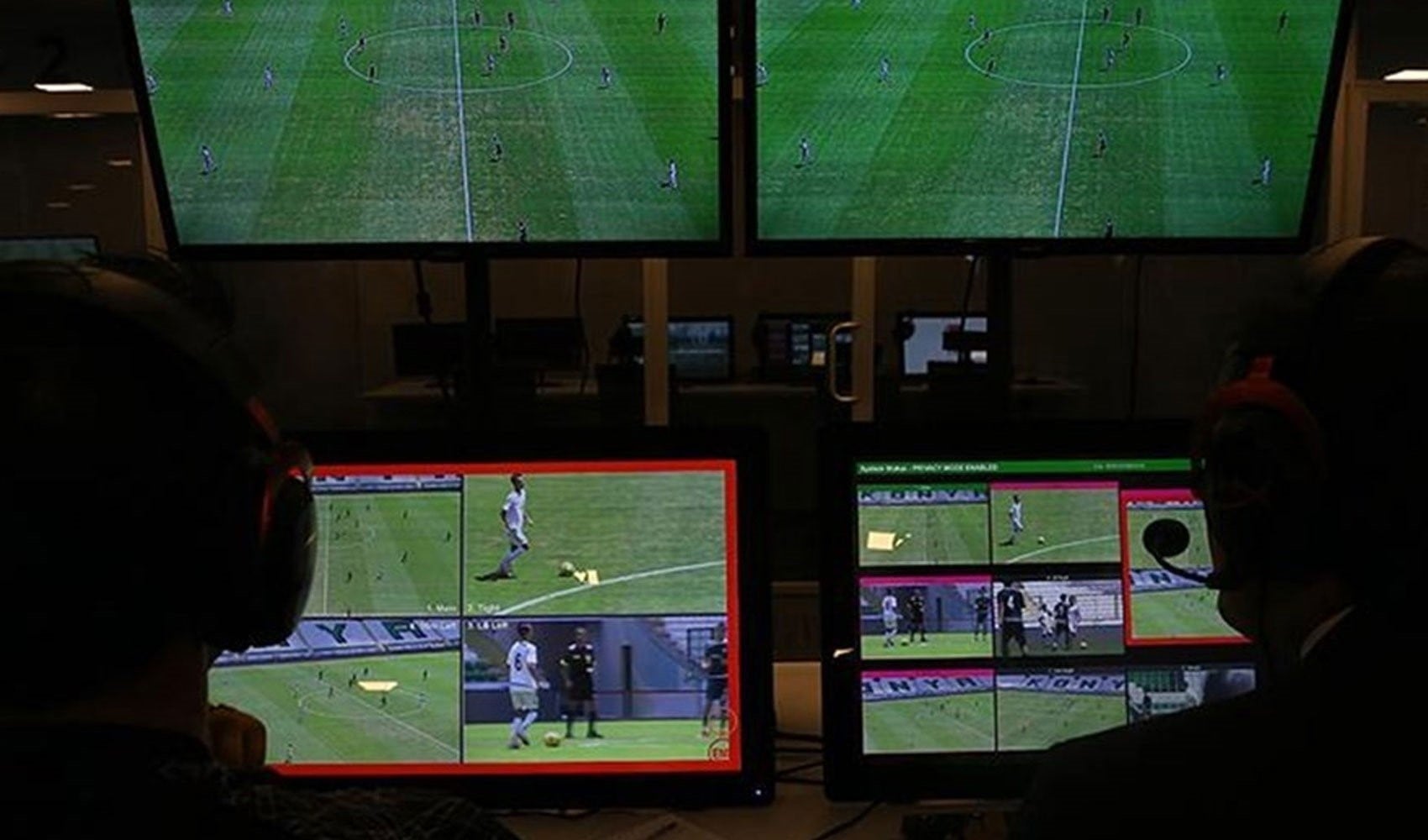
VAR for the Fenerbahçe-Beşiktaş derby has been announced!
Bridges and highways are being privatized: 15 July and FSM are also on the list

Peugeot September 2026 price list is out

New details emerge in 'panel' operation targeting lawyers
Gökçek era detail in ABB investigation
Rules are changing in Schengen
First statement from Osimhen after injury in Başakşehir match
Özlem Şanver: 'He said he would change, I believed him; should I be beaten just because I didn't leave?'