



Since the early 1990s, everything related to globalization has been written and discussed.
In the second half of the 80s, when I was at university, the subject would come up in lectures, but for our generation, which had left home and hearth to enter the School of Press and Broadcasting with the desire to become an enterprising reporter, it was a very vague concept.
Of course, back then, there was no internet, no mobile phones, and no social media...
There was no answer to with whom, when, how, and in what way we would globalize.
People only talked about the free movement of international capital around the world.
The situation of labor and the working class never came to the agenda.
What we understood was: with globalization, big companies would come to Turkey, build big factories, create employment, and unemployment would decrease; thus, our country would develop.
After all, this was the background of the January 24 decisions and the September 12 coup.
With Turkey's transition to a market economy, we were going to integrate into the international system. Finance capital was going to flow into Turkey.
Thus, we would all get rich and live happily ever after in prosperity.
But we hit a wall.
In the nearly forty years that have passed, things in Turkey have gone completely awry. The process that began with Turgut Özal continued with the rise of political Islamists to power.
Since 2002, everything in the country has been sold off, the economy has reached the point of bankruptcy, and the Turkish Lira has become one of the most worthless currencies in the world.
As the country anchors itself below mediocrity under a government that feeds on ignorance and is fed by ignorance, not many people are left pondering globalization as they once did.
The passing years have shown that, as a side effect of globalization, the world is becoming increasingly fragmented, and paradoxically, ethnicism, sectarianism, and religious extremism are on the rise.
The world is increasingly dividing into micro-pieces in almost every field.
So much so that the postmodern mentality, which even accepts religious prohibitions as freedom, has brought the world to the brink of a new Middle Ages.
There is much to be said about these aspects of globalization, but let us look at the issue from another side today.
Since I started journalism in 1991, I have had the chance to visit nearly a hundred countries.
Although I have mostly been in crisis regions such as Iraq, Syria, and Afghanistan, I have spent time in many places from the far north to the far south of Europe, from Africa to America, from the Middle East to the Balkans, and from Central Asia to Indochina.
In the last 30 years, I have witnessed firsthand, by seeing and even living through it, how globalization has affected the world.
However, what has caught my attention in the last 10-15 years is that the world is becoming culturally uniform.
Diversity and difference are disappearing.
Localization is strengthening, but local cultures are vanishing. Cultural richness is giving way to ordinariness and mediocrity.
For example, from Turkey to Czechia, from Norway to Tanzania, from Greece to Malaysia, from Croatia to Singapore - and it is possible to multiply these examples - all young people are now almost uniform!
They wear the same brand of shoes, the same brand of t-shirts or jackets, use the same social media applications, watch the same series on the same digital platforms, buy the same types of coffee from the same brand of coffee shop, work with the same brand of computers, and play their games on the same computers.
Their hairstyles, their clothing, their style, the music they listen to, and even their behavioral patterns are almost the same!
Even the Japanese, known for being extremely attached to their own culture, are making an effort to look like Westerners.
Young girls have become unable to live without taking selfies. Eyebrows and lips look like they came out of the same factory.
Try to find those who strive to be original!
It is not that there are no people resisting this, but the wind is so strong that it is very difficult to stand against it.
Consumer culture is being pumped in an incredible way. Young people have fallen into the delusion that they only exist when they consume.
That is why the shopping malls in Turkey, Malaysia, Norway, and Singapore are packed with young people.
Almost all of them are socializing by showing off with a sugary, foamy, milky coffee called a latte, which they bought from that famous coffee shop scattered like weeds all over the world.
It is as if they are committing a crime if they walk around without a huge plastic cup in their hand; they absolutely pay the money, get in line, and get their coffee.
For instance, if a cosmic prankster were to take a few of them from Ankamall in Ankara and put them inside Galeries Lafayette in Strasbourg, they would continue without feeling any sense of alienation!
They are not aware of it, but as they become uniform, they are becoming stunted, barren, and unqualified.
As belonging to social networks replaces family ties, they are losing their values.
Because they spend their lives there, they are becoming unable to speak their own mother tongue properly.
For example, if you try to talk to two young people in Istanbul, Ankara, or anywhere in Anatolia today, you will see that they cannot express themselves with more than a handful of words.
Instead of being nourished by their original culture and becoming universal, they prefer to surrender to the standardization brought by globalization.
They have no concern for internalizing knowledge.
They resort to the convenience of asking Saint Google. The word "aynen" (exactly/agreed), which they use when they are in a tight spot, is their greatest savior.
This applies to young people in almost all countries.
The situation of those in Germany, France, or Tunisia or Algeria is not very different from one another.
Especially if artificial intelligence enters daily use, just think about what will happen to the youth; let no one doubt that this will plunge us into a complete dystopia.
If things continue this way, it seems that within three to five years, we will be faced with a global youth that is managed from the same center, standardized, disconnected from free thought, and even stripped of the ability to think, focused on consumption, and indistinguishable from one another.
Are there no young people who have managed to keep themselves out of this? Of course there are. But unfortunately, they are in the minority.
Let us put a period to our article for now by saying that we will make the political dimension of this issue the subject of another article.
Most Read

Galatasaray announces injury updates for Osimhen, Lemina, and Singo

Attention online sellers: Tax monitoring expanded
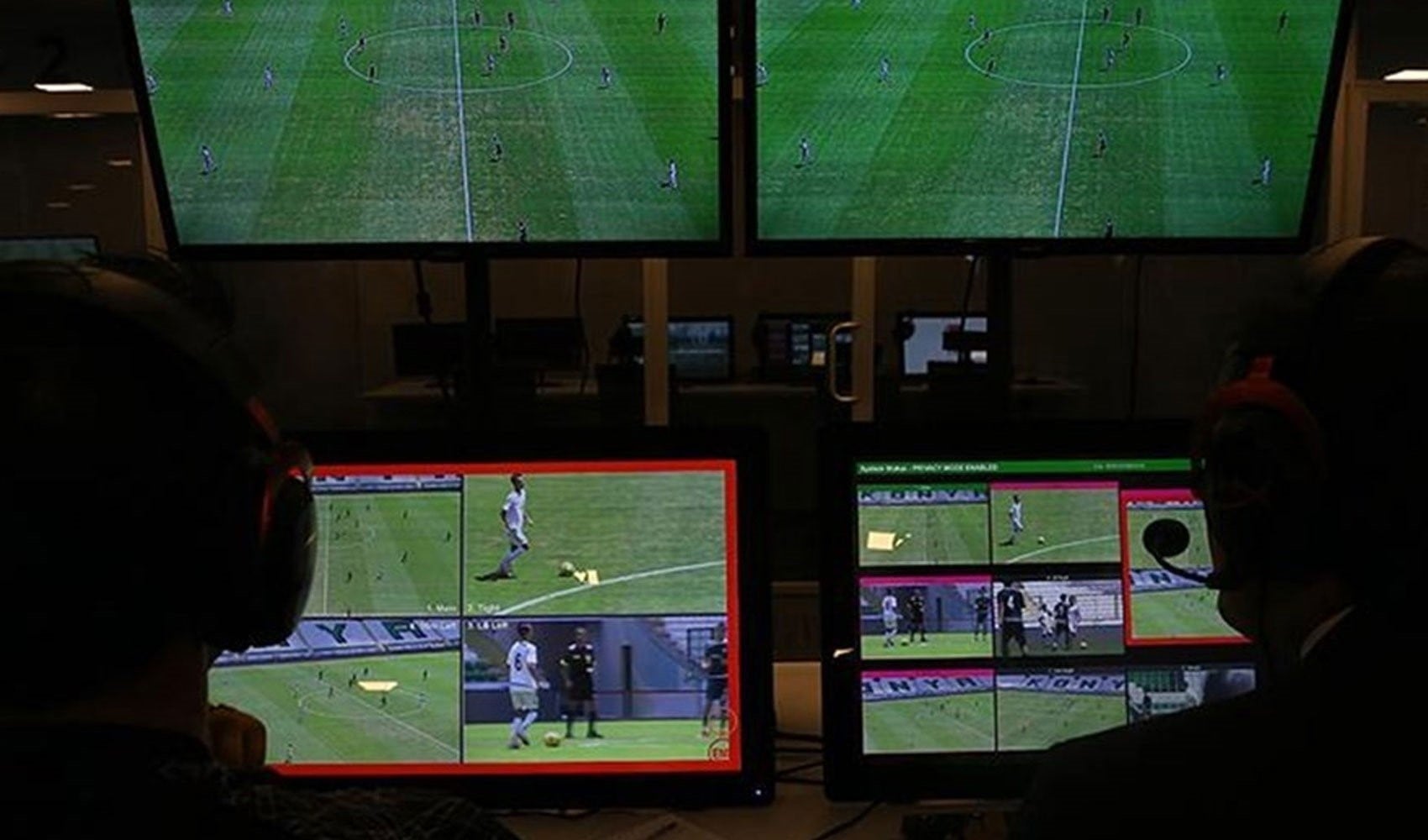
VAR for the Fenerbahçe-Beşiktaş derby has been announced!
Bridges and highways are being privatized: 15 July and FSM are also on the list

Peugeot September 2026 price list is out

New details emerge in 'panel' operation targeting lawyers
Gökçek era detail in ABB investigation
Rules are changing in Schengen

First statement from Osimhen after injury in Başakşehir match

Özlem Şanver: 'He said he would change, I believed him; should I be beaten just because I didn't leave?'