


Artificial intelligence, the US dollar, and BRICS


The summit held in China last week, where leaders of the world's three major powers came together, once again demonstrated the sharpness of global competition. European leaders, speaking the day after the summit where the top figures of China, the US, and Russia met, complained, lamented, and grumbled as they always do. They made comical statements such as, "We will not let Europe be divided, we will not let it be occupied." Aside from their arrogance and insolence, they were unable to mask either their desperation or their ignorance.
One thing is certain: in today's competition between great powers, it is not enough to simply possess economic power, influence over energy resources and energy routes, or strong armies and navies. In addition to these, one must also be ambitious in information technologies, artificial intelligence technologies, semiconductors, rare elements, and the discovery and processing of precious minerals. Especially artificial intelligence technologies and semiconductors are emerging not only as subjects of economy and technology, but also of foreign policy, national security, and national sovereignty. Because today, both competition and intelligence are shifting to these areas.
The US knows all of this. It sees China's steps in these matters. However, the measures it has taken and the steps it has initiated against China are not yielding results. That is why it is panicking even more. The US, seeing that high customs tariffs and trade wars are not effective and are even hitting itself and its allies, also lacks superiority in competition against China in the field of artificial intelligence.
In recent years, concepts such as techno-oligarchs, techno-fascism, techno-feudalism, and techno-imperialism are frequently used in the world in economy, foreign policy, international relations, the business world, and trade. The GAFAM economy (consisting of the initials of 5 US companies that shape information technologies on a global scale: Google, Apple, Facebook, Amazon, Microsoft), where information, software, artificial intelligence, and technology giants stand out, is mentioned more and more not only in these areas but also in foreign policy, international relations, national security, and intelligence. In great power competition, the US and China also stand out in these areas. They are followed by India and Russia. The European Union's name is left behind in these areas as well.
WHAT ARE THE REASONS FOR THE US PANIC?
The US is aware that its influence on a global scale is declining, its hegemony capability is eroding, and it is far from its former appeal and deterrent power. Economically, China is breathing down the US's neck. The US dollar, one of the US's greatest power elements, is still the most used currency in global trade, but it is losing ground, albeit slowly. As a currency held in reserves and used in trade, the weight of the US dollar is decreasing. In contrast, the Chinese yuan is rising, albeit slowly.
The BRICS platform, to which China attaches great importance, is also driving down the use of the US dollar. The weight of BRICS countries in the world economy is increasing. As BRICS countries, which make up half of the world's population, 30 percent of the world economy, and 20 percent of world trade, turn to using their national currencies in trade between them, even if not the Chinese yuan, the usage rate of the US dollar is decreasing. Most importantly, China is moving away from the US dollar. It is turning to gold. BRICS member countries are also inclined to move away from the US dollar in their trade with other countries. The increasing number of countries in the world that prefer trade with national currencies, and especially the preference for currencies other than the US dollar in oil and natural gas trade, worries the US.
BRICS members want the international financial system to be more participatory and more egalitarian. In this context, they are closely interested in the financial institutions led and funded by China, which form a serious alternative to institutions such as the IMF and the World Bank. China, as the largest investor in Africa and the Middle East, attaches special importance to the development of BRICS.
In short, on one hand, there is artificial intelligence and digitalization increasing their influence in every field, and on the other hand, there is a multi-faceted, multi-dimensional, and multi-layered competition between great powers. Inequality, poverty, and injustice on a global scale continue exactly as they are.
Would you like to get notifications about new developments and save news?
- NotificationsNew developments and breaking news
- SaveNews is stored in the app
Most Read
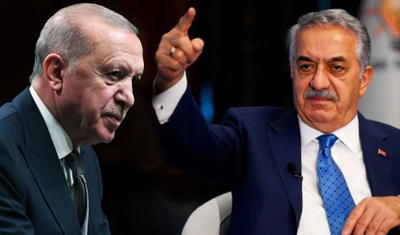
The backstory of Hayati Yazıcı's resignation from the AKP has emerged

And I thought the 'Reis' was furious!

Artificial intelligence, the US dollar, and BRICS

Passion in the garage, responsibility in the factory

12punto's Instagram account with 330,000 followers blocked
The Kilis Governorship appointment has been brought to the Parliament's agenda
Who is Kilis Governor Yusuf Alperen Ayar?

Target of spies captured by MIT revealed

Ümit Özlale responds to allegations regarding his wife Serap Belovacıklı
They appointed the person who appointed a trustee to Atatürk's party