



Atatürk and Kemalism are undoubtedly among the most discussed topics in Turkish political, intellectual, scientific, and cultural life. In this context, beyond Atatürk being a commander, a leader of the people, a war of independence fighter, a revolutionary, and a founder of a state, his worldview, thought structure, and political preferences have also been widely debated and studied. They are still being discussed and studied today. This, in addition to keeping Atatürk always current and on the agenda, is one of the proofs of the great revolutionary's justification and his strong resonance with the public.
According to one view, Atatürk is solely and exclusively a man of action. To understand the great revolutionary, one should look only at his practices. He is pragmatic. It is unnecessary to seek continuity or consistency in his words and actions. And if one does look, it is seen that he is not very consistent. Furthermore, Atatürk is not a very brilliant intellectual, thinker, or scholar. It should not be expected that he would be. There are many names who lean toward this view...
The other view, conversely, argues that Atatürk was not just a man of action, but possessed a very strong scientific mind and an intellectual, cultural, and political background, having received the best education of his era and time by attending schools that were the product of Ottoman modernization, specifically Ottoman military modernization. According to this view, Atatürk is a very distinguished intellectual, ranging from his knowledge of history to the foreign languages he knew, from his manners and taste in life to his musical taste, from his attire to the terms he produced in different disciplines, and from the books he read (he read roughly 4,000 books that were found, recorded, and known, by taking notes, making comments, and underlining lines) to his interest in the Enlightenment revolution in the West and social movements.
Those who defend the first view argue that Atatürk did not leave behind a solid ideology with internal consistency, and that an ideological integrity cannot be established based on his practices and actions, nor can a theoretical or conceptual framework be drawn. Many socialists and communists, who disagree with these names on many issues, hold similar views regarding Atatürkism and Kemalism.
Those who draw attention to Atatürk’s strong theoretical, scientific, and intellectual side remind us that the great revolutionary, like every national liberation leader and every state founder, had to observe the relationship and balance of the three fundamental elements of strategy: force, time, and space. For this reason, they emphasize that it was natural and inevitable for him to be both pragmatic and reticent about the work he would do and the steps he would take. They state that it was necessary for him to take certain tactical steps, form alliances, and develop rhetoric. They point out that knowing and following the debates taking place in Europe at the time Atatürk started the War of Independence is one thing, while conducting these debates in Anatolia and carrying out a struggle along the axis of these debates is something entirely different.
It is one thing to discuss class struggle, exploitation, surplus value, production-property-distribution relations, Marxism, socialism, communism, and liberalism in a society where a significant part of the country is under occupation, 90 percent live in rural areas, an equal number are illiterate, and the industry—and therefore the working class—is very, very thin, weak, and unorganized, and to do this on a scientific and intellectual scale, ground, and environment; it is something else entirely to put them into practice. It is one thing to establish socialist parties, lead women's movements, discuss the constitution and civil code, and ponder contemporary and secular education; it is something else entirely to carry out a political, social, and class revolution to implement them.
Atatürk is very clear and explicit about the guidance of reason and science. His world of thought was influenced by nationalism on one hand, and Enlightenment thought and modernization on the other. He was influenced by science, enlightenment, and positivism. Atatürk, a revolutionary shaped by his own era, conditions, context, and historical agenda, not only shaped his own society but also deeply influenced nationalist, progressive, revolutionary, and anti-imperialist movements in underdeveloped and developing countries, in the third world, and especially in the Islamic world. For this reason, when Atatürk is mentioned, it is natural to think of full independence, national sovereignty, and anti-imperialism, alongside reason and science, the War of Independence, the nation-state, and nationalism. The program, summary, and symbol of the Turkish Revolution, the Kemalist Revolution, which was brought to life under Atatürk’s leadership—the 6 arrows, the 6 principles—possess ideological integrity within themselves. These principles are indispensable to one another. They are complementary and integrative.
Of course, both in the Ottoman Empire and in Republican Turkey, there were intellectuals, bureaucrats, and politicians who closely followed developments in Europe and had quests, initiatives, and moves regarding whether these could be applied in our country. This can be seen when looking at the programs of political parties established during the multi-party life experiments in the early Republican period, and it can also be seen in the proposals of different wings within the CHP at that time. That is why, in later years, a clearer, sharper, and more framed program, though not very rigid on an ideological and political plane, came to the agenda and was recorded within the CHP. In other words, as the principles, essentials, and red lines of the CHP—which Atatürk defined as the “political organization of the revolution,” which went down in history as the party that founded the Republic, and whose roots go back to the Kuvayı Milliye (National Forces) and the Society for the Defense of Rights—became clearer, and as the need for a specific party program became more pronounced, this need was met.
Indeed, the first comprehensive step in this direction was taken at the 1927 congress (the congress where Mustafa Kemal Pasha read his Nutuk/Speech), and 4 principles were determined as the party's principles: Republicanism, nationalism, populism, and secularism. This step was followed by the addition of 2 principles, namely statism and revolutionism, to the program at the 1931 congress. Thus, the integrity of the ideological core and the program was ensured, and the 6 arrows were recorded historically, politically, and symbolically. Just a year later, in 1932, History of Revolution courses were introduced to universities, and the people giving the lectures were Atatürk’s close colleagues. Mahmut Esat Bozkurt, the most important theorist of the Turkish Revolution after Atatürk, explained the importance of the revolution to the youth, and Recep Peker explained its place in the world. In the party program adopted a few years later, on May 13, 1935, the following was written in the introduction: “All these principles pursued by the party are the principles of Kâmâlizm.”
In conclusion, this much is certain: It is baseless and unfounded to claim that a leader, revolutionary, commander, and state founder like Mustafa Kemal Atatürk—a leader who evaluated all possibilities and considered all details in every step he took—lacked an intellectual background or did not think about ideology.
Most Read

Galatasaray announces injury updates for Osimhen, Lemina, and Singo

Attention online sellers: Tax monitoring expanded

VAR for the Fenerbahçe-Beşiktaş derby has been announced!
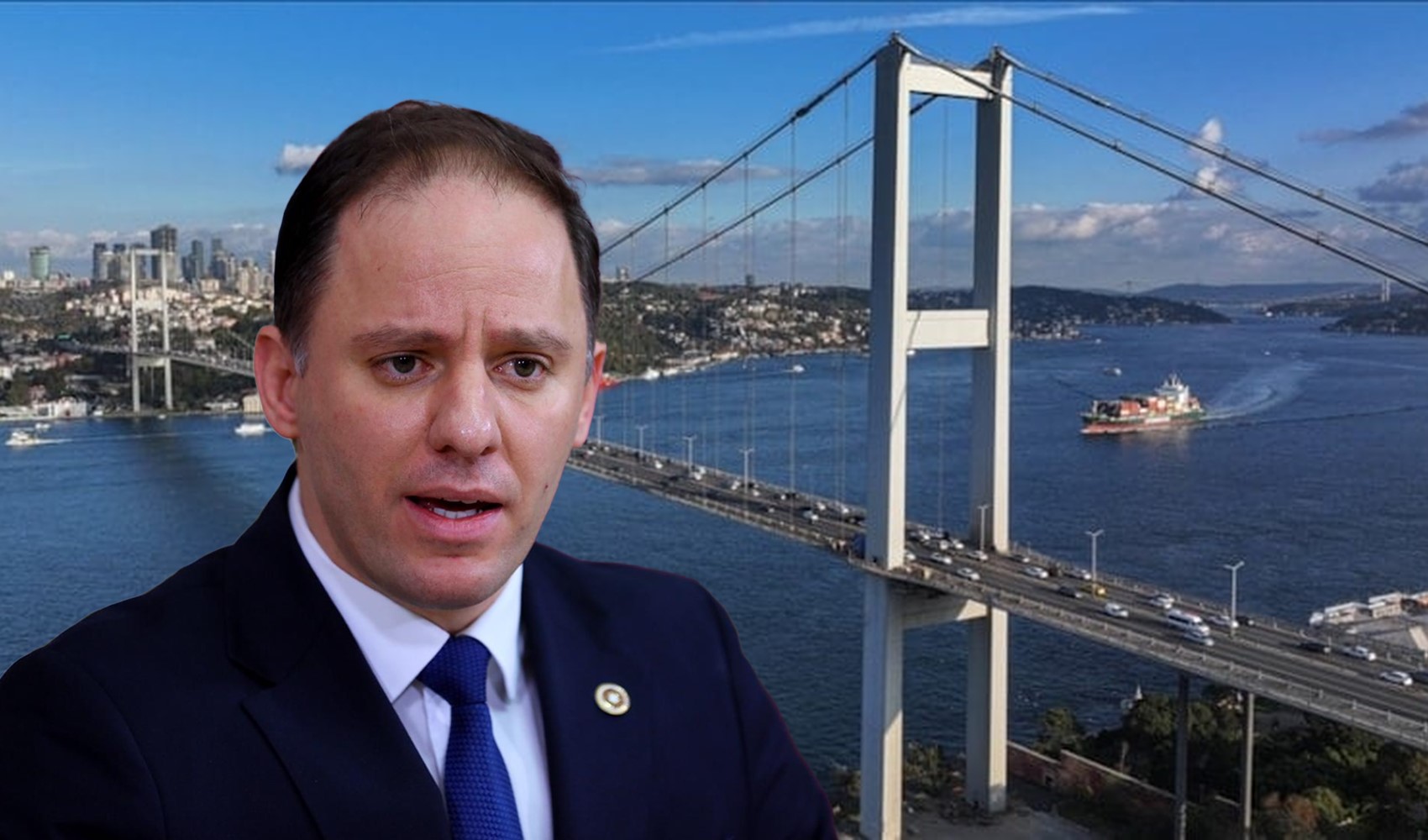
Bridges and highways are being privatized: 15 July and FSM are also on the list

Peugeot September 2026 price list is out

Rules are changing in Schengen

New details emerge in 'panel' operation targeting lawyers

Gökçek era detail in ABB investigation

First statement from Osimhen after injury in Başakşehir match

Özlem Şanver: 'He said he would change, I believed him; should I be beaten just because I didn't leave?'