



Recently, the term "internal front" has been on everyone's lips, whether in government or the opposition. Our politicians are not the authors of this phrase. Nor are they the first to use it.
The emphasis on the internal front was made by our great leader Mustafa Kemal Atatürk during the conditions of the War of Independence. Atatürk also explained the importance of the internal front in his Nutuk (Speech) with these words:
"The essential thing is the internal front. This front is the front formed by the entire nation. The external front is the armed front of the army against the enemy. This front may be defeated; but it can never destroy a country. What destroys a country from its foundations is the collapse of the internal front."
Now let us ask: What was the situation in Anatolia before the War of Independence? What was the state of the internal front?
Because without asking these questions, it is impossible to understand how the War of Independence was won and under what conditions the Republic was founded.
Whether in the 19th century—in the definition of Prof. Dr. İlber Ortaylı, "the longest century of the empire"—or in the first 20 years of the 20th century, the conditions were not at all bright for the Turkish people. On the contrary, they were very discouraging. Defeats in wars, loss of territory, and the emptying of the treasury followed one another. Moreover, there was oppression. There was the tyranny of the landlords. There was disorder due to poor governance. In state administration and bureaucracy, there was favoritism, nepotism, and cronyism. There were foreign debts and their high interest rates.
The nation fought under these conditions, gritting its teeth. However, the objective conditions were against the Ottoman Empire. Despite significant successes on some fronts, especially in Gallipoli, the Ottoman Empire ultimately lost World War I.
The Armistice of Mudros was signed on October 30, 1918. Immediately afterward, two weeks later, on November 13, 1918, the occupation fleet dropped anchor in the Bosphorus. This de facto occupation would officially turn into a formal occupation on March 16, 1920.
When Atatürk arrived in Istanbul on the morning of November 13, 1918, his duty as Commander of the Yıldırım Army Group had ended, which is why he had come to Istanbul from Adana. After the Armistice of Mudros was signed on October 30, 1918, Atatürk, who arrived in Istanbul, was met at Haydarpaşa by his close friend Dr. Rasim Ferit Bey. While they were boarding the Kartal steam launch to cross to the European side, Atatürk looked at the enemy ships anchored in the Bosphorus and shared his sorrow with Dr. Rasim Ferit Bey as follows:
"I made a mistake. I should not have come to Istanbul. I must find a way to return to Anatolia, no matter what."
Then he said: "They will go as they came."
The Turkish nation had two options. In a process where the Ottoman Empire had lost the war, lost its independence, its lands were occupied, and it was being liquidated, either a fight for independence would be waged, or a submissive, British-controlled, colonial state devoid of freedom and independence would be accepted. The Turkish people chose not to bow down, not to surrender, but to resist under the leadership of Mustafa Kemal Pasha, to fight, and to die if necessary for the sake of independence. This organized resistance coming from the local level, from the grassroots, would go down in our history as "war democracy," in the definition of Prof. Dr. Bülent Tanör.
The goal was national sovereignty along with full independence. This was a goal very different from the solution proposed by the palace and the sultanate, and even diametrically opposed to it. In this process, harmony between the goals could not be expected anyway. On one side, there were the proposals of the imperialists and the victorious states. On the other, there was the approach of the palace and the sultanate, which hoped to preserve its existence by going along with the imperialists and doing what they said. On one side, there were local congresses that, while entirely sincere and well-intentioned, lacked a national perspective. On the other side, there was Atatürk's idea of starting a War of Independence, saying, "Either independence or death."
Atatürk's idea was, of course, the most difficult, but also the most honorable. It was democratic and participatory. At the same time, it was militant. Because he conducted the war under the will and administration of the parliament, it was democratic, participatory, and legitimate.
To this end, after a while, the congress process began under the leadership of Atatürk. First, the Erzurum Congress (July 23 – August 7, 1919) was convened. It was a congress that was regional in its delegates but national in its decisions. 56 delegates from five provinces (Erzurum, Trabzon, Sivas, Bitlis, Van) participated. Then the Sivas Congress was convened (September 4 – 11, 1919). It was a national congress with its delegates and decisions. The congress opened with 31 delegates, and this number reached 41 with those who joined later.
Before the Erzurum and Sivas congresses, there were, of course, congresses held before Mustafa Kemal Pasha landed in Samsun. Among the common features of these congresses, the first that come to mind are: They were local. They were against surrender. They emerged and gathered spontaneously. All of these congresses were national, sincere, well-intentioned, and patriotic. However, they lacked a national perspective. There was no war on a national scale against imperialism on their agenda. Atatürk was the leader who gathered all these organizations under one roof, instilled the will, courage, and determination to fight, and gave them a perspective on a national scale.
Following the process that began with the congresses, after intense preparation, the Parliament was opened in Ankara on April 23, 1920. The Turkish War of Independence and the Turkish Revolution, alongside their other features and the firsts they achieved, also went down in history as a war and revolution achieved under the will, administration, and legitimacy of the Parliament.
Most Read
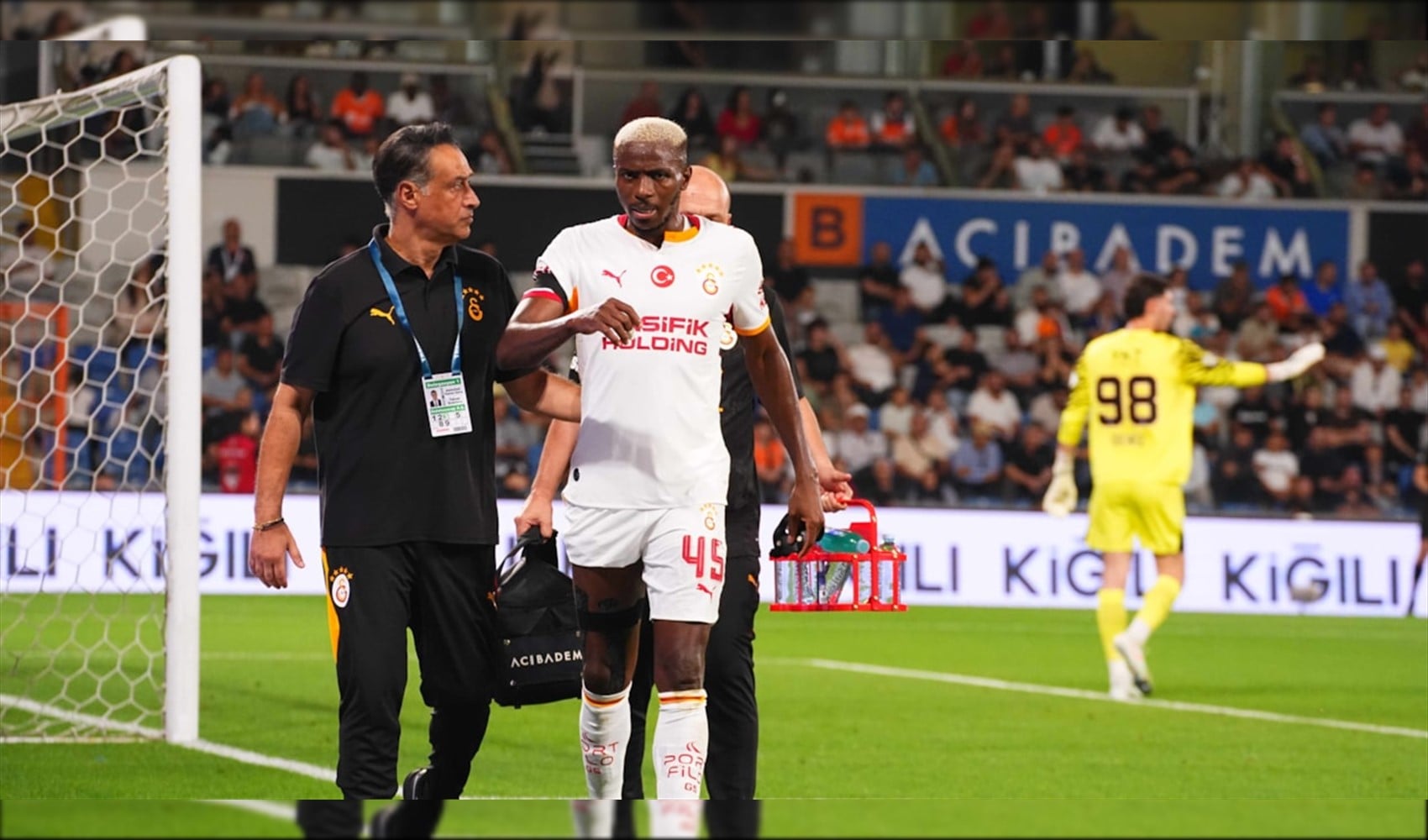
Galatasaray announces injury updates for Osimhen, Lemina, and Singo

Attention online sellers: Tax monitoring expanded
VAR for the Fenerbahçe-Beşiktaş derby has been announced!
Bridges and highways are being privatized: 15 July and FSM are also on the list

Peugeot September 2026 price list is out

New details emerge in 'panel' operation targeting lawyers
Gökçek era detail in ABB investigation
Rules are changing in Schengen
First statement from Osimhen after injury in Başakşehir match

Özlem Şanver: 'He said he would change, I believed him; should I be beaten just because I didn't leave?'