



It is said that someone is “bookless” (kitapsız); referring to religions with holy books, it means someone who does not respect them and is therefore irreligious or an infidel. Now, we have become bookless in the literal sense of the word. The academy has also stopped writing books; when it does, it writes articles or book chapters, or most often, it just “compiles.” For this reason, with the exception of publishing houses abroad, it has become very difficult to find monographs on foreign policy. There is a noticeable lack of serious texts in Turkish. This is especially true in the field of foreign policy. The field is on the verge of being abandoned to journalists. Given this situation, the book by ATASAM President Assoc. Prof. Dr. Volkan Özdemir, published in January 2019, “Renewed World, Everlasting Turkey,” is attracting the attention of those working in this field.
The book is written from a “nationalist” (ulusalcı) worldview. By the way, I must mention in passing that the term “ulusalcı” is as grating and problematic as “redder” or “whiter.” In the original Turkish political conjuncture, it is a term preferred by those who come from the left or have stronger Kemalist/secular emphases to avoid calling themselves “nationalist” (milliyetçi) due to sensitivities remaining from before 1980, and later used by others who wanted to define this specific segment.
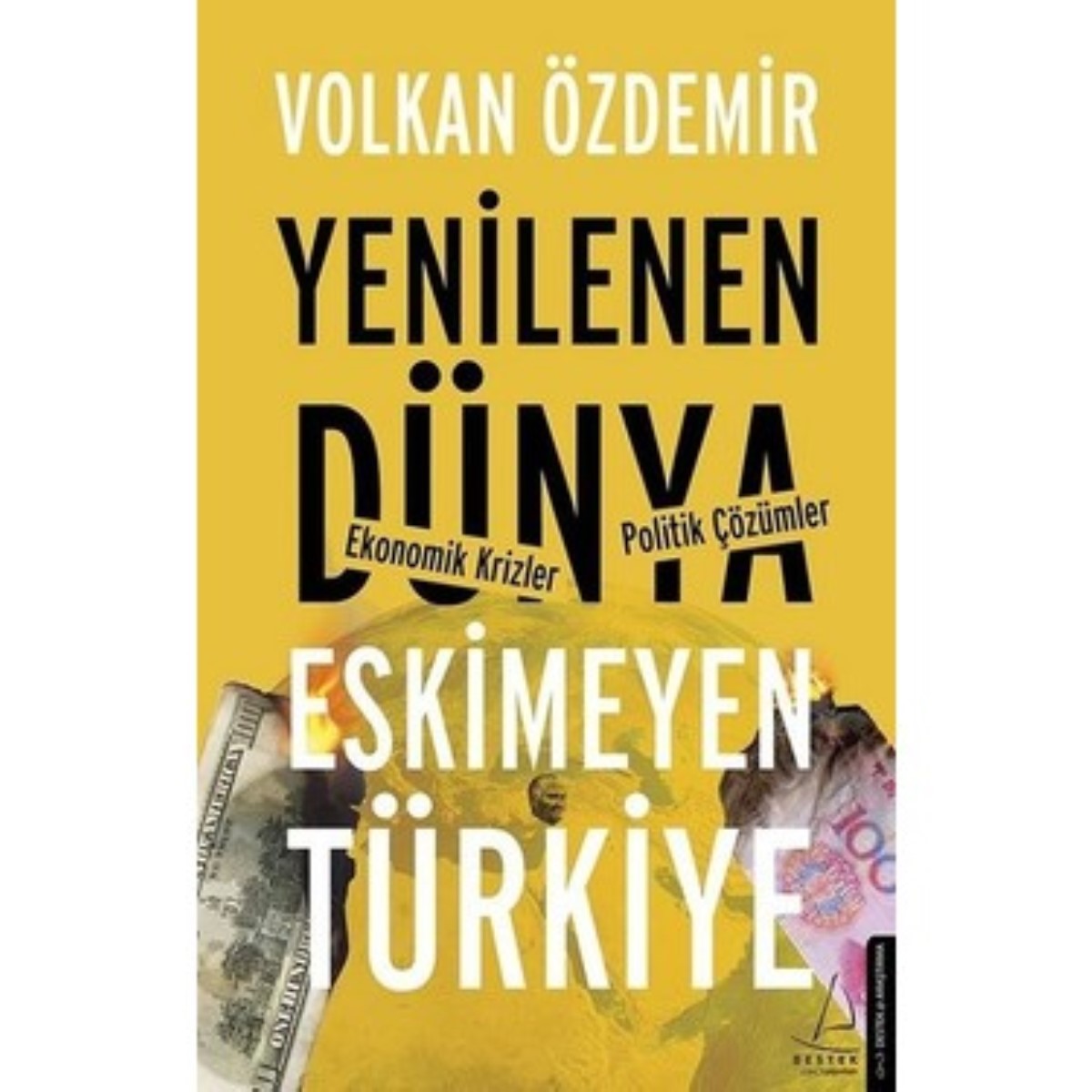
If universal concepts are to be used, it would be more accurate to say “nationalist” (ulusçu or milliyetçi). “Ulusalcı” must also be used because it resembles the term “millici” (nationalist) used by the Ittihadists and later the Kemalists at the beginning of the twentieth century. Indeed, in the preface of the book, the author says, “The issue is to understand the world and to be able to put forward a national idea,” (p. 10). Of course, we are more familiar with the “national” versions of policy proposals, while ideas are generally accepted for their universality.
The book’s main argument is clear and concisely reflected in its title. The author approaches the “old”-“new” Turkey conceptualization with distance and argues that “what was done by Atatürk is still valid today” (p. 10). “Everlasting Turkey” describes the Turkey founded under Atatürk’s leadership and his ideas. The author’s argument is based on this: While there is a new era in the world, a “beginning of an Asian age” (pp. 72, 217), in other words, while the world is being renewed, it is necessary to return to “Everlasting Turkey.”
According to the author, if one must resort to “old”-“new” Turkey conceptualizations, “it seems logical to divide Turkey into three periods.” He describes the three periods as follows: “If we start from the end, the current so-called ‘New Turkey,’ the ‘Old Turkey’ that was already aging and changing before it, and the ‘Everlasting Turkey’ of the early years of the Republic, which bore the stamp of Atatürk! Its being everlasting is because his work is still appreciated by the world today.” (p. 210)
According to the author, since “Kemalism was gradually abandoned after World War II and replaced by an Atatürkism compatible with the Western system,” “the Atatürk Republic had already been largely destroyed before 2002,” and “the process after 2002” can only be called “a period in which the principle of secularism suffered great destruction.” In the post-war process, which the author prefers to call “Old Turkey,” the country had “long since changed” and finally “turned into a semi-colony.” The same period “created a major fracture in Turkey’s own identity.” (p. 210)
Here, the accession to NATO and the practices of the September 12, 1980 coup that carried US influence are particularly criticized. The essentialist approach, which is felt in the phrase “Turkey’s own identity” and suggests that the country possesses a trans-historical and unchanging “essence,” coincides with the nationalist approach in the book.
Although the author declares his purpose as “being able to put forward a national idea,” he claims in the book that he resorts to a “geopolitical economy perspective” rather than nationalism. The “geopolitical economy” approach, which gained recognition after the work titled “Geopolitical Economy: After US Hegemony, Globalization and Empire” by Radhika Desai, a professor of comparative politics and political economy whom the author also states “made important contributions,” is an international relations and international political economy approach with Marxist roots. This approach, which also places the “developmental state” tradition at the center of its analysis, fits well with many of the arguments developed in the book.
However, while the “geopolitical economy” approach, as mentioned, has Marxist and therefore historical materialist roots, it is possible to encounter examples of the ahistorical essentialist approach given above or speculative interpretations approaching conspiracy theories in many parts of Özdemir’s book. For example, when speaking of the capitalist elite at the global level, it is said, “It is no exaggeration to say that there is no game that a group of elite capitalists, blinded by greed for profit at the expense of the broad masses, would not play for power and control,” (p. 24).
Again, when speaking of geopolitics, it is claimed that there are some “iron laws” and that the “forms of government” and “ideologies” of states are “secondary” (p. 36). This can also be seen in parts where, contrary to historical materialist approaches, an essence beyond socioeconomic factors is attributed to states, and it is claimed that “finance-capital” and “states” “cannot fully control” each other and that “a struggle is going on between them” (p. 41). In the expressions “It seems the British state is preparing the Keynesian Labour Party again instead of neoliberal conservatives after Brexit,” (p. 92) or “To make the public accept the neoliberal program, a left-looking party named Syriza was established and even Tsipras was brought to power,” it is seen that a trans-historical subjectivity is attributed to states.
Yet, states are, yes, an “arena” that no one, including “finance-capital,” can “fully control,” but rather one over which other social groups struggle. Attributing an unchanging, trans-historical “essential” identity or spontaneous subjectivities to them is incompatible with this historical sociological nature of states. However, according to the author, in the interwar period, “the great states of the old had actually reappeared with different ideological shirts.” (p. 44)
The author does not put this metaphorically, because according to the author, even if the world “read” it otherwise, the power struggle in the Cold War was not social-systemic or “ideological,” but only “geopolitical”: “The truth would emerge later.” (p. 45) Indeed, according to the author, “Every ideology necessarily serves an interest. In this sense, ideologies are tools for some to consolidate their power.” (p. 49, and for a similar expression, see p. 95)
With these arguments, the author relies on a nationalist framework rather than historical materialist or at least historical sociological approaches. He does not feel the need to hide this: “Those who have kept Turkey waiting at the EU gate for years and sold dreams were saying, referring to the increasing globalization just 10 years ago, ‘The nation-state is over, our condolences.’ The times have changed. It was not the nation-states that ended, now it is the turn of nation-statists like us: Globalization is clogged, the EU is dead. Our condolences!” (p. 97) Or, “Contrary to the lies that have been instilled for years during the globalization period, nationalism has become inevitable today.” (p. 199)
On the other hand, the book clearly reveals the level that financialization has reached in the world, for example by conveying debt values more than three times the total real economic size of the world (p. 27). The emphasis on the period when the crisis of capitalism in the 1970s was overcome by abandoning the Keynesian social welfare state model and making neoliberal policies hegemonic (pp. 42-48) is also extremely relevant for understanding the process leading to the present of global capitalism. The emphasis on the gradual transformation of the political discussion ground based on social class into one based on identity (pp. 50-51) and the fact that neoliberalism imposes a framework limited to options that emerge with similar programs, contrary to its so-called “democratic” claims, making it extremely “undemocratic” (p. 55), are also meaningful.
Again, as I have often mentioned in this column, the determination that the US, as the “country that started globalization with neoliberalism” (p. 80), has begun to lean towards national protectionism rather than globalization under conditions where it accepts competition with China (p. 89) is also on point. However, in one place, the expression “We embrace nationalism!” attributed to the former US president Donald Trump (p. 82) is certainly not the equivalent in English. In the mentioned UN speech in 2018, Trump uses the concept of “patriotism,” which means “yurtseverlik” (patriotism), not “ulusalcılık” (nationalism). Although it is obvious that they are taken as synonymous words for the author, it may be a meaningful distinction for readers. Nevertheless, mentioning the growing conflict between capital groups and elites within the US (p. 120) and that the US “will regress from its monopoly position to one of the most influential powers in a multipolar system” (p. 121) is also useful.
In the parts where the focus returns to Turkey, the emphasis on “early deindustrialization” coming from “before full industrialization” is again extremely important. Economy and energy occupy a large place in the author’s analyses of Turkey. The differences between concepts often used when energy policies are discussed, such as energy corridor, transit, or hub, and how they describe a country’s position are also conveyed in a very explanatory way. The author’s expression, “contrary to what is thought in our country, the more pipelines that pass under us, the less we become an energy hub,” (p. 166) is especially worth conveying.
Again, the warnings that the Neo-Ottomanist or Pan-Turkist orientations sometimes desired in Turkey’s foreign policy are not realistic are also on point (pp. 178-184). A quote from here will probably be summarizing: “The Seljuk and Ottoman empires are like the grandfather and father of the Republic of Turkey. Their memories should be carried with respect, but they are dead now. Trying to resurrect the dead is a surreal and futile effort. What is essential in geopolitics is to seek remedies according to the space and time one is in.” (p. 183)
The problems in the proposals regarding the foreign policy that Turkey should follow stand out as problems stemming fundamentally from moving away from the historical method. Some are more controversial assessments of a conjunctural nature. In this part of the book, it is argued in many places that cooperation with Russia and China should be developed, and in one place, Syria is included in this (p. 172). Protecting Syria’s territorial integrity was of course critical for reducing security threats to Turkey, but today, leaving aside whether the current Syrian administration has any intention of cooperation, whether Turkey has the capacity to regain the kind of territorial integrity it desires remains a very serious question mark. The motive of the West to eliminate the potential of semi-peripheral and peripheral countries to pursue an independent foreign policy in general, and the fact that this takes the form of undermining secular politics in the Middle East, which could actually be allies with the West on many issues under other conditions, by the policies implemented by the West itself, had been discussed at length in this column before.
The author also rightly speaks of Turkey being “poisoned and paralyzed” by the West itself in this sense (p. 214). Provided that we do not attribute responsibility to the West alone and see the role of the dominant social segments in Turkey, this situation unfortunately stands before us in all its reality. On the other hand, in addition to the Parliament, a “Kamutay (National Assembly) authorized in foreign policy and security matters” (p. 215) or a senate proposal could also be meaningful. However, in the same place, in the proposal for “a fully independent national left party on one wing of the political spectrum and a party that is national in every respect, in which globalists do not run rampant, on the right wing” proposed “for the broad masses of the people to rally,” it is not very clear what is being proposed other than that both of these parties are “nationalist.”
Finally, despite the extremely relevant NATO criticisms (p. 218), advocating for Turkey’s immediate withdrawal from NATO does not explain how the “geopolitical” disadvantages that would be faced against, for example, Greece in such a situation could be overcome. The “Greater Middle East Project,” on which the arguments that the US is “trying to divide Turkey by surrounding it” are based, as İlhan Uzgel has addressed in several of his articles, actually carries no meaning beyond a windmill. These claims go no further than speculation, to say the least. On the contrary, for example, it is known that James Jeffrey, one of the important diplomats of the Trump era, found the roles Turkey played, especially in Syria and the Caucasus, positive in terms of balancing Russia. Moreover, while the S-400s purchased from Russia are found to be “no different from the machine guns [that came from Soviet Russia] of the War of Independence” (p. 219), it should be noted that the PYD also has an office in the capital of Russia, where cooperation is advocated to be developed. Again, while the Customs Union has many problems, such as being bound by agreements made by others with third countries without being an EU member and without taking part in decision-making mechanisms, or not being able to make agreements on its own with third countries, which is discussed even at the license level, it is necessary to weigh well the economic effects of withdrawing from it as advocated by the author on the manufacturing industry, which has become highly dependent on it.
The criticisms directed by the author through a segment he describes as “more Western than the West” (p. 218) also aim to separate Mustafa Kemal Atatürk’s modernization from the West. Yet, as the author rightly points out (p. 225), although Atatürk condemned “taking advice from Europe” as a form of politics in every issue, he did not hesitate to implement the dress revolution or import basic laws from the West in his ideal of modernizing society. Losing the balance on the fine line here could easily set fire to the secular legacy of the more than two-century-old Ottoman-Turkish modernization upon which Turkey is founded and which forms the basis of its social peace today, and it should be clearly seen where Turkey could drift with “anti-Western” rhetoric that loses this fine balance.
*Volkan Özdemir, Renewed World, Everlasting Turkey, Istanbul: Destek, 2019.
Most Read

Galatasaray announces injury updates for Osimhen, Lemina, and Singo

Attention online sellers: Tax monitoring expanded

VAR for the Fenerbahçe-Beşiktaş derby has been announced!
Bridges and highways are being privatized: 15 July and FSM are also on the list

Peugeot September 2026 price list is out
Rules are changing in Schengen

New details emerge in 'panel' operation targeting lawyers
Gökçek era detail in ABB investigation

First statement from Osimhen after injury in Başakşehir match

Özlem Şanver: 'He said he would change, I believed him; should I be beaten just because I didn't leave?'