



On October 29, we celebrated the 102nd anniversary of our Republic. Last Sunday, we wrote about the political economy of the Republic and where we stand today. Yesterday, on November 1, we celebrated two important steps of the Enlightenment Revolutions with mixed feelings.
The abolition of the Sultanate…
The transition to the Latin alphabet…
It is no easy task to establish a Republic in a country of impoverished peasants who have been under the pressure of a sultanate for centuries and, in their final period, under the exploitation and occupation of imperialism. Before its foundation, the struggle was waged against three different armed forces amidst scarcity. On one side were the occupying imperialist countries, on another the Caliphate Army of the Sultanate, and on the third, the 12 armed uprisings launched against the Grand National Assembly of Turkey (TBMM) from the West to the East…
Declaring a Republic in a country of impoverished peasants who were left uneducated, practiced primitive agriculture, missed the industrial revolution, and did not know how to invest might seem like a one-day job, but establishing the Republic is not an easy task. The Republic requires Enlightenment Revolutions that have continuity.
November 1 is an important milestone for our Republican history and our Enlightenment Revolutions. After the liberation of İzmir on September 9, 1922, the hot war period of the national struggle ended with the Mudanya Armistice on October 11, 1922, and the diplomatic process began. On November 20, 1922, before the Lausanne negotiations began, England and other countries were planning to invite the Istanbul Government, the representative of the Sultan, to Lausanne in addition to the TBMM Ankara Government. As a counter-move to this maneuver, the Sultanate was abolished by a law passed by the TBMM on November 1, 1922. It was declared that the sole representative of the Turkish nation was the TBMM Ankara government, and this was accepted by the imperialist countries before Lausanne.
THE SULTANATE WAS ABOLISHED ON NOVEMBER 1, 1922, BUT WHAT ABOUT NOW?
We said that the Republic is a democratic revolutionary process that requires continuity. Unfortunately, we have not been able to ensure this continuity, especially after 1945. Today, the counter-revolution under the guidance of imperialism is still making efforts to bring back the Sultanate. Perhaps the sultanate has returned, but like the frog in the heating water, we have not yet realized it. With the constitutional amendments made, the one-man regime we are living under has little difference from the sultanate administration. Only the power does not pass directly from father to son. As defined by the esteemed scientist Prof. Dr. Ersin Kalaycıoğlu, the name of the regime in Turkey is "patrimonial sultanism."
I asked artificial intelligence to define Patrimonial Sultanism. Its response was as follows:
“It is a form of government where the leader manages the state as if it were the property of his own dynasty or family. There is no rule of law, and the leader's will is the sole legislator. Power is not restricted by institutionalized structures or bureaucracy. It relies on the absolute personal power of the leader, who uses this power arbitrarily and generally does not develop a structure of loyalty outside of his family or close circle. The loyalty of the army, police, and bureaucracy is directed toward the leader and his personal interests.”
THE TRANSITION TO THE LATIN ALPHABET…
The transition to the Latin alphabet, adopted by the TBMM on November 1, 1928, is one of the most important moves of the Republic's Enlightenment Revolutions.
There is no statistical study conducted on the literacy rate in society during the final period of the Ottoman Empire. Historians estimate it to be between 5 and 10 percent. However, a large portion of this population lived in cities and, again, the majority were non-Muslims. It is estimated that the literacy rate in rural areas was at the 1 percent level. According to the first census conducted in 1927, the literacy rate was around 10 percent.
More than 80 percent of the population were peasants, uneducated, and practiced primitive agriculture, but they were not farmers. Instead of a consciousness of citizenship, a consciousness of the ummah and servitude was dominant. There was a structure that was content with everything the absolute authority said. The way to break this was to turn the peasant into a farmer and to bring education to all residential centers of the new state.
While Gazi Mustafa Kemal Pasha said, "The peasant is the master of the nation," in his opening speech to the Assembly in 1922, he also gave important messages for village education in that same speech.
“The owner of this country and the main element of our social structure is the peasant. It is this peasant who has been deprived of the light of education until today. The basis of the education policy we will follow is, first and foremost, to eliminate the existing ignorance. I am sorry to go into detail, but I can explain this thought of mine in a few words: to give the peasant, in general, enough geographical, historical, religious, and moral knowledge to read, write, and know his homeland, nation, religion, and world, and to teach the four operations (addition, subtraction, multiplication, and division) is the first goal of our education program.” (Thoughts from Atatürk. Ord. Prof. Enver Ziya Karal, Ministry of National Education Press)
Major moves in education began in 1924. The madrasas were closed, and the Law on Unification of Education (Tevhidi Tedrisat) was enacted. With the transition to the Latin alphabet on November 1, 1928, there was a rapid increase in the number of people learning to read and write.
There are nearly 40 thousand villages in Turkey, and 50 thousand teachers are needed for the villages alone. The total number of teachers is 17 thousand. Most of them are already in cities and towns. Therefore, first, the National Schools were established, followed by the Village Institutes.
The Land Reform Law and the Village Institutes were the most important pillars of the Republic's Enlightenment Revolutions. The goal was 60 Village Institutes, to leave no village without a teacher, and to raise 200 thousand farmer families with the Land Law.
While the Village Institutes were spreading rapidly, the Counter-Revolution did not stand idle. The 1946 elections were approaching. Circles opposing land reform, large landowners, the Democrat Party, large land-owning deputies in parliament, representatives of the local notables, even victorious commanders of the War of Independence, a group within the CHP, the pious crowd who lost their power due to the transition to the Latin alphabet and the Law on Unification of Education, and bigots all became one body. First, they rendered the Land Reform Law, which was discussed in Parliament in 1945, ineffective; in 1947, they closed the Higher Village Institute, which trained teachers for the village institutes, the lifeblood of the system; and in 1954, they completely closed all Village Institutes.
In today's Turkey, the literacy rate for the population aged 6 and over is at the 98 percent level. (TUIK 2023 Education Statistics) If you ask what the level of education is like…
Education policies are structured around raising a religious and vengeful generation, far from analytical thinking. As a result of the deterioration in income distribution and the economy, young people have also lost hope in education. Social morality has collapsed. National consciousness and citizenship consciousness are eroding.
The Republic and the Enlightenment Revolutions aimed to create a 20th-century society from a population that had not previously encountered enlightenment, industrialization, or a skill system (education). The Counter-Revolution prevented this. Although the calendars show that we have left the first quarter of the 21st century behind, Turkey has not been able to complete the 20th century and has not been able to enter the 21st century. It is our duty to revive the unfinished enlightenment revolutions under today's conditions and to uphold Atatürk's Principles and Revolutions in the light of science.
Most Read

Galatasaray announces injury updates for Osimhen, Lemina, and Singo

Attention online sellers: Tax monitoring expanded
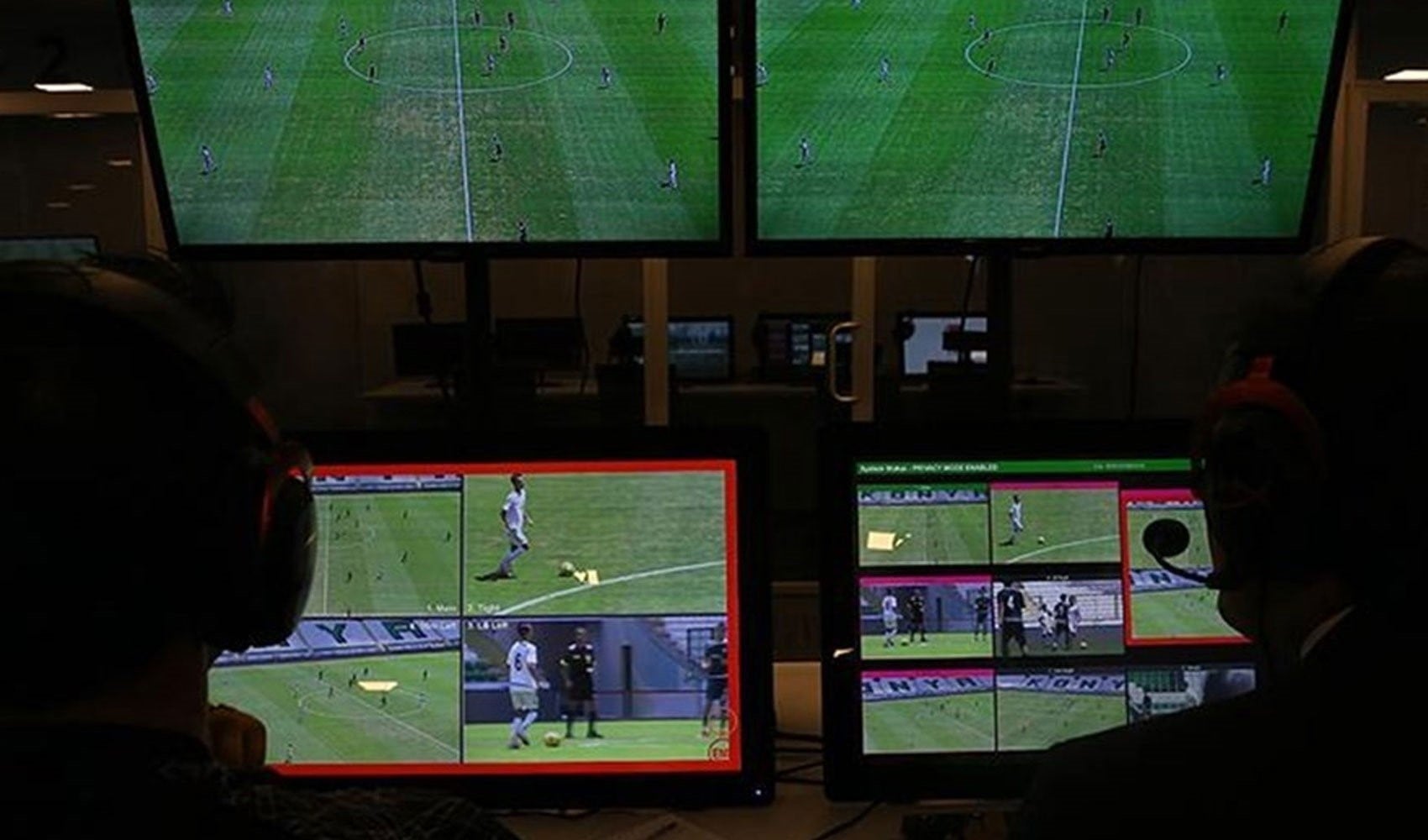
VAR for the Fenerbahçe-Beşiktaş derby has been announced!
Bridges and highways are being privatized: 15 July and FSM are also on the list

Peugeot September 2026 price list is out

New details emerge in 'panel' operation targeting lawyers
Gökçek era detail in ABB investigation
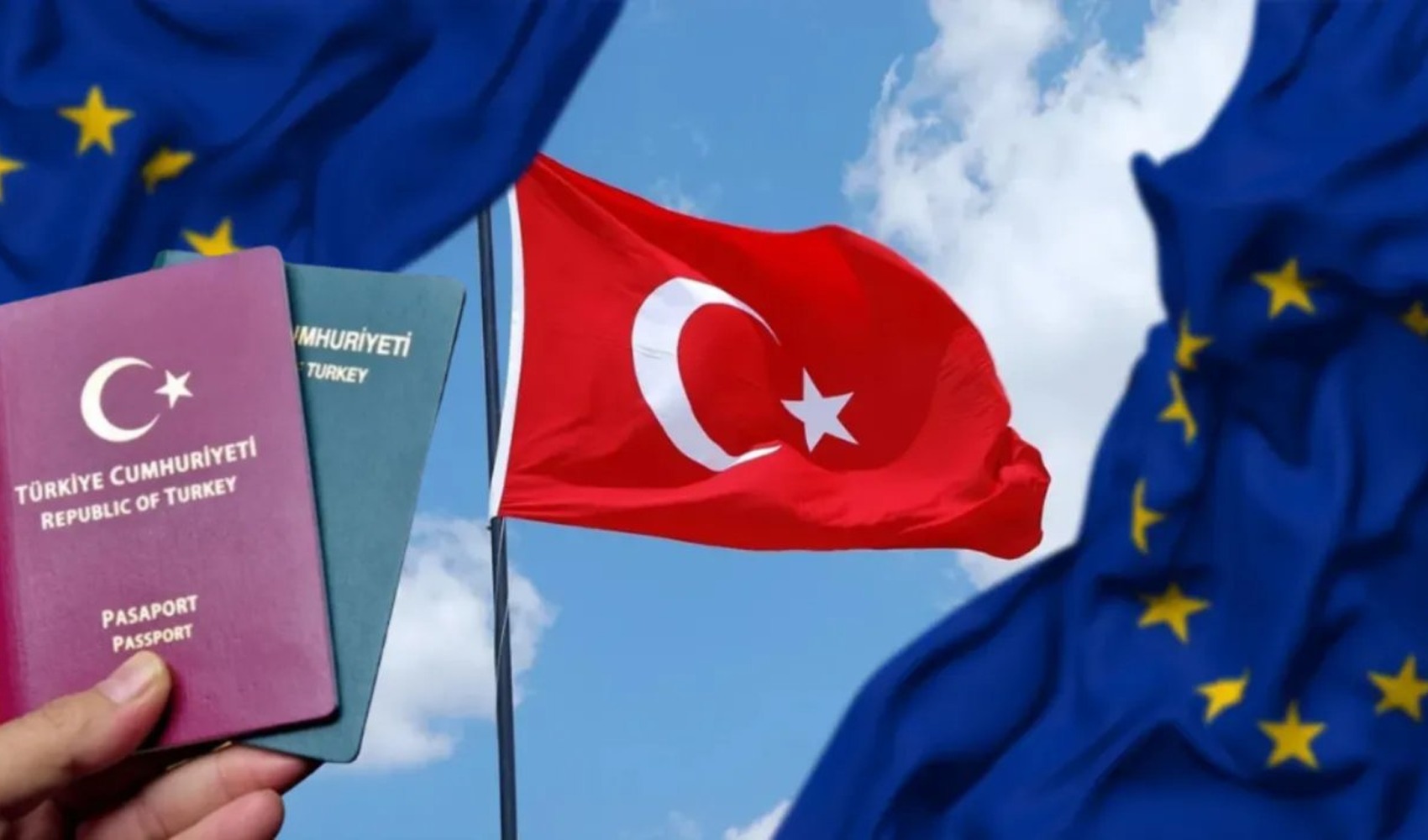
Rules are changing in Schengen

First statement from Osimhen after injury in Başakşehir match

Özlem Şanver: 'He said he would change, I believed him; should I be beaten just because I didn't leave?'