



What will be the effects of the US-Israel alliance attacking Iran? Today and in the days to follow, we will encounter hundreds of articles on this subject. Of course, comprehensive economic assessments are important. I was just intending to discuss the possibilities regarding this when my book, which I wrote 19 years ago, came to mind. The traps imperialism would set for us and the threats surrounding us were clear even back then, but we could not convey our plight to those who shape politics and public opinion in Turkey.
Almost everyone, especially after the surrender of Syria, “Iran is next, and after that, Turkey…” began to say.
It was clear from the beginning that Turkey would eventually be next in the Greater Middle East Project. How was the GMEP born, and what has happened until today? A very brief summary is in the footnotes at the end of the article (1, 2, 3). Both MOSSAD and Israeli politicians frequently express that Israel sees Turkey as a greater threat than Iran and that it should be expelled from NATO. Those who wish to recall a brief summary of these can look at the footnotes at the end of the article (4, 5, 6).
The trap that would be set for Turkey was clear at the beginning of the 2000s. Moreover, at that time, well-trained soldiers with patriotic staff intellect were still in charge. The high command of that time warned. The well-trained, patriotic diplomats of that time warned. The loud-mouthed, so-called intellectuals and so-called democrats, “a rabid minority,” “Military tutelage” "Monşerler" (Monsieurs) They showered them with insults, calling them "Monsieurs," and turned a deaf ear to these warnings. A short time later, in the final quarter of 2007, the staff intelligence of the Turkish Armed Forces was dismantled through a series of conspiracy cases such as Ergenekon, Balyoz (Sledgehammer), and Military Espionage. Diplomats in the Ministry of Foreign Affairs were neutralized.
On Saturday morning, following the US-Israel alliance's attack on Iran, I would like to share a few paragraphs from the Preface and Conclusion sections of my book published 19 years ago, in May 2007, "What Will Become of This Country" not with an "I told you so" attitude. Rather, because there are still lessons to be learned today, and to prevent Turkey's turn from coming. WHAT WILL BECOME OF THIS COUNTRY?
WHAT WILL BECOME OF THIS COUNTRY? 2007
The Republic of Turkey, by both consuming more than it produces and falling into a debt trap, as well as through the dream of full EU membership, has lost its economic and political independence to the US and the EU.
On the other hand, the reactionary movements and the separatist Kurdish movement, which have risen up at every opportunity since the War of Independence, have reached unprecedented levels in our history.
Supporters of reactionism, with 25 percent of the vote, seized a two-thirds majority in parliament and gained control of the state. Separatist Kurdish insurgencies secured the support of countries we consider allies, such as the US and EU, and found a base domestically.
Maps of a partitioned Turkey and an imaginary Kurdistan, which were previously published in a few French and British newspapers, began to appear before us in US Armed Forces journals and at NATO.
As a result of the high inflation, deteriorating income distribution, and unemployment we have experienced for many years, our social structure has eroded. Trust in the state regarding justice and public order has vanished; society has become a prisoner of lumpen culture.
With things as they are;
The economic, social, and political conditions during the collapse of the Ottoman Empire,
I felt it my duty to write about the state of the economy in response to those who say, 'We have a current account deficit, but it's not a problem, the economy is doing just fine,' as well as...
Turkey's social structure and the internal and external threats it faces,
and the spirit of Mustafa Kemal Atatürk's revolutions along with our Westernization goals.
I sought answers to the question, 'What will become of this country?' within the context of economics, economic history, and social structure. I wanted to highlight, in sections, the damage caused to the nation-state integrity and the effects on our sociological structure by the decay in areas such as justice, public order, education, and social peace—all of which have been caused by over 30 years of high inflation.
History, especially economic history, provides us with very serious clues. By examining past events through the lens of economic history, we can predict what might happen in the future.
The situation of the Ottoman Empire, which fell into a debt trap and had to make concessions and enact laws dictated by the West, is a cautionary tale when compared to the current state of the Republic of Turkey, which has become dependent on hot money and foreign debt in its dealings with the IMF, the World Bank, and the EU.
The United States, the world's most significant global power (economically, politically, and militarily), created a new definition for the Middle East: The Greater Middle East Project. In this project, Turkey, a secular republic, was seriously humiliated and defined as 'moderate Islam.' The AKP government, which rules Turkey, dove headfirst into this definition and fell in line with America. While all these definitions were being made, maps began to circulate.
FROM THE CONCLUSION OF THE BOOK...
The danger is this: The ideals of two groups that have rebelled against the Republic of Turkey since its founding phase—Islamists and separatist Kurds—are currently aligning with the goals of the United States, which acts as the world's unilateral gendarme. The Kurdish state established in Northern Iraq under U.S. protection and the concept of 'Moderate Islam' introduced through the Greater Middle East Project (BOP) are the new allies of the reactionary movements and the PKK uprising within our country. An alliance between internal and external threats is the most serious danger one could face.
Our trouble and dilemma is this: The Republic of Turkey, by repeatedly saying 'financing the current account deficit is not a problem,' has sunk up to its neck in debt, both as a state and through its large capital holders. Turkey's military capabilities and resources are extremely dependent on the U.S. in terms of logistics.
Of course, changing our borders, which were drawn with blood during the War of Independence, and partitioning the country is not that easy. However, instead of taking precautions and strengthening our position against internal and external threats, 'We drew our borders with blood, come and try if you dare' is not a sufficient approach.
Even retired generals (and admirals) who have served in the upper command echelons of the military have estimated a 20-year lifespan for the Republic of Turkey if these conditions persist. What will be our stance against the powers trying to change the map of the region and Turkey? Will we shape our own future, or will we submit?
The answer to this question from Gazi Mustafa Kemal Atatürk is as follows: “Societies that have made it a habit to seek ways to live comfortably without working, without tiring, and without learning are doomed to lose first their dignity, and then their freedom.”
While writing this book, I often debated within myself. Is the answer to the question 'What will become of this country' really that dire?
- When I look through the window of Ottoman economic history...
- When I look at today's economic indicators and the economic and political fragilities caused by these indicators...
- When I look at today's social structure...
- When I look at today's domestic and foreign political relations...
- When I look at international military strategies today...
I always reach the same conclusion:
Of course, for the Turkish nation, which has never been left without a state in history and has founded 16 states, the solution is not to say, "We will establish the 17th Turkish State anyway," but to rid itself of indifference. I think we are at the penultimate station...
THE SITUATION 19 YEARS LATER...
It was clear years ago that today's economic, political, and social problems would grow even larger and that global geopolitics would become even more complex. The situation has become even more severe. In addition to its existing, worsening problems, our country has been turned into a warehouse for refugees and migrants from countries that were dismantled and had their regimes changed within the scope of the Greater Middle East Project (BOP). The negotiations held with the PKK and its terrorist leader, the process carried out under the name of a "Terror-Free Turkey" that targets the pillars of the unitary state, the nation-state, and the secular state, as well as the Treaty of Lausanne, and the Parliamentary Commission report are all there for everyone to see...
The forces influencing Turkish politics and public opinion, and the voters under the influence of these forces, unfortunately did not object to the imprisonment and purging of the well-trained, heroic officers who foresaw these days; they remained silent. They turned a deaf ear to the warnings of well-trained diplomats, intellectuals, and writers who saw these days coming. Even more painfully, the Turkish nation, including the cadres who took over the CHP administration, failed to uphold the principles and revolutions of Gazi Mustafa Kemal Atatürk, their savior and the founder of the state they possess.
Let us repeat the question. Is it Turkey's turn?
The solution for Turkey to overcome its existential problems lies in the principles and revolutions of Gazi Mustafa Kemal Atatürk... Will the Turkish nation, the political establishment, the components of the opposition, and especially the CHP leadership, uphold Atatürk's principles and revolutions? That is the real question...
A SMALL NOTE: The book 'Ne Olacak Bu Memleketin Hali' (What Will Become of This Country), published by Truva Yayınları in 2007, is no longer on the market. You might find it in second-hand bookstores. My book 'Yirmi Birinci Yüzyıl İçin Türkiye’nin Fabrika Ayarları/Ekonomide Karşı Devrim' (Turkey's Factory Settings for the 21st Century/Counter-Revolution in the Economy), which I published at the beginning of 2025 and which offers not only an assessment but also an economic way forward for Turkey, is also available in limited quantities.
FOOTNOTES
(1) The mention of the U.S. Greater Middle East Project emerged in 2001. However, the clues were essentially provided earlier in books written by authors who were CIA officers. Retired Admiral Cihat Yaycı, whom I listened to on television after the attack, goes back even further than 2001. Yaycı states the following: 'Whatever Graham Fuller (1) and Henri J. Barkey (2) wrote in their 1998 book, Turkey's Kurdish Question, is what is happening. It is known that after Iran, it will be Turkey's turn.'
(2) Graham Fuller: Permanent political advisor to the American RAND Corporation think tank, former vice-chairman of the CIA's National Intelligence Council, author, and American government official.
(3) Henri Barkey: Born in Istanbul to a Jewish family from Izmir. He is a citizen of both the US and Turkey. He served as a policy planning staff member at the US Department of State. Following the July 15 FETO coup attempt, an arrest warrant was issued for him on charges of political and military espionage. However, he somehow managed to travel to the US. He currently works as a Middle East expert at a university in the US.
(4) The Greater Middle East Project (GMEP) was likely on the agenda much earlier, but its intellectual foundations began to be openly discussed after the September 11, 2001 attacks. On August 7, 2003, US National Security Advisor Condoleezza Rice wrote in an article for The Washington Post titled 'Transforming the Middle East' that the borders of 22 countries in the region, stretching from Morocco to the Persian Gulf, would be changed. The views in this article were announced as the National Security Doctrine by then-US President George W. Bush on November 6, 2003. Israel shapes US Middle East policy. For its own security, Israel aims to establish a Kurdish state in the region that also eyes Turkish territory. Let us also recall that Israel views Turkey as a greater threat than Iran and has called for its expulsion from NATO. I will provide the details in subsequent footnotes. The ultimate goal is Turkey's Euphrates-Tigris Basin... They base this goal on a sacred justification, claiming it is God's gift to Israel in the Torah. The GMEP map drawn by the US, which has been circulating for years, also illustrates these claims. Countries whose regimes have changed due to occupation, popular uprisings, or coups within the scope of the GMEP since 2001 include: Afghanistan, Iraq, Libya, Egypt, Tunisia, Yemen, Sudan, Syria, and Somalia...
(5) In August 2020, The Times newspaper in the UK reported that then-Mossad Chief Yossi Cohen had stated in a meeting with his counterparts from Egypt, Saudi Arabia, and the UAE that 'Iran's power is fragile, but the real threat comes from Turkey.'
(6) In July 2024, Israeli Foreign Minister Israel Katz called for Turkey to be expelled from NATO.
(7) During discussions held in the Israeli Knesset's Foreign Affairs and Defense Committee in December 2025, the thesis began to be developed that Turkey's defense industry breakthroughs and regional alliances pose a more complex risk to Israel's security than the Iranian model.
Most Read
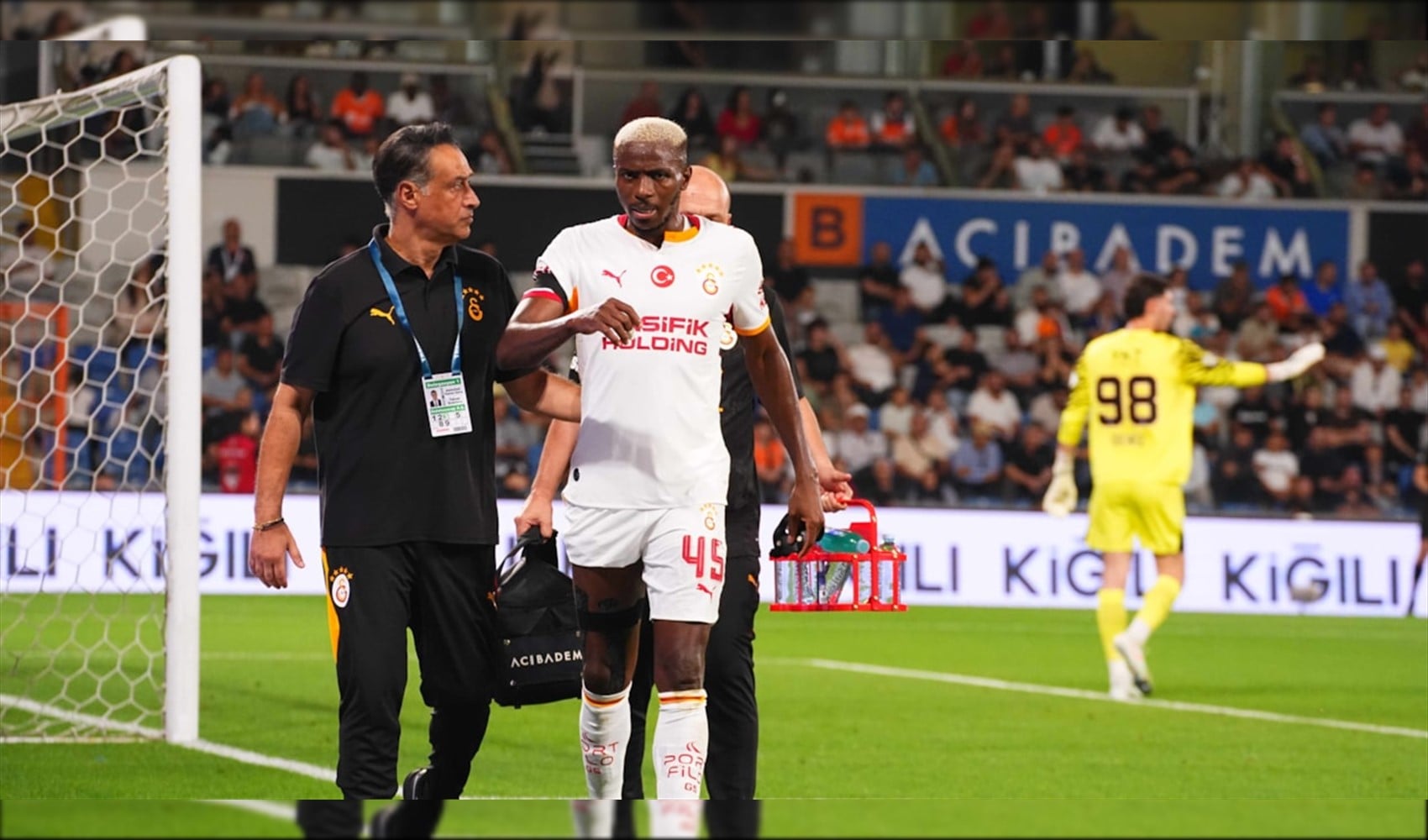
Galatasaray announces injury updates for Osimhen, Lemina, and Singo

Attention online sellers: Tax monitoring expanded
VAR for the Fenerbahçe-Beşiktaş derby has been announced!
Bridges and highways are being privatized: 15 July and FSM are also on the list

Peugeot September 2026 price list is out
Rules are changing in Schengen

New details emerge in 'panel' operation targeting lawyers
Gökçek era detail in ABB investigation

First statement from Osimhen after injury in Başakşehir match

Özlem Şanver: 'He said he would change, I believed him; should I be beaten just because I didn't leave?'