


The political economy of the Republic



First, let us establish this observation. The Ottoman Empire missed the scientific, technical, Renaissance, reform, Enlightenment, and Industrial Revolutions that took place in Europe over the last three centuries, and it collapsed after the First World War. Its typical characteristic was that of a religious agrarian empire based on the ummah and the monarchy.
The new state established after the War of Independence became a republic that ended the monarchy and the sultanate.
The claim put forward by Gazi Mustafa Kemal Pasha, who founded the Republic, was essentially to carry society into the 20th century while establishing a new state, the Republic. The goal of the Republic and the revolutions was a move to transform from an ummah to a nation, and from being subjects of the sultan to equal citizens before the constitution and free individuals.
Looking from this perspective, we can say that the Republic and the revolutions were primarily based on three fundamental pillars.
The first is the creation of the legal infrastructure of the newly established state... Let us briefly recall many regulations regarding economic and social life, such as the Constitution, the abolition of the caliphate and sharia laws, the civil code, the penal code, the closure of madrasas, the law on the unification of education, and the transition to the 'Latin Alphabet', and move on, noting that these are subjects for another article.
The second pillar of the construction of the Republic is the industrial initiative... In this article, we will touch upon the industrialization efforts and the political economy of the revolution. Before entering into this, let us also recall the third pillar.
The third initiative of the Republic and the Enlightenment Revolutions is to carry society into the 20th century.
80 percent of the population lived in rural areas. They were peasants, but not farmers. The goal of the revolution was to bring society together with the Republic through the Land Reform Law and education (Village Institutes). The target was to turn the peasant into a farmer, to save them from primitive agriculture, and to increase productivity in agriculture. Unfortunately, this third initiative was blocked by the counter-revolution, and the Enlightenment Revolutions remained incomplete. We will address this in the next article.
Let us try to briefly summarize the political economy of the Republic along with the industrialization initiatives.
At the forefront of the basic characteristics is the principle of economic independence. The Ottoman Empire was a semi-colonial country; the capitulations were a major problem; it was mired in debt; its finances were in the hands of foreigners through the Public Debt Administration (Duyun-u Umumiye); there was no industry; and productivity in agriculture, which was carried out with primitive methods, was quite low. (It is the same today).
For Gazi Mustafa Kemal Pasha and the founding cadres of the Republican Revolution, who were aware of the destruction and ruin caused by this structure, the fundamental principle of economic policies was to be free from capitulations, independent, to borrow as little as possible, and to grow with its own resources.
THE EFFECT OF SOLIDARISM
The model was a statist economic model that also made room for the private sector. Atatürk was influenced by the French Revolutions in his reforms and intellectual life.
When we look at Atatürk's library, there are books by two French economists who proposed cooperativism, solidarism, and statism, which were dominant among the already limited economic resources of that period.
“Like many thinkers of the period, Atatürk also reached economics through solidarism, which was a widespread system of thought. His primary reference sources were the solidarist economists of France. At that time, Charles Gide and Charles Rist, in particular, were well known in Turkey. The French and Turkish versions of the history of economic thought movements titled History of Economic Doctrines from the Physiocrats to the Present Day, which they wrote together, as well as Charles Gide's four-volume Lessons in Scientific Economics, were in Atatürk's library.
The only work by a classical economist in his library was the 1852 edition of Cours complet d’économie politique pratique (Applied Political Economy) by Jean-Baptiste Say. (Prof. Dr. Zafer Toprak, Atatürk, T. İş Bankası Publications)
Solidarism is not a very well-known concept in Turkey. It is a model that prioritizes statism and cooperativism.
However, unlike socialists, they do not believe in class conflict but in the solidarity of classes, and they believe that the private sector should also have a place in the economy. It is a movement that emerged as a reaction to the savage capitalism practiced in the 1800s.
The Germans call this movement Social Democracy. When you combine Atatürk's principle of statism with the principle of populism, you can easily see Solidarism or the Social Democratic economic model.
The Populism Declaration presented by Gazi Mustafa Kemal to the Grand National Assembly in September 1920 was born as a reaction to the exploitative policies of imperialism and capitalism, and the Principle of Populism prioritizes fair distribution in the economy. (We will also address Gazi Mustafa Kemal Pasha's Populism Declaration in another article.)
In the period up to 1929, there was the establishment of the state on one hand and state investments on the other, but expectations from the private sector created disappointment. In any case, there was no national bourgeois class, nor a private sector with sufficient capital accumulation and knowledge. It was decided to switch to a planned development model. Reports were requested from both the Soviet Union and America. As a result, the First Five-Year Industrial Plan was implemented in 1934 in cooperation with the Soviet Union. Sümerbank became the fortress of industry, and Etibank became the fortress of mining.
The First Five-Year Industrial Plan covered the textile (cotton, wool, hemp), mining (iron, coal), cellulose (paper, carbon, cellulose, artificial silk), ceramic (bottle, glass, porcelain), and chemical (sulfuric acid, chlorine, caustic soda, superphosphate) industries. In sector selection, the fastest results that could be obtained for import substitution were effective. Imports in these sectors accounted for approximately half of total imports. Under the conditions of that period, it was a major goal.
“In choosing the locations for the factories, not only economic criteria but also the goal of spreading industry and military purposes were taken into account. Thus, many factories were spread across Anatolia, from Malatya in the east to Nazilli in the west.” (Prof. Dr. Akın İlkin, Seminar on the Turkish Economy in the Atatürk Era, 1981, Yapı Kredi Bankası)
Before the plan period ended, as things were going more successfully and faster than expected, the Second Five-Year Industrial Plan, which would come into effect after 1939, was prepared. The goals here were heavy industry, investment goods industry, and large energy and irrigation facilities. However, when the Second World War broke out, the plan could not be implemented.
And of course, the “Railway Policy” (Şimendifer Siyaseti), as it was called at the time, is important. Every year, an average of 300 kilometers of railway was built with pickaxes and shovels. The Republic inherited 3714 km of railway from the Ottomans. These railways, which belonged to foreign companies, were nationalized by paying for them, and in addition, 4645 kilometers of railway were built until 1939.
Independence is the development of the economy with its own resources. Like the Ottomans, borrowing for every current expenditure was avoided. During this period, external debt was taken only three times. The first was 10 million dollars taken from a Swedish businessman for the purpose of establishing the Central Bank; with this money, 6 tons of gold were placed in the Central Bank's vault. In return for this debt, the trade of matches and flint was granted for 25 years. The second was 8 million dollars (16 million Turkish Liras) taken from the Soviet Union for the machines and equipment of the factories included in the industrial plan. This agreement is the first clearing (barter) agreement in history.
The debt was paid with Turkey's agricultural product exports. The third debt was 2 million 745 thousand Pounds Sterling (17 million TL) taken from England for the Karabük Iron and Steel Factory. This debt was also paid with Turkish export products. Between 1929 and 1947, after 1928 when the capitulations were abolished, the young Republic never had a foreign trade deficit and always had a foreign trade surplus.
SCIENCE IS ESSENTIAL, IDEOLOGY STAGNATES REVOLUTIONS
Another fundamental principle of the Republican cadres is the balanced budget-sound money policy. During the Atatürk era, the budget ran a surplus until 1939, except for 1925-1926 (due to internal rebellions like Sheikh Said) and the years 1930 and 1932, when there was a drought. In addition to the balanced budget policy, a disciplined emission policy was implemented for sound money. The emission inherited from the Ottomans was 158 million Liras. When the Republic replaced these banknotes with its own printed banknotes, the emission was still 158 million liras, and no new money was printed for a long time. New money printing was provided by the growth of the economy.
We can briefly summarize the political economy of Gazi Mustafa Kemal Atatürk and the Republican Cadres as follows:
The goal is the level of contemporary civilization. This level is not fixed; it is in constant development. Therefore, reason and science are important. Ideology drives revolutions into inertia. Therefore, the revolution has no ideology. Continuous revolution in parallel with developments in the light of science is essential.
Economy-Education-Public Works (Economy, education, and urbanization-public works-railways) go in parallel with each other. Economic independence cannot be compromised. The statist mixed economic model is essential. Planned development based on own resources and fair distribution (Populist) is essential. A sound money and balanced budget policy is implemented. Behind the saying “The peasant is the master of the nation” lies a great claim and initiative for agricultural development and social transformation. Unfortunately, this leg of the revolution remained incomplete. And sadly, the model of planned industrialization based on the independence of the economy and its own resources was also abandoned starting from 1947.
We will cover this topic in the next article.
Would you like to get notifications about new developments and save news?
- NotificationsNew developments and breaking news
- SaveNews is stored in the app
Most Read

Video response to Kim Jong-un claims

Murat Ağırel’s police statement has been revealed
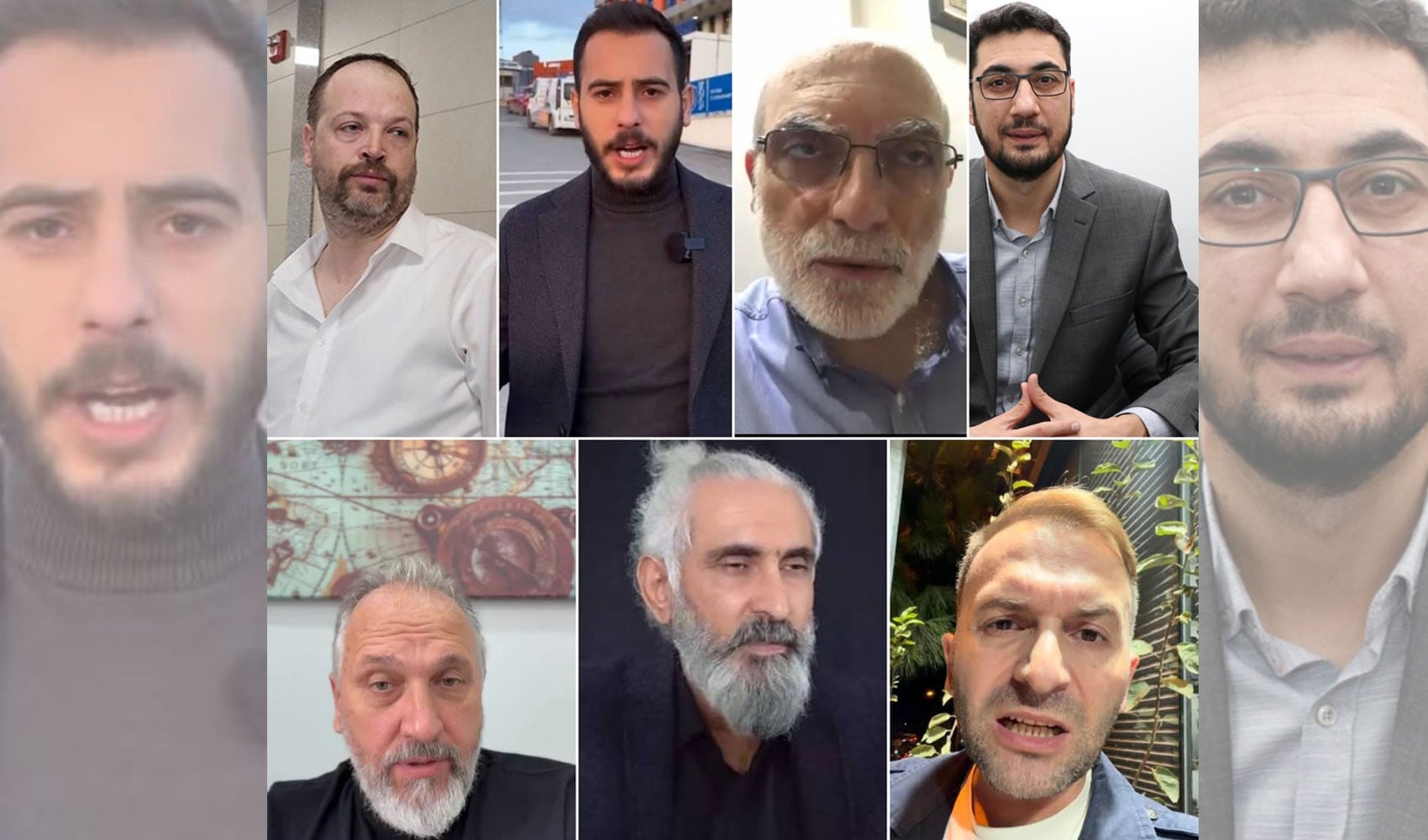
Azerbaijan issues arrest warrants in absentia for 7 people living in Turkey

The Orionid meteor shower will be visible from Turkey!
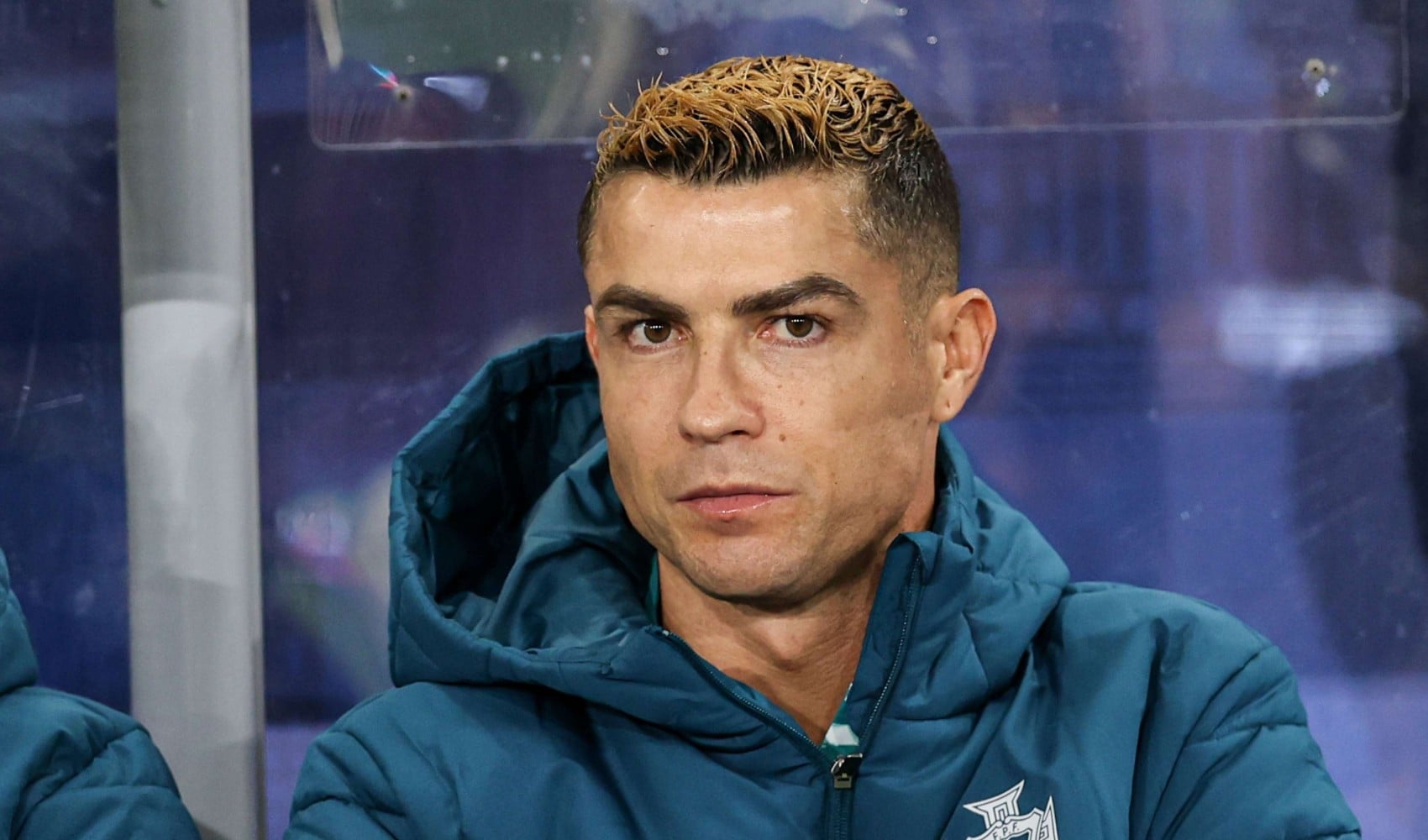
The penalty for Ronaldo, who left the national team camp, has been announced

Fatoş Seğmen reveals the cause of her daughter's death

Injury shock at Liverpool: He may miss the Fenerbahçe match

Latest status in the race between AKP and YENİ Party revealed

Who authorized the concert held in a parking garage?

From brotherhood to a distant partnership...