



He inherited a political, social, and economic structure where the economy had almost entirely fallen into the hands of foreigners, the country had been reduced to a semi-colonial state, its most elite cadres had been martyred on the front lines, the number of men available to farm the fields had dwindled, and 90 percent of the population lived in rural areas, with an equally high percentage being illiterate.
The Republic inherited this from the Ottoman Empire. Throughout the 1800s, due to the significant influence of Britain and France, and later Germany, on the Ottoman Empire's economy, trade, production, and domestic market, the Ottoman state had largely lost its economic independence, and consequently its political independence, falling into a semi-colonial state.
Under these conditions, it was hardly possible for the Ottoman educational institutions to teach objective, scientific, and factual information regarding the country's and the state's history, politics, economy, and social structure, or to adopt a rational and inquisitive teaching method.
Therefore, Turks began to learn their history not during the Ottoman period, but with the Republic. Turkish history surpassed the history of the Ottoman Empire, which reigned for over 600 years, through the educational reforms led by Mustafa Kemal Atatürk; it went far beyond that, reaching back much further.
With the Republic, it came to include and reconnect with the pre-Ottoman era, the Seljuks, Anatolian civilizations, and our historical roots in Central Asia. Studies, examinations, research, and publications regarding those periods, civilizations, and states began during the Atatürk era. They were embraced during the Atatürk era.
For this reason, it can easily be said that with the Republic, Turks began to learn and write about the pre-Ottoman era consciously and using scientific methods. This was made possible thanks to Atatürk. It happened with the Republic. It happened in the nation-state. The Turkish Historical Society (1930) and the Turkish Language Association (1932) are products of this understanding. History, language, culture, and homeland are, after all, the fundamental elements of national consciousness.
In this context, it must be reiterated once again that, regardless of which political tradition or political view one comes from, opposition to Atatürk is simultaneously an overt opposition to the nation, the state, and the republic.
Because a nation without Atatürk, a state without Atatürk, and a republic that ignores Atatürk are not possible. That is why those who oppose Atatürk—whether they rely on religious profiteering, are sectarian, are 'fake' republicans, are separatists or ethnicists, or are those who pose as leftists and live off the left—are individuals whose strings are held by imperialists.
They can never be anything more than pawns, extensions, or collaborators of imperialism. This simple truth holds for history as it does for today. It never changes.
Let us repeat: it has never been seen that opposition to Atatürk and the Republic has made anyone more Muslim, more revolutionary, or more nationalist. But it has made all of them pawns of imperialism.
Most Read

Galatasaray announces injury updates for Osimhen, Lemina, and Singo

Attention online sellers: Tax monitoring expanded

VAR for the Fenerbahçe-Beşiktaş derby has been announced!
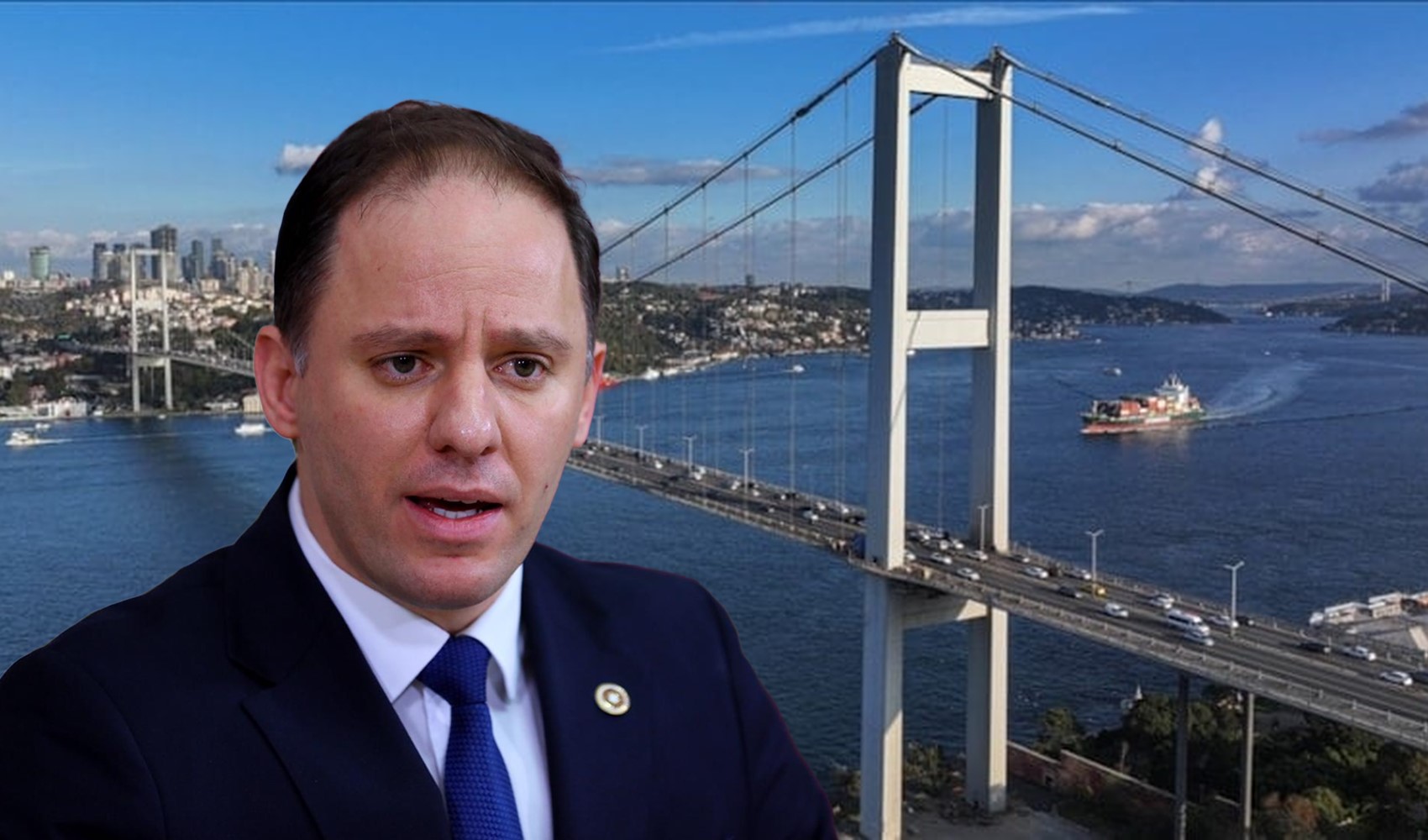
Bridges and highways are being privatized: 15 July and FSM are also on the list

Peugeot September 2026 price list is out
Rules are changing in Schengen

New details emerge in 'panel' operation targeting lawyers
Gökçek era detail in ABB investigation

First statement from Osimhen after injury in Başakşehir match

Özlem Şanver: 'He said he would change, I believed him; should I be beaten just because I didn't leave?'