



As the Republic of Turkey celebrates its 100th anniversary, it finds itself in a political climate where liberal economics and capitalist preferences are highly influential. In this regard, the opposition front of mainstream politics is not very different from the government. It is quite far from defending communal, populist, public-oriented, and statist options in a determined, consistent, and courageous manner. In addition to the opposition, academia, media, professional organizations, unions, and think tanks are unfortunately also ineffective.
However, against this pessimistic picture, just like the line in the poem “Laz İsmail” by our language’s giant and revolutionary poet Nazım Hikmet, one must resist and stand tall: “The issue is not in being taken prisoner, the whole issue is in not surrendering!”
It is essential—and must be done tirelessly—to insistently, stubbornly, and assertively struggle against liberal hegemony, to emphasize that liberal and neoliberal policies are not the only option, and to loudly voice policies that favor labor, equality, independence, and enlightenment. Because, as the famous English liberal thinker John Stuart Mill emphasized, “ideas that are not subject to debate lose their vitality.”
Let us start with this observation: Liberal economic political thought is against the public sector being a guide, regulator, or restraint in the economy. Essentially, according to this approach, which began to be widely accepted in the 19th century, the state should limit its functions as much as possible. It should even be pulled back to the most minimal, narrowest boundaries possible. It should avoid interfering in the economy and society as much as possible. If it does this, the desired balance and order can be established in economic and social life. Because in social life, citizens and classes fighting for their own interests compete freely, and act rationally, realistically, and pragmatically. State intervention disrupts this functioning. The supply-demand balance of the economy and the invisible hand law of the market are decisive. As long as the state does not interfere or intervene.
According to liberals, the state has no duties, functions, or responsibilities such as bridging the gap between classes, addressing the imbalance between rich and poor, eliminating regional development disparities, or ensuring equality of opportunity. Therefore, defending the social state is wrong. It accustoms people to laziness. Moreover, it is contrary to the nature of society. It is also incompatible with economic realities. According to those who argue that liberalism and the freedom of enterprise of capital are equal, one and the same with democracy, if the state withdraws from economic and social life as much as possible, the rules of free competition and the free market will function.
LIBERALISM AND INEQUALITY
However, the facts are not as the liberals claim. The views of liberals regarding the boundaries of the state, the free market, and competition pave the way for monopolization and increase social inequalities and social injustice. A system without state intervention, without the guiding, supervisory, and regulatory functions of the public sector, and without public planning, paves the way for capital, economic, and political power to concentrate in certain hands. This order cannot be called democracy. As liberals desire, less state—more market, less public—more private enterprise only deepens class inequalities.
Liberalism has not been able to overcome the crisis it has experienced even though the Cold War ended between 1989 and 1991, the Eastern Bloc collapsed, the Berlin Wall fell, the Warsaw Pact dissolved, the USSR became history, and the USA declared its victory. Capitalism has not been able to escape cyclical crises. Parliamentary democracies, liberal democracies, and representative democracies have not been successful in solving the fundamental and human problems of laborers, the oppressed, the poor, and broad masses of the people. They have not been able to prevent big capital from using political power in an unlimited and unchecked manner, the monopolization of the media, the pruning of the gains of the social state, and the strengthening of racist and xenophobic movements.
Since liberal democracy adopts the political, economic, and social system of capitalism on the economic plane; and embraces capitalist production, property, and distribution relations, it causes the gains of laborers to be constantly eroded. Since capitalism constantly produces crises—meaning the crisis in capitalism is structural—and moreover, since it experiences a crisis not every 40–50 years, but almost every 10–15 years, the situation of the broad masses of the people worsens.
When this is the case, every time, liberals, the dominant actors of the market, bosses, and top executives (CEOs) with high salaries set their sights on public resources, steps to be taken by the state, rescue packages to be issued, and tax debts to be wiped out to overcome the crisis. Every time, they instruct governments to “limit wages,” “lower salaries,” and “allocate fewer resources to education, health, and social security.” Unfortunately, governments do what they are told.
DEFENDING THE NATION-STATE AND THE SOCIAL STATE
Equality in the legal order in representative democracy does not exist on the economic, political, and social plane. Citizens who are equal before the law are not equal on the class plane. Therefore, equality of opportunity, the social state, and state intervention in the economy are essential. The only way to achieve this is through the nation-state. It is the foundation and opportunities offered by the nation-state. This is one of the most important reasons for the opposition of liberals and neoliberals to the nation-state. Because a strong, effective, respected, and truly democratic nation-state is a fundamental condition for modernizing by becoming a nation and gaining independence, and for consolidating civic consciousness.
Since the day the Cold War ended, privatization, localization, and deregulation have been imposed on the economic, legal, and administrative levels to erode and weaken the nation-state. In line with the demands of global capital, national jurisdiction has been sidelined through international arbitration. On the political and social plane, identity politics has been encouraged; sub-identities, ethnic, religious, and sectarian sensitivities, affiliations, and allegiances have been placed ahead of national identity, citizen identity, and class identity.
Under these conditions, it is necessary to explain to the people, tirelessly and without hesitation, that the freedom promised by liberalism brings poverty, hunger, and ultimately misery and death. There is no justice or equality in a system where the market is the sole determinant. There is a gap in income distribution, infant mortality due to hunger, and rising crime rates.
Most Read

Galatasaray announces injury updates for Osimhen, Lemina, and Singo

Attention online sellers: Tax monitoring expanded

VAR for the Fenerbahçe-Beşiktaş derby has been announced!
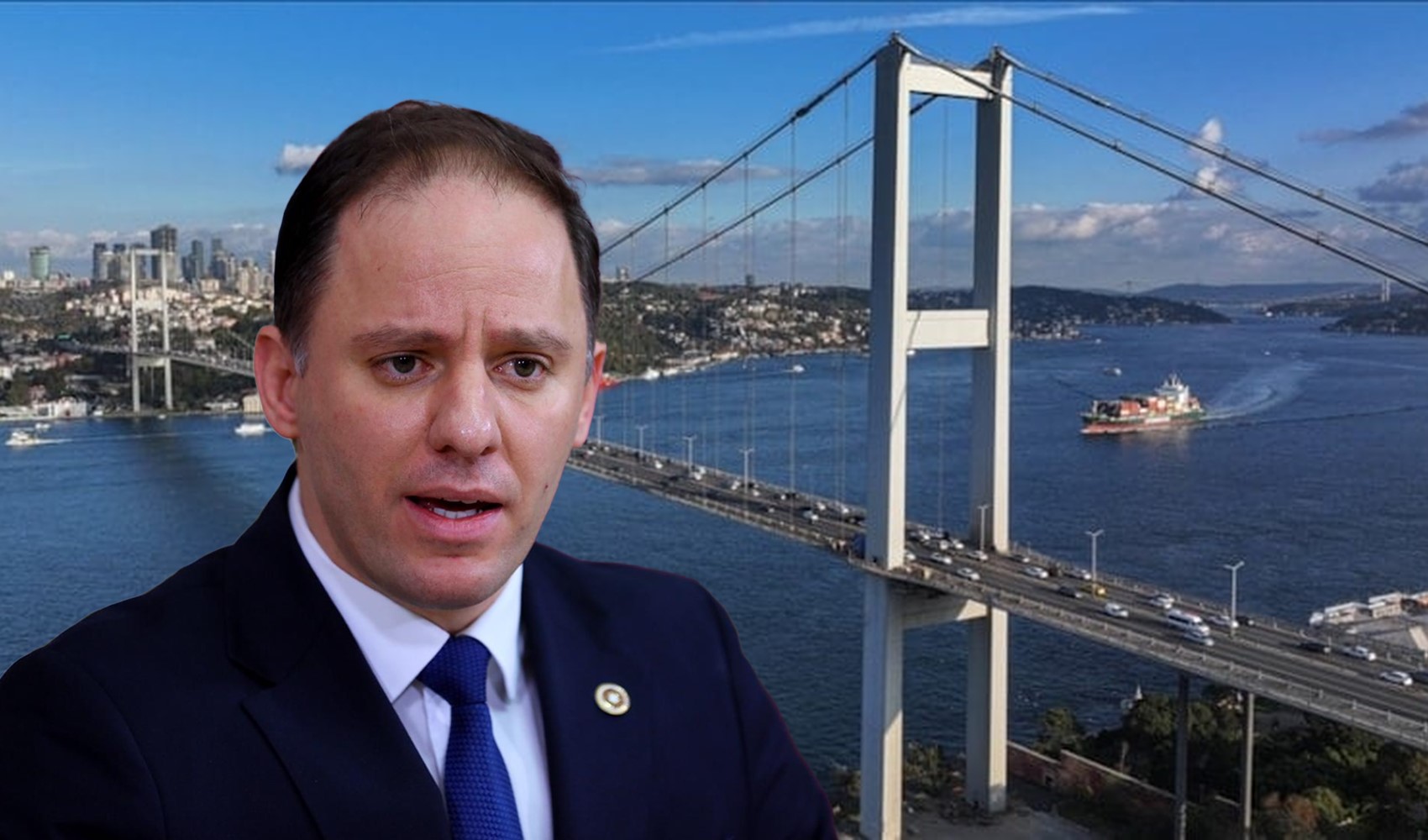
Bridges and highways are being privatized: 15 July and FSM are also on the list

Peugeot September 2026 price list is out

Rules are changing in Schengen

New details emerge in 'panel' operation targeting lawyers
Gökçek era detail in ABB investigation

First statement from Osimhen after injury in Başakşehir match

Özlem Şanver: 'He said he would change, I believed him; should I be beaten just because I didn't leave?'