



Education is the foundation of the process of humanization. It is the primary way for a person to realize, construct, and express themselves. It aims to raise individuals who ask questions, inquire, criticize, and research. It targets the cultivation of individuals who do not obey but object, who do not submit but resist, who do not pledge allegiance but seek their rights, who do not just look but see, and who are not selfish but possess social responsibility. The Republic perceives the right to education, which is a fundamental human and citizen right, with an egalitarian, free, scientific, co-educational, secular, enlightenment-oriented, populist, and public-service approach. It values it in terms of both human capital and social capital.
Education is a superstructure institution. However, it stands out as the superstructure institution that most influences the infrastructure. For this reason, all regimes, all political movements, and all revolutions place great importance on education. Atatürk, the only revolutionary leader in the world who, among his other titles, also held the title of “Head Teacher” (Başöğretmen), also attached great importance to education. He utilized his most distinguished cadres, from Reşit Galip to Mustafa Necati, as Ministers of National Education. In a conversation, his statement, “If I were not the president, I would have wanted to be the Minister of Education,” is among the proofs of the value he placed on education. While Atatürk sought to make reason and science dominant in state and social life, he also left reason and science as his spiritual legacy. He said, “The truest guide in life is science,” and specifically emphasized that “The foundation of the Republic of Turkey is culture.”
The First Education Congress (Maarif Kongresi) was convened in Ankara between July 15 and 21, 1921, during the most difficult days of the War of Independence, before the Battle of Sakarya. When Atatürk saw that the teachers were sitting in gender-segregated sections in the congress hall, he asked the male teachers the following question: “Gentlemen, do you not trust yourselves, or do you not trust these ladies?” This question is also an indication of the revolutions he would carry out and the importance he placed on gender equality. One year after this congress, in 1922, the Teachers' Congress was held in Bursa. At that congress, Atatürk expressed the importance he placed on teachers with these words: “You, and only you teachers, are the soldiers of a second army that explains to the first army, which dies and kills, why it dies and why it kills.”
While Atatürk approached the education system with a revolutionary and enlightenment-oriented perspective, he aimed to create a modern nation through a new human and citizen. In a speech, he said: “Those who try to save the country and the nation must also be honest experts and scholars in their professions. It is the school that ensures this. Let us all remember the name of the school with respect; the school teaches young minds respect for humanity, love for the nation and the country, honor, and independence. When independence is in danger, it teaches the most correct path to follow to save it.”
Less than a year after the proclamation of the Republic, the Law on Unification of Education (Tevhid-i Tedrisat Kanunu), which was one of the three Revolution Laws adopted on March 3, 1924, was a true revolution. What was aimed with this law was not just the unification of education, but also the equalization of people through education and starting from educational institutions. It was for citizens to benefit from equality of opportunity. That is why Atatürk’s education policies form the basis of all his policies. Knowing that the Ottoman Empire paid a very heavy price for missing the Scientific Revolution, the Age of Enlightenment, and the Industrial Revolution, and knowing that missing the Scientific Revolution cost society at least 300 years (the printing press arrived in the Ottoman Empire with a 281-year delay), Atatürk ended the “school-educated vs. madrasa-educated” divide in society with this law. The Republic’s schools replaced religious schools teaching in Arabic, primary religious schools (sıbyan mektepleri), madrasas, palace schools, military schools, and schools attended by the children of non-Muslim subjects. The education curriculum was unified, and all schools were placed under the Ministry of National Education.
HEAD TEACHER ATATÜRK
In 1928, the Alphabet Revolution was carried out, and the transition to Latin letters was made. If one considers that 90 percent of the population was illiterate when the Republic was proclaimed, the importance of this step is better understood. Those who make remarks to criticize the Alphabet Revolution such as, “We broke away from our history. We cannot read old texts. We cannot understand the letter our grandfather wrote to our grandmother or the will he left to his children,” should not forget that 90 percent of the Ottoman society was illiterate. Because this grim picture reveals that Ottoman Turkish, which was a mixture of Turkish, Arabic, and Persian, could not be learned by the public. While Ottoman Turkish was spoken in the palace and among the elites in Istanbul, the Anatolian people spoke Turkish and embraced Turkish.
During the period when Mustafa Necati was the Minister of National Education, the Nation Schools (Millet Mektepleri) were opened in 1928 and achieved great success in teaching the public to read and write. Between 1929 and 1936, 2.5 million people received diplomas from these schools. The young Republic decided to send successful high school graduates abroad for university and specialized education, and in this context, 288 students were sent abroad between 1929 and 1930. The People's Houses (Halkevleri) also provided great service in the education of the public and in making education and science dominant in social life. When the People's Houses, which operated between 1932 and 1951, were closed, there were 478 People's Houses and 4,332 People's Rooms across the country.
The following words spoken by İsmet Paşa in later years regarding the closure of the People's Houses are not just a confession and self-criticism of a statesman. They are also a bitter lesson: “The greatest failure of my life is that I could not prevent the closure of the People's Houses.” The Village Institutes (Köy Enstitüleri), established in 1940, are considered the pinnacle of Turkish national education. These schools, which were presented as a model to developing countries and entered the education science literature as “Turkish-invented educational institutions,” provided great service to Turkey until they were closed in 1954. Among the tens of thousands of graduates of these institutions, which adopted the principle of “education for work, in work, and with work,” are distinguished intellectuals such as Fakir Baykurt, Mahmut Makal, Talip Apaydın, and Ümit Kaftancıoğlu.
The goal of the Republican education designed by Atatürk, who said “The Republic is virtue” and emphasized its populist and pro-people aspect with the words “The Republic is especially the protector of the unprotected,” was to raise generations with “free thought, free wisdom, and free conscience,” in the words of the great poet Tevfik Fikret, who greatly influenced Atatürk. It was, in a sense, to create a new human being. For this reason, the young Republic carefully and especially insisted on education being populist, egalitarian, secular, and enlightenment-oriented. It considered these qualities indispensable for education and science. This is the purpose of the Nation Schools, the People's Houses, and the Village Institutes. These institutions were opened for the enlightenment of society and the integration of the revolution with the people, and they took giant steps on the path to nation-building. They fought against backwardness and reactionism. They carried out work and produced works in every branch of fine arts, from theater to music, from painting to literature. They strengthened national culture and national consciousness.
After Atatürk’s death, however, the enlightenment-oriented, public-service, populist, secular, pro-society, and nationalist approach to education that he initiated could not be sustained. On the contrary, it was liquidated over time. The CHP could not protect the People's Houses and Village Institutes established during its own era. On the contrary, during the term of CHP Prime Minister Şemsettin Günaltay, major concessions were made from secular education. After 1950, the planning, direction, and content of the Turkish national education system were largely left to the initiative of US consultants. Prime Minister Adnan Menderes’s remark, “If you couldn't become anything, couldn't you even become a teacher?” shows his approach to education and teachers.
MARKETIZED, COMMERCIALIZED, AND PRIVATIZED EDUCATION
While the Republic advocates for education services to be egalitarian and free, it finances education from the general budget and public resources. It believes that education and science institutions should be under public ownership, not the private sector, and at the service of society. It views these institutions in terms of public benefit and social interest. It knows that by opening up different thoughts and ideologies, they contribute to the establishment and rooting of democracy in society. It is aware that they are institutions that receive their financial resources from the state budget but can also criticize the state administration.
Thinking that education is a state duty and a citizen's right as a public service provided free of charge and equally, the Republic does not leave citizens to the mercy of the market in education and health. It does not see the student and the patient as customers. It sees them as citizens benefiting from education and health services, which are public services. It does not define the school and the hospital as businesses. If a citizen is seen as a customer, the service provided to them is not a public service, but a market service. The teacher and doctor providing that service become marketers and sellers. A widespread perception forms that good education and health services are provided to those with money, and poor education and health services to those without. This damages social peace, justice, national integrity, and democratic stability.
Education being a public service is also a requirement of the social state expressed in the constitution. From the perspective of a social state, equality of opportunity in education is an indispensable condition. A social state must provide everyone with the opportunity for education where they can develop their abilities equally, without discrimination, without distinction, and without favoring or protecting anyone. This reinforces nation-building and social cohesion. It helps close the gap between east and west, between city and countryside, reduces class conflict, and eliminates injustice in income distribution. Paid education, on the other hand, deepens inequality of opportunity, damages the sense of social justice, and wounds the public conscience.
Since Turkey currently lacks a national, enlightenment-oriented, and populist education and science strategy, it is also impossible for it to set goals that consider the needs of society, such as industrialization, holistic development, and foreign competition. For this reason, universities function not as institutions based on scientific development, but as commercial enterprises. Education and science policies do not coincide with Turkey’s interests. These are the education and science policies of a country that prefers imports, assembly industry, subcontracted production, cheap labor, growth through debt, and agency work as an economic model, rather than production, exports, development, industrialization, economic externalities, and advanced technology. Since Turkey is a country dependent on foreign resources, running a high current account deficit, having to import 80 liras worth of goods to export 100 liras worth, and is eager to act as a subcontractor and a power of intervention on behalf of imperialism, its education system has been made to suit this.
This suitability is also reflected in the language of education and science. The view that education should be provided in a foreign language, otherwise integration with the world economy is impossible, has been put into circulation. The national dimension of education and culture, its relationship with national consciousness, history, memory, and the Turkish language has been discarded. The ideological and class-based aspect of education has been largely forgotten. Because if education is done for society, it is done in that nation’s language, and it must be done so. Because a person can be educated best in their own language. They understand, think, grasp, and express themselves in their own language. The practices of countries advanced in science also prove this. Because they place special importance on education being conducted in their own languages to consolidate their national integrity and sovereignty and to impose their own values. It is the same imperialist centers that impose education in a foreign language, market-oriented education, and reactionary education. The US and Europe present their own cultures as “universal, ideal, and humane” through imperialist methods via education. They define others as “backward, barbaric, second-class” and plant this in memories in this way. This has created a serious sense of inferiority among non-Western intellectuals, including Turkish intellectuals.
Despite the betrayals it has suffered from within and the attacks from outside, the Republic has achieved significant successes in education. The misfortune is the liquidation of the Republic’s populist, pro-society, public-service, and nationalist qualities by those it raised itself. It is that those who became ministers, prime ministers, and presidents thanks to the Republic are uprooting this principle instead of strengthening it. It is their defense of savage capitalism and globalization. Because of these cadres, the institutionalization and socialization of science have remained stunted.
The Law on Unification of Education and equality of opportunity in education, which are the foundations of education and science taking root in the public, have received blow after blow after Atatürk. Because the Republic was successful in spreading education to the base despite all its shortcomings, the son of a tradesman could become president, the son of a boatman could become prime minister, the son of a tailor could become chief of general staff, the son of a shoemaker could become a university rector, and the son of a painter could become an undersecretary. This situation is the essence and proof of the populism, statism, public-service orientation, and pro-society stance that some look down upon. It is also a sign that there is no caste system in the country and that vertical mobility is ensured. What needs to be done today is to update the Republic’s approach to education in line with today’s needs, give the education system a national direction, and instill self-confidence in society.
Most Read

Galatasaray announces injury updates for Osimhen, Lemina, and Singo

Attention online sellers: Tax monitoring expanded
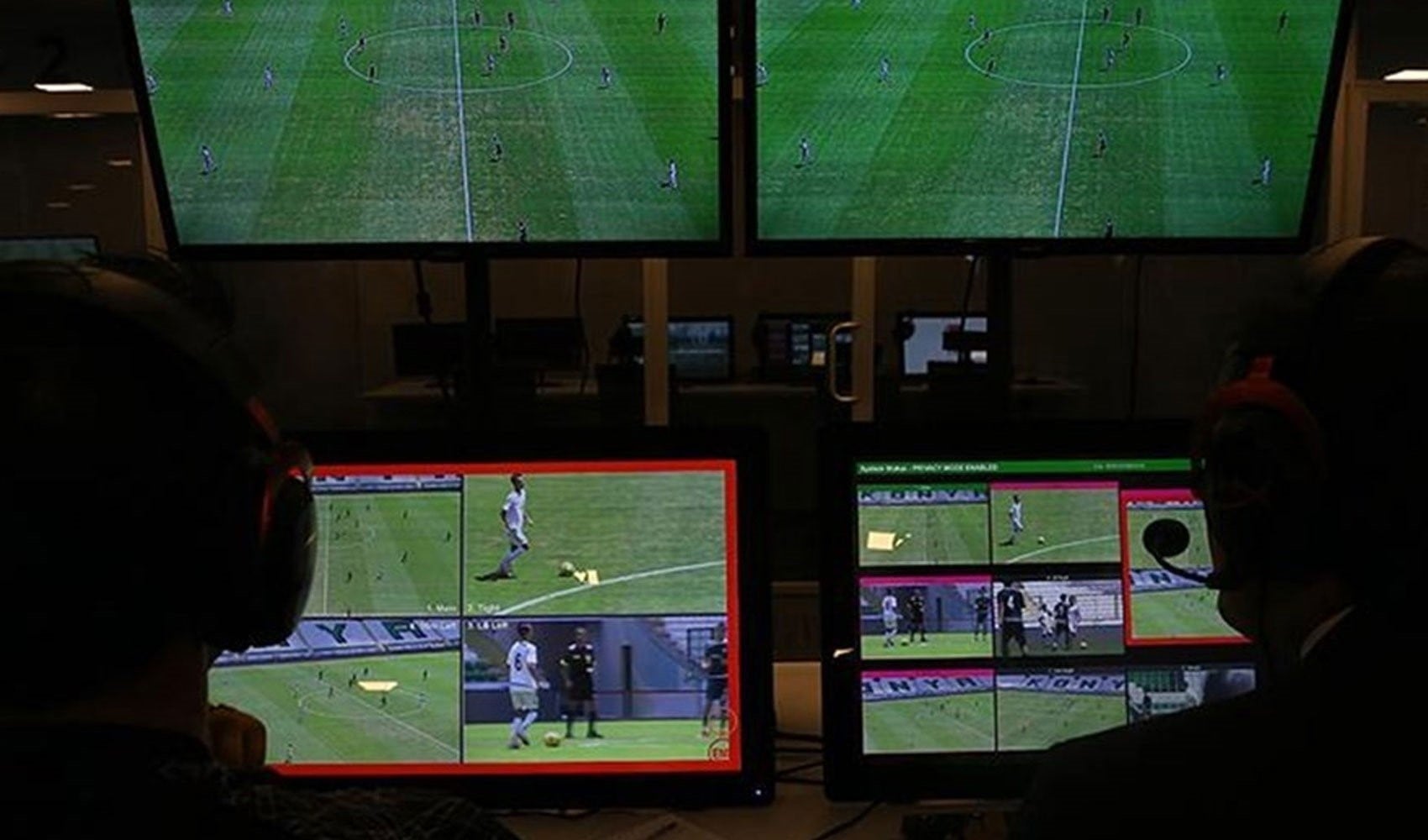
VAR for the Fenerbahçe-Beşiktaş derby has been announced!
Bridges and highways are being privatized: 15 July and FSM are also on the list

Peugeot September 2026 price list is out

New details emerge in 'panel' operation targeting lawyers
Gökçek era detail in ABB investigation
Rules are changing in Schengen

First statement from Osimhen after injury in Başakşehir match

Özlem Şanver: 'He said he would change, I believed him; should I be beaten just because I didn't leave?'