


The Constitutional Court's decision 'not to close' the AKP (2008)



WHAT WERE THE TENSIONS SURROUNDING THE FOUNDING OF THE AKP?
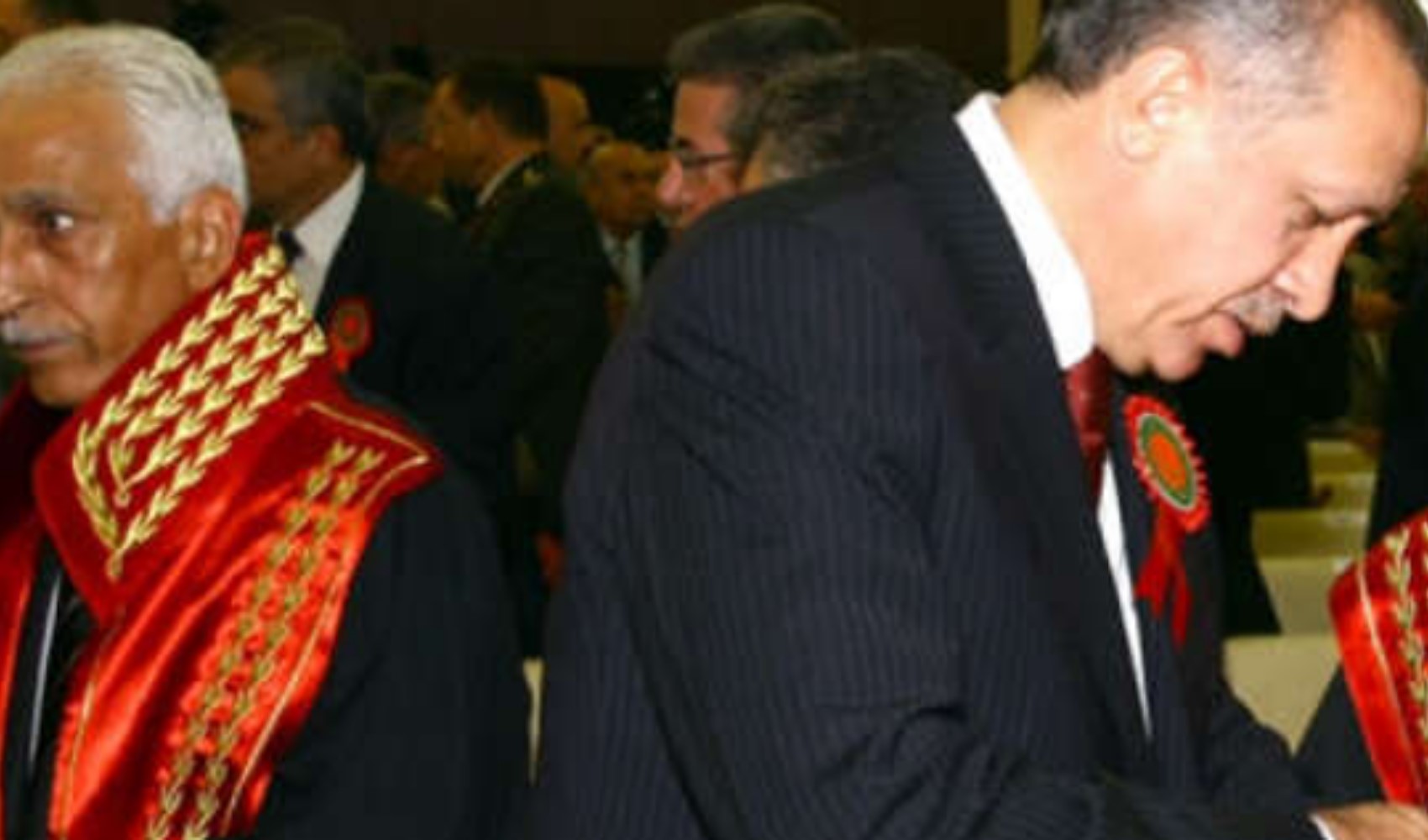
The Constitutional Court had closed the Welfare Party (Refah Partisi) on the grounds that it was a center of anti-secular activities, and a 5-year political ban was imposed on the party's chairman, Erbakan. The Virtue Party (Fazilet Partisi), which was established in its place, was also closed on June 22, 2001, for the same reason.
This final closure decision and Erbakan's banned status led to the party splitting into two: the Felicity Party (SP) and the Justice and Development Party (AKP). The split was reflected in parliament as follows: 48 deputies for the Felicity Party and 51 for the Justice and Development Party.
With the end of the Cold War, the US changed its strategy regarding the center-right parties it had supported since 1950. Perhaps it consciously dismantled these parties. Or perhaps it preferred to remain a spectator to their collapse. I find the first interpretation more accurate.
Former Istanbul Metropolitan Municipality Mayor Erdoğan met with neoconservatives (Neocons) in the US before founding the AKP. He received their approval. This is one of the important thresholds in Turkey's political history. As Dilipak often mentions, the AKP was founded with the support of the American right and the Jewish lobby. According to Erbakan, Erdoğan and his team had escaped through the back door of the party and entered the service of Zionism.
The 2002 elections were held in an environment where economic crisis and distrust in politics were at their peak. There are those who describe this as a conjuncture where political apathy was high.
The word apathy must be wrong. Losing hope in politics might be more accurate. Ultimately, the AKP won the election with the votes of only 10.8 million of the 41 million registered voters, that is, 26%. The party had received 34.5% of the votes of those who went to the polls.
Erdoğan was brought in as the founding chairman of the AKP. There was a serious legal problem with Erdoğan's chairmanship. He was under a 5-year political ban by a court decision. The Constitution and the Parliamentary Election Law were obstacles to Erdoğan's candidacy.
In a way unprecedented in world political history, a party whose chairman was banned won the election. This was the reason why Sezer appointed Abdullah Gül to the post of prime minister. The party that won the election did not have a leader to form a government.
Deniz Baykal came to Erdoğan's rescue. Article 76 of the Constitution, which prevented Erdoğan from being elected as a deputy, was amended. On December 27, 2002, Erdoğan gained the eligibility to be elected as a deputy with the support of the opposition. The qualified majority provided in the Grand National Assembly of Turkey (TBMM) was sufficient for this. Then, in a way that is difficult to explain legally, the Siirt elections were canceled. Erdoğan became a deputy and prime minister.
ERDOĞAN'S PROBLEMATIC FOUNDING CHAIRMANSHIP
How Erdoğan was able to maintain the founding chairmanship of the party under the conditions of his ban is a subject that needs explanation. I think this must have dynamics outside of the law.
In a way that I think is legally impossible to explain, Erdoğan, who could not be a parliamentary candidate due to the constitution and the parliamentary election law, was elected as the founding chairman of the party, he could not be a candidate himself, but his party was able to win the election.
In the 2002 elections, the election judiciary approved a banned person—whose political ban period had not yet expired—to enter the ballot as chairman. How did this happen? I am sure this result had many components.
The Supreme Election Council (YSK) and the Constitutional Court did not see themselves as having the authority to make the final decision. The initiatives of Workers' Party Chairman Doğu Perinçek and Chief Public Prosecutor Sabih Kanadoğlu remained unanswered.
Doğu Perinçek's claim that the election in which Erdoğan's name appeared on the ballot as party chairman would be "absolutely void" found no interlocutor. I also agree with this thesis, which is legally correct.
THE ISSUE OF THE RESTORATION OF ERDOĞAN'S BANNED RIGHTS
Erdoğan tried quite hard for the restoration of his banned rights. He had a restoration decision issued by the Üsküdar 2nd High Criminal Court. However, it is necessary to apply to the court that issued the conviction decision for the restoration of banned rights.
Chief Prosecutor Kanadoğlu and Erdoğan met at the judicial year opening reception at the Ankara Palas. Erdoğan was quite cheerful, thinking he had solved the issue of the restoration of his banned rights. He must have thought he had solved the business of chairing the party and his parliamentary candidacy.
Erdoğan's lawyers applied to the court where they could get results. Upon this, the Supreme Court of Appeals Chief Public Prosecutor Sabih Kanadoğlu objected to the Üsküdar 1st High Criminal Court. The restoration decision was lifted.
Finally, Erdoğan had a restoration decision issued by the Diyarbakır 4th State Security Court (DGM). Kanadoğlu did not give up the pursuit. This time, he applied to the Supreme Court of Appeals with the argument that an unauthorized judicial body had given this decision. The 8th Chamber of the Supreme Court of Appeals deemed all decisions given "regarding the restoration of banned rights" as "null and void." Thus, all legal paths for Erdoğan were exhausted. Despite these decisions, Erdoğan would still try his luck. He would become a parliamentary candidate. His candidacy would be rejected by the YSK.
THE CLOSURE CASE FILED BY SABİH KANADOĞLU (2002)
We learn many things from an interview with the late Kanadoğlu. At the top of these is the story of Erdoğan's de facto chairmanship of the AKP. Kanadoğlu was on vacation in Ayvalık on August 14, 2001. He heard about the founding of the AKP and Erdoğan's founding chairmanship.
Kanadoğlu took action with the thought that Erdoğan could not be the founding chairman; he applied to the Constitutional Court on August 21, 2001.
He requested that Erdoğan's chairmanship powers be suspended as a precaution. The Presidency of the Constitutional Court did not respond to the Supreme Court of Appeals Chief Public Prosecutor until January 8, 2002. Upon this, Kanadoğlu sent word to Constitutional Court President Mustafa Bumin that he was waiting for a response to his application. As far as I understand, Bumin did not like Sabih Bey very much. He acted coldly. After a while, the request for a warning was accepted by a majority of votes, but the request for a precautionary decision was rejected. The AKP was given six months to do what was necessary.
Erdoğan resigned from party membership but continued as Party Chairman. It is truly an event that is legally difficult to explain. Kanadoğlu interprets the event as follows: "It is possible to liken this decision to this; the speaker of the parliament resigned from his deputyship but continues as the speaker of the Grand National Assembly of Turkey."
Upon Erdoğan resigning from party membership and continuing his title as Founding Chairman, and the Constitutional Court "doing nothing" about this, Kanadoğlu filed a closure case. The Presidency of the Constitutional Court seems not to have cared about this file. Kanadoğlu actually blames Bumin by saying, "They didn't even open the cover of the case file."
The court dismissed the case on the grounds that Article 104/2 of the Political Parties Law was repealed on June 11, 2009.
THE FILING OF THE CLOSURE CASE AND THE DECISION QUORUM
The case file requesting the closure of the AKP was sent to the Constitutional Court by Supreme Court of Appeals Chief Public Prosecutor Abdurrahman Yalçınkaya on March 14, 2008. It entered the court records. The indictment was accepted on March 31, 2008.
The case file is available on the Constitutional Court website as 697 pages (E: 2008/1, Decision: 2008/2, decision date: 30.7.2008). The articles the court applied and referred to in the trial are as follows: Constitution 68/4, 69/6; Political Parties Law 101/1-b, 103/2.
The closure case included a request to impose a 5-year political ban on 71 people, including Erdoğan and Gül. The AKP, for which closure was requested, made its oral defense on June 16, 2008. Cemil Çiçek and Bekir Bozdağ defended the party together. Cemil Çiçek read the defense text more. Cemil Çiçek is a minister of the AKP government, and Bozdağ is the Group Deputy Chairman. I cannot help but write it. Both are from Yozgat.
A 3/5 qualified majority is required for the court to make a closure decision. Now it is 2/3. The number of members voting for closure is six. This is a number that does not reach the 3/5 majority.
This special majority was accepted with the constitutional amendment made during the Ecevit Government (2001). The amendment may be related to the harmonization process with the EU acquis. In the end, it was the AKP that benefited from this.
However, since the 1961 Constitution period, the decision quorum had been a simple majority. On every subject. As in the decisions of the National Order Party and the Workers' Party of Turkey, which were closed during the March 12 interim regime period. In all party closure cases, the decision quorum was always a simple majority.
When we look at the Constitutional Court's closure decisions in general, parties in Turkey have been closed for two reasons. The first is being contrary to the secular nature of the state or the indivisible integrity of the state with its territory and nation.
The Constitutional Court continued this attitude during the 1982 Constitution period as well. HEP, DEP, and HADEP were closed for "being contrary to the principle of the nation-state."
They were closed for being contrary to the indivisible integrity of the state with its territory and nation, that is, the principle of the nation-state.
The Welfare Party and the Virtue Party, on the other hand, were closed on the grounds that they were the center of anti-secular activities.
INTERNAL AND EXTERNAL REACTIONS TO THE FILING OF THE CASE
The AKP's first reaction to the filing of the case was the idea of making changes to the Constitutional Court law. Such as taking the authority to file a case from the chief prosecutor's office and the authority to close from the Constitutional Court. To achieve this, legal and constitutional amendments were discussed. Among the AKP's legal experts were Cemil Çiçek, Sadullah Ergin, Bekir Bozdağ, Ahmet İyimaya, and Burhan Kuzu.
While it was being discussed what could be done within the AKP against the closure case, a great reaction came from the US and Europe. At the core of the reactions was this argument: The AKP is a party that came to power with a large majority. A party that nearly half of the public voted for cannot be closed. If one pays attention, no thought statement came from either the US or European circles regarding the claim that the party was an anti-secular party.
SOME EXAMPLES OF EVIDENCE THE CHIEF PROSECUTOR PUT IN THE INDICTMENT
I would like to share here some examples that the Chief Prosecutor's Office put forward as evidence in this case: For example, proposals containing amendments to the constitution and higher education laws. The filling of state cadres by people with pro-party Islamist thoughts. Instructions given regarding cooperation with the Fethullah Gülen community abroad during the period when Abdullah Gül was Minister of Foreign Affairs. These were seen as an intention to create the ground to change the fundamental characteristics of the Republic of Turkey.
Another example is Prime Minister Erdoğan's approach regarding the use of religious symbols for political purposes. During the days when the headscarf issue was hotly debated, AKP Chairman Erdoğan's statement in his Spain speech, "Even if it is thought to be worn as a political symbol, can we accept the headscarf as a crime?" The initiation of the Red Light District application for places with alcohol. The start of employing headscarved doctors in Haseki and Vakıf Gureba hospitals. The censorship of some posters in Istanbul.
The party's discourse that would prepare the ground for the Council of State attack. Upon the Council of State's headscarf decision, Erdoğan's following comment was seen as important: "The right to comment on the headscarf issue belongs to the ulema, not the judiciary." These words were seen as evidence of the party's goal of establishing a sharia order. Reorganizing the state according to religious rules, gradually making the country's legal system compatible with sharia. Egemen Bağış's defense of the use of the headscarf in all public areas, universities, and the TBMM.
According to the indictment, the AKP is a continuation of the party starting from the National Order Party, the MSP, the RP, and the FP. Its main goal is to change the regime.
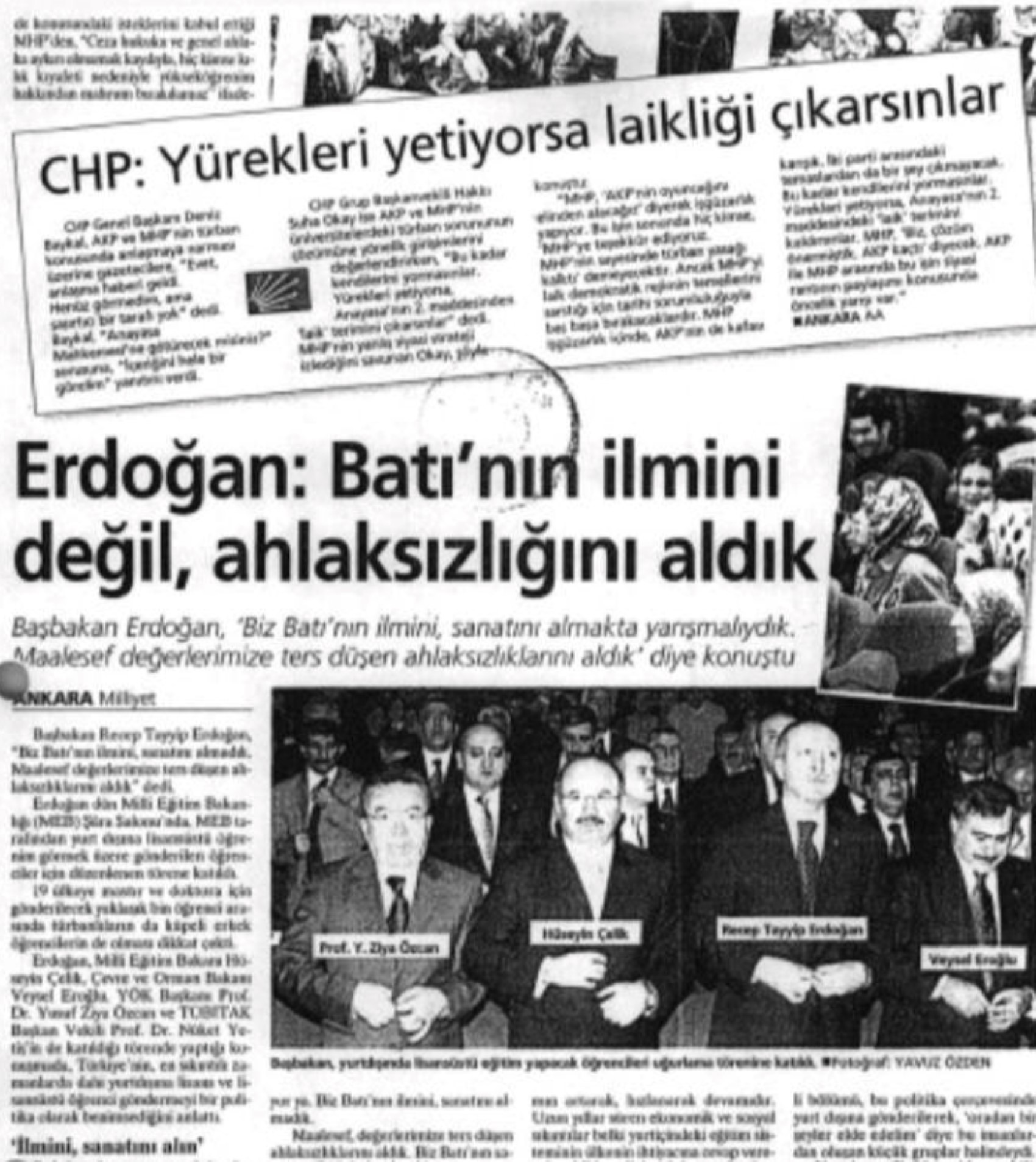
ERDOĞAN, ÇELİK, AND TOSUN'S ANTI-SECULAR VIEWS
In the substantive examination of the case, a speech Erdoğan made at Oxford in 2004 was included. The answer the Prime Minister gave to the question of "moderate Islam," which was very popular at the time, is as follows: "There is no moderate Islam. There is only Islam. A person cannot be secular. A person cannot be both secular and Muslim. It causes reverse magnetism." These words were considered one of the important pieces of evidence.
Again, Erdoğan's expressions while returning from Beirut that he was against the age limit in Quran courses, that he himself went to a Quran course at the age of 7, and why are you trying to prevent a child from learning his book when nothing happens when he reads Texas Tommiks, were also considered evidence. Erdoğan also said that the Quran was not taught in compulsory religious classes in schools.
I felt a class antagonism in these words of Erdoğan. The Prime Minister says: "The notables of the country do not visit the neighborhood of the mosque. When they do, they think they have lost some values. Now the logic of these is as follows: you work in the field with a headscarf, hoe, but they don't want you to be a sociologist or psychologist. We need to overcome this now." He stated that his daughters could not study in Turkey because of their headscarves.
These words of Erdoğan were also included in one of the speeches the prosecutor put forward as evidence. "The court has no right to say anything to those who wear a headscarf because of their faith. The final word belongs to the religious ulema. While the state should guarantee religious beliefs, on the contrary, it is trying to restrict the right to live beliefs in the public sphere and this is called secularism."
Hüseyin Çelik also said that the final word in the headscarf debate should be the jurisprudence of the High Board of Religious Affairs.
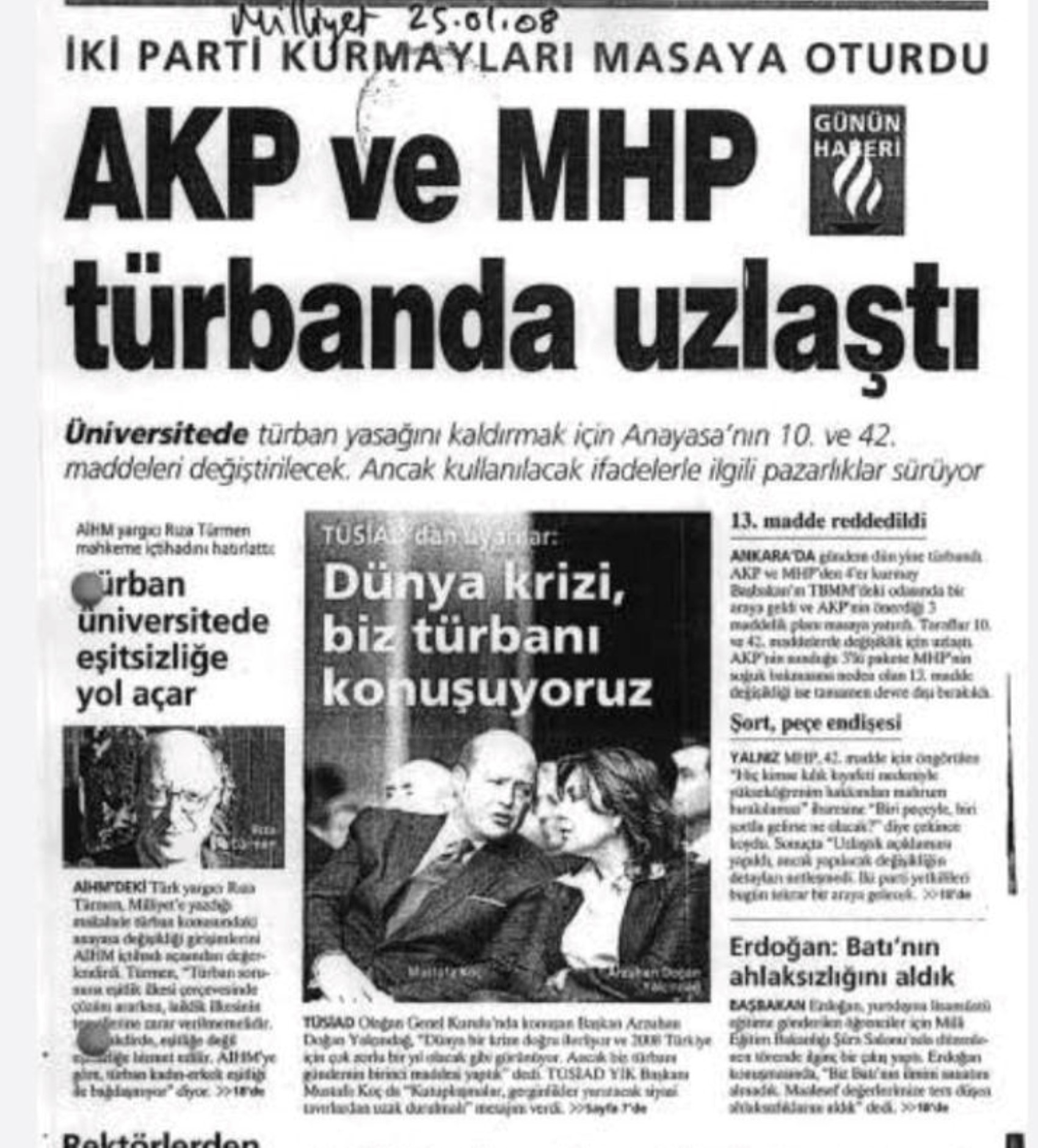
An important move by the government on this issue was the constitutional amendment. Support for this came from the MHP. After supporting Gül's election as president (2007), the first serious support for the AKP was the constitutional amendment that would ensure the "freedom of the headscarf in public institutions."
The Constitutional Court interpreted the amendment of Articles 10 and 42 of the constitution as an attempt to bypass secularism, which is the fundamental principle of the republic. This is one of the pieces of evidence used in the closure case. The Constitutional Court deemed this amendment "null and void." Constitutional amendment: February 9, 2008, Constitutional Court cancellation date: June 5, 2008. This decision is one of the important decisions in the history of Turkish constitutionalism. The court later interpreted this attempt at amendment as a "concrete act contrary to the principle of secularism."
THE COURT'S EVALUATIONS ON THE MERITS
As for the court's evaluation on the merits, the following expressions are remarkable in my opinion: There is no similarity between Islamist parties in Turkey and Christian Democratic parties in Europe. Islamist parties resort to the method of taqiyya (dissimulation).
Since Islam claims to cover the entirety of religious, state, and social life (public and civil), the ultimate goal of Islamist parties is a religious-theocratic order.
For this reason, the ban imposed on fascist parties in Europe should be applied to religious parties in Turkey.
The AKP is a political party that is a continuation of the closed MSP, RP, and FP. It wants to base the fundamental order of the state on religious principles. With the votes it received after the July 22, 2007 elections, its audacity to change the order has increased.
In the unipolar world created by globalization, the secular Republic in Turkey is no longer cared about. Thanks to this, counter-revolutionaries have strengthened their search for revenge against the secular Republic.
Since an anti-secular party has seized power, the secular republic has come under danger more than ever in our history. Counter-revolutionary elements are not marginal elements today. They are in power.
The power and opportunities brought by the defendant party being in power make it possible for it to transform the state into a religious-theocratic structure.
It has been claimed that important cadres of the state have been handed over to people known for their cult activities and identity, and that the ruling party has eroded Turkey's image as a secular country with the policies it has implemented for 5.5 years.
As a result, the members of the Court agreed with a large majority with the claim put forward by the chief prosecutor in the indictment that the ruling party was the center of anti-secular activities.
Except for President Haşim Kılıç, all members are of this opinion. The content of the AKP decision was determined by the failure to achieve a 3/5 majority.
A party that was registered as anti-regime by the high court decision continued on its way with the comfort provided by the general vote. The sanction foreseen in the decision—in my opinion—meant nothing.
THE COURT'S MEMBER STRUCTURE AND VOTING
Another important issue is the member profiles of the Constitutional Court. The 1982 Constitution, unlike the 1961 Constitution, gave more authority to the president in the selection and appointment of Constitutional Court judges.
Although not all members, a significant portion are brought to court membership with the election or approval of the president.
When the AKP closure case was filed, the number of members of the Constitutional Court was 11.
There were members appointed by Kenan Evren, Turgut Özal, Demirel, and Sezer. President Haşim Kılıç, who voted for the rejection of the case, was appointed by Özal. Sacit Adalı, who was appointed by Özal, voted in the opposite direction with a different justification.
The members who voted for a 1/2 deprivation of treasury aid penalty instead of closure, while accepting that the AKP was the center of anti-secular activities, were as follows: Ahmet Akyalçın, Serruh Kaleli, Serdar Özgüldür, and Sacit Adalı. Ahmet Akyalçın was appointed to Constitutional Court membership on April 16, 2000, by Ahmet Necdet Sezer. He is also from Afyon. He was appointed by Sezer along with Serruh Kaleli and Osman Paksüt. Kaleli was elected and appointed from the lawyers' quota, and Paksüt from the high bureaucrats' quota. (2005) Paksüt was an ambassador at that time.
Kaleli retired in 2019; this member was expected to vote for the closure of the AKP. For this reason, because he voted for closure in the FP case.
The last member, Serdar Özgüldür, was brought to Constitutional Court membership from the Military High Administrative Court quota. While writing this article, I learned that he was in a legal dispute with Professor Kemal Gözler.
There is quite a lot of speculation about Özgüldür as far as I have seen on the internet. There is also talk of blackmail that saved the AKP from being closed. Özgüldür's brother was the imam of the Military Academy. "Imam" is an expression used in Fethullahist terminology. It means the highest official of an institution. Who the imam is is kept extremely secret. A non-commissioned officer can be a secret imam. He is the greatest authority after the Hodja Efendi. For this reason, he can give instructions to a Fethullahist general. That's how the organization works. There are such claims.
Let us remember that Özgüldür was brought to Constitutional Court membership from the military judiciary quota. In an environment where there are such suspicious indications, the votes of Kaleli and Özgüldür gain importance. In general, it is not difficult to guess that there were intense internal and external pressures on the members in both directions.
WHO WERE THE MEMBERS WHO VOTED FOR CLOSURE?
Osman Ali Feyyaz Paksüt, Fulya Kantarcıoğlu, Mehmet Erten, Şevket Apalak, Necmi Özler, and Zehra Ayla Perktaş voted for closure. They wrote a joint dissenting opinion. The justifications of these members largely overlap with the indictment.
WHY DID THE SIX MEMBERS THINK THE AKP SHOULD BE CLOSED?
It was concluded that the defendant party was trying to build the society model it envisioned with its actions, and that the risk had increased day by day during their time in power.
Considering that the party had a majority in the TBMM, it was determined that the danger of counter-revolution existed and that there was a clear and imminent danger to the regime.
Under these conditions, it was concluded that the closure decision was not a disproportionate and radical sanction, but appropriate, necessary, and timely.
THE DISSENTING OPINION OF THE MEMBERS WHO SAID A CLOSURE DECISION SHOULD BE GIVEN
The point that caught my attention in the dissenting opinion is this: For the majority of the court members, the 47% vote the party received in 2007 does not give the party legitimacy against the principle of secularism.
The AKP is a party where anti-secular acts are widely committed. The majority it provided in the Grand National Assembly of Turkey points to a great danger for the regime and democratic political life.
According to the majority of the court members, there is a government that is making an intense effort to invalidate the constitutional principle by defining a different secularism instead of the secularism that gains meaning and content with court decisions.
The constitutional amendment the government made together with the MHP is evaluated as bypassing secularism. It characterizes the constitutional amendment as a concrete step that could lead to the elimination of the fundamental characteristics of the republic. This is the reason why the court made a nullity decision.
TBMM Speaker Bülent Arınç's expression in his speech dated April 23, 2006, that the strict secularism application turned people's social lives into a prison is counted among anti-secular acts.
The pro-closure members are of the opinion that anti-secular acts are persistently continued by the party chairman, party administrators, party deputies, mayors, and members influential in political life, and therefore the danger cannot be prevented by deprivation of treasury aid.
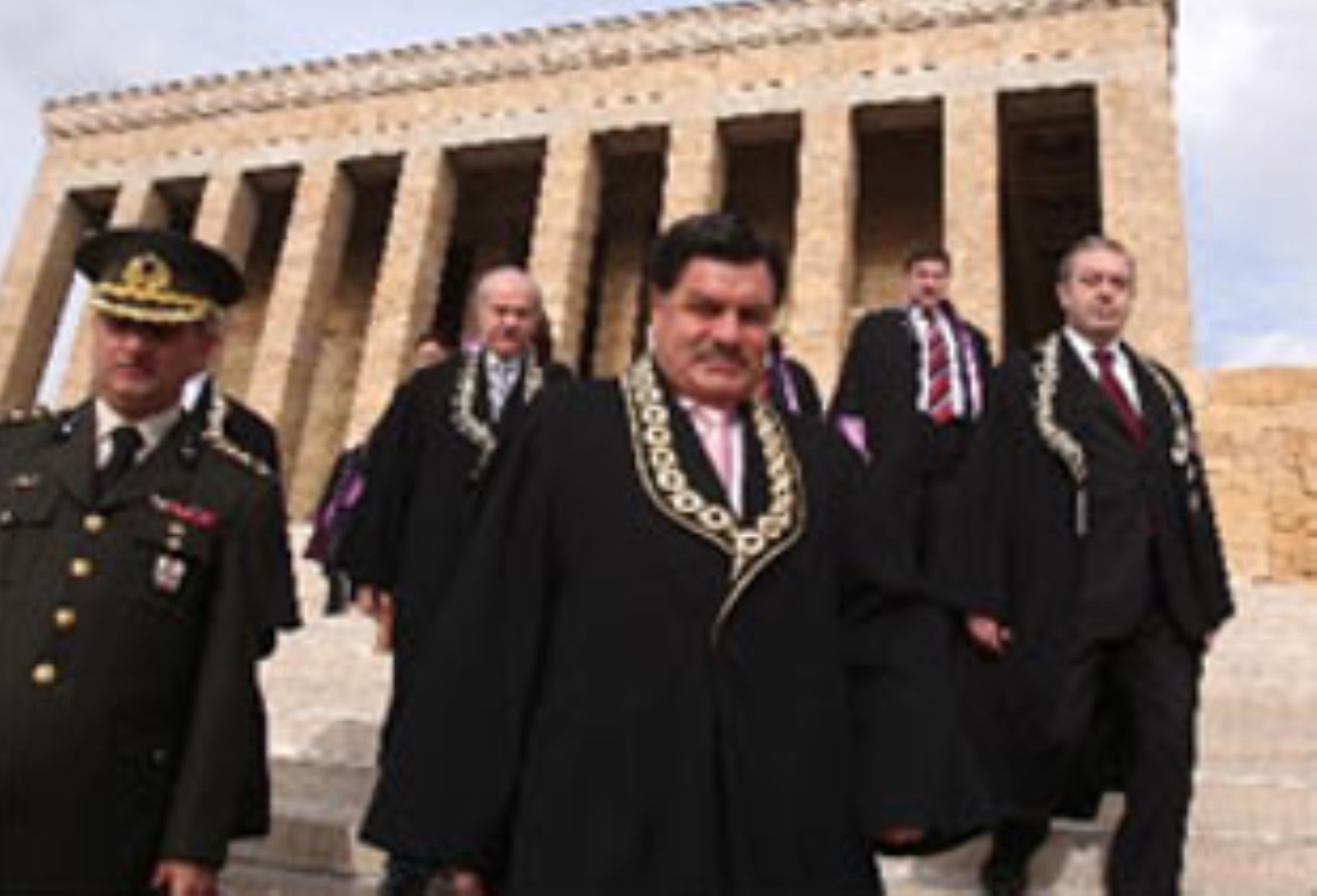
THE DISSENTING OPINIONS OF HAŞİM KILIÇ AND SACİT ADALI
Constitutional Court President Haşim Kılıç voted against in this case. In his dissenting opinion, he explained that he did not see the AKP as the center of anti-secular activities. He meaningfully put a quote from Rosa Luxemburg in his dissenting opinion. "Freedom is only and always for those who think differently." This is saying, "I think differently, like Rosa." I think a message is intended to be given to those who read the text: "I am not 'reactionary' as you think."
Haşim Kılıç is in the opposition these days. He warns the AKP about the rule of law. Even if you remember, his name had been mentioned as the presidential candidate of the Nation Alliance. Turkey has changed quite a bit. You see.
Two of the five constitutional judges who were influential in the decision were appointed by Turgut Özal: Kılıç and Adalı.
For this reason, it would be appropriate to examine the dissenting opinions written by Kılıç and Adalı. These two members had also written long dissenting justifications in the Welfare Party and Virtue Party cases. I recommend you read them.
Kılıç develops his thoughts as follows: In Turkish political life, closure cases have been based on the grounds of being the center of acts contrary to the indivisible integrity of the state with its territory and nation and secularism. He does not agree with the prosecutor's claims, stating that this narrows the freedom space of political parties.
He interprets the statements of the AKP's chairman, deputies, and other administrators regarding the headscarf ban as the exercise of freedom of thought and expression. He sees the views put forward regarding imam-hatip schools and Quran courses as an explanation of freedom.
He thinks that most of the 400 documents the prosecutor put into the file as evidence are speculative newspaper clipping information.
He thinks that discourses contrary to the concrete applications of secularism are under the guarantee of freedom of expression as long as they do not contain violence. He interprets the ruling party's non-violent anti-secular discourses as freedom of expression.
Kılıç argues that the ruling party is against the way secularism is applied, but does not carry a goal of rejecting the democratic order. Therefore, he says the case should be rejected.
Sacit Adalı's dissenting vote is based on the fact that the evidence does not overlap with the alleged acts. His objection is largely procedural. He finds the evidence weak and the file collected. While agreeing with the view that the party is the center of anti-secular acts, he finds the closure sanction heavy and votes for deprivation of treasury aid.
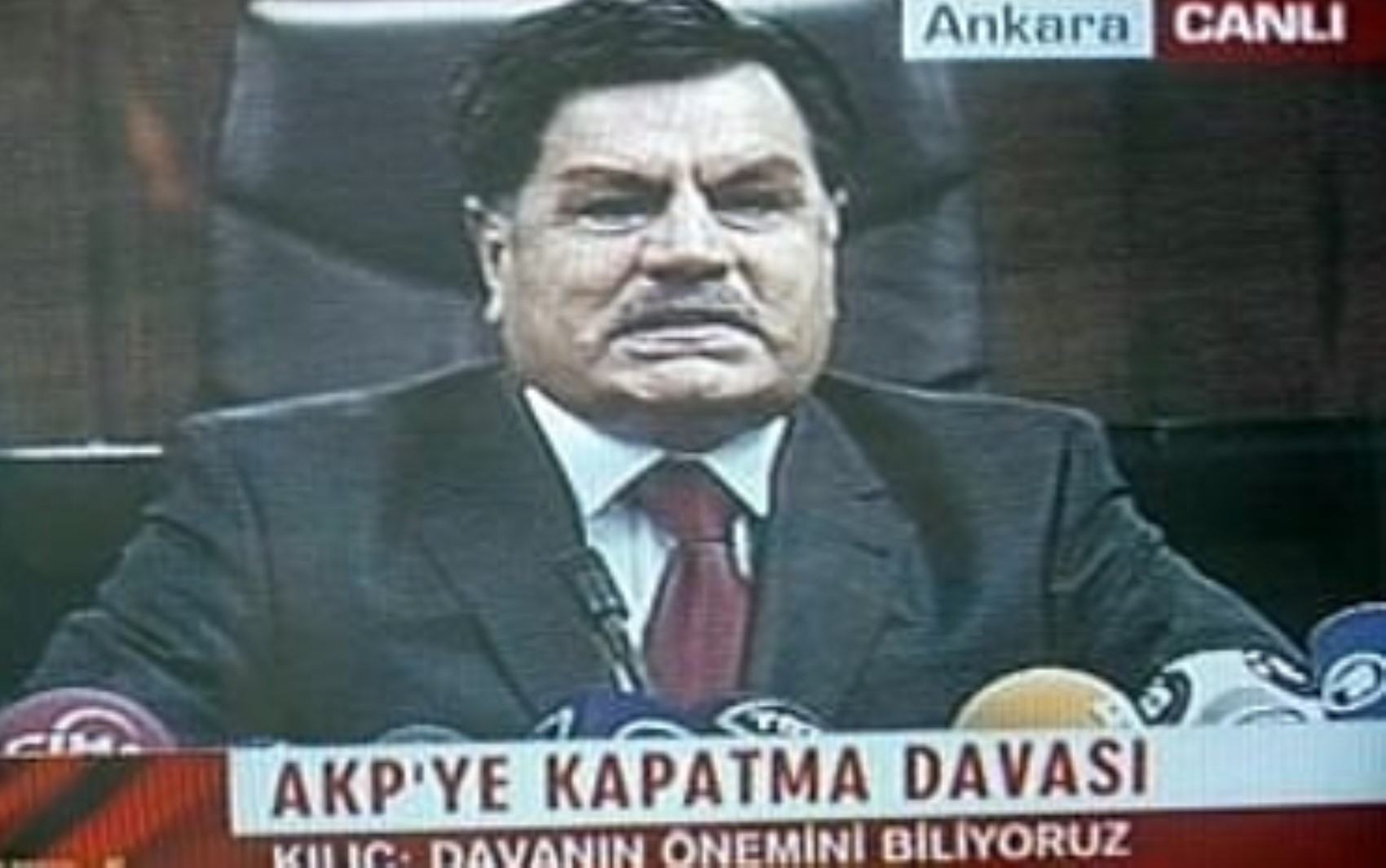
THE PROCEDURAL ERROR MADE BY THE CONSTITUTIONAL COURT IN THE CLOSURE CASE ACCORDING TO KANADOĞLU
Sabih Kanadoğlu is of the opinion that a procedural error was made in the closure case. According to him, three votes should have been held one after another. In the first vote, it should have been determined whether the party for which the closure case was filed was "the center of anti-secular acts." The answer to this is either yes or no. If 7 or more yes votes were cast, the decision that the party was "the center" would have been made. In the second vote, the weight of the party's acts should have been voted on. In the third round of voting, it should have been put to a vote whether the treasury aid would be cut partially or completely.
Due to the voting procedure adopted by the president, the lightest penalty was given to the party that was the center of anti-secular acts.
Kanadoğlu claims that a major procedural error was made during the trial, and that the expressions used by President Haşim Kılıç while announcing the court decision with an oral explanation were also wrong.
Kanadoğlu finds it legally unacceptable for Kılıç to state that the decision was made by taking into account the economic and political situation of the country.
You will accept by ten votes to one that a party is both the center of anti-secular acts. And you will give the lightest penalty. Such a thing cannot be, says Kanadoğlu. I am of the same opinion.
WHAT HAPPENED AFTER THE DECISION?
The AKP escaped from the closure case without being harmed. It even turned the "not being able to be closed" situation into an initiative superiority. Afterward, the Ergenekon and Balyoz cases began. When the Kemalist judiciary was unsuccessful against the ruling party, this time the Fethullahist cadres positioned within the judiciary launched an attack against all the remaining cadres and institutions of Kemalism with the approval they received from the US.
First, a few small-scale attempts were made. The most famous of these is the arrest of Lieutenant Mehmet Ali Çelebi: September 18, 2008.
Afterward, the Ergenekon and Balyoz cases came. Prosecutors affiliated with the organization such as Nihat Taşkın, Zekeriya Öz, Mehmet Ali Pekgüzel, and Aykut Cengiz Engin filed cases one after another. The goal was to collapse the army. Heavy sentences were given in these cases. It was later understood that the judges were also Fethullahists.
Most of the conviction decisions given in these cases were overturned after July 15. In an article I read recently, the number of those acquitted as of September 11, 2019, is 235.
The constitutional amendment brought to the agenda under the name of judicial reform in 2010 was to be the final line of the operation to liquidate the Kemalist judiciary.
THE CLASS BASIS OF THE CLOSURE CASE
The Constitutional Court decision needs to be examined from another aspect as well. That is—in my opinion—the aspect of class hegemony.
Since the founding of the Republic, the fact that the petty-bourgeois class was the ruling class stemmed from no other class having the power to seize hegemony. This class was largely outside of economic processes.
After 1950, the tension between the petty-bourgeois class and the bourgeoisie continued until September 12. September 12 corresponds to the completion of bourgeois hegemony in Turkey. Consequently, this is the class meaning of Özal's presidency.
Starting from the 1994 elections, tension emerged between the guardians of the old regime (Kemalist army, judiciary, public administration, university) and the rising Islamism.
After the closure of two Islamist parties, no voice was raised against the Justice and Development Party, which pledged to take off the National View (Milli Görüş) shirt and not to cross the red lines of the regime, taking power.
This result meant a tacit consensus between the US (international finance capital) and the country's compradore bourgeoisie and the green capital rising from Anatolia.
From the perspective of the old owners of the state, the AKP's political economy did not create a problem. However, it became clearly evident that the ruling party did not give up on the idea of establishing a religion-based state with the cadres it established and its actions. Although AKP experts marketed their policies as conservative democracy for a long time. They were partially successful too.
The closure case against the AKP was filed in a political conjuncture where the party was quite strong. The AKP was a party that won the election: 47%. The CHP in second place remained at 21%. It had received more than twice the votes of its closest rival.
The party had managed the 2007 presidential election crisis very well. It had realized the constitutional amendment that tied the presidential election procedure to the general vote.
The amendment had passed the parliament with the condition of a referendum. The AKP turned its inability to elect a president into a political opportunity for an early general election. It managed to achieve a success far above expectations in the elections.
As of 2007, we can interpret Turkey as follows: After the power was given to the AKP, the tacit civil war between the traditional elites of the state (military, civil, judicial elite, and university) and the elites trying to settle in the center by coming from the periphery intensified even more. This was not only an ideological, political process, but also a class process.
The AKP evaluated the old elites positioned against it as Kemalists. This expression actually meant secular Republicans. I also used it in this sense in this article.
This class was determinedly continuing its attitude of defending the secular republican nature of the state against reactionism in an uncompromising manner.
In my opinion, this class (old elite) had fallen from power in 1950. But it was maintaining its existence in the field outside of economic power.
Only the ideological hegemony identified with the secular character of the state remained in the hands of this class. The fields outside of this had long since passed into the hands of the bourgeoisie.
As seen in the September 12 regime, the real hegemony was already in the hands of the components of the capital class. What was emphasized with the expression of Atatürkism was only the ideological apparatus of the State.
For this reason, Turgut Özal became the prime minister of the military regime in terms of political economy. (Ulusu Government) Then ANAP chairman and prime minister. Then he went up to Çankaya.
It is not correct to interpret this process only as Özal's personal ambition. The process had a class basis.
Özal and the "elite he brought to power in the name of democracy" point to a significant shift in the ground of Turkey's traditional elite/power structure.
Islamism "infiltrated" the field of power during the Turgut Özal era. In the next twenty years, Islamists continued to take part in the alliance despite experiencing internal contradictions with other layers of power. Always knowing how to stand one step behind.
The end of the Cold War/collapse of real socialism coincided with the dissolution of the center-right parties that the US had supported since 1950. The US no longer needed this.
The center-right, which remained in power for fifty years, did not have a problem with the ideological superstructure field. Economic hegemony was enough for them.
In 2002, the alliance bloc underwent a radical change. The US needed other things now.
The Turkish bourgeoisie did not have a serious issue to experience tension with the AKP. The AKP also did not have an issue with global capital-international capitalism. This was the important point. Both fronts of hegemony were in full consensus regarding full integration into capitalism.
The US (global capital) had the AKP implement every policy it would have implemented with the Kemal Derviş option much more comfortably. Kemal Derviş was an actor with an overly secular appearance. International capital changed horses with a very clever maneuver. A "pious team" burning with the desire for power was brought to power within 1.5 years. The AKP implemented Kemal Derviş's bitter prescription in high doses but did not see a reaction. The reason was the doctor's identity.
WHAT DOES A ONE-VOTE DIFFERENCE ACTUALLY EXPLAIN?
The AKP initially tried the policy of not disturbing/bypassing the Kemalist elite. When the counter-revolutionary attitude became clear, the issue arose.
The Headscarf War showed the symbolic aspect of this. The issue was actually the secular nature of the state. The Islamists had already conquered the civil administration from the first hand. September 12 is a milestone in this sense.
The army, judiciary, and university remained. When it was understood that the army would resist the US's new Middle East plans (BOP), it was sidelined with the "Pentagon-Service movement joint plan."
The last turn here is the end of the term of the last Kemalist in Çankaya. Sezer handed over the presidency to Abdullah Gül with a ceremony-less, cold, and official facial expression. The discourse of representing the national will, which had been carried out against the founding ideology since the 50s, was taken over by the AKP. Now more powerfully. The national will was capable of everything. Even to abolish secularism.
The anti-secular attitude that the government had maintained with a somewhat timid attitude in the past period gained strength gradually.
The decision of the then Supreme Court of Appeals Chief Public Prosecutor Abdurrahman Yalçınkaya to file the case can be understood by taking all these changes and transformations into account.
What does the fact that this case could be filed primarily express?
Abdullah Gül became President on August 28, 2007. With the support of the MHP. Now none of the problems experienced during the Sezer period would be experienced. If the AKP were not a counter-revolutionary party, such a case would not have been filed.
This result meant, from the perspective of the army and the regime judiciary, the counter-revolution coming to power by benefiting from the general vote. The closure case is a reflex against this. I do not guess that the Chief Public Prosecutor decided to file this case—alone—with his own discretion. He must have consulted with the remaining components of the state that the government had not yet penetrated.
When the case was filed, it was met with great reaction in the US and Europe. It was interpreted as a judicial coup.
The theme at the center of the reactions was that this could not be done to a party that had won the elections through democratic means.
However, as a result of the trial, the following emerged: the ruling party was the center of acts contrary to the secularism principle of the republic. This determination was a reason for closure.
Official and unofficial organizations in Europe and the US were not interested in the dimension of the indictment related to secularism. Whereas the foundation of their own societies was based on enlightenment and secularism.
The case was seen as the challenge of the founding ideology (Kemalism) against a government that was extremely compatible with capitalist globalization. They were not interested in the Turks' secular republic, but in Turkey's full integration into capitalism. This is the reason why one of the two founding values of the state (in my opinion, republicanism and secularism) lost by one vote.
WHAT WOULD HAPPEN IF THE AKP WERE CLOSED?
What would happen if the AKP were closed? In my opinion, a process would be experienced just like after the Welfare and Virtue Party decisions.
They would continue on their way with Islamist cadres who were not within the scope of the political ban. A new party would be established to form the government. Since Abdullah Gül was President, a political ban could not be imposed. A proxy politician whom Erdoğan would point to would head the party; he would form the government.
Would you like to get notifications about new developments and save news?
- NotificationsNew developments and breaking news
- SaveNews is stored in the app
Most Read
Statement from Nihat Zeybekci on the fund investigation

New 75,000-seat stadium plan for Fenerbahçe
Interpol and MIT tracking yields results in Izmir

ID convenience for KPSS candidates

2027 Budget: Taxes for the people, tax exemptions for capital

The reality of Akkuyu and the longing for national nuclear power

To whom and how was the Petition of Intellectuals submitted? Who accepted the petition?

The Çanakkale robbery -1- How was the Troy treasure smuggled out?

Artificial intelligence and the new imperialism

Ministry investigation into unauthorized promotional messages