

A journey of mourning and confrontation on the 'Throne of the Gods'
In her novel 'Throne of the Gods', author Gülsel Ceren Güneş takes the reader on a journey of personal grief and deep reckoning on the freezing summit of Everest.



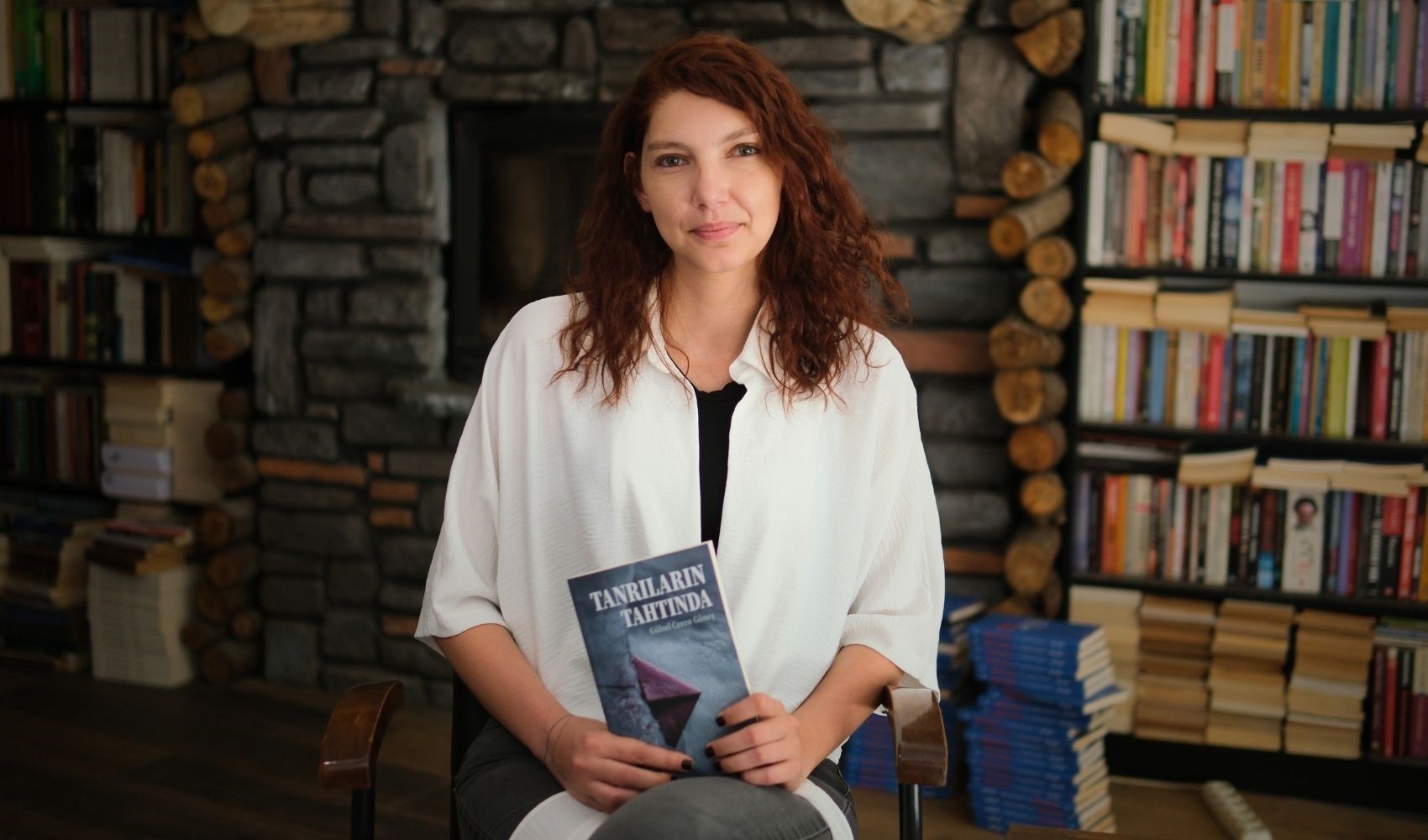
Published by Toros Yayınları, Throne of the Gods addresses a subject rarely seen in Turkish literature, focusing on the journey of Tomris as she attempts to heal her wounds. Through the story of Tomris, who seeks to reach her husband's body at minus sixty degrees, Gülsel Ceren Güneş confronts the reader with the heavy burden of having no grave and the most naked state of humanity. Extending from the harsh realities of high-altitude mountaineering to the ancient wisdom of Sherpa culture, the novel stands out with its cinematic narrative and strong psychological depth. We spoke with Gülsel Ceren Güneş about her literature, the incomplete nature of grief, and this striking climb in the shadow of Everest.
What does Throne of the Gods tell the reader?
It tells the story of a woman's journey toward the summit to bring down the body of her husband who died on Everest.
Is this a novel of healing?
Rather than a novel of healing, it is about how a toxic grief is experienced. We all have different ways of experiencing grief. The desire to reach him and bury him is actually an effort to end that grief. At the same time, there is a lot in the book about high-altitude mountaineering, the Everest region, and Sherpa mythology. I am not just telling the story of grief. There is also friendship, and Deniz's perspective on high-altitude mountaineering and ethical mountaineering in the novel.
What is the real goal of the novel's protagonist, Tomris, while climbing Everest?
The goal is to bring Deniz down; at least that is what she thinks. As Tomris climbs up, she learns things about Deniz she didn't know from various people who knew him throughout that journey. Her reckoning is both with her own pain and with Deniz, and her struggle is both with the mountain and with herself.
How do the challenges faced by men and women in high-altitude mountaineering differ?
There is a huge difference between how men view the mountain and mountaineering and how women view them. Men are after a conquest. They already use the word "conquer" in the sense of taking over. However, women are more interested in bringing the trash down from there and helping each other. There are many differences even in terms of equipment. The prices of things that belong to women, produced for them, are very expensive because they are labeled "special series." An ice axe, for example, is extremely expensive, and they make the colors more in pink tones. There are more models for men. And women menstruate every month; they have to deal and struggle with this as well. Men don't have such a problem. There is a huge difference between the two genders even in terms of using the toilet on the mountain. If someone is conquering, I think it is the women.
There is a similarity between the 1999 earthquake and Everest: the lack of a grave. That is, Tomris has no grave for her loved ones. How does this affect her throughout the novel's journey?
When Tomris lost her family in the '99 earthquake and their bodies could not be found, she suffered a lot because of it. Because going to someone's grave and praying at their head is actually a very comforting thing. Also, since there is no body for Deniz, she believes the only way to end her grief is to bury him. In fact, we can read this as a suicide mission in some way. Thinking that she has left no one behind... Because there are 5 years between Deniz's death and Tomris's summit climb. After losing her cat, she sets out to retrieve the body.

Sherpa wisdom also holds an important place in the novel. What is the difference in the perspective on life between Sherpas and city dwellers?
There are huge differences. Sherpas see the mountains in the Himalayan region as goddesses. According to them, climbing the goddess's spine is a sin. Therefore, doing this job makes them sin every day. But on the other hand, the Nepalese government condemns them to the mountain. They don't build schools there, they don't build hospitals. They have no other choice; they have to make a living from the mountain. Nepal earns very serious money from mountain tourism, and Sherpas have to climb the mountain and open those paths to survive and make a living, at the cost of committing a sin. In newspapers and on the internet, it is announced every year that "The first climber to reach the summit this year was an American, the Germans reached the summit," but no, there are Sherpas who open the path for them. They are always the first to go up.
Which emotion regarding grief did you try to convey?
I don't think grief can be completed. I mean, at least in my own personal grief, even though more than ten years have passed, it continues. I continue to live my life, but it will remain as a deep ache in a part of my heart until I die. However, in these types of extreme sports or during wartime, in battalions, there are feelings like, "He died, I didn't die. Why am I living? I wish I had died." This is the feeling I experienced as well. I guess that's why Tomris is so real. Because even though we are different as personalities, I wrote my own pain there.
Well, we talked about Tomris's goals. What is your goal in your literary journey?
I write because if I don't put the story in my mind into writing, if I don't sit down at that computer, it continues to stay in my mind constantly. I think I write to get it out of my mind. When I started this book, I would even drive to the grocery store. While I was looking at it thinking, "Are these people crazy? Why are they climbing to 8,000 meters high where there is no oxygen, into the stratosphere?", now I want to actually go to Nepal and at least walk to a base camp. Mountains are a love. I started without understanding at all, but I understood why they get into this Everest, summit obsession; I understood that. It happened to me too. Now I want to find another idea that I will love as much as the mountains and pursue it.
Interview: Sercan Meriç
News Source: 12punto
Most Read

The 32-day return on 1 million TL

Turkish man who claimed to be 'Trump's advisor' detained in the US

Fenerbahçe Tarfin's opponent for the inaugural EuroLeague Süper Cup has been determined
Million-lira fines for those saying 'DM for price' on social media

When receiving a 'royal greeting'...

Iran denies claims of Mecca Agreement invitation

What did the Israeli attack in Syria reveal?

Trossard's incident becomes a talking point in the global sports press

The new season date for Taşacak Bu Deniz has been set
3rd wave operation against the Süleymancılar!