

Message read at the conference: 'The Kurdish issue has reached the stage of resolution at the local government level'
At the DEM Party's conference in Diyarbakır, a message sent by Abdullah Öcalan, the leader of the terrorist organization PKK, was read. Öcalan called for the strengthening of local democracy.



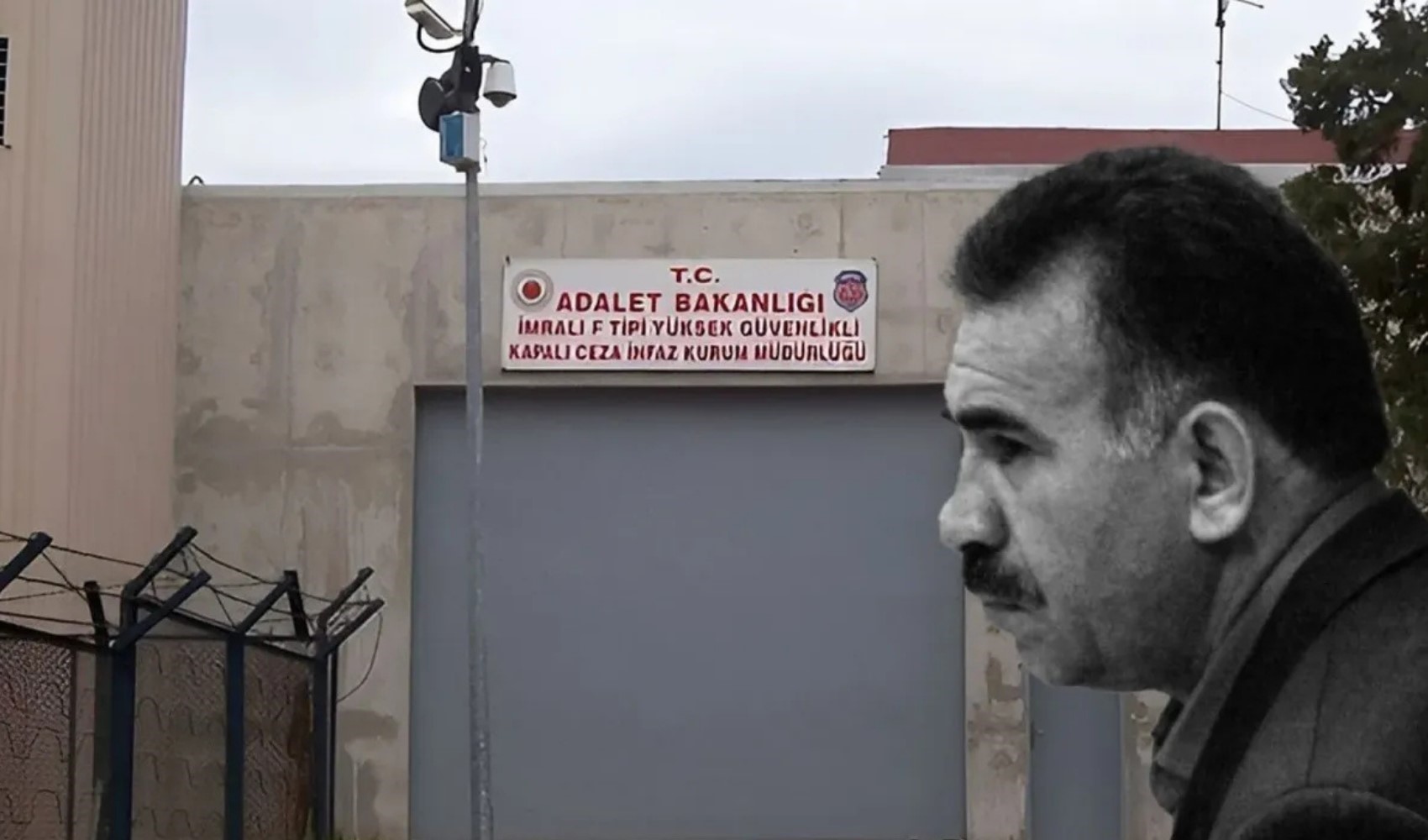
At the Democratic Local Governments Conference organized by the DEM Party in Diyarbakır, a comprehensive message sent from prison by Abdullah Öcalan, the leader of the terrorist organization PKK, was read. Emphasizing "local democracy" in his message, Öcalan criticized the trustee policies and argued that the path to a peaceful resolution of the Kurdish issue lies in strong local governments.
Diyarbakır hosted the widely attended local governments conference organized by the DEM Party. The most notable moment of the conference was the reading of a manifesto-like text penned by Abdullah Öcalan, the leader of the terrorist organization PKK, who is currently held at Imralı Prison, to the delegates. In his message, Öcalan made assessments on many issues, ranging from the nation-state model to local democracy, and from trustee practices to the balances in the Middle East.
"THE SOURCE OF THE TRUSTEE POLICY IS THE ABSENCE OF LOCAL DEMOCRACY"
Addressing the trustee appointments made to municipalities in Turkey in recent years, Öcalan claimed that this situation stems from a systemic deficiency. The following statements stood out in his message:
"The source of the trustee policy implemented in recent years lies in the absence of local democracy. In a country where democracy can be denied so easily, no problem can be solved, and it is evident that they have not been solved. The way to overcome the current local government problems, not just in the context of the Kurdish issue but for Turkey as a whole, passes through strong local democracy."
"LOCAL DEMOCRACY AND DEMOCRATIC CONSTITUTION" FORMULA FOR THE KURDISH ISSUE
Stating that the Kurdish issue has now reached a maturity for resolution at the level of local governments, Öcalan proposed a two-legged structure for the solution:
"The formula of 'local democracy and democratic constitution' is also the formula for the peaceful and democratic resolution of the Kurdish issue. The jugular vein of the democratic integration we have been trying to develop in the Peace and Democratic Society Process is local democracy."
Arguing that removing the reservations on local democracy would make Turkey stronger in the Middle East in its second century, Öcalan asserted that this model is the only way out for Syria, Iraq, and Iran as well.
"MUNICIPALISM IS NOT SMALL-STATEHOOD, IT IS A COMMUNE"
Arguing that the current understanding of municipalism acts like "micro-states" and that this philosophy must change, Öcalan stated, "Municipalities are not micro-states, they are communes. The basis of the municipality in Europe is the commune. Among the Kurds, it is 'kombûn'," and indicated that local governments should develop alternative social, economic, and ecological models based on the people.
Touching upon the developments in Iraq in his message, Öcalan cited the election of a Turkmen governor in Kirkuk as an example, stating that the Turkmens there could also be a commune where they determine their own content instead of a micro-state.
"NOW IS THE TIME TO BUILD AND IMPLEMENT"
Warning the local administrators and mayors attending the conference "not to manage municipalities with a small-time bureaucratic mindset," Öcalan requested that all the needs of cities, from sanitation to transportation, and from education to health, be solved with a communal understanding. The message concluded with a wish that the practical successes to be achieved in local governments would provide more strength to future democratic negotiation grounds, followed by greetings.
The message from the leader of the terrorist organization PKK, Abdullah Öcalan, is as follows:
"For a large part of history, the phenomenon of governance in society was based on the local, the place-specific; in other words, on self-governance. Even in the state tradition, local governments were predominantly the rule, while central power was the exception. The applicable law was the law of the locality and the region. This tradition was disrupted by the homogeneous-monist-rigid centralist nation-state model of the last two hundred years of capitalist modernity. The main source of all problems and impasses has been the imposition of this model and forcing it upon the world.
With two world wars, the entire world, especially the European countries that gave birth to this understanding, has experienced and continues to experience the pain caused by fascism. Since the 1950s, the law of the local, the region, nationality, and culture has been redefined, albeit limitedly, and a transition to democratic constitutions has been made. The 'European Charter of Local Self-Government', accepted and ratified by European Union countries, is a continuation of this process. The return to local democracy has been the salvation of countries and the breath of societies.
If democratic expression is granted to the local and regional in the Middle East, where Turkey's role is dominant, a large part of the problems will be overcome more easily. In particular, removing the reservation on local democracy can make Turkey strong in the region in the second century. Restructuring is essential for both societies and states that are sensitive to democratic solutions. The general flow and need of the era are also towards reducing centralism and multiplying the local. Rowing against the current and resisting only deepens the existing political, economic, and ecological crisis. Indeed, a century has been wasted this way and everyone has lost.
One should not fall into the fallacy of expecting anti-democratic central structures to transform on their own. The organized struggle of continuous democratic local and cultural structures has been decisive in accelerating transformations. Local democracy and democratic constitutions have also been developed as a result of such struggles.
'Local democracy and democratic constitution' formula is also the formula for the peaceful and democratic resolution of the Kurdish issue. The jugular vein of the democratic integration we have been trying to develop in the Peace and Democratic Society Process is local democracy. Democratic integration can only find its meaning through local democracy. The source of the trustee policy implemented in recent years lies in the absence of local democracy. In a country where democracy can be denied so easily, no problem can be solved, and it is evident that they have not been solved.
The Kurdish issue has reached the stage of resolution at the local government level. The way to overcome the current local government problems, not just in the context of the Kurdish issue but for Turkey as a whole, passes through strong local democracy. Securing local democracy within the framework of law is the most realistic and only solution formula. What is necessary for Syria, Iraq, and Iran is also the full and complete implementation of local democracy. The antidote to all negativity is democratic politics and local democracy. It is only possible to reach a democratic society this way.
The role of local governments in the development of local democracy is decisive and pioneering. The first leg of both democracy and the democratic commune is the local. The development of democratic communal people's municipalism is path-breaking in this regard. For this, alternative social, economic, and ecological models based on the people, not on the center, power, and monopolism, should be developed. The greatest capital of local governments is the people; if the labor of the people is combined, there is no problem that cannot be overcome.
A democratic understanding of municipalism should be developed. The democratic municipalism movement should ensure the organization of a democratic society everywhere, from village-neighborhood communes to cooperatives, from civil society organizations to human rights institutions, from the struggle for women's freedom to defenders of children's and animal rights, from youth to ecologists, as a broad social network. Emphasis should be placed on work regarding children, youth, education, language, culture, art, health, economy, and ecology, especially for women. Production areas should be increased, and solutions should be found for the ever-growing unemployment. New living spaces should be woven under the leadership of women.
The participation of the people in governance and their inclusion in all decisions should be taken as a basis. City Councils and City Assemblies can be established; citizens can gather here and discuss all kinds of economic and social problems and make decisions. If democratic people's municipalism is developed, the people will own their municipality; anti-democratic tendencies such as trustee appointments will not easily develop.
Municipalism is not small-statehood. But the system being implemented is a micro-state. One must get rid of this idea both philosophically and practically. Municipalities are not a micro-state, they are a commune. The basis of the municipality in Europe is the commune. Among the Kurds, it is 'kombûn'; its origin dates back thousands of years and extends from these lands to Europe.
The state thinks and approaches macro, while the commune produces micro solutions; there is dialogue, negotiation, and competition between the two, but there is no conflict. Thus, civil society becomes functional and transforms into real cultural, social, and economic institutions. The spirit of the commune should be developed in municipalities, which are the ground and possibility for all of this, and all work should be carried out with this spirit. Mere discussion is not enough; now is the time to build and implement.
In the Peace and Democratic Society Manifesto, we replaced class with commune, and intense discussions were held. We do not deny either the class or the state. But the state is growing like a tumor. Our synthesis of state and commune is developing as a response to the frozen, large-scale tensions, meaningless wars, and the excessive idealization of classism. And we are gradually making this more flexible. The antidote to this is to turn the commune-state relationship into a democratic struggle and competition. What has been attempted in Syria recently is important in this respect; it is necessary to implement this in Iraq as well. The election of a Turkmen governor in Kirkuk is an example; Turkmens here can be a commune where they determine their own content, not a micro-state.
Municipalities should be managed with the mentality and importance of local democracy; they should not be managed with a small-time bureaucratic mindset. Solutions can be found for all the needs of cities, from sanitation to cheap production, from education to health, from transportation to ecology, with a communal understanding. As long as one acts with the understanding that 'municipalities are communes' and does what is required.
Being successful in local governments and municipalities during the Peace and Democratic Society Process will lead to new developments; it will provide more strength to the democratic negotiation position and ground. I wish success to everyone involved in the work of putting democratic populist municipalism into practice with a seriousness that will develop this process. I wish the Local Governments Conference to be successful and offer my endless greetings and love."
News Source: 12punto
Most Read
Galatasaray announces injury updates for Osimhen, Lemina, and Singo

Attention online sellers: Tax monitoring expanded
VAR for the Fenerbahçe-Beşiktaş derby has been announced!
Bridges and highways are being privatized: 15 July and FSM are also on the list

Peugeot September 2026 price list is out
Rules are changing in Schengen

New details emerge in 'panel' operation targeting lawyers
Gökçek era detail in ABB investigation

First statement from Osimhen after injury in Başakşehir match
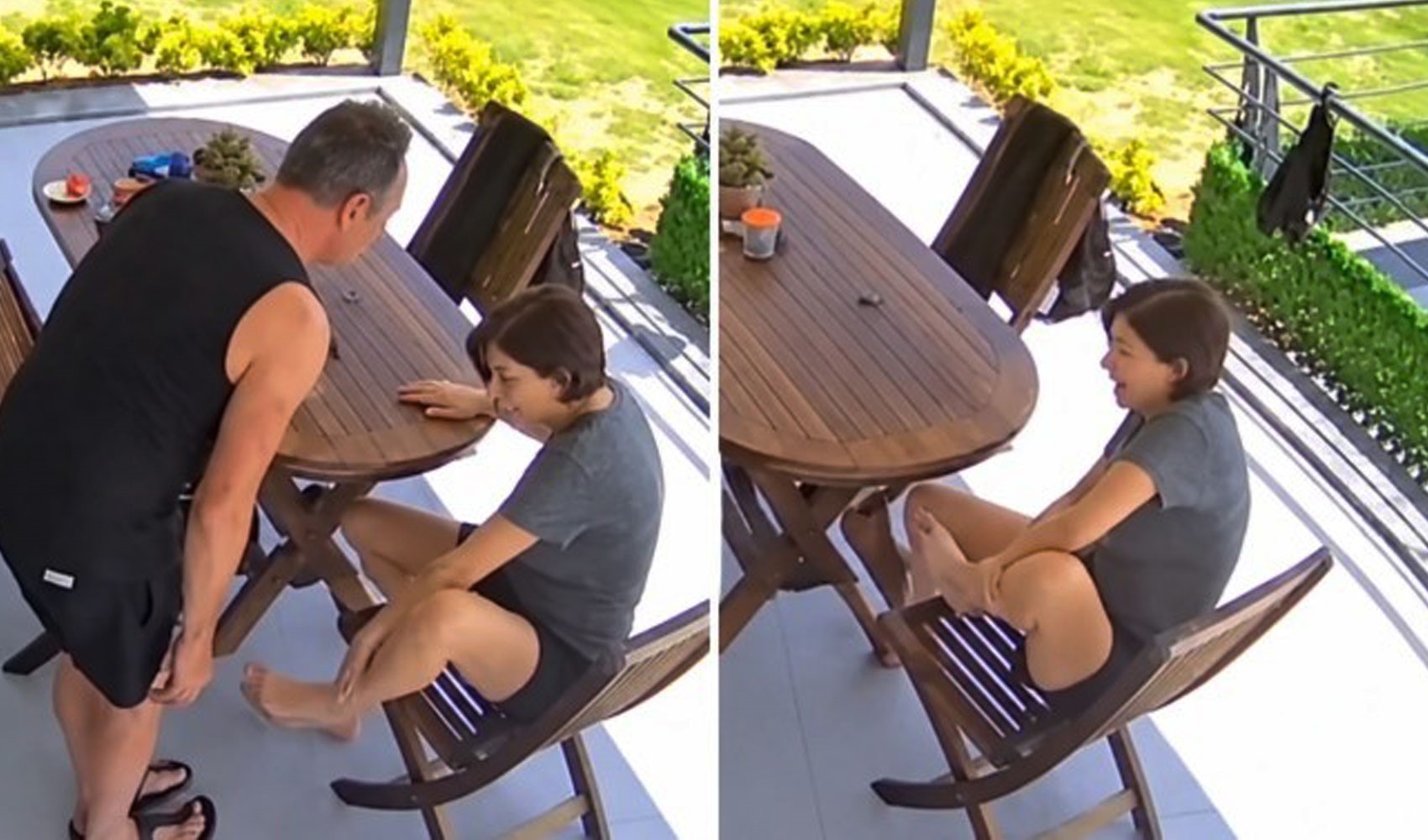
Özlem Şanver: 'He said he would change, I believed him; should I be beaten just because I didn't leave?'