



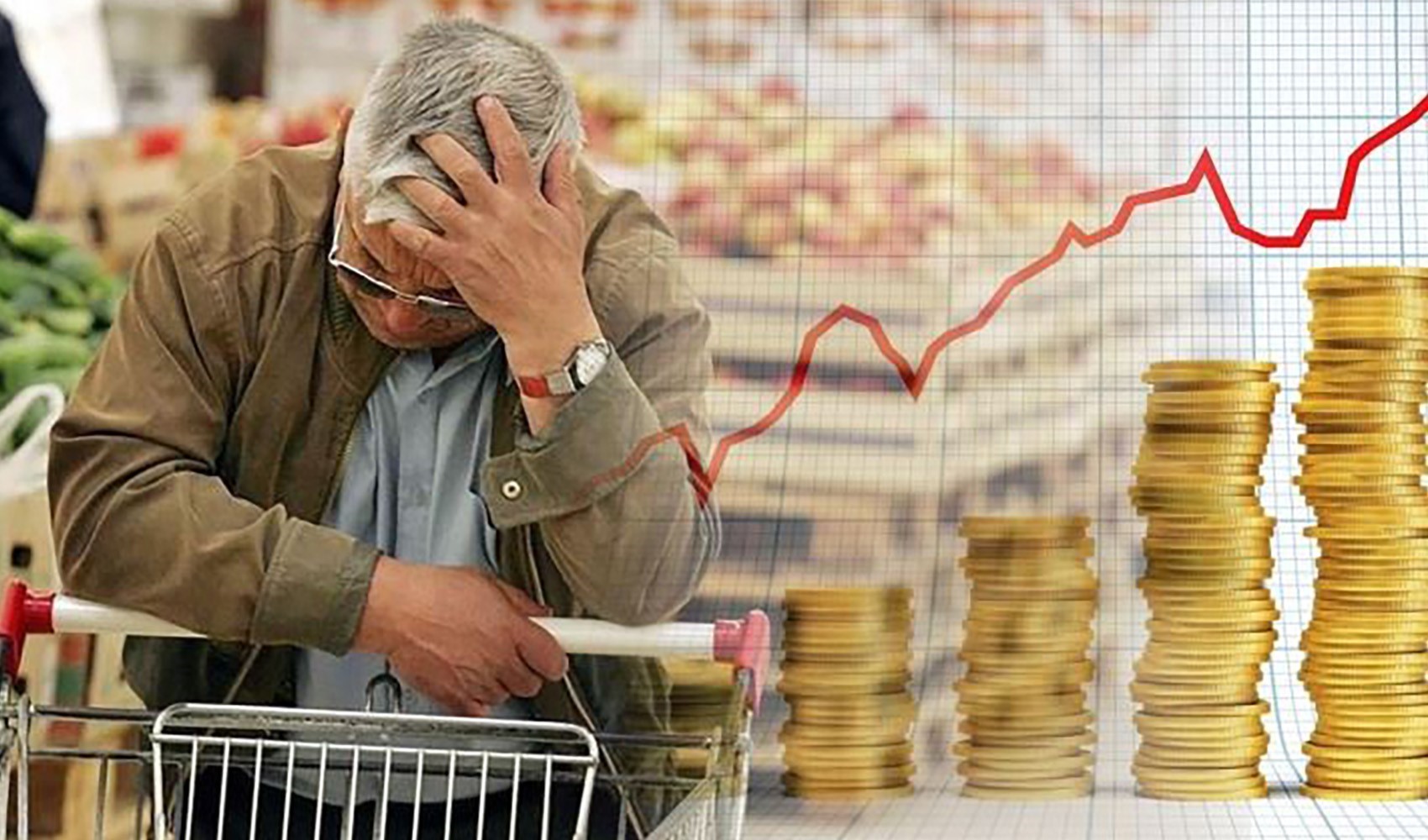
Bloomberg has turned its lens on the economic policies implemented in Turkey in recent years.
According to information reported by 10 Haber, food prices in Turkey have increased by more than 50 percent on an annual basis since the beginning of 2022.
"PEOPLE ONLY TALK ABOUT PRICES"
The analysis included the following statements:
In Istanbul or Ankara, it doesn't take long for conversations among people to turn to restaurants and grocery stores. But these days, people aren't talking much about food; they are only talking about prices. Because Turkish President Recep Tayyip Erdoğan chose to prioritize growth at any cost and abandoned conventional economic policies, the country has had one of the highest inflation rates in the world in recent years. The U-turn policy, which came a little over a year after Erdoğan consolidated his power with a new election victory, is helping to lure back some of the foreign investors who fled as the Turkish Lira fell.
Every great turnaround story in emerging markets inevitably has a flip side. Despite officials' statements that the worst is behind us, many citizens believe that household inflation will accelerate further and borrowing costs will rise. Over more than two decades, Erdoğan and the governments that followed him lifted millions of people out of poverty and into the middle class. The current risk is that citizens who benefited from the credit boom are now being squeezed enough to cause a blow to the critical points of the 1 trillion dollar economy.
Retirees are working for extra income
Inflation was nearly 76 percent in May compared to a year ago. The Central Bank predicts that the rate of price increases will be half of this by the end of the year, but Turks do not share this optimism. Food prices have increased by more than 50 percent on an annual basis since the beginning of 2022.
Elif Bulut is one of the millions of Turks who were allowed early retirement (EYT) as an election gift. The 54-year-old Bulut, who earns extra income by working as a secretary at a decoration company, now calls herself 'damaged.' She works 10 hours a day, earns slightly above the minimum wage, and tries to keep up with rising prices.
'WE ARE THE ONES WHO HAVE TO SWALLOW THE BITTER PILL'
Living in the capital, Ankara, Bulut said, "We are the ones who have to swallow the bitter pill. I don't believe the lies that the economy is supposedly improving. I don't feel it in any way. Maybe foreign investors do." Tighter monetary and fiscal policies are critical to sustaining the renaissance in Turkish stocks and bonds. The BIST 100 Index has been one of the best performers in the world, providing a return of over 40 percent in dollar terms since Erdoğan was re-elected last May. Lira bonds attracted a record 6.5 billion dollars in foreign inflows last month.
INVESTORS TURNED TO CARRY TRADE TRANSACTIONS
Borrowing in dollars and investing in the Turkish currency has also become a preferred move for foreign investors. Last month, this was the most profitable carry trade transaction in emerging markets. Bloomberg Economics estimates that since the end of March, approximately 20 billion dollars have flowed into the country through carry trade transactions, where investors borrow from places with low interest rates and invest in places with high interest rates.
"INFLATION NOW SEEMS LIKE A POLITICAL ISSUE"
David Austerweil, deputy portfolio manager for emerging markets at Van Eck Associates Corp., said, "Investors are more convinced than the average citizen of the country because they are facing the burden of inflation, which is normal. It takes much longer to regain the trust of a country's people. Inflation now seems more like a political issue."
The IMF said last year that nearly 30 percent of the population had been lifted out of poverty since the early 2000s. 70-year-old Erdoğan cast aside conventional wisdom with a five-year push toward ultra-loose monetary policy that fueled cheap money to ensure economic growth. Inflation soared and the currency fell to record lows, but the middle class took advantage of low borrowing costs to buy property and cars or to hoard foreign currency. Many have not yet been able to pay off these loans, which are now much more expensive.
CREDIT BOOM HALTED
The President appointed a more market-friendly economic team following last year's election victory amid warnings that the country was on the brink of a balance of payments crisis. He brought in former Merrill Lynch economist and long-time friend Mehmet Şimşek as Minister of Treasury and Finance to design an economic overhaul. The credit boom was halted by tightening lending rules. The Central Bank raised the policy interest rate from 8.5 percent to 50 percent. Since last May, consumer loan costs have doubled, reaching 72 percent. Interest rates on credit cards, on which Turks are heavily dependent, have also risen. As a result, non-performing loans have begun to increase.
TOOK HIS CHILD OUT OF UNIVERSITY BECAUSE HE COULD NOT AFFORD THE TUITION
Murat Köse, a civil servant at a state university in Ankara, says that while he is trying to pay off the housing loan he took out during the era of cheap money, he is also trying not to over-rely on his credit card due to rising borrowing costs. The biggest change was taking his daughter out of university because he could no longer afford the tuition. 46-year-old Köse said, "If we hadn't bought the house, we would probably be on the streets by now. Food prices are the worst. We can't eat meat properly, maybe once or twice a month."
Turks are not alone in feeling the effects of the decline in disposable income. From emerging markets like Egypt to more developed countries in Europe, spending habits are changing due to inflation and high interest rates, and this has political consequences. With no major elections scheduled for the next four years, foreign investors are benefiting from the shift to more orthodox economics, along with one of the highest nominal interest rates in the world.
INTEREST RATES MAY BE LOWERED EARLY
The Ministry of Treasury and Finance has announced a series of austerity measures and is now working on new tax regulations to help with efforts to combat inflation. Central Bank Governor Fatih Karahan said that price stability would ultimately help restore social welfare. However, Wolfango Piccoli, co-president of the consulting firm Teneo, says there is a risk that Erdoğan will run out of patience regarding the social impact of the change in economic policies. According to Piccoli, this could lead the Central Bank to lower interest rates early to avoid a political backlash.
WILL THE MINIMUM WAGE INCREASE?
Erdoğan stated that the outlook will improve later in the year as the country takes steps regarding interest rates. In a statement he made last weekend, he said, "We will wait for the fourth quarter" to fully get rid of high inflation. Another issue is what the government will do to alleviate the rising cost of living following the 49 percent hike in the minimum wage at the beginning of the year. More than half of the workforce in Turkey earns the minimum wage or slightly above it. All eyes are on whether ministers will make another increase in July, in line with previous years.
It is stated that not raising the minimum wage would be another sign to investors of the government's determination to curb inflation. In April, Minister of Labor Vedat Işıkhan said that the minimum wage would not be increased, but banks, including Goldman Sachs, still see this as a risk. 28-year-old Mehmet Tutarlı, who runs his family's sausage and pastrami factory, said, "If the government increases the minimum wage, people might spend more and the activity in the economy would increase. But that would only last a few months."
News Source: 12punto









