Ezgi SİVRİTEPE/ 12punto.com.tr EXCLUSIVE
The Central Bank of the Republic of Turkey (TCMB) shared its interest rate decision with the public following the Monetary Policy Committee (PPK) meeting on Thursday, March 21. The Central Bank raised its interest rate policy by 500 basis points, increasing it from 45 percent to 50 percent.
In a written statement released after the committee meeting, the TCMB explained the reason for the interest rate hike as 'the rise in inflation' with the following words: "The committee has decided to increase the policy rate, taking into account the deterioration in the inflation outlook." Furthermore, the statement indicated that a tight monetary policy would be maintained until monthly inflation declines.
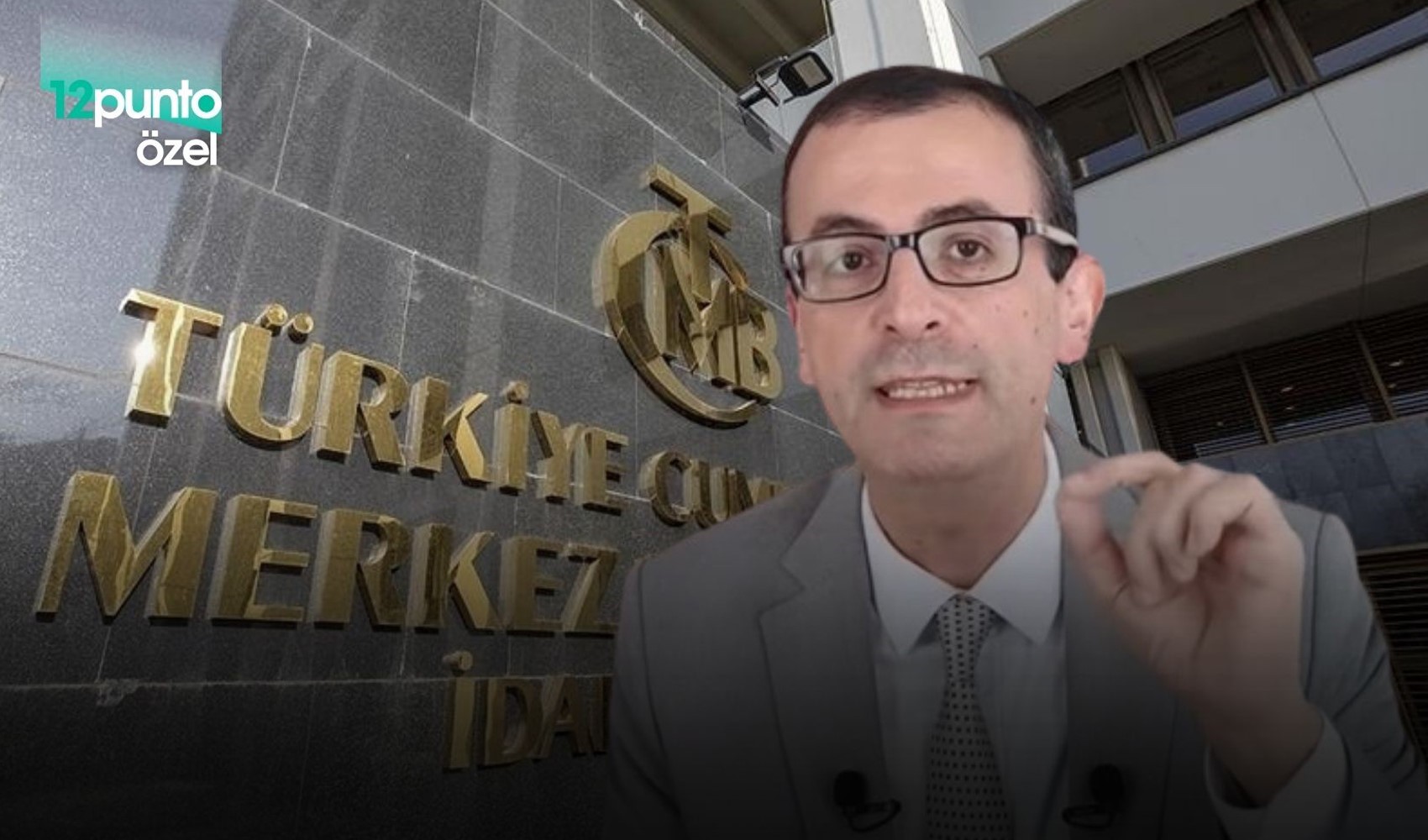
Investment Strategist Evren Devrim Zelyut evaluated this decision by the Central Bank for 12punto.com.tr. In his assessment, Zelyut stated, "Over the last 3 years, during the Nebati era, we burned 200 billion dollars with our President's 'Nas' (religious-based) policy. The coffers are completely empty; there is no money in the budget."
INTEREST RATE HIKE BEFORE THE ELECTION
Zelyut stated that it was not a surprise that the Central Bank announced an interest rate hike before the election, explaining that it was an economic necessity with the following words:
"It is not a surprise. This decision was a requirement of economic logic. Moreover, Fatih Karahan, who is currently serving at the Central Bank, and Deputy Governor Cevdet Akçay are people who deserve their positions based on merit. Therefore, they have also proven their independence. If inflation is trending upward, unfortunately, you have to raise interest rates. This is an economic rule, and they did what that rule required."
THE ECONOMIC MODEL OF THE LAST 20 YEARS
Following the bank's announcement of the interest rate decision, the dollar experienced a 1 percent drop. Zelyut noted that this decline is not possible solely by raising interest rates. Comparing the interest rate hike to a short-term treatment, Zelyut explained that this treatment causes much more damage with the following expressions:
"When you raise interest rates, job opportunities shrink, investments fall, and unemployment rises. In the last 20 years, we have not been able to transition to a new economic model that would lower inflation and the exchange rate. Turkey's economy has revolved around construction and textiles since 2002, and it has an industry dependent on foreign inputs. Because we have not been able to change the economic model for 20 years, we cannot permanently lower inflation and the exchange rate."
"THEY BARELY GOT IT ACCEPTED"
Touching upon the Protected Turkish Lira Deposit (KKM) scheme, Zelyut spoke about the damage done to the Turkish economy with these words:
"The COVID disease, the Russia-Ukraine war, and Mr. Erdoğan's 'Nas' policy, which added insult to injury by forcibly lowering interest rates from where they were; we experienced this last year, and it caused the exchange rate to explode. To stop this, so that citizens wouldn't buy dollars, a 'covert interest rate' was provided, which was called KKM. We reach this conclusion from here: Raising interest rates does not solve our current problems; it just buys time—so the dollar won't be 50 but 40 at the end of the year—it is like cortisone treatment."
"THE DOLLAR HUNGER WE FEEL"
Stating that one must not be 'dependent on the outside' for the dollar to fall, Zelyut indicated that what needs to be done is 'structural reform' and said, "What needs to be done are structural reforms. You have to save the industry from being dependent on the outside. You must produce semi-finished raw materials on Anatolian soil so that you don't have to import from China or Germany. In the last 20 years in Turkey, the number of cultivated lands has dropped dramatically, and the population has increased. On top of that, 10 million immigrants have arrived. Cultivated land is decreasing; the population is increasing; naturally, while food prices are falling globally, they are going up by 72 percent in Turkey. If we do not make reforms in agriculture and industry, if we do not increase production quantities, and if we cannot produce and sell high-tech products, the dollar shortage we feel will be a 'dollar hunger' because our imports exceed our exports."
Describing how the interest rate hike decision was taken, Zelyut used the phrase 'barely' and made the following remarks:
"We need to fix the economy's own dynamics. Now, Mr. Fatih and Professor Cevdet are doing the right thing. If a country has not changed its production model and is in a situation of entering a short-term crisis, it must necessarily raise interest rates. Look, they barely got even this interest rate hike accepted by the President after much fighting. Currently, the Central Bank's reserves have dropped to minus 67 million dollars."
"THE BUDGET DEFICIT WILL BE CLOSED WITH PRICE HIKES AND TAXES"
Evaluating how this decision by the Central Bank will affect March inflation data, Zelyut said, "When the interest rate rises, naturally, commercial loan and consumer loan interest rates will increase; these were already very problematic points. Commercial loans are above 60, and consumer loans are in the 70s. When you use a commercial loan, there is a cost to it; you reflect this cost onto the product. When a bank receives money at a higher cost from the Central Bank, it raises this interest rate when providing consumer and commercial loans. Both banks and companies have financial costs, but they pass these increases on to the citizens. Therefore, there is no problem for companies and banks, but I think it might trigger inflation a little bit because it will push product prices, service prices, and costs upward. Over the last 3 years, during the Nebati era, we burned 200 billion dollars with our President's 'Nas' policy. The coffers are completely empty; there is no money in the budget. On top of that, there was the earthquake in Kahramanmaraş. There will be a deficit of more than 1 trillion last year and more than 2 trillion this year. This deficit will be closed with price hikes and taxes. And price hikes mean inflation. Rather than interest rates, our budget deficit; rather than interest rates, our deficiency in agriculture; rather than interest rates, the fact that our industrial policy is wrong is what is driving inflation through the roof right now."
WHEN WILL THERE BE AN INTEREST RATE CUT?
Making predictions about when the Central Bank will lower interest rates, Zelyut pointed to September and said, "It seems to me that the interest rate will not be lowered before September. The Central Bank must first see that we have brought inflation under control, brought the exchange rate under control, and some foreign capital needs to come in as well. You cannot hold the exchange rate just by raising interest rates. People are not going to dollars because interest rates are high; they are going to the lira, but foreign money also needs to come in to provide support. For this, foreigners are pointing to June."
News Source: Ezgi Sivritepe