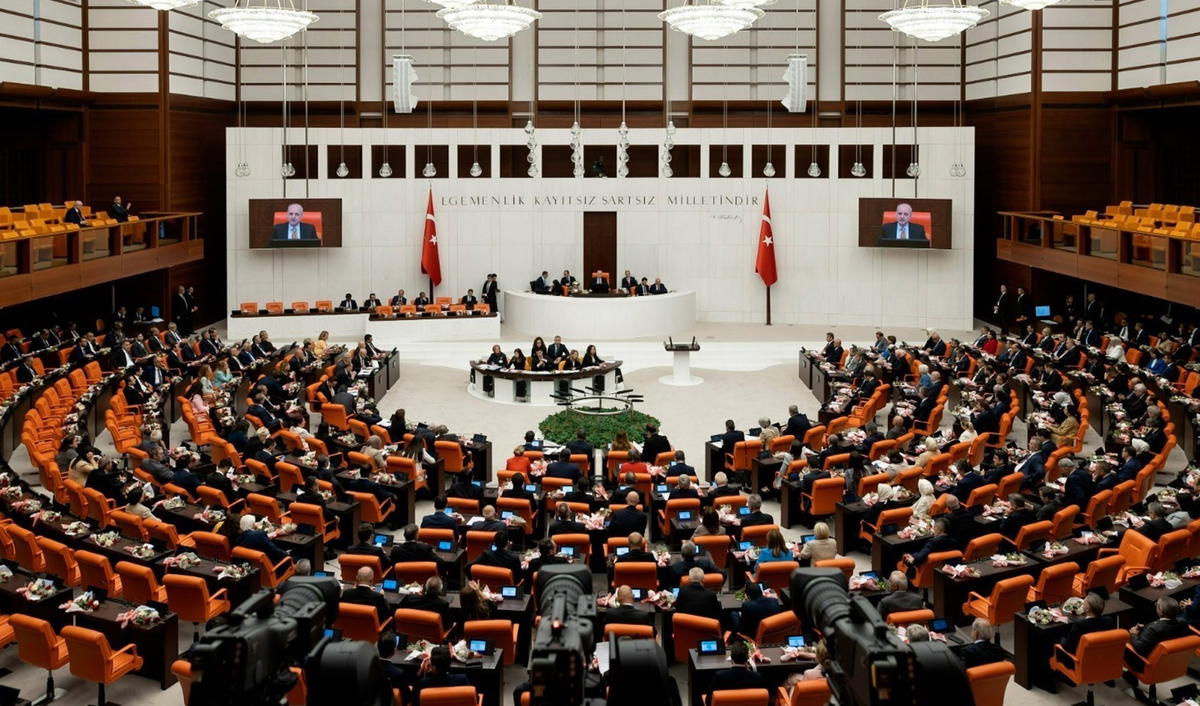
The Turkish Grand National Assembly (TBMM) Committee on Industry, Trade, Energy, Natural Resources, Information and Technology has approved a legislative proposal that includes changes to the law on the use of renewable energy resources for electricity generation and several other laws.
In addition to energy and social security, the proposal also includes regulations aimed at employment and vocational training.
GSS PREMIUM DEBTS ARE BEING WIPED OUT
According to the regulation, the collection of all unpaid general health insurance (GSS) premiums for periods prior to January 1, 2017, as well as the late payment penalties and interest associated with these debts, will be waived.
However, premiums already paid for these debts up to the date of the regulation's publication will not be refunded and will not be offset against other debts.
It is expected that 2 million 199 thousand 869 people will benefit from the regulation regarding GSS debts. The total amount of receivables to be waived is calculated at 5 billion 627 million 666 thousand lira.
EMPLOYMENT INCENTIVE DURATION EXTENDED
The legislative proposal also introduces changes to the Unemployment Insurance Law. The duration of the incentive applied to increase additional employment and support the participation of groups requiring special policies in the labor market is being extended until December 31, 2028.
The President is granted the authority to extend the application, which supports the employment of women, youth, and unemployed individuals holding certificates in vocational and technical education, until December 31, 2029.
STATE SUPPORT FOR VOCATIONAL TRAINING EXTENDED TO 15 YEARS
With the change made to the Vocational Training Law, the duration regarding the state contribution provided for wages paid to candidate apprentices, apprentices, students receiving vocational training in businesses, and those continuing internships or supplementary training is being reorganized.
The extension authority granted to the President is being increased to a total of 15 academic years, with each extension being for one academic year at a time. The authority to determine the procedures and principles regarding the implementation of the state contribution will also rest with the President.
The regulation in question will enter into force on the date of its publication, effective from September 14, 2026.
CHANGES IN GENDARMERIE AND COAST GUARD PERSONNEL RECRUITMENT
The legislative proposal also covers personnel recruitment processes in the Gendarmerie General Command and the Coast Guard Command.
Accordingly, the qualifications required for active-duty officer and non-commissioned officer candidates to be employed in these two commands, as well as candidates to be admitted to faculties and vocational schools, will be redetermined. The procedures and principles for the exams to be applied to candidates will also be reorganized.
News Source: 12punto