Gizem Yaralı-12punto
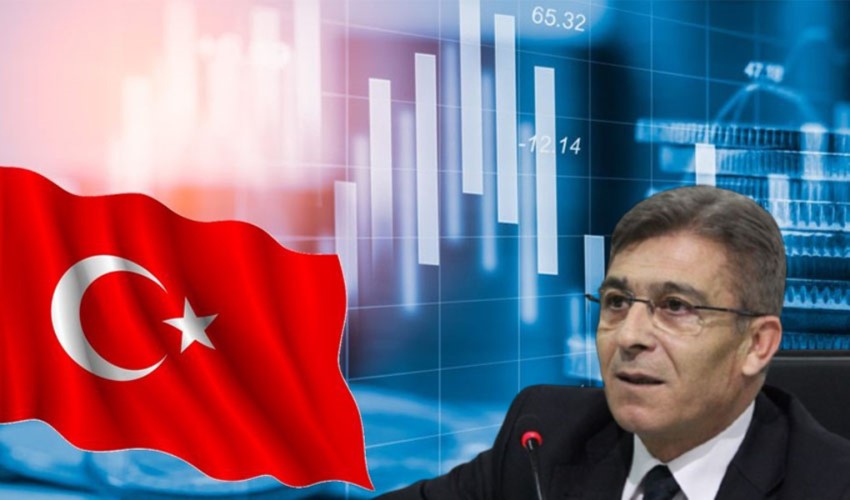
Economist Prof. Dr. Duran Bülbül said, "The reconstruction of the Republic of Turkey depends on an ideological stance, choosing the spirit of the Kuva-yi Milliye (National Forces) as a way of life, and making the principles and revolutions of Mustafa Kemal ATATÜRK a matter of honor and dignity. Do not be afraid to call for a return to statism, a return to public ownership, and a return to the people's state."
Here are the assessments of Economist Prof. Dr. Duran Bülbül:
IZMIR ECONOMIC CONGRESS
All policies regarding economy, agriculture, development, and industry were determined at this congress. We must question why the Izmir Economic Congress is historically important because Izmir is the city where the victory ended, where the struggle for liberation concluded, but also where it was completed in a bloody manner and heavy prices were paid. For this reason, Izmir is where victory touched.
THE ONLY PATH TO LIBERATION: KEMALIST ECONOMIC POLICY
Only a genius like Mustafa Kemal Atatürk could have rebuilt a country that had been razed to the ground in the dark steppes of Anatolia, a country that could not produce enough wheat for itself, imported sugar, and had no industry. Indeed, no Republican government established after him has ever achieved the rate of development and growth captured in the 1923-1938 period. Mustafa Kemal Atatürk and the Kemalist cadre, who founded the Republic of Turkey by successfully completing the National War of Liberation in Anatolia against both imperialist states and internal reactionaries and collaborators, believed that true liberation could only be achieved through economic independence, and they treated the country's economic and financial independence as a matter of honor and dignity, doing what was necessary.
As early as January 1923, just 3 months after Mustafa Kemal Atatürk had driven the imperialists out of our Anatolia, he pointed to the goal by saying, "The State of Turkey will be an Economic State." And he did this even before the peace treaty was signed and the Republic was proclaimed.
In order to bring our new Turkey to the level of civilization it deserves, it is imperative that primary importance be given to the economy. Economy means everything. It means everything necessary to live and to be happy. It means agriculture, it means trade, it means services, it means everything. There is no civilized state that has not thought of its economy before its army and navy. Full independence means independence and complete freedom in every field: politically, financially, economically, legally, militarily, and culturally. Lack of independence in any of these means the country is truly devoid of its full independence. The goal of our wars today is also full independence. The completeness of independence, however, will only be possible with financial independence of the nation.
FACTORIES ESTABLISHED IN 6 YEARS
Factories established between 1923-1929:
1-Ankara Arms Factory
2-Eskişehir Aircraft Repair Factory
3-Kırıkkale Artillery Ammunition Factory
4-Eskişehir Railway Workshop
5-Kırıkkale Steel Casting and Rolling Mill
6-Kırıkkale Brass Casting Factory
7-Eskişehir Aircraft Maintenance Factory
8-Alpullu Sugar Factory
9-Construction Steel Rolling Mill
10-Kayseri Aircraft and Carbon Factory
11-Bakırköy Cement Factory
12-Bünyan Glassware Factory
13-Bursa Textile Factory
14-Ankara Cement Factory
15-Istanbul Beverage Factory
16-Ankara Cement Factory
17-Gaziantep Beverage Factory
18-Ayancık Timber Factory
19-Paşabahçe Raki and Spirits Factory
In 1929, national income accounts were calculated for the first time in Turkey. Yet, even today, we still cannot calculate national income correctly. In 1931, the preparation of a development plan began for the first time in the world, and the first Industrial Development Plan was prepared for 1933-1937, and the 2nd Industrial Development Plan was prepared for 1938-1942 under Atatürk's personal leadership. To summarize briefly, the main goal of the 1st Industrial Development Plan, which was "to produce domestic consumer goods that exist in Turkey but are not produced for consumption and are imported from abroad, within the country instead of importing them," was achieved, and for this purpose; Kayseri, Nazilli, Ereğli, Bakırköy textile factories, Malatya yarn and weaving factories, Iğdır yarn factories, Karabük iron and steel, Izmir paper, Bursa merino, Kütahya Ceramics, Paşabahçe glass and bottle, Keçiborlu sulfur, Gemlik artificial silk, İzmit superphosphate, spirits, rose oil, and cement industrial facilities, as well as the Turkish Sugar Factories, the Soil Products Office, Sümer Bank, and Eti Bank were established during the 1st Industrial Development Period. Have those who have been in power for 20 years been able to build even one of these facilities and factories? No. They only sell and destroy.
The great leader Mustafa Kemal Atatürk personally directed the 2nd Industrial Plan, covering the years 1938-1942, one year before his death, while he was ill and under treatment, staying awake until the morning hours with the Prime Minister and other officials. While on his sickbed, he summoned Prime Minister Celal Bayar to Dolmabahçe Palace and ordered the completion of the unfinished investments from the first plan, and commanded that the 20 factories targeted in the first plan and the 100 factories targeted in the second plan must be brought to life, and that railways be expanded. The 20 factories planned in the first plan were established within five years. The factories and investment areas planned in the second plan can be summarized briefly as follows: mining, electricity production, household goods industry, soil and food industries, chemical industry... In fact, without waiting for the industrial development plan, Mustafa Kemal Atatürk established the İş Bank and the Industrial and Mining Bank in 1924, and started implementation by regulating customs tariffs in 1929. He ensured the establishment and operation of Securities and Exchange Markets, which we still cannot regulate according to international norms today. On June 30, 1930, he established the Central Bank of the Republic of Turkey and enacted the Law on the Protection of the Value of Turkish Currency. In 1931, quotas were placed on imports. In 1933, Sümer Bank was established, and laws for deposit protection, lending, and credit operations were regulated.
Between 1933-1937, a development plan was implemented for the first time in the world in Turkey under the leadership of Mustafa Kemal Atatürk. With the first five-year industrial development plan, the state's entry into economic activities and state enterprise began. Thanks to the economic policy followed by Mustafa Kemal Atatürk, Turkey remained outside the 1929 economic crisis, and significant steps were taken in the name of industrialization. The practice of "planned industrialization under state leadership" in developed and developing countries was first realized in Atatürk's Turkey. With this planning, the main goal was to produce the basic industrial goods needed in Turkey through public enterprises, and when the plan was prepared, no external resources were foreseen, and the plan was carried out with domestic resources.
The main purpose of monetary policy is to establish a balance between state expenditures and resources. For this reason, an inflationary situation was never experienced. He always thought of the happiness and welfare of his people. He never allowed spending more than income. He was strictly against the Central Bank of the Republic of Turkey increasing emission, that is, printing money, and made his investments with the country's own national resources. Indeed, for 15 years, he limited the central bank's emission volume to 10 million TL. He saw the central bank printing money as the most important cause of inflation. And he never resorted to this diseased financing method.
While one British pound was on average 605 kuruş in 1921, it was at the level of 616 kuruş in 1938. The great leader Mustafa Kemal Atatürk, who wanted the national currency to pass into the hands of the Turks, distributed the shares of the Central Bank of the Republic of Turkey, which he founded in 1930, to Turkish banks and state officials. While the central bank had 6,127 kilograms of gold in 1931, this increased to 26,190 kilograms in 1938. He always kept the state budget balanced, gave a surplus when necessary, and never allowed price stability to be disrupted.
According to Mustafa Kemal Atatürk: "Turkish banking should be under the management of Turks and in the ownership of Turks." He did not find it appropriate for the vast majority of Turkish deposits to be in the hands of foreign banks. It is very interesting that while 68% of deposits were in the hands of foreign banks and 32% in national banks in 1920, 81% of deposits were in national banks and 19% in foreign banks in 1937. Atatürk made investments without falling into inflation, encouraged his people to save, and launched the "National Economy and Savings Move" and the domestic goods week for this purpose.
One leg of Atatürk's economic policy is the balance of external payments. By preventing the Turkish Lira from losing value against foreign currencies, he always raised the reputation of the Turkish treasury in international markets. In accordance with fiscal and monetary policy, he always ensured the balance of external payments and closed the foreign trade balance with a surplus. In the 1937 period, our foreign trade balance always gave a surplus. In a speech in 1933, Atatürk expressed that he saw a balanced budget as a guarantee for the survival of the state. "I believe that our high council will attach special importance to taking every measure to protect and ensure budget technique. The fact that the Grand National Assembly of Turkey, which knows the countless drawbacks of an open budget, is determined to ensure a balanced budget is a great guarantee for the financial and even general policy of the state." He attached such great importance to a balanced budget that he also included the balanced budget principle in the CHP program.
While the per capita national income was 45 dollars in the 1923-38 period, it rose to 88 dollars in 1938. While one German mark was 44 kuruş in 1924, it was 46 kuruş in 1938.
Nations that do not attach importance to economic science and its rules always prepare their own end. The most fundamental element of Atatürk's economic understanding, who was aware of this, is economic balance and stability. It is possible to group this policy into 4 main categories:
1. Anti-inflationary monetary-credit policy that protects the value of the Turkish Lira
2. Balanced budget policy based on real public resources
3. Foreign trade policy without devaluation
4. Planned development policy that ensures the effective use of national resources
As a result of the economic policy implemented by Atatürk, GNP grew by an average of over 10% in the 15-year period. With the successfully implemented anti-inflationary budget and monetary policy, stability was achieved in domestic prices and the value of money. In foreign trade, a constant surplus was achieved. In a speech, Atatürk said, "In any case, the state's regulatory role in economic affairs, just as in political and intellectual matters, should be accepted and deemed appropriate as a principle." Mustafa Kemal Atatürk created the path to liberation with his own original thinking and realized the world's first democratic development plan in 1933 in the light of science.
He fundamentally implemented the national bourgeoisie in Turkey. Atatürk's model of statism is a development model in the light of science. And it was born as a historical necessity. The famous economist Keynes argued in his book "The General Theory of Employment, Interest and Money," published in 1936, that equality would be achieved through state intervention. However, the great leader Mustafa Kemal Atatürk shaped the state and economic model in his utopia at the Izmir Economic Congress even before the republic was proclaimed, and with the proclamation of the republic, he implemented a development and welfare economy model based on state intervention in the economy. Western economists and financiers only introduced this model of Atatürk into the literature in the 1950s under the name of development model developed for underdeveloped countries. As a result of this view of Atatürk, while the increase in industrial production in the world was 19% in the 1929-1938 period, it was 96% in Turkey. The great leader Mustafa Kemal Atatürk achieved liberation by doing very great things in a short time. In order for the whole society to develop in the shortest time, he implemented stable economic policies, constantly observed internal and external economic balance, never allowed easy ways such as printing unbacked money, and did not allow inflationary policy by implementing a balanced budget policy. The great leader Mustafa Kemal Atatürk made the Republic of Turkey, which he created from nothing in 15 years, the most respected country in the world, and made it the 11th largest economy and state in the world.
News Source: Gizem Yaralı