
Scientists in China have developed an experimental system designed to filter circulating tumor cells, which play a critical role in the spread of cancer, from the blood. The research team, led by Shanghai Jiao Tong University, calls the system a "black hole"; in experiments conducted on mice, it reduced the risk of tumor recurrence and extended survival time when used in combination with chemotherapy.
The focus of the research is on tumor cells that break away from a primary tumor or tissues where cancer has spread and enter the bloodstream. These cells play a significant role in the process of spreading to distant organs, known as metastasis. It is noted that metastasis is associated with more than 90 percent of cancer-related deaths worldwide.
HOW DOES THE SYSTEM WORK?
The new system was designed with inspiration from blood purification methods. In the experimental setup, blood is drawn from the carotid artery with the help of a pump; it is then passed through a special microfluidic chamber outside the body before being returned to circulation. Researchers developed this chamber to selectively capture cancer cells.
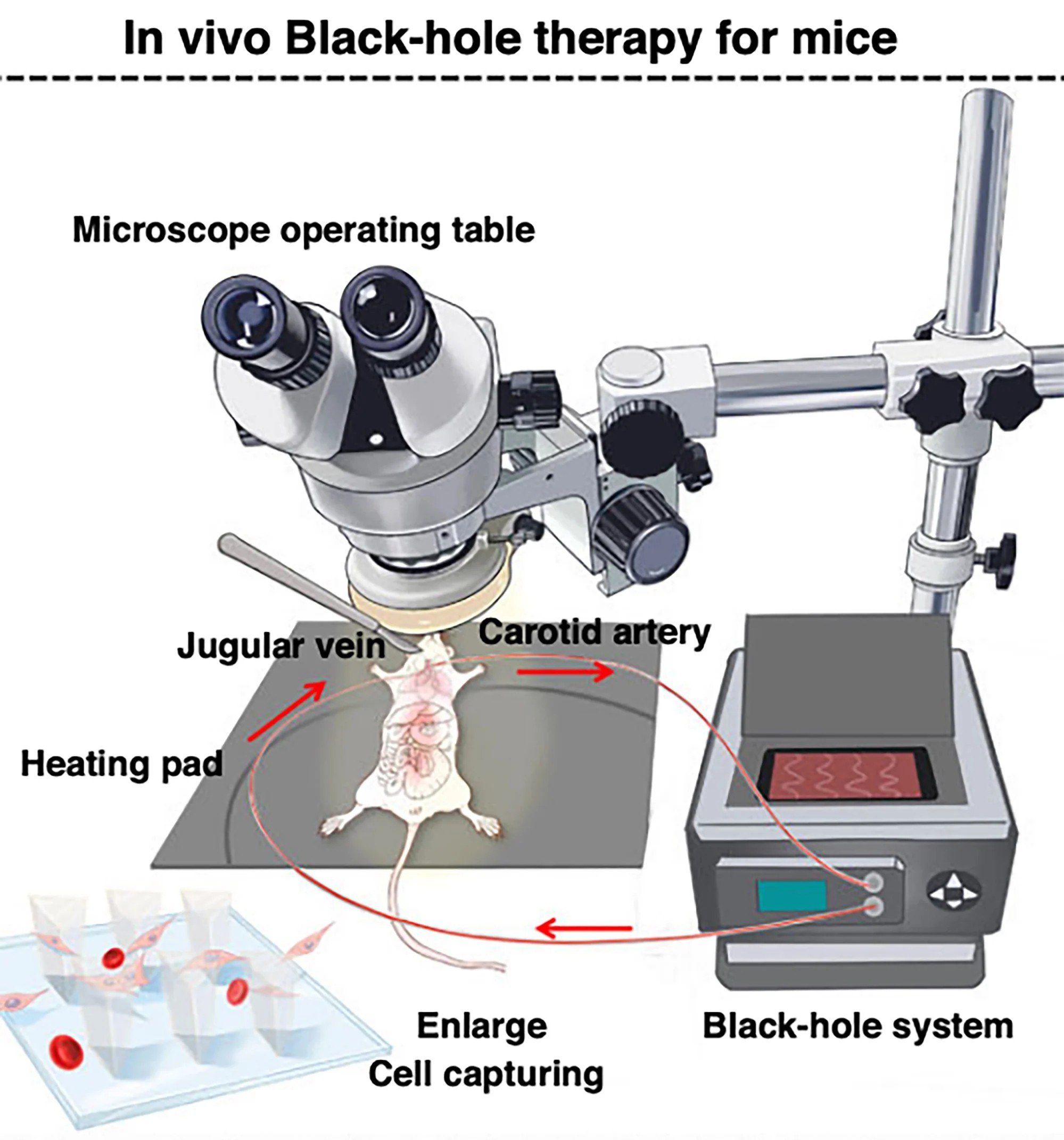
The selectivity of the system is achieved through antibodies that target a surface protein called EpCAM, which is found on the surface of many cancer cells but not on normal blood components. In this way, the goal is to capture circulating tumor cells while protecting healthy blood components.
In initial tests using a closed-loop circulation model, more than 99 percent of human breast cancer cells were captured at low flow rates when added to the chamber. When the flow rate was increased to 1.2 milliliters per hour, the capture efficiency remained at approximately 95 percent. The system was also reported to be effective on human lung and prostate cancer cells carrying EpCAM.
The researchers then tested the system on mice with breast cancer. After the tumors were surgically removed, the mice were divided into four groups: those receiving no additional treatment, those receiving only chemotherapy, those receiving only blood purification treatment, and those receiving both methods.
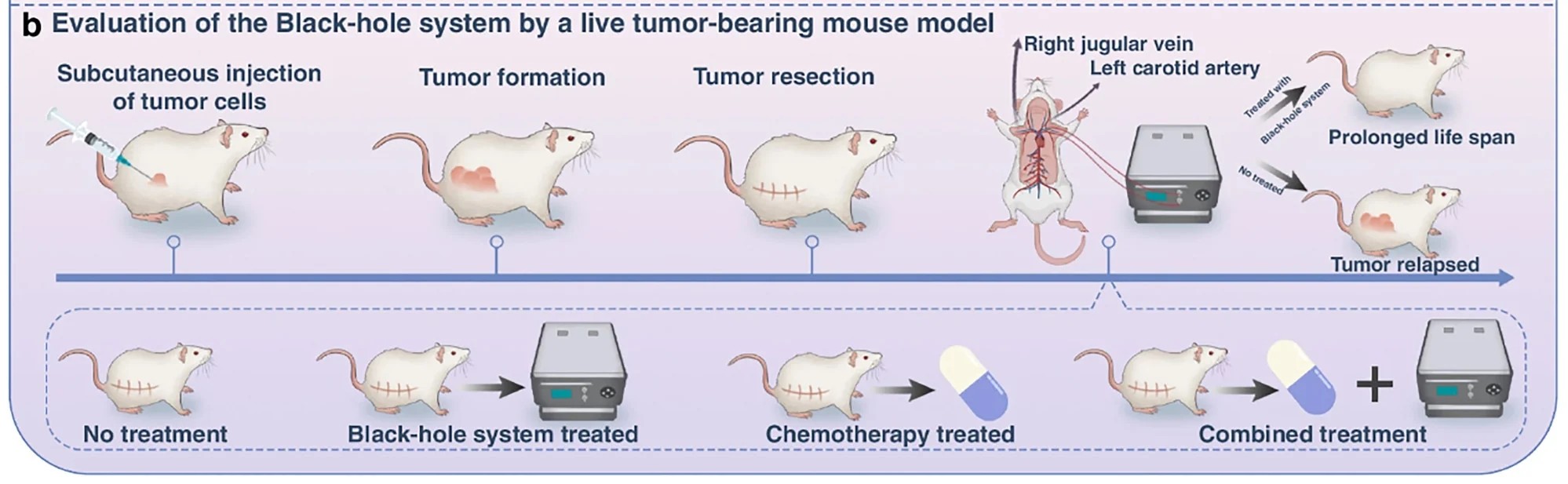
In the four-week experiments, the best results were seen in the group where chemotherapy and the blood purification system were used together. While 50 percent of the mice in this group survived, the survival rate was 20 percent in the groups that received only chemotherapy or only blood purification treatment. It was reported that all mice that did not receive additional treatment died.
It was also noted that the tumor recurrence rate in the combined treatment group decreased by 16.7 percent, and no signs of significant damage or toxicity were found in the organs of the mice. The findings indicate the potential of the system to reduce circulating tumor cells, especially when used in combination with chemotherapy.
EARLY STAGE FOR CLINICAL USE
According to the researchers, the system has the potential to be used in different types of cancer, including breast, lung, colon, and stomach cancers that carry the EpCAM protein. It may also be possible to target other cell membrane proteins by changing the design of the microfluidic chamber.
However, the study is still in the proof-of-concept stage. To be used in humans, it needs to reach a capacity that can safely process larger blood volumes at higher flow rates. Furthermore, since each animal received only a single session in the mouse experiments, the safety and performance of the system in repeated use will also be investigated.
The team plans to move to larger animal models in the next phase and evaluate the system in terms of long-term safety, efficacy, and cost. Before moving to clinical use, the results will need to be verified through larger-scale trials.
News Source: 12punto