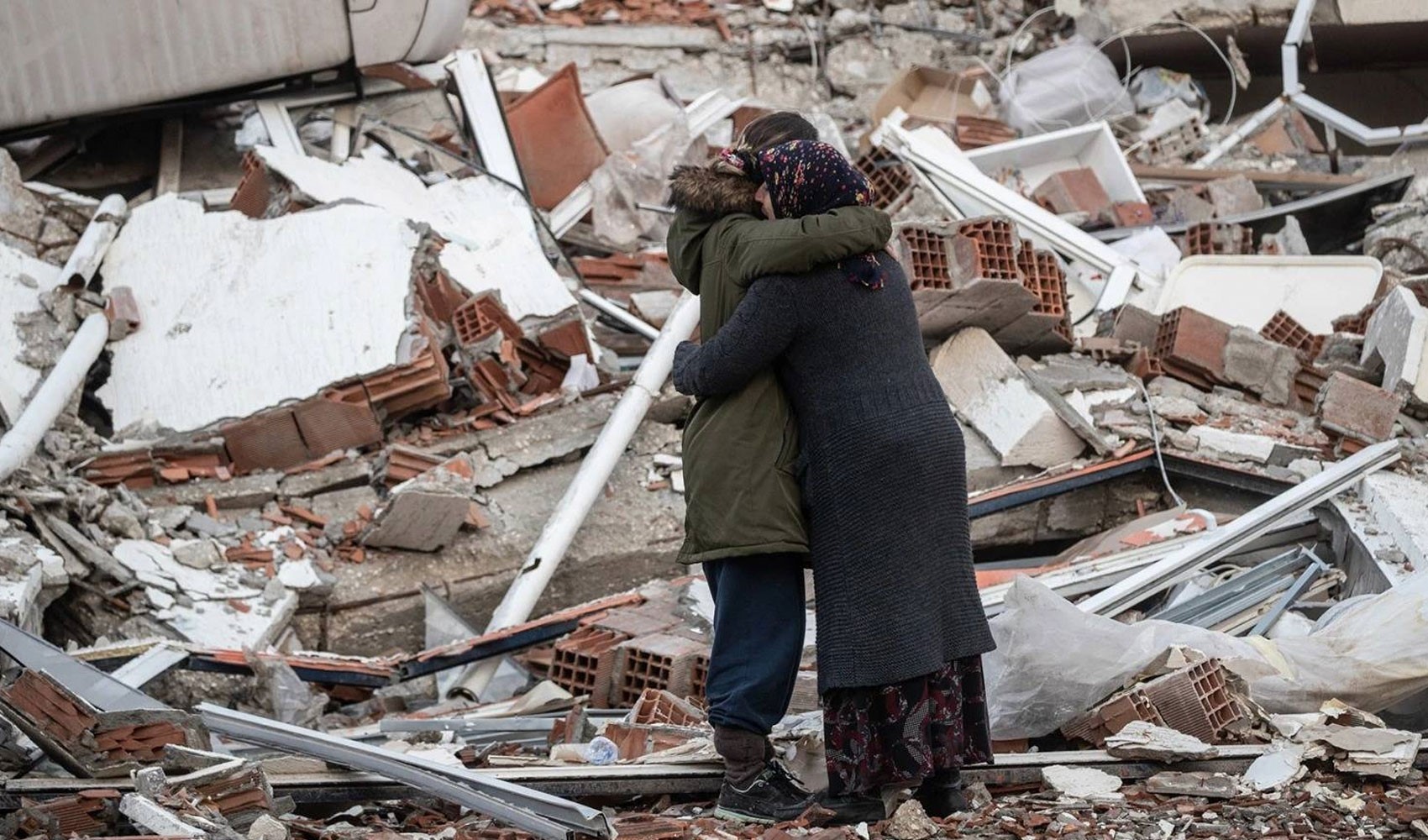
We are at the 2nd anniversary of the February 6 earthquakes. The disaster caused by the earthquake has deeply wounded society in every aspect, and its consequences are still being felt.
Earthquakes are the type of disaster that causes the most loss of life and property.
In our country, where disasters occur, it is clear that raising awareness to ensure necessary measures are taken so that natural events do not turn into disasters, ensuring that relevant institutions and organizations perform their duties diligently, conducting effective investigations, and identifying those responsible in this regard are of great importance.
In our country, many residential areas have been established on alluvial lands managed by active faults. Establishing residential areas in places unsuitable in terms of tectonic and soil characteristics, construction created on and around active fault lines, construction on earthquake-unsuitable soil; errors in design, construction, materials, and workmanship during the building process; and the failure to carry out inspections as required lead to loss of life and property in earthquakes.
In identifying those responsible for damages arising from earthquakes, the entire process of a building's construction, from planning to collapse, must be examined. In the collapse of buildings, there is often not just one person responsible, but a chain of responsibility in the stages from the zoning of the area to the destruction of the building.
Regarding those at fault in disasters, a separate procedure is generally provided by law for public officials. The failure to sufficiently investigate the negligence of those at fault in the incident and the failure to bring them to justice continue to be a problem regarding the judicial procedure. This impunity encourages perpetrators in subsequent years as well.
While the amnesties issued since 1959 have led to an increase in illegal construction, this wrong state policy continued with the zoning amnesty introduced in 2018, known as the 'Zoning Peace'.
Disasters should be handled as "before" and "after". The "pre-disaster" phase includes prevention, preparedness, and mitigation; the "post-disaster" phase includes response, recovery, and reconstruction. Being prepared for earthquakes requires a total struggle. Therefore, lack of communication between institutions and the fact that social service units do not work in isolation from each other are of great importance.
In the event of a disaster, what the disruptions in the functioning of each institution will be should be determined in advance according to what we call disaster scenarios, and what will be done before, during, and after the disaster should be included in the relevant laws.
The fact that we are a country open to disasters, that disasters violate the right to life, which is the most important of fundamental rights, and that they are closely related to fundamental rights that should generally be above all laws, shows the importance that should be given to its legislation.
The legal aspect of a disaster should not be evaluated only as the criminal and compensation dimension after the damage caused by the disaster; importance should also be given to the preparation of preventive legislation, especially the damage-reducing aspect of disaster management.
Disaster concerns many different branches of law. Disaster legislation should primarily determine what needs to be done in terms of preparation and damage reduction so that a natural event does not turn into a disaster; and when a disaster occurs, it should have already regulated which rules will come into play in every area of society. In our country, not only is disaster legislation not organized in a cohesive manner, but what will happen in related fields of law is often not even included in their own laws. This creates chaos at the moment of a disaster.
Ensuring that risks do not turn into disasters and minimizing their harmful consequences requires multi-stakeholder cooperation and participation in every segment of society; it also requires separate studies for disasters in many fields such as medicine, law, and technology, as well as the coordination of these studies.
On the other hand, laws prepared with a rent-oriented perspective have become the biggest problem in terms of sincere efforts to reduce the harmful consequences of disasters.
In our country, where buildings collapse on their own, with zoning amnesties, let alone fighting disasters, disasters have been invited! We painfully experienced the harmful consequences of the amnesty law called zoning peace, which was presented as good news in those days, in the February 6 earthquake.
Disruptions in the trial procedure of public officials and decisions far from objectivity increase indifference, and the failure to bring all those responsible to justice encourages negligence for the sake of rent.
The reflection of the "Comprehensive Approach"; "All-Hazards Approach"; "Integrated Approach"; and "Disaster-Ready, Resilient Society Approach", which are the generally accepted basic approaches and principles of disaster management today, into practice will only be possible with the provision of necessary coordination with the field of law.
When the process of constructing a building is considered, there are many links in the chain of responsibility in the stages from its zoning to the collapse of the building.
Opening areas unsuitable for settlement to construction and the lack of inspection of structures are the most important reasons why earthquakes turn into disasters.
Regarding those at fault in disasters, a separate procedure is generally provided by law for public officials. The failure to sufficiently investigate the negligence of those at fault in the incident and the failure to bring them to justice continue to be a problem regarding the judicial procedure.
It is clear that lack of inspection and a rent-oriented perspective lie at the root of the pain caused by the fire in Bolu Kartalkaya.
Lack of inspection, a rent-oriented perspective, and impunity are the main factors in the transformation of dangers and natural events into disasters. The first step in the fight against disasters is the fight against this mentality.
News Source: 12punto