

Astronomers capture the ‘first light’ from a star’s death: Missing link in supernovae observed
Located approximately 500 million light-years away, SN 2026gzf has provided new clues into the relationship between powerful supernovae and gamma-ray bursts.



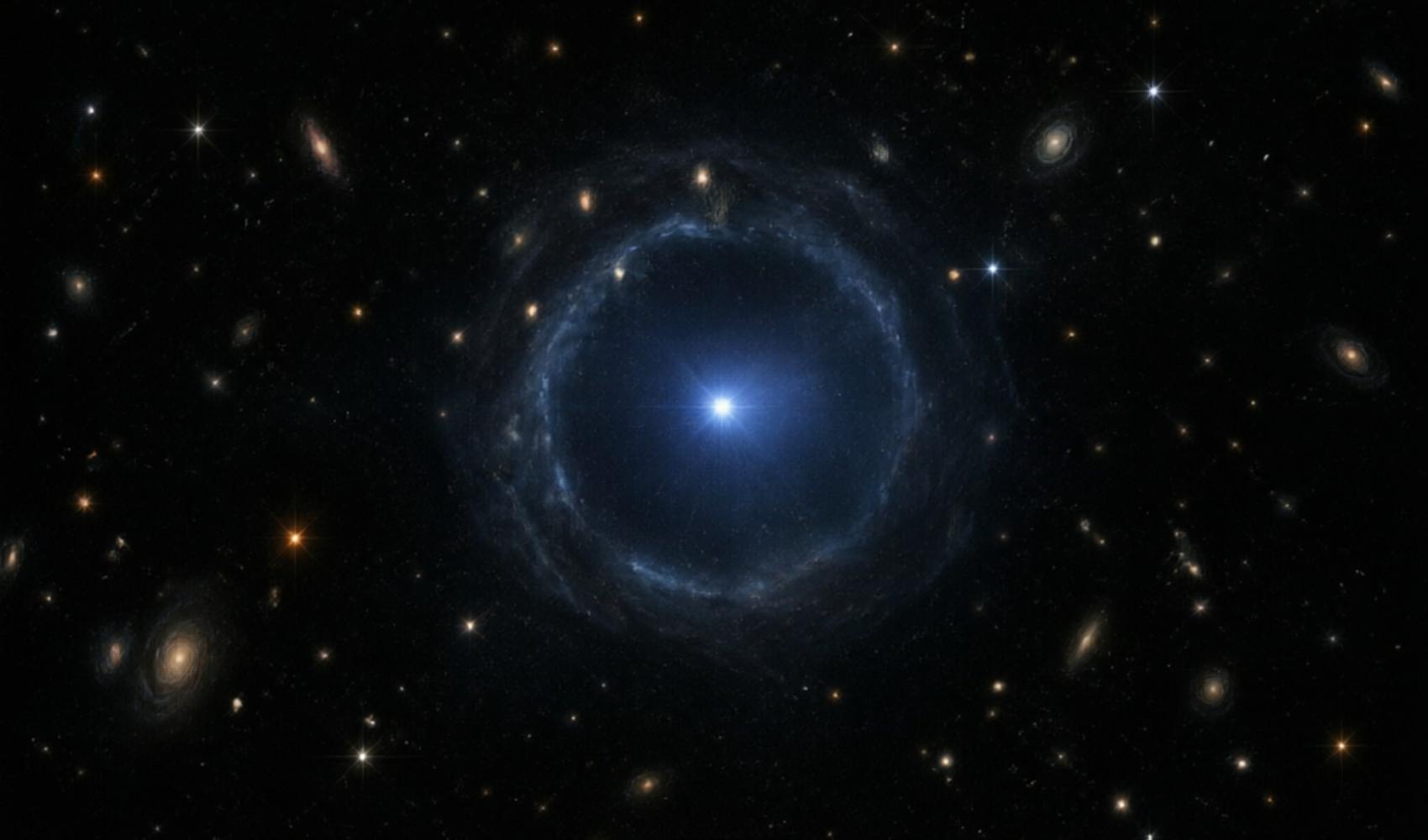
Astronomers have captured the first moments of an extraordinary stellar explosion occurring approximately 500 million light-years away, marking a rare observation regarding the death of massive stars. The short-lived, low-energy X-ray flash recorded by the Einstein Probe space telescope in March 2026 was subsequently identified as the initial signal of the supernova designated SN 2026gzf.
Following the signal, labeled EP260321a, telescopes in different parts of the world were rapidly pointed toward the same region. Ground-based observations began within about an hour, and the rapidly brightening supernova was detected. The findings of two independent research teams studying the event have been published in The Astrophysical Journal Letters.
SHOCK BREAKOUT IS RARELY SEEN
Teams led by Brendan O’Connor of Carnegie Mellon University and Jillian Rastinejad of the University of Maryland determined that the initial X-ray flash was a “shock breakout.” A shock breakout occurs when a powerful shock wave generated in a core-collapsing massive star reaches the stellar surface. For this reason, the observed flash is considered one of the first lights emitted by the supernova.
Capturing such signals is extremely difficult because a shock breakout can last anywhere from a few seconds to a few hours. In the last 20 years, the only other example that could be definitively identified in the X-ray band was SN 2008D, discovered in 2008. Therefore, the observation of EP260321a/SN 2026gzf holds special significance for studying the earliest phase of stellar deaths.
The main point that caught the researchers' attention was the type of supernova. SN 2026gzf was classified as a “broad-lined Type Ic.” Explosions in this class are generally very energetic and, in some cases, are associated with jets of matter moving at near-light speeds, or even gamma-ray bursts.
However, the expected gamma-ray burst was not seen in SN 2026gzf. Follow-up observations did not detect a distinct relativistic jet or the long-lived afterglow expected to be produced by such a jet. According to O’Connor, one possible explanation is that the star produced a jet, but that jet failed to break out. Researchers call this scenario a “choked jet.”
THE STAR’S FINAL PERIOD ALSO MAPPED
The studies also provided important clues about the history of the exploding star. According to the findings, the progenitor of the supernova was a Wolf-Rayet star. Initially having a mass approximately 20 times that of the Sun, such stars consume their fuel rapidly and can shed their outer layers into space in the final stages of their lives.
It was noted that the progenitor star of SN 2026gzf also underwent periods of irregular and violent mass loss before dying, losing its hydrogen and helium layers and transforming into a “stripped” structure composed largely of carbon and oxygen. This process created multiple shells of matter around the star.
According to the researchers, while a dense shell close to the star contributed to the formation of the initial X-ray signal, more distant asymmetric structures of matter were associated with the optical supernova signal. Thus, the pre-explosion environment of a star that had lost its hydrogen and helium was observed at this level of detail for the first time.
The discovery shows that the relationship between powerful Type Ic-BL supernovae and gamma-ray bursts is more complex than previously thought. Although SN 2026gzf was a powerful and fast supernova, it did not produce a distinct jet or a gamma-ray burst. In this respect, the event is considered a transitional example between more ordinary supernova shock breakouts and low-luminosity gamma-ray bursts.
Following the Einstein Probe's capture of the initial signal, data from numerous observatories—including the Vera C. Rubin Observatory, the Dark Energy Camera, DESI, Gemini telescopes, the Chandra X-ray Observatory, and the Very Large Array—were combined. This coordinated follow-up allowed for the detailed reconstruction of a stellar death hundreds of millions of light-years away, from the initial shock wave to the subsequent supernova evolution.
News Source: 12punto
Most Read

Netanyahu shows pager at the UN

11 more arrests in the fund investigation

Is Greece emboldened because our nation doesn't know what 'Casus Belli' is?!

Did the fund crisis come in plain sight? Who won while the house was winning?

Searching for the left in Berlin and Europe: It's just not there!

Little America

Reactions from the 'Butlan' management continue following Mansur Yavaş's resignation from the CHP

Saudi Arabia calls for 'urgent' defense meeting with Turkey and Pakistan

Digital blockade: Will account bans be able to hide the truth?

A former MASAK Vice President is among them!