


Atatürk and the Young Turk Revolution


Gazi Mustafa Kemal Atatürk is, among his other qualities and characteristics, a highly distinguished intellectual who was a product of Ottoman modernization, and specifically, Ottoman military modernization. He was an intellectual who cultivated himself exceptionally well, drawing attention with the vastness, richness, and diversity of his interests and intellectual curiosities. These attributes are strong enough to make the great leader a thinker, alongside his other titles. The range of subjects in the books he read throughout his 57-year life—taking notes and writing comments in the margins (the Anıtkabir Association has published the 4,000 volumes known and found in 24 volumes and uploaded them to the internet, where they are accessible)—demonstrates Atatürk's intellectual depth and equipment.
Atatürk was a member of a generation that knew well and was influenced by the thinkers and ideas of his time and before, from Namık Kemal to Tevfik Fikret, and from Ziya Paşa to Ali Suavi. He was influenced by the French Revolution. He learned German philosophers well. He closely followed developments in Russia and Iran.
When he was a young student at the Military Academy (Mektebi Harbiye), he was pondering the future of the Ottoman Empire (Devlet-i Aliyye) along with many of his friends. However, what distinguished him from his other friends was his realism, his ruthless realism. Even then, as a young officer candidate, he saw that the Ottoman Empire would be partitioned, would collapse, and would be liquidated. He stated that preparations should be made accordingly and that this painful reality had to be accepted. He emphasized that it was inevitable to establish a state with a smaller surface area, a reduced population, but one that had become more homogeneous. The year was 1902, 1903, 1904, or 1905. These were years when even thinking about these ideas, let alone voicing them, was a crime and required great courage. Because in the despotic regime, the spies, informants, and stool pigeons of Sultan Hamid II were everywhere.
Mustafa Kemal was opposed to both the sultanate and the caliphate. In 1906, while serving as an officer in the 5th Army in Damascus, he secretly founded the Fatherland and Freedom Society (Vatan ve Hürriyet Cemiyeti) with his friends, which would later merge with the Committee of Union and Progress. The following words reflect his Republican, Nationalist, Populist, and Libertarian thoughts, as well as his courage:
“Why are you so fixated on the idea of a sultan? We will make the administration a republic.”
COMPLETING THE YOUNG TURK REVOLUTION
Mustafa Kemal was, of course, pleased with the 1908 Young Turk Revolution. However, he did not find it sufficient. He thought it had shortcomings. He set his mind to completing those shortcomings with the Republican Revolution, which he would lead. Because he was a Republican.
Mustafa Kemal was, without a doubt, a successful soldier. During the Gallipoli Campaigns, he stepped onto the stage of history, so to speak, and demonstrated this success to both friend and foe. However, he was much more than a successful soldier. He was a revolutionary. He was the leader of the War of Independence. He was a state founder.
A note stating “He is a Republican” was entered into Mustafa Kemal Pasha’s service record at the Ottoman Ministry of War. When it was decided in 1919, before May 19, to send Mustafa Kemal to the Samsun region to ensure public order, Grand Vizier Damat Ferit Pasha placed this very record note before Sultan Vahdettin.
Mustafa Kemal Pasha was, of course, a Unionist (İttihatçı). However, he was not among the leadership cadre of the organization. He never got along with Enver Pasha, especially within the trio of leaders we refer to as the “pashas” or the “triumvirate” (Enver Pasha, Talat Pasha, Cemal Pasha). His relations with Talat Pasha and Cemal Pasha were more moderate and positive. Both his great success at Gallipoli and the fact that he was not in the leadership cadre of the organization, despite being a Unionist, were among the features that strengthened Atatürk’s hand when he launched the War of Independence.
FEARLESS ATATÜRK
Atatürk was, without a doubt, brave. The description of Atatürk given by İsmet Pasha for a TRT documentary shortly before his death was: “HE WAS NOT AFRAID.”
Atatürk was always organized and an organizer. He was cautious and prudent. He was a genius of timing. For that reason, after starting the War of Independence, he did not voice the concept of “REPUBLIC” for a long time. He spoke of national sovereignty (Hakimiyeti milliye). He spoke of national forces (Kuvayı milliye). He spoke of national will (İrade-i milliye). This attitude was seen in the Amasya Circular, the Erzurum Congress, and the Sivas Congress. In his own words, “He kept the Republic in his conscience like a national secret.”
Even if Atatürk did not say Republic, British intelligence was aware of the trend. In November 1919, they sent the following note to London: “The Turks are heading toward a Republic.” For this reason, in a survey conducted by the National Army Museum in the UK in recent years, the answer given to the question “Which leader is the greatest enemy of the British?” was ATATÜRK. Mustafa Kemal, who won all the wars he entered not only while alive but also after his death, continues to be the nightmare of the British even after his death.
Would you like to get notifications about new developments and save news?
- NotificationsNew developments and breaking news
- SaveNews is stored in the app
Most Read
The 4 major threats that have put 33 countries on alert have been identified
A surprise visit to Istanbul from Tim Cook
Erdoğan and Aliyev deliver joint message in Shusha
New details in the Kahramanmaraş school attack
They gave a presentation to the PKK commission, but...

Atatürk and the Young Turk Revolution

More than a series crisis: The table of capitalism
Murat Emir reveals the 'key' name in the fund fraud!
Çorum FK-Fenerbahçe starting lineups announced!
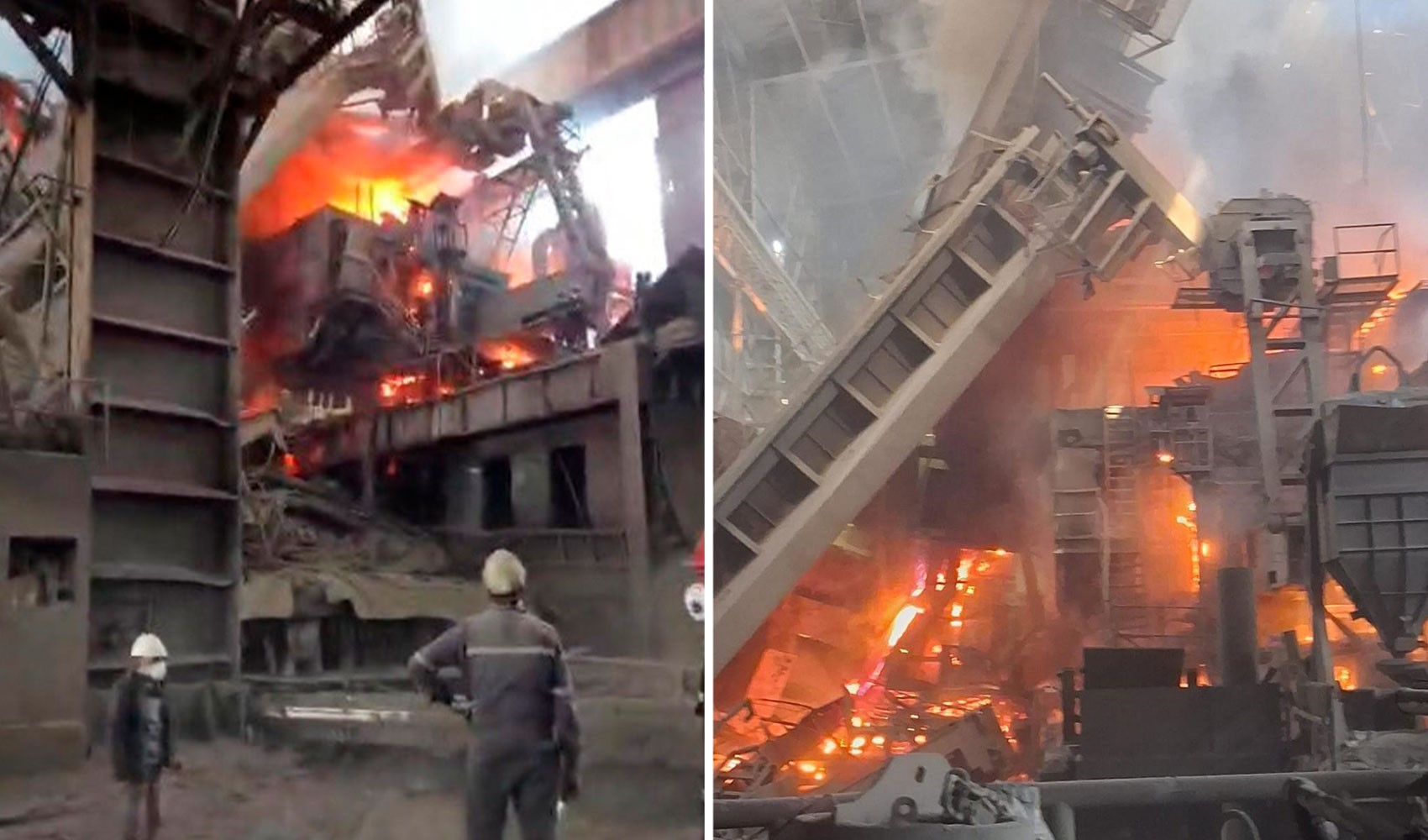
Death toll rises to 3 in iron and steel factory explosion!