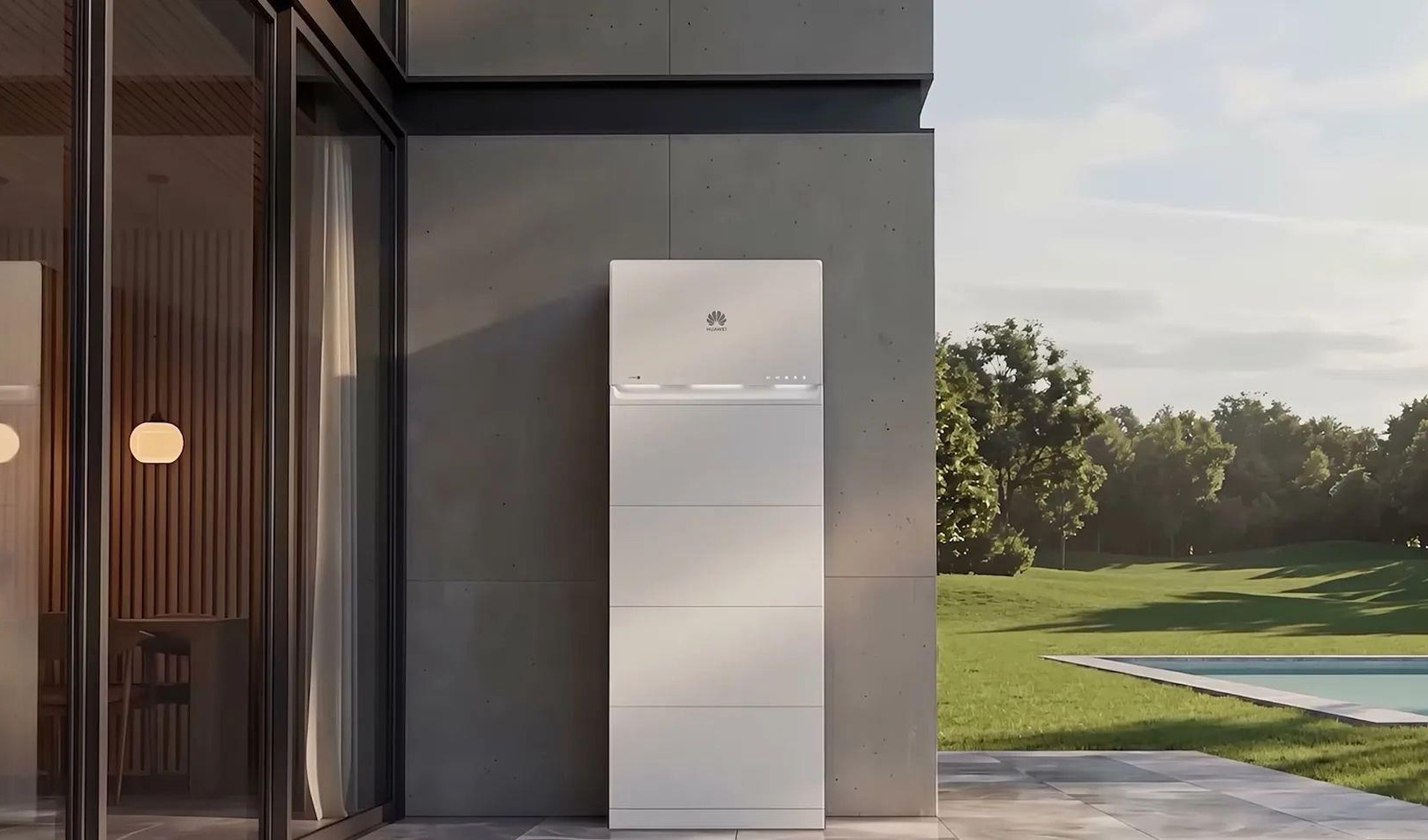
Huawei has announced its new home energy storage solution, Luterra S2, developed to work in tandem with solar energy systems. Combining a hybrid inverter, Lithium Iron Phosphate (LFP) battery, and AI-powered energy management into a single structure, the system can reach a storage capacity of up to 336 kWh through modular installation.
The company's new solution aims to allow excess electricity produced during the day, particularly in rooftop solar installations, to be used during nighttime hours or in the event of power outages. While the Luterra S2 offers an inverter capacity of up to 20 kW, the total output power can be increased to 60 kW by connecting three-phase 20 kW inverters in parallel.
MODULAR BATTERY STRUCTURE
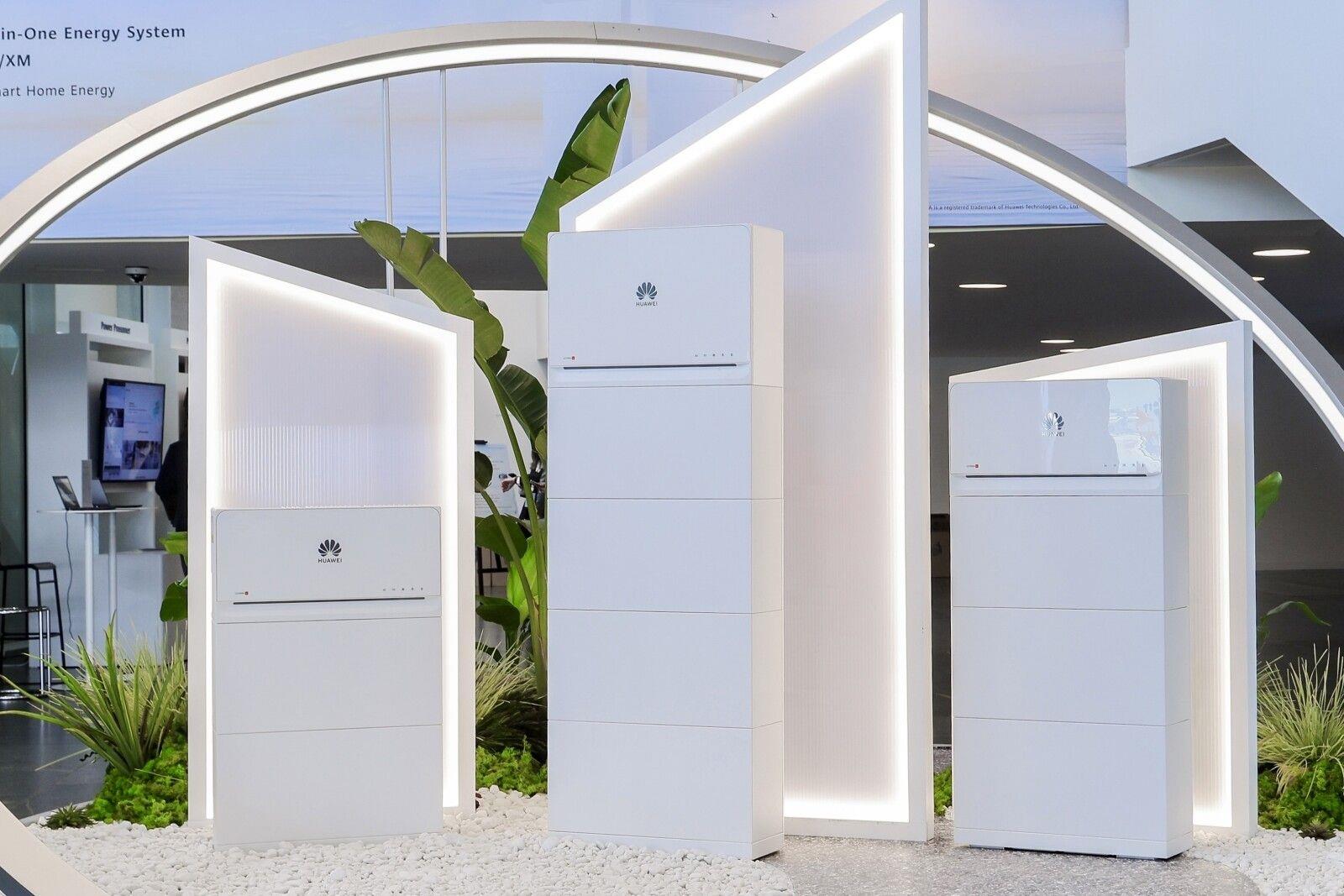
The Luterra S2 comes with single-phase and three-phase inverter options. Single-phase models offer capacities between 3 kW and 10 kW, while three-phase models offer between 5 kW and 20 kW. On the battery side, there are two LFP module options with nominal capacities of 5.02 kWh and 7.03 kWh. The usable capacities of these modules are stated as 4.9 kWh and 6.9 kWh, respectively.
According to information shared by Huawei, the system supports up to 48 battery modules in interconnected installations. When configured with 7.03 kWh capacity modules, the total nominal storage capacity can reach 336 kWh. It is stated that the batteries are designed for a service life exceeding 15 years and can provide up to 5 MWh of energy transfer per 1 kWh of capacity over their lifetime.
EFFICIENCY UP TO 99 PERCENT
The system uses Silicon Carbide (SiC) power electronics and Active Neutral Point Clamped (ANPC) circuit topology on the inverter side. According to Huawei's preliminary technical data, maximum efficiency reaches 98.6 percent in single-phase inverters and 99 percent in three-phase models.
The Luterra S2 supports a maximum PV input voltage of 600 V for single-phase models and 1,100 V for three-phase models. Depending on the model, up to three Maximum Power Point Trackers (MPPT) are offered. In three-phase models, the total solar panel input power can reach up to 40 kWp.
Backup power support against electrical outages is also among the system's standout features. Huawei states that the transition time to backup power mode in the event of a grid power failure is less than 10 milliseconds. The system can supply a continuous load of up to 20 kW while operating off-grid; the 20 kW three-phase inverter can provide a peak backup power output of up to 40 kW for short durations.
Huawei's AI Energy Management 2.0 platform aims to optimize energy usage by analyzing data such as weather forecasts, electricity tariffs, the home's consumption habits, and the battery's current state of charge. This allows energy from solar panels to be distributed more efficiently among batteries, electric vehicle charging stations, and heat pumps.

The system also offers support for participation in virtual power plants (VPP). This structure allows battery and production systems in different homes to be managed as a single large energy source. Connectivity options include EEBUS, SG Ready, OCPP, and Modbus TCP standards.
On the safety side, cell-level thermal insulation, a pressure relief mechanism, and smoke exhaust channels are used. While the temperature of AC and DC connection terminals is continuously monitored, it is stated that the system has been tested by TÜV Rheinland in scenarios such as thermal runaway, fire exposure, and hydrogen explosion. It was also reported that the Luterra S2 has UL 9540A certification and meets the requirements of IEC 63027 arc fault protection.
The system uses passive cooling, eliminating the need for an external fan; operating noise is stated to be kept below 29 dB. Capable of operating in ambient temperatures between minus 25 and 60 degrees, the Luterra S2 is designed for outdoor conditions with an IP66 protection rating and C5-M corrosion resistance. Huawei has not yet made a statement regarding the product's price or which markets it will be available in.
News Source: 12punto