

Small plasma vortices detected for the first time in the most detailed image of the Sun's surface
Observations made with the world's largest solar telescope offer new clues regarding the extreme heat of the corona and the energy of solar flares.



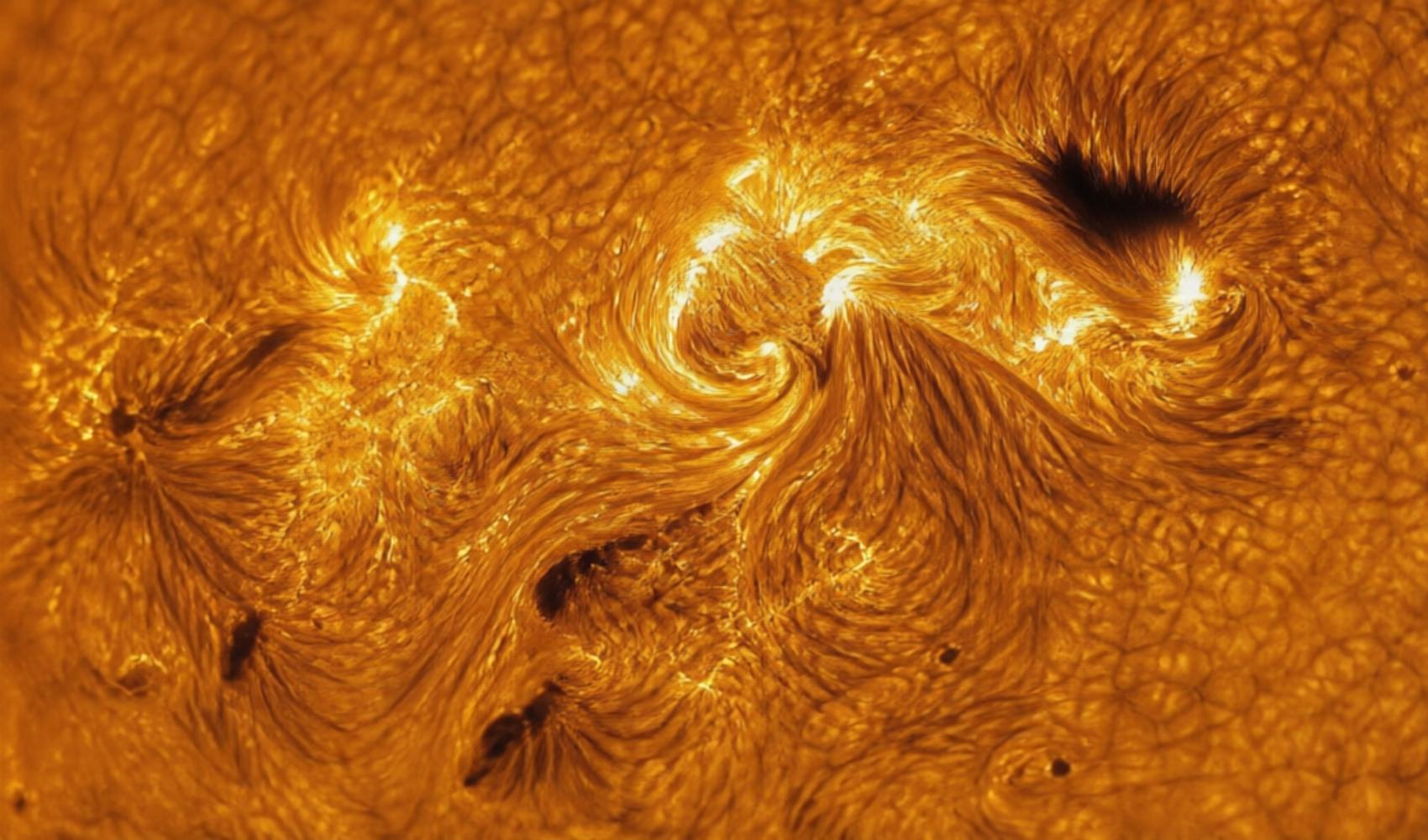
Scientists have directly observed, for the first time, small vortex-like structures on the Sun's visible surface that were previously predicted by theoretical models. The US National Science Foundation's National Solar Observatory (NSF NSO) announced on August 5 that these structures were identified in a manner consistent with a physical phenomenon known as the "Kelvin-Helmholtz instability."
According to the research published in Nature, the observations were made using the Daniel K. Inouye Solar Telescope on the island of Maui, Hawaii. The telescope, which features a 4-meter diameter primary mirror, is known as the world's largest solar telescope and provided one of the highest-resolution surface images of the Sun's photosphere ever obtained.
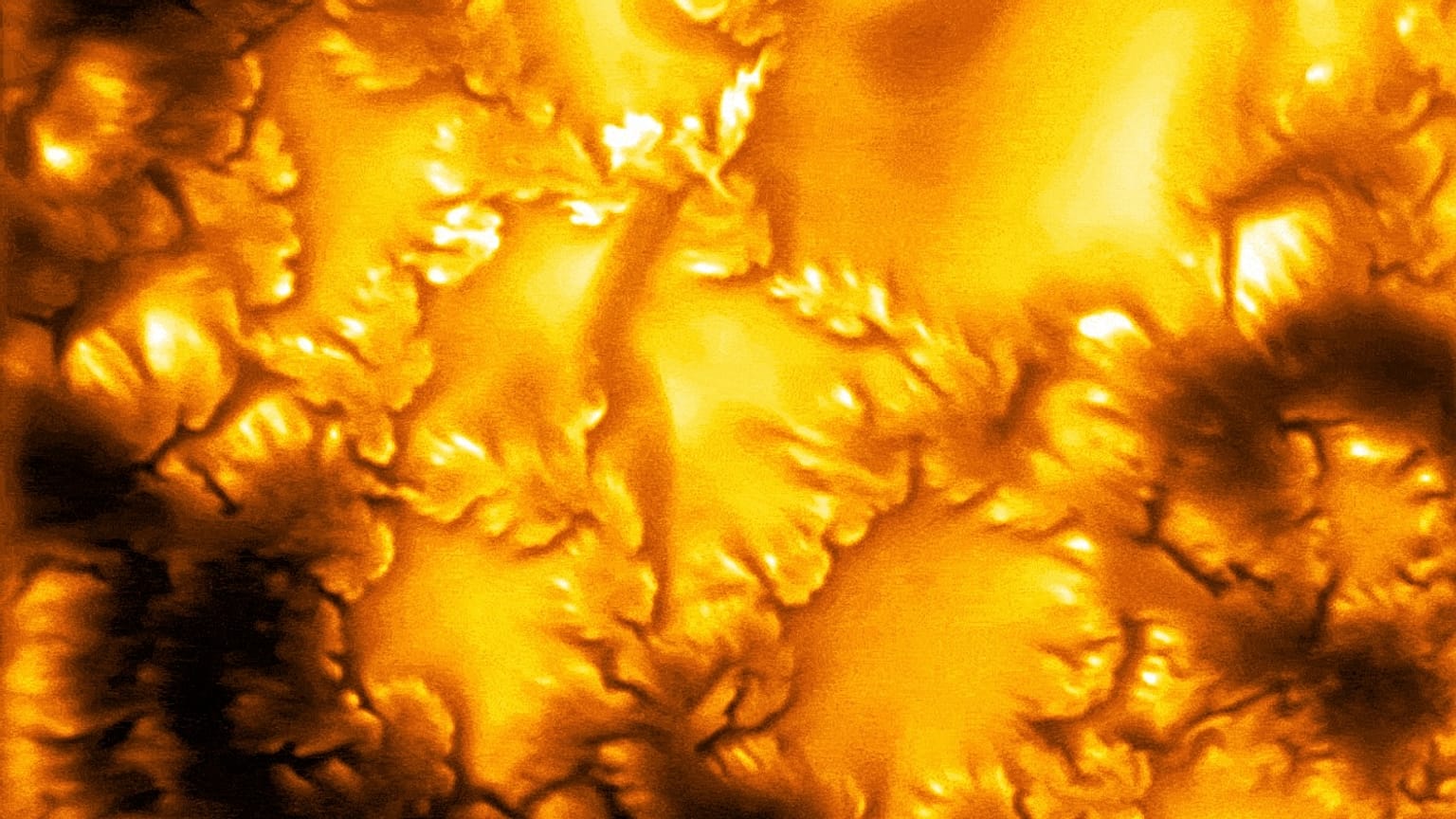
HOW DO VORTICES FORM?
The Kelvin-Helmholtz instability is a fundamental physical process that occurs at the boundary of two fluids moving at different speeds. The shear created by the velocity difference can turn initially small disturbances into waves and vortices over time. Similar examples can be seen in cloud formations in the atmosphere, in oceans, and in astrophysical plasmas.
On the Sun, the process is more complex due to the interaction of plasma—which consists of electrically charged particles—with strong magnetic fields. The research team identified small vortices that rapidly form and disappear at the edges of magnetic field concentrations, along with thin dark strips called "striations." The fact that the observations align with computer simulations and theoretical calculations strengthens the link between these structures and the Kelvin-Helmholtz instability.
NEW CLUE TO THE CORONAL MYSTERY
The discovery is also significant for one of the long-debated problems in solar physics. While the Sun's surface is approximately 5,500 degrees Celsius, the corona, its outer atmosphere thousands of kilometers above the surface, can reach millions of degrees in some regions. The fact that the corona is much hotter, despite being further away from the heat source, is among the questions scientists have been seeking answers to for nearly a century.
Researchers believe that the newly observed small-scale vortices could be one of the mechanisms that transport kinetic energy from the Sun's lower atmosphere to the upper layers. This energy could be transferred to smaller scales, converted into heat, and contribute to the heating of the corona. However, experts emphasize that the share of these vortices in total energy transfer is not yet clear.
Another potential contribution of the study is the understanding of solar flares and space weather events. When energy accumulated in the Sun's magnetic fields is released suddenly, radiation and plasma can be ejected into space; when this process reaches Earth, it can lead to geomagnetic storms that can affect satellites, radio communications, navigation systems, and in some cases, power grids.
The research team's next goal is to develop algorithms that can automatically detect these small vortices in the high-resolution data from the Inouye Solar Telescope. This will allow for more detailed calculations of how widespread these structures are, how much energy they carry, and how much of this energy can reach the Sun's upper atmosphere.
News Source: 12punto
Most Read

Netanyahu shows pager at the UN

11 more arrests in the fund investigation

Is Greece emboldened because our nation doesn't know what 'Casus Belli' is?!

Did the fund crisis come in plain sight? Who won while the house was winning?

Searching for the left in Berlin and Europe: It's just not there!

Little America

Reactions from the 'Butlan' management continue following Mansur Yavaş's resignation from the CHP

Saudi Arabia calls for 'urgent' defense meeting with Turkey and Pakistan

Digital blockade: Will account bans be able to hide the truth?

A former MASAK Vice President is among them!