Neck-and-neck race in Israeli elections: 7,700 vote gap between Netanyahu and the opposition
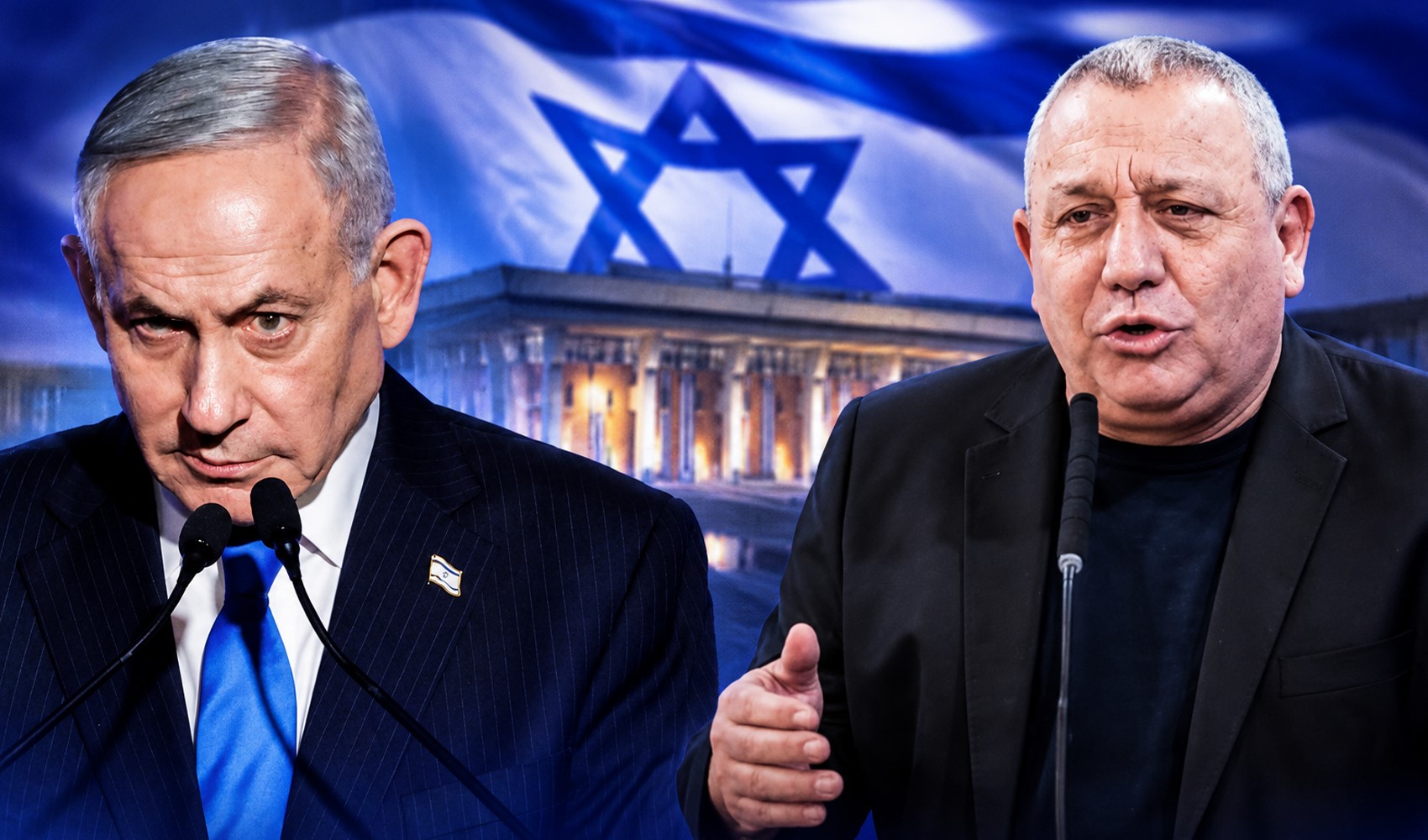
As vote counting continues following the general elections in Israel, the race between the ruling bloc led by Prime Minister Benjamin Netanyahu and the opposition remains close. At the stage where 16.8% of the votes have been counted, Netanyahu's bloc received 50.4% of the vote, while other parties received 49.6%. The gap between the two sides was recorded as approximately 7,700 votes.
LIKUD IN FIRST PLACE, YASHAR SECOND
According to data published on the Yedioth Ahronoth newspaper's website, 2,419 out of 11,996 ballot boxes across Israel have been opened. This corresponds to 20.2% of the ballot boxes.
In the results by party, Likud, led by Netanyahu, took first place with 24.1% of the vote. The Yashar Party, led by former Chief of General Staff Gadi Eisenkot, came in second with 16.1%.
The Together List, led by former Prime Minister Naftali Bennett, received 8.8%, Yisrael Beiteinu received 6.9%, United Torah Judaism received 6.7%, and the Jewish Power Party received 6.4% of the vote.
The Joint List, formed by the Hadash, Ta'al, and Balad parties representing Palestinian citizens of Israel, reached 5.9% of the vote, while the Shas and Democrats parties each received 5.6%, and the Religious Zionism Party received 5.4%. The Ra'am Party's vote share was announced as 2.8%.
OPPOSITION AHEAD IN EXIT POLLS
Exit polls published by the Israeli state broadcaster KAN indicated that the opposition bloc led by Eisenkot could win 52 seats, while the ruling bloc led by Netanyahu could win 50 seats.
However, neither bloc reached the 61 seats required to form a government in the 120-seat Israeli Parliament. While the parties representing Palestinian citizens of Israel are expected to win a total of 18 seats, it is projected that 11 of these individuals will enter Parliament from the Joint Arab List.
Exit polls do not reflect the final results. Official results are expected to be announced by November 4 at the latest, following the completion of vote counting and objection processes.
EISENKOT TO NETANYAHU: "DO NOT DARE TO USE ISRAEL'S SECURITY FOR YOUR OWN POLITICAL NEEDS"
Following the appearance of the opposition in the lead in exit polls, Gadi Eisenkot argued that the Netanyahu administration has lost voter support.
Eisenkot stated, "The Israeli people have voted against Netanyahu continuing his role as Prime Minister of Israel. Tonight, Netanyahu finds himself facing a much broader and stronger mainstream Zionist majority."
In his statement directed at Netanyahu, he used the words, "Netanyahu, do not dare to use Israel's security for your own political needs."
In his post on the US-based X platform, Eisenkot also stated that he would take action to form a new government, saying, "I will act immediately to implement the will of the people without wasting time, to replace the Netanyahu government, and to form a Zionist government as soon as possible that advocates for mandatory military service for everyone."
MESSAGES OF CHANGE FROM BENNETT AND LAPID
Former Prime Minister Naftali Bennett argued that the Netanyahu administration was defeated in the elections and announced that they would work to form a new coalition.
Bennett said, "We will do everything in our power to form a Zionist government based on an alliance. Netanyahu has lost; the October 7 government will be sent away! The coalition consisting of those who evade military service has dropped from 68 seats to 50 seats."
Emphasizing that official results should be awaited, Bennett stated, "We will wait patiently for the official results, as many things can still change. However, we, as the leaders of the change bloc, have already begun discussions and coordination."
Former Prime Minister Yair Lapid also criticized the results of the Netanyahu bloc, stating, "Do not let anyone confuse you. The Netanyahu bloc has suffered a crushing defeat. This is a complete collapse, and the people have told them to go home."
REACTION TO THE OPPOSITION FROM SMOTRICH
Far-right Finance Minister Bezalel Smotrich rejected the opposition's victory declarations following the exit polls.
According to a report by The Times of Israel, Smotrich made assessments regarding the settlements in the West Bank during his speech at his party's election headquarters in Jerusalem.
Smotrich said, "We will not let you celebrate. They are celebrating because they think they will succeed in reversing our settlement revolution in Judea and Samaria (the name Jews give to the West Bank)."
Arguing that the opposition will not achieve its goals, Smotrich said, "They will not succeed. Jewish settlements will rise in Gaza."
INCLUSION OF ARAB PARTIES IN THE COALITION ON THE AGENDA
Yair Golan, leader of the opposition Democrats Party and former Deputy Chief of General Staff, advocated for the inclusion of Arab parties in the coalition to be formed to replace the Netanyahu government.
According to the Haaretz newspaper, Golan said, "Every member of parliament elected through democratic and legal processes is a legitimate part of our political system."
Stating that the majority required for a change of government must be secured, Golan said, "If there is a democratic majority to replace the government of destruction, we must do it."
THREE COALITION SCENARIOS STAND OUT IN ISRAEL
If the election results turn out close to current estimates, coalition negotiations will be decisive, as no bloc has reached the majority required to form a government on its own.
FIRST SCENARIO: MINORITY GOVERNMENT LED BY EISENKOT
In exit polls, the bloc led by Eisenkot is expected to win 52 seats. Since this number is not sufficient to form a government, external support from other parties may come to the agenda.
While it is stated that the number of seats could reach 59 with the support of the Ra'am Party, the support of the Joint List is also required for the government to be formed. It has not yet been clarified whether this support will be given.
SECOND SCENARIO: ROTATING PRIME MINISTERSHIP BETWEEN NETANYAHU AND EISENKOT
Another possibility is that Netanyahu and Eisenkot agree on a rotating prime ministership to form a national unity government. It is projected that a government in which the Likud, Yashar, Together List, Democrats, Shas, and United Torah Judaism parties participate could reach a total of 81 seats.
However, Eisenkot had announced before the election that he would not form a coalition with Netanyahu. Furthermore, Eisenkot's stance on mandatory military service and the opposition of Shas and United Torah Judaism to this issue are among the main disagreements standing in the way of a possible agreement.
It is also evaluated that a possible Iranian attack could change political balances and affect the possibility of a national unity government.
THIRD SCENARIO: EARLY ELECTIONS
If the parties cannot agree to form a coalition, Israel may go to early elections again.
HOW WILL THE GOVERNMENT FORMATION PROCESS WORK?
Following the announcement of the final results, President Isaac Herzog will assign the task to the candidate he believes can form a government. This person will have 28 days to complete coalition negotiations. The period can be extended by another 14 days if necessary.
If the first assigned candidate cannot form a government, the president may assign the task to another candidate. If this attempt also fails, a 21-day period will begin for members of Parliament to agree on a candidate who will receive the support of 61 members of parliament.
If a government cannot be formed during this process, Parliament will be dissolved, and elections will be held again within three months.
Israel experienced five consecutive early general elections between 2019 and 2022 due to coalition disagreements. Following the current elections, the outcome of the negotiations between the parties will be decisive for the formation of a government.
News Source: 12punto