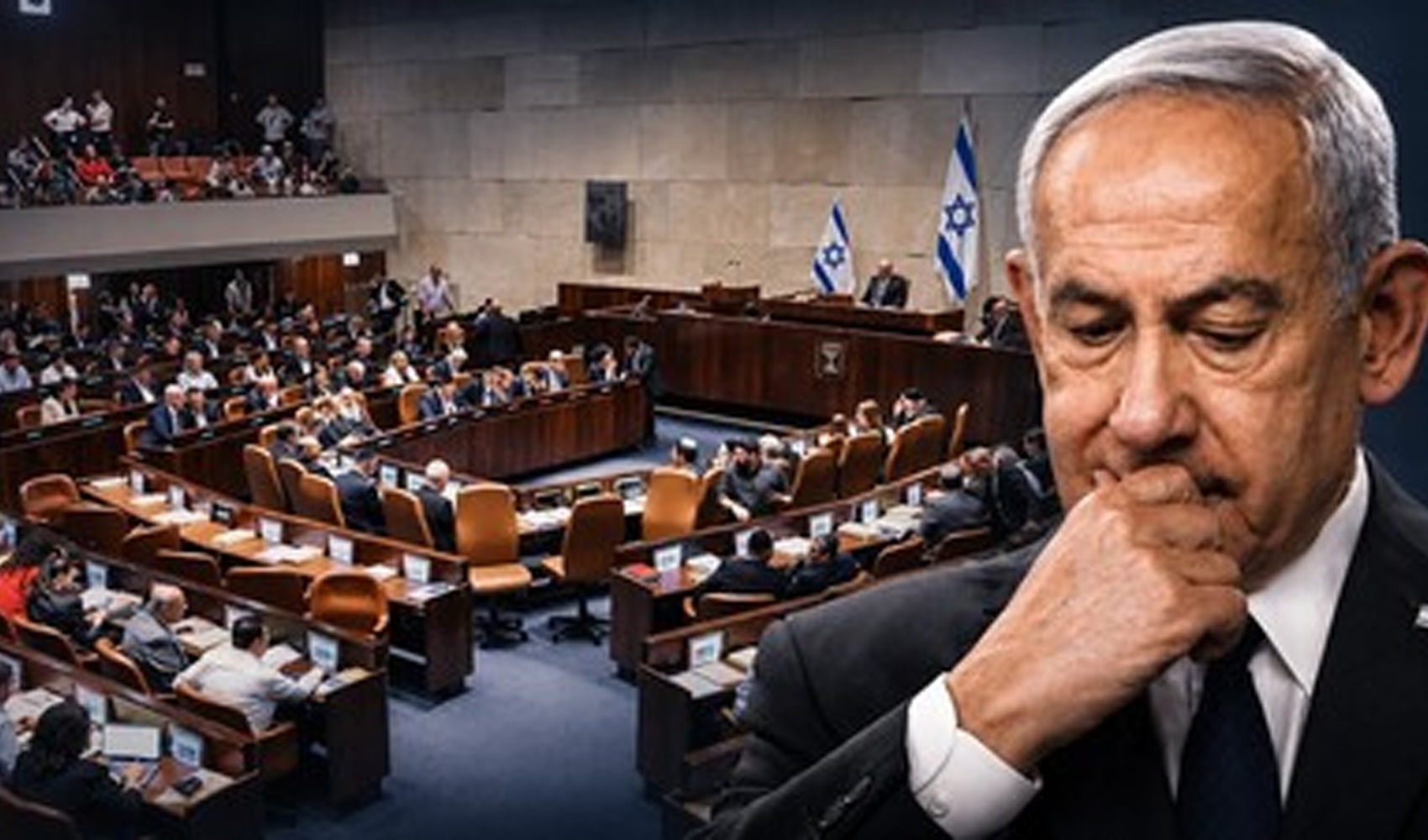
The bloc led by Israeli Prime Minister Benjamin Netanyahu failed to secure a majority in the first vote of the new parliamentary term. In the 120-seat Knesset, the proposal regarding the establishment of the Arrangements Committee was approved with 63 votes against 50.
The fact that the opposition parties led by Gadi Eisenkot and the Arab parties representing Palestinian citizens of Israel acted in the same direction was decisive in the vote. According to the approved decision, a member of the Yashar Party, led by Eisenkot, who was tasked with forming the government, will chair the committee.
According to information published on the official Knesset website, the proposal for the establishment of the Arrangements Committee and the determination of its member structure, submitted by Yashar MP Roy Folkman, was approved in the General Assembly. It had been stated that the opposition parties had previously reached an agreement on giving the committee chairmanship to Folkman.
Netanyahu's Likud party will be represented by 5 seats on the committee. The Yesh Atid, Joint List, Democrats, and Ra'am parties will each have two members, while the Yisrael Beytenu, Otzma Yehudit, United Torah Judaism, Shas, and Religious Zionism parties will each have one member on the committee.
SHARP REACTION FROM LIKUD
Following the result of the vote, the Likud Party issued a statement emphasizing that the parties of Gadi Eisenkot, Avigdor Liberman, and Naftali Bennett voted in the same direction as Ahmed Tibi and Mansour Abbas.
In its statement, Likud also targeted the Arab members of parliament who left the hall while the Israeli national anthem was being played at the opening of the parliament. The party called on the opposition to "end cooperation with terror supporters who protest the national anthem."
Following the elections held in Israel on October 27, the bloc led by Netanyahu remained at 53 seats. The Jewish opposition parties won 48 seats, while the Arab parties won 19 seats. Thus, the total number of seats held by the opposition parties reached 67.
In order to form a government in the country, it is necessary to receive the vote of confidence of at least 61 members of parliament. For this reason, the first vote in the Knesset stood out as a development closely watched in terms of the arithmetic of forming a government in the new term and the capacity of the opposition to act together.
News Source: 12punto