

Opposition leaders in Israel decide to act together against Netanyahu before the election
Coming together ahead of the October 27 elections, opposition leaders announced that they will work together for a change of government and will seek to form a government after the election.



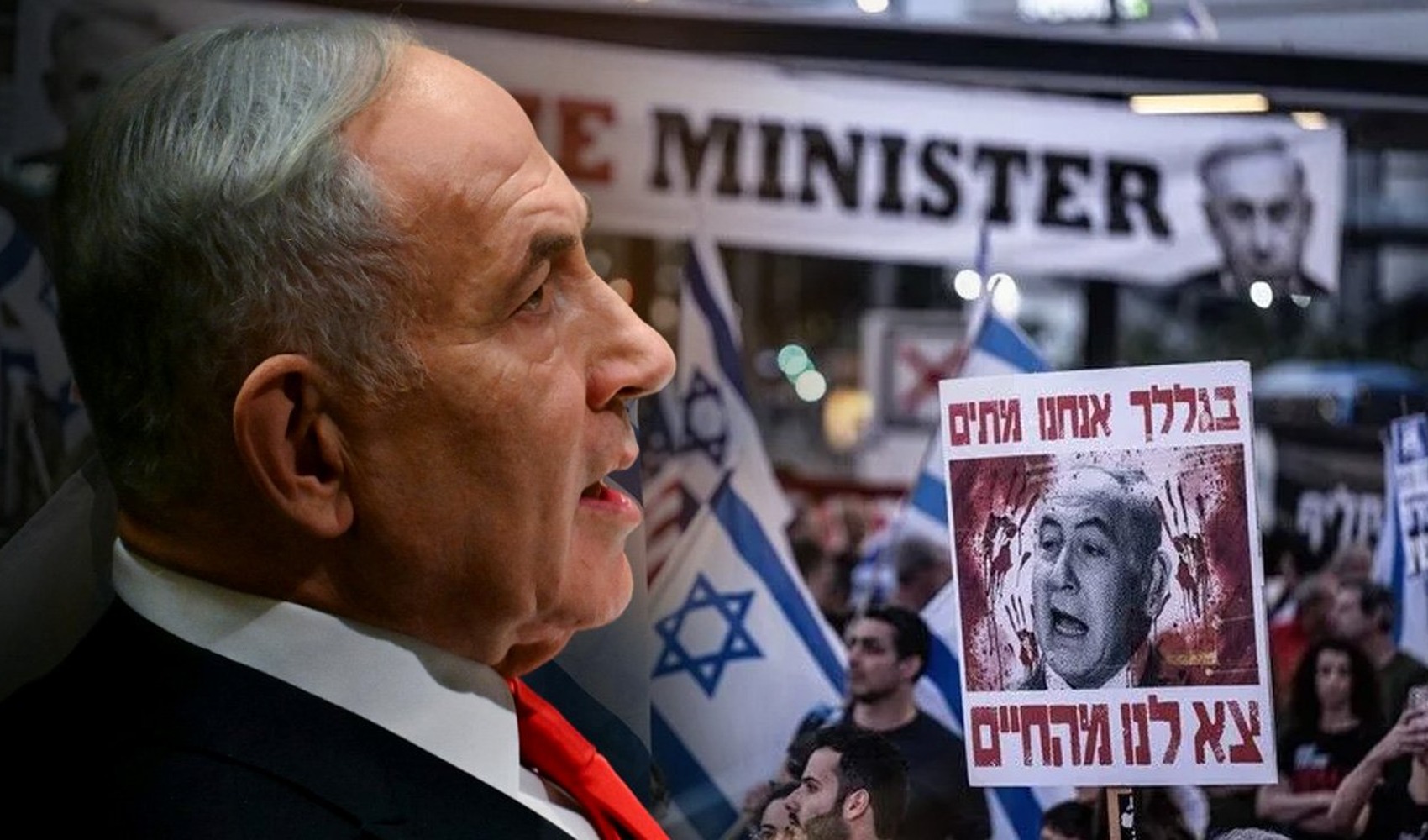
Ahead of the elections to be held in Israel on October 27, opposition parties have agreed to act together against Prime Minister Benjamin Netanyahu's government. Opposition leaders signed a document aiming to reduce intra-bloc tension throughout the election campaign and to work together to form a coalition government after the polls.
Yesh Atid Party leader Yair Lapid announced the meeting he held with opposition leaders in a post on his social media account. The meeting was attended by Yashar Party leader Gadi Eisenkot, former Prime Minister Naftali Bennett from the "Together" list, Yisrael Beiteinu party leader Avigdor Liberman, and Democrats party leader Yair Golan.

In his post, Lapid stated that while there are ideological differences between the leaders, they have united on the goal of a change of government. Lapid said, "Even if there are ideological disagreements between us, we have a duty to act together to achieve the change of government, acknowledging that it is our common overarching goal."
DECISION FOR THREE WORKING GROUPS IN THE JOINT DOCUMENT
According to the signed document, opposition parties will refrain from criticisms targeting each other's policies until the elections. While each party will try to increase its own voter support, the main goal will be to reach the majority required to form a government in the Israeli Parliament as a bloc.
The document emphasized that the government to be formed must be of a nature that will "protect Israel as a Jewish and democratic state." It was also decided to begin negotiations for forming a coalition government immediately after the elections.
Opposition leaders also agreed on the establishment of three separate working groups during the election process. These groups are planned to carry out activities on campaign efforts to increase vote shares, the basic principles of the government to be formed after the election, and combating smear campaigns.
Recent public opinion polls show that the opposition wing could win 54 to 56 seats, while the ruling bloc led by Netanyahu could win 50 to 52 seats. In Israel, the support of at least 61 members of parliament is required to form a government in the 120-seat Knesset.
Polls indicate that, according to the current picture, neither of the two main blocs may reach the number required to form a government on their own. The Israeli Supreme Court will make the final decision regarding the participation of parties representing Palestinians in the elections. It is estimated that these parties could win 12 to 14 seats.
News Source: 12punto
Most Read

Fenerbahçe issues statement on FIFA transfer ban

Turkish citizen Cansu faces risk of death in Afghanistan

How did the manipulation cycle function in the fund crisis?

Fenerbahçe star Greenwood's new address has been revealed

Deniz Baysal's 7-year marriage ends in a single hearing

The closed-period list of the mysterious fund has emerged
Amine Cansu Çelik has resigned from the CHP

The fund fraud scandal and MSCI 'Status Concern'

What is beauty anyway (mathematics)

Who would have thought, my dear, that one day we would fall out