



Greetings,
Beautiful people with free minds and free consciences.
Continuing to look through the mirror of art...
What appears to us today through the mirror of art is beauty again, but beauty within the brain...
Dear reader,
Is our relationship with beauty an exhausting endeavor?
Then let me exhaust you a little, shall I?
Let us focus on ourselves, beauty, and our brains for a moment...
There is such a relationship between the way our brain works and beauty:
It is not just this or that...
Please read with patience, sir.
Have we ever asked ourselves? Where do we place ourselves in the mirror of beauty? Where does our brain fit into this?
Are we happy in the place where we put ourselves?
In the eyes of the other: when we weigh ourselves on the scales of beauty, what do we feel?
If we are satisfied with the result on the scale, what do we perceive?
Or conversely, if we are not satisfied with the result on the scale, what troubles and depressions do we drift into?
Have you ever thought about it? If everyone, men and women, were of ideal beauty, what would happen?
Would there be competition then?
Would it be necessary to fight to the death to prove oneself socially, economically, and physically, and to obtain what is beautiful?
Consequently, would people who have written history and gone down in history, such as artists, scientists, kings, etc., emerge?
Or could what we call civilization today have been built?
Think about it for a moment...
Well, if you ask me, I would say they would not.
Why? First of all: I think beauty is a necessary impulse for the emergence of competition among humans, because beauty represents the genetically healthy and strong, and thus suitable conditions for the continuation of the lineage; and secondly, starting from the city-states established after the agricultural revolution, it serves as an indicator of material and class wealth—whether it is beauty in a person, an object, or nature—in terms of showing your power within society by possessing it.
If you like, let us look at nature and the animal kingdom. In the animal kingdom, males are always ornate, large, strong, and predatory. Females, on the other hand, are smaller, less ornate, and weaker than males, but they have a say in mating. They decide for themselves who they will mate with. From an evolutionary perspective, the authority to make the selection has been given to females, and females make their choices among male candidates who are genetically strong for the continuation of their lineage. For females, the most fundamental motivation is to ensure the continuation of the lineage with the strongest genetic codes; they force males into competition for this and ensure the healthy continuation of their lineage by choosing those who are successful in this competition.
When we look at the human realm: that is, the architecture of our own social relationships between men and women, what we see is: when we simplify the subject from the complexities of human relationships: I worry about whether the reality we encounter will be the same, dear reader, what do you say about this...
Let us try to explain with an example, sir. For instance: the socio-economic, cultural, and class foundations in which a woman living in a village, town, or city finds herself motivate her toward those who are the strongest emotionally, mentally, spiritually, and in terms of class and material wealth when choosing a partner. Dear reader, it does, doesn't it?
My dear professor, are you saying there aren't many marriages that end in disappointment and murder?
No, I am absolutely not saying that. Because I want to remind you that all partner choices made are thought to be the most appropriate partner choice under the conditions of the moment they were made. I mean, I am talking about conditions. I won't elaborate, as you will understand the rest.
Are you a character, Professor Abidin? You might say...
Instead of explaining beauty to us, you have started explaining husband-wife partner selection.
Oh reader, should we not explain it and keep it to ourselves? Look, how beautiful it is; is beauty a nuisance or is it the fundamental motivation of our lives? If we think about it a little and ask ourselves once again what beauty really is, would that be so bad?
Dear reader, let us also address the subject from the perspective of our brain and its basic operating mechanisms; it will be fun.
Have you ever thought about it? Or have you wondered? Which organ in our body consumes the most energy?
I have both thought about it and wondered for you, sir.
If you are ready, I will tell you: The brain. That piece of meat that we think some people don't have, and in some who do, it doesn't work well. By the way, one must not forget that the brain needs protein to function healthily... You are immediately complaining, of course; professor, where do you live, do you know how much a kilo of meat costs...
Anyway, let us not get too involved with protein and meat. You know, thank God, we have no hungry people. That is what the authorities say, sir. Let them not eat meat, right sir? God forbid, what would happen then: brains would start working.
With your permission, let us return to our subject: his majesty the brain.
Although it makes up only about 2% of our total body weight, it consumes about 20% of the total energy we expend daily on its own. It is such a gluttonous thing. So now we have come to the crux of the matter, haven't we, sir?
If our brain is the organ that consumes the most energy, and what must be done constantly to meet the brain's energy needs? Of course, since the very beginning of humanity, one must obtain food and nourish oneself by hunting, gathering, or producing. If you do not have enough food and are still performing energy-consuming mental processes like thinking, what happens? Your brain starts to consume the energy in your energy stores quickly, right? Well, does our brain, whose entire reason for existence is to keep us alive, stand idly by in this situation? It immediately does itself a favor (if we say immediately, it is not immediate, of course, it is over 3 million years or so) and develops mental shortcuts (heuristics) and cognitive biases. Did you ask why it develops these mechanisms? To survive, sir. Because food was never abundant. Faced with this situation, what has our self-sacrificing brain, which thinks for us, done? It established these mechanisms by saying, 'If I think less, I will consume less energy, and thus my chance of survival will increase.' Did it do well? Did it do badly? I leave the answer to you, dear readers who love to think.
Let me briefly explain mental shortcuts and cognitive biases so that the subject becomes clear and your mind is not clouded.
Mental shortcuts: Instead of carrying out a deep analytical thinking process from scratch for every situation, the brain makes the fastest and 'good enough' decision based on past experiences. This provides a tremendous saving of energy. For example, the fact that we do not constantly think about actions like shifting gears or braking while driving is a result of these shortcuts (habits).
Cognitive biases: Shortcuts do not always work perfectly; these shortcuts can turn into systematic thinking errors or biases. For example, perceiving a fast-moving shadow directly as 'danger,' even if it is a faulty generalization, ensured the survival of our primitive ancestors. Today, our first impressions or stereotypes are shaped by this principle.
According to the model developed by the American Nobel Prize-winning psychologist Daniel Kahneman, this situation is based on the conflict between two different systems (System 1 and System 2) in our minds:
System 1: It is the automatic, fast, emotional, and low-energy-consuming system. It manages shortcuts and biases.
Our brain chooses to evaluate data with pre-filtered patterns to avoid constantly running System 2, which performs heavy calculations, and to survive. In summary; shortcuts and biases are the strategy of using the brain's limited energy budget in the most efficient way.
System 2: It is the slow, logical, attention-requiring, and high-energy-consuming system. A significant amount of energy must be spent for analytical thinking.
Do you see? What the brain thinks for us, what it does. I am sure your eyes have welled up.
Professor Abidin, God bless our brains, but what happened to this beauty? You couldn't get to the point, you started saying, didn't you, sir...
We have come to beauty, sir. The article seems to have gotten very long... I hope you haven't been bored...
I think my reader does not get bored...
I will explain to you with a scientific experiment that this thing called beauty is not a cultural learning, but is based on a cognitive shortcut as I have been trying to explain for an hour, and that symmetry and proportion, which have gained representational power in creating healthy generations, and the holistic state of both, are effective behind it.
We have reached the end, are you ready, sir?
American developmental psychologist Dr. Judith H. Langlois and her team conducted experiments titled 'infants' face perception and attractiveness preference' at the University of Texas in 1987.
In the experiment: 73 infants between the ages of 2 and 8 months were used. Adults participated in the experiment to pre-rate the photos of faces that only the infants watched as 'attractive' or 'unattractive'.
In the study, which used the standard visual preference technique, photos of women's faces that adults had previously rated were shown to infants in pairs (one attractive, the other unattractive). As a result, it was observed that even infants a few months old looked at symmetrical and proportional faces (which adults rated as 'attractive') for a significantly longer time compared to unattractive ones.
These results proved that the basis of the perception of beauty and stereotypes does not begin with cultural learning, but with the brain's natural reactions to visual harmony and proportion at an early age.
Have we finally reached the end of the article?
You are saying, was everything this simple? You decide that, dear reader.
Heads are a bit confused, I guess... Let it be, it is good. I would say it is good for brains to work, but I am afraid you will say that it doesn't work for free either...
Are you sad that the article is over...
Do not be sad, sir, we will continue to explain beauty.
For example, our great poet Aşık Veysel says, 'your beauty is worth nothing'.
Stay healthy.
Until our next meeting, goodbye for now, right now and always, breathe with art, stay with art.
Most Read
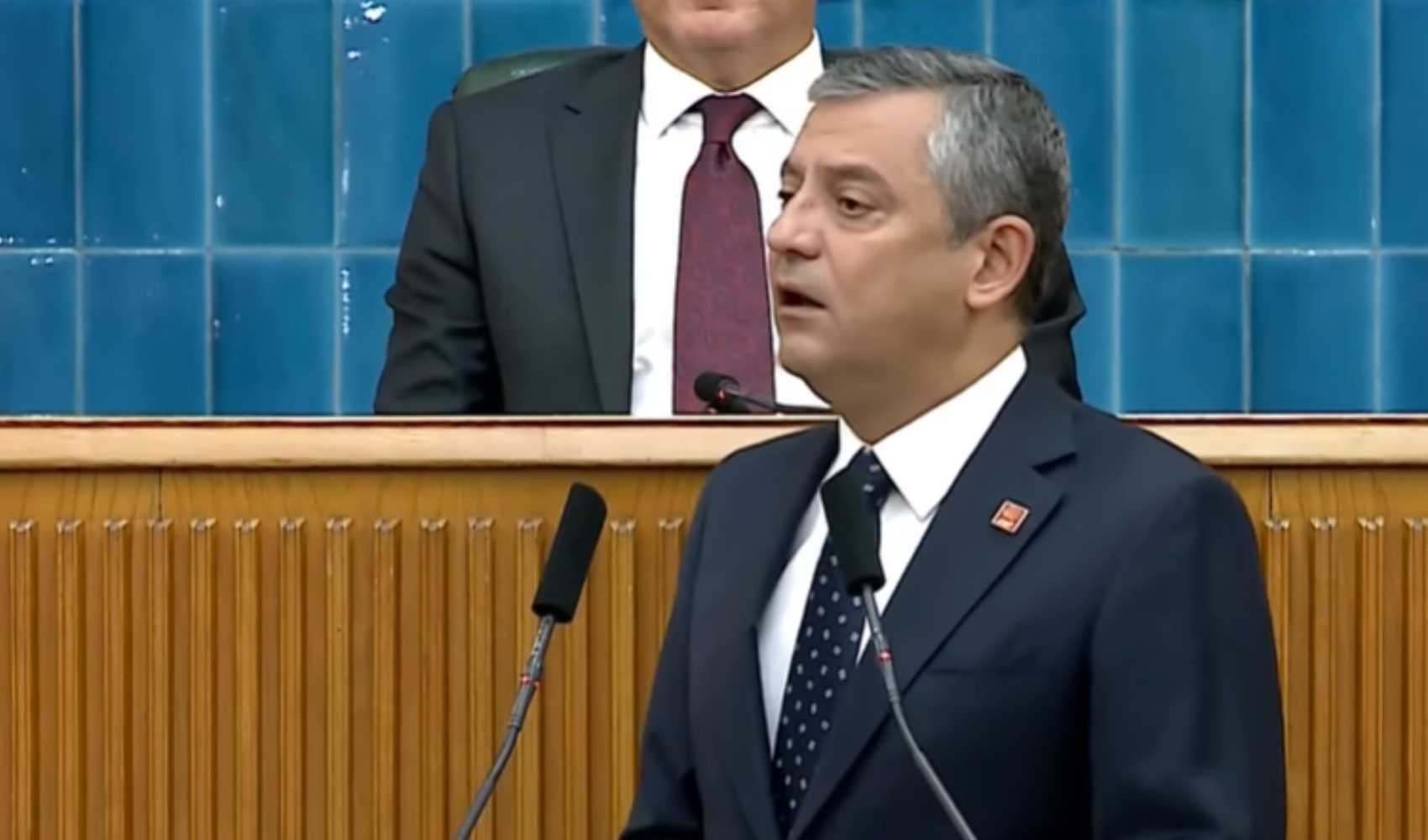
Historic words from Özgür Özel at the CHP group meeting

Air Force Academy student Veli Bilgin has died
Is this an opportunity for Özgür Özel to shed the CHP's ideological baggage?
The same refrain
Why you should not let your children play Roblox
Collapse: What kind of alternative program?
Tuncer Bakırhan calls for a framework law
After the final: The political economy of football
Here are the names that will be in Özgür Özel's new party!
Major crisis in CHP